


Art has long offered an escape and provided food for thought. This selection of summer exhibitions promises to do just that, taking us on multiple journeys for the senses and the mind. Ranging from retrospectives of artists such as Anish Kapoor, Steina, Ai Weiwei or Mariuccia Secol to group exhibitions of emerging artists, these shows delve into universal struggles, hopes and aspirations that accompany modern-day existence. Whether through an exploration of ongoing violent conflicts, the climate catastrophe, colonial legacies, patriarchal norms or the increasing individualism that drives us further apart, they try to tackle the world’s bittersweet complexities.
Inspired by the artists’ own biographies, age-old motifs and the world around them, they weave together politics, culture, history, activism and art, playing with our emotions and leaving us wanting more. The exhibited artists incessantly manipulate space, form, texture, size and colour, but, even more importantly, they never stop asking urgent questions, interrogating the world that we’re all so used to. The selected exhibitions hold the key to learning new visual languages, formulating powerful counter-narratives and imagining our own alternative realities.
William Kentridge: The Battle Between YES and NO at Kunsthalle Praha
16.04–07.09.2026
Prague, Czech Republic
The Battle Between YES and NO offers a glimpse into William Kentridge’s practice that brings together tradition and innovation, resulting in an artistic legacy rooted in South Africa’s complicated history. Unfolding as a spatial collage, the exhibition traces Kentridge’s artistic journey from charcoal prints to cross-disciplinary multimedia works. It reflects themes that resonate universally, across time and space, and invites audiences to join the artist in his exploration of hope and despair, desire and guilt, exile and belonging – everyday preoccupations and emotions.
Born and raised in Johannesburg, Kentridge finds inspiration in his own life experience, politics, history, science and culture, and uses it to fuel creations that span drawing, sculpture, film, performance and what he calls ‘miniature theatre.’ In this exhibition – the first major display of his work in the Czech Republic – Kentridge creates a unique entryway into his practice through the work of Franz Kafka, drawing on his representations of the world, and his fascination with the fantastic and the absurd. The show captures Kentridge’s openness to the uncertainties of the creative process – he lets the work speak for itself, revealing truths that even the artist himself was not aware of at the time of its creation.


Tetsuya Ishida at the Gagosian (rue de Ponthieu)
10.06–31.07.2026
Paris, France
Presenting Tetsuya Ishida’s work in France for the first time, this exhibition is a moving portrayal of the modern world. Ishida created hyper-realistic, painfully detailed but somehow still delicate paintings that capture the taxing conditions of existence in contemporary times. He drew on his own experience of coming of age in the 1990s in Japan – the so-called ‘lost decade’, characterised by long-term economic stagnation, political unrest and social challenges. Against this backdrop, Ishida found inspiration in social realism, surrealism and Japanese pop culture.
The artist captures his peers – young people and working-age men – stuck in the monotony of routinised work under capitalism, fighting the perils of over-consumption and all-encompassing commodification, adjusting to technological progress and, above all, grieving the loss of individualism. Evoking both distance and empathy, Ishida gives shape to the fears that we all hold deep within ourselves.


Anish Kapoor at the Hayward Gallery
16.06–18.10.2026
London, United Kingdom
First introduced to UK audiences by the Hayward Gallery nearly 30 years ago, Anish Kapoor now returns as a globally acclaimed artist known for his immersive sculptural works. This exhibition lures the viewers in with the artist’s beloved materials, colours and textures: bloody red and Vantablack, reflective steel surfaces, massive spheres, geometrical structures and spectacular installations. The works impose themselves upon the audiences from all sides, hanging from the ceiling, filling the gallery space to the brim and escaping its bounds, creating optical illusions and astounding with their sheer size.
The display that balances between awe and abject brings together works from several of Kapoor’s iconic series, including disorienting mirror-like sculptures, objects covered in the light-absorbing Vantablack or illusory voids spread throughout the gallery space. Apart from bringing Kapoor’s artistic genius back to the Hayward Gallery, the exhibition showcases its new, astonishing manifestations. Kapoor’s most famous works are accompanied by a recent series of visceral paintings and gory sculptures, as well as a few new works that appear to turn the world on its head.


Reverse Futures at the Joburg Contemporary Art Foundation
26.06–05.12.2026
Johannesburg, South Africa
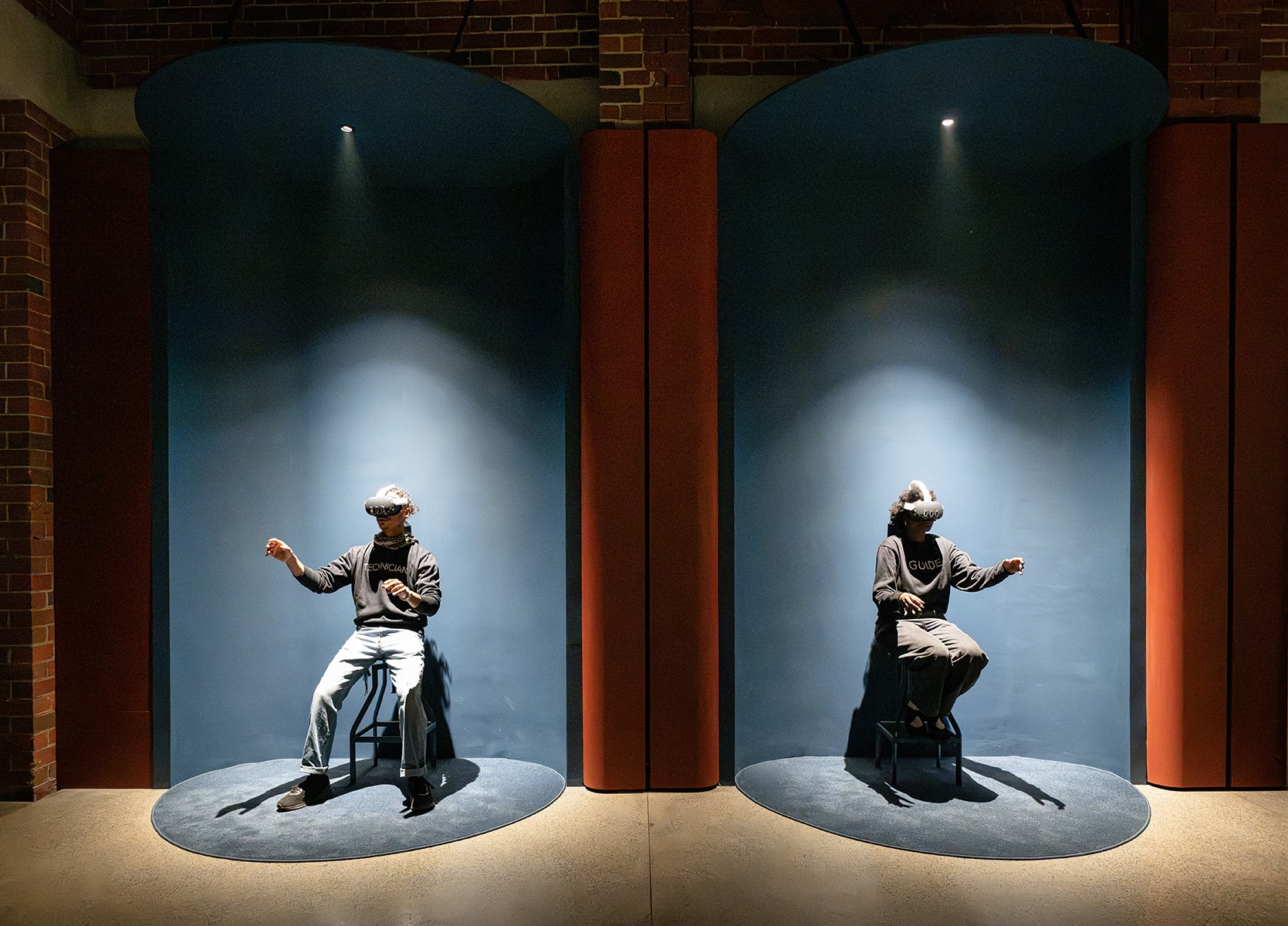
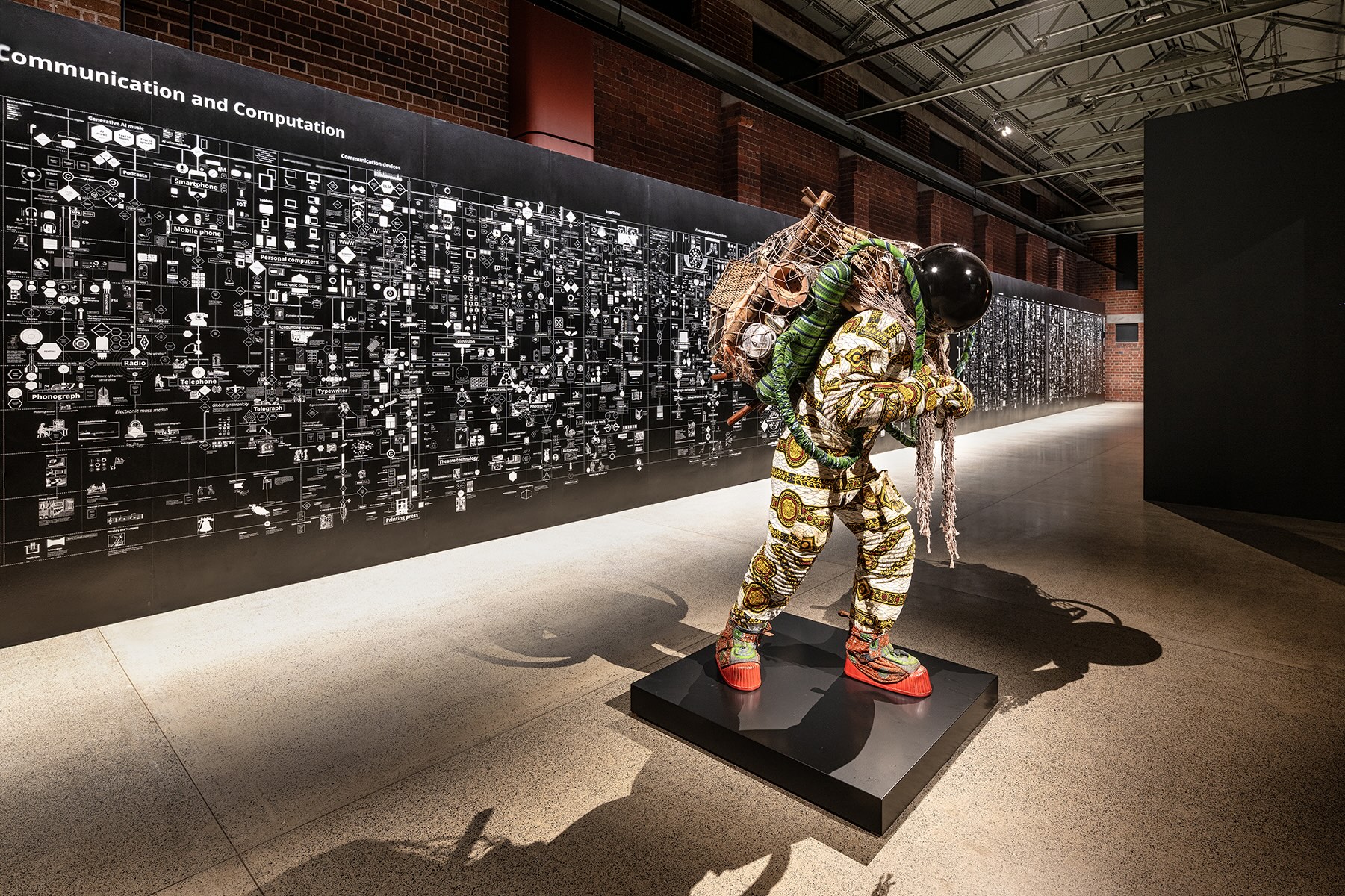
Reverse Futures explores conceptualisations of the future from the Global South, which sees it as intrinsically tied to the past and the present. The exhibition decentralises colonial ways of knowing in favour of Indigenous meaning-making systems, community knowledge and lived experiences. It presents the work of several artists and weaves together various techniques, ranging from paintings to spatial and video installations. Through their works, the show addresses the injustices of the modern world and, at the same time, imagines alternative realities.
Its title emerges from the term ‘reverse futurism’, coined by Cave-bureau to signify the enduring effects of colonialism in Africa, which still affect people’s lives despite the Western world’s efforts to move on. The concept encapsulates the need to undo – rather than bury – the mistakes of the past in order to reform the present and create a future free from neocolonial forces.
George Lappas. Spotlight. Art always begins with the word “supposing” at the National Museum of Contemporary Art Athens
11.06–08.11.2026
Athens, Greece
This exhibition invites the visitor into the neon-bright, futuristic world of George Lappas, a Greek artist who redefined the nation’s understanding of sculpture and contemporary art. Lappas’ work emerged from his relentless experimentation with forms and ideas that constitute sculpting, which in his eyes – and under his skilful touch – transformed into intricate installations that combine sculpture, photography, movement, light and scale.
Thematically, his work bounces between endless contradictions: the individual and the collective, the local and the global, the private and the public. It is powered by distant yet intersecting cultural influences, touching on ancient Egyptian, Greek and Mayan art and smoothly segueing to contemporary artistic, social and political developments. His bizarre reimaginations of everyday objects and spatially displaced installations emerge from this very amalgamation of sources of inspiration, resulting in a visually unique journey through Greek contemporary art.


Steina: Playback at Haus der Kunst
12.06.2026–07.12.2026
Munich, Germany
Steina: Playback brings a retrospective of the artist’s work to Germany for the first time in a particularly well-attuned composition of video and sound. With a background in classical music, Steina imbues video with a rhythmic, musical quality. The exhibition is a feast for several senses, presenting audiences with rich visual narratives accompanied by electronic soundscapes. The sensory overload leads to one overwhelming effect – a whole-body feeling, a building vibration, a never-ending expanding rhythm.
Steina plays with perception and sensation in her incessant exploration of ‘machine vision’, which moves well beyond the Anthropocene, into the more-than-human dimension. The exhibition documents her growth as an undisputed trailblazer in media art, covering the artist’s early experimentation with documentary forms and her more mature intermedia multichannel installations. It submerges audiences in Steina’s polyphonic world that never ceases to evolve.


Idemitsu Mako. What a Woman Made at the Tokyo Photographic Art (TOP) Museum
18.06–21.09.2026
Tokyo, Japan
Idemitsu Mako is a pioneer across both Japanese experimental video art and the artistic exploration of women’s roles in society. This exhibition provides a nuanced overview of the width and depth of her practice, taking its title from Idemitso’s first video work from 1973, which brought her initial recognition. It also acknowledges the roots of her inspiring career – her need to transcend the roles of a wife and a mother through creative expression that bridges her own experiences, feminism and artistic prowess.
Idemitsu’s practice relies on various techniques, including early video and narrative techniques associated with television melodramas, which imbue her work with unmatched qualities in both form and content. She uses them to create complex visual realities that address the full scope of women’s lives in today’s world: harsh societal expectations and gender roles, marital and family dynamics, or the resistance that women artists face throughout their careers. This critique is accompanied by a steady exploration of the constant mediation of the world and society’s dependence on technology.


Wild Waters: Dams and Deltas After Modernity at Framer Framed
19.06–30.08.2026
Amsterdam, Netherlands
Built on water, peat and artificially reclaimed land, the Netherlands is a nation whose history is inextricably linked to water, seen both as a vital life source and a mounting threat. Wild Waters: Dams and Deltas After Modernity emerges from this legacy to explore how water has become a pawn in a political game, instrumentalised to exploit some for the sake of others.
Control over bodies of water has long been associated with national myths of progress and technological advancement, yet it often comes with dispossession, displacement and damage. This exhibition counters these erased histories and lived experiences through the work of various artists and the stories encrypted in several bodies of water: the Ebro Delta, the Meuse, the Vistula, the Tajo and the Tigris. Tracing the interconnectedness of water resources, colonialism and territorial exploitation, it touches on unspoken topics, especially relevant in a world threatened by an impending climate catastrophe.


Mariuccia Secol: Unraveling at Muzeum Susch
11.06–01.11.2026
Susch, Switzerland
Mariuccia Secol: Unraveling is the first major retrospective devoted to the work of artist and activist Mariuccia Secol. What began with a formally traditional exploration of existential themes and trauma quickly grew into a multimedia artistic practice that blends feminism with socio-political critique and questions the established order of the world. Initially informed by the growing resistance movements of the 1960s, Secol turned to everyday materials to weave counter-narratives about the world’s various issues: oppression and patriarchy, migration crises, global conflicts and environmental demise.
To construct her ever-relevant commentary, Secol has created a unique formal language rooted in the act of refusal. Her work moves in the in-betweens: the silences, the losses, the lacks. It is in these gaps that knowledge – the kind that Secol seeks – emerges. Through courageous representations of the world, the artist offers an alternative to the art-historical canon, which this exhibition thoroughly documents in the form of the artist’s own alternative account of the last century.


Superglue, or Inventing the Friend at Contemporary Art Centre
30.04–06.09.2026
Vilnius, Lithuania
Superglue, or Inventing the Friend, invites us to explore our relationship with the other, to get to know that which scares us before we run away for good. In a powerful return to figurative art, the exhibition presents an intricate installation of seemingly disjointed, displaced and disfigured objects in an effort to familiarise viewers with the initial uncomfortable unfamiliarity of contemporary art. Through this facilitated encounter, it examines processes of recognition, identity formation and connection.
By forging meaningful relationships with the unknown, this show comments on the concerning conditions of the contemporary world, torn apart by increasing political polarisation, radicalisation and individualism. It searches for the glue that could put it back together and imagines an alternative reality in which the other becomes a friend rather than an enemy, wondering whether art could possibly hold all the answers.


Maria Nepomuceno | ∞ ∞ infinita infinito at A Gentil Carioca
23.05–01.08.2026
São Paulo, Brazil
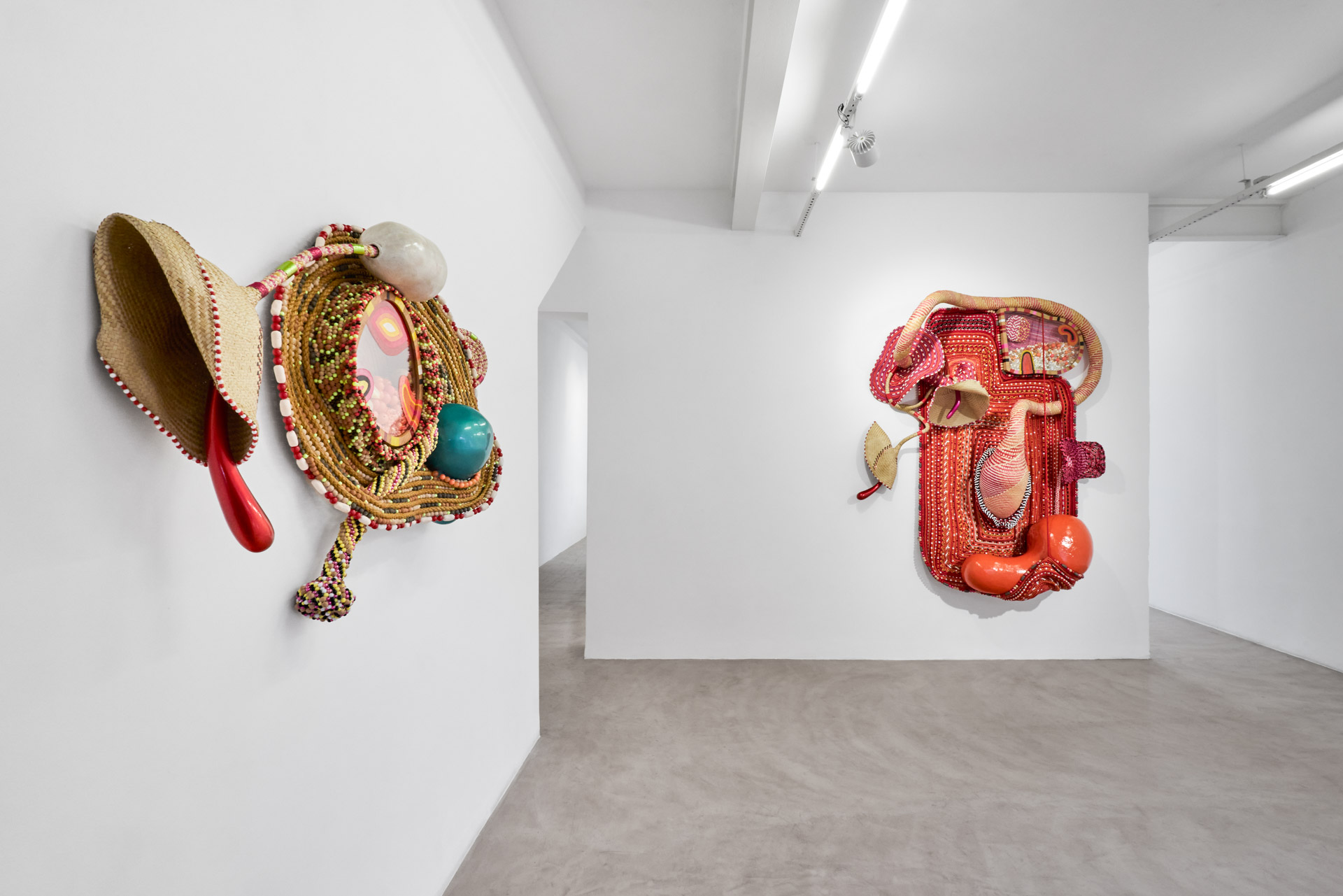
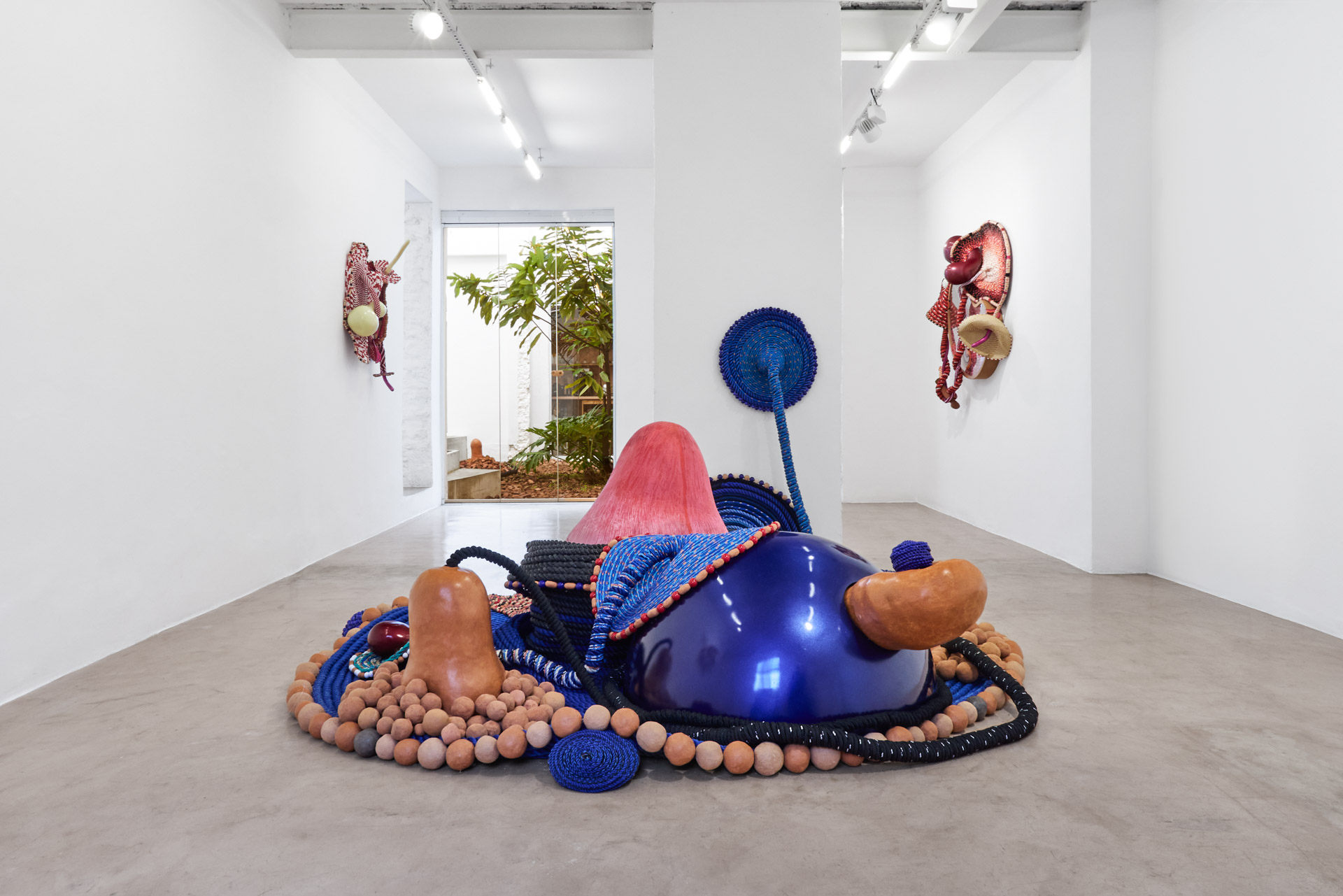
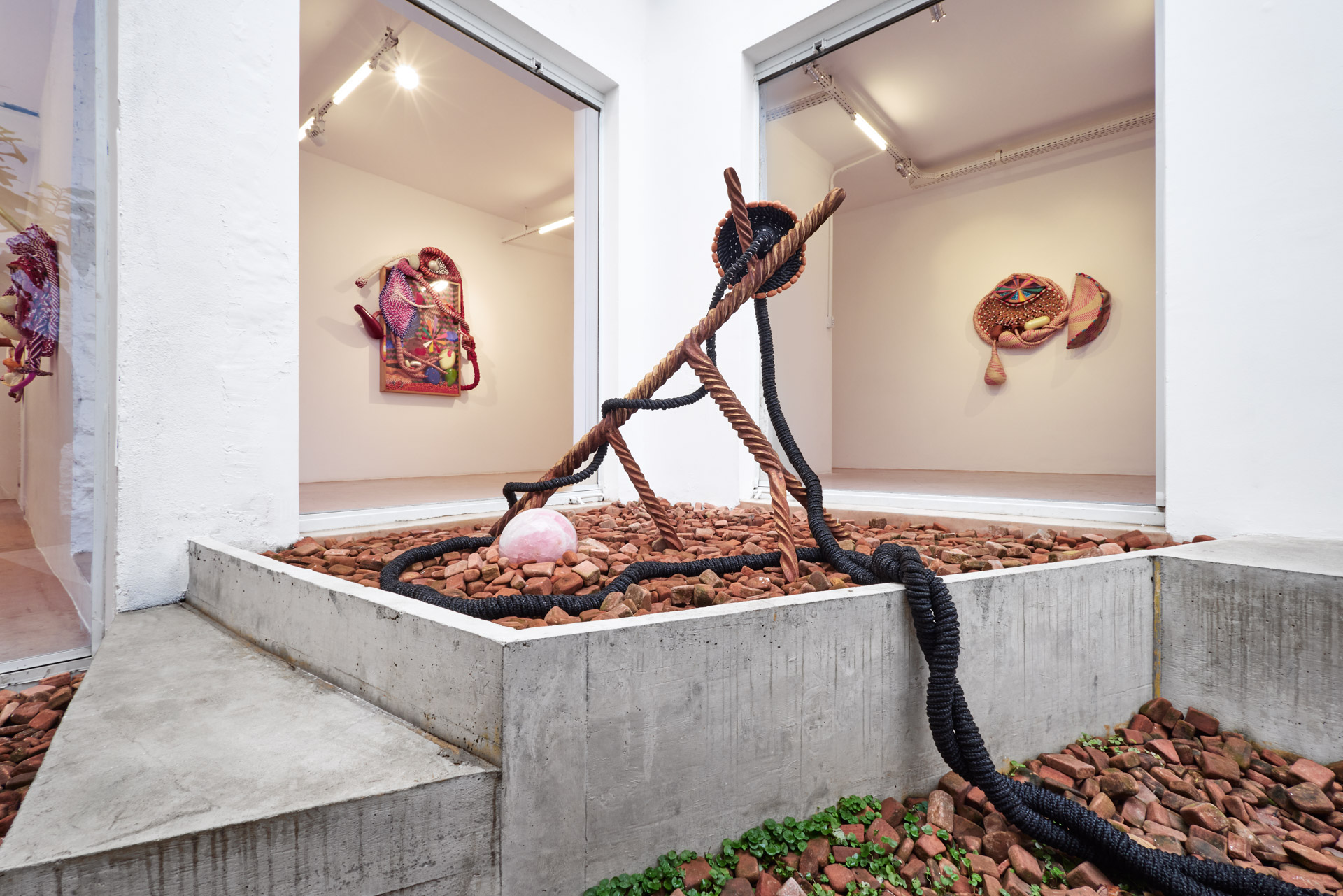
Maria Nepomuceno plays with form, colour, texture and space, creating interconnected three-dimensional structures that lie at the intersection of painting, sculpture and installation. Her works, developed simultaneously, form one whole – a living, breathing, symbiotic organism. Through infinita infinito, the viewer enters the realm ruled by curious creatures made from materials well-known but at the same time unfamiliar: beads, ceramics, fabrics and ropes. One has to learn their language to be able to grasp the conversations suspended in space, the dependencies between materials, and the transitions from one form to another.
Nepomuceno created this series of works thinking of light and gravity, envisioning how they will be positioned in the space they were made for. She plays with their organic quality, creating illusory movement. The associations with the body are not incidental as Nepomuceno chases the feminine through her works. Her practice is rooted in her own experiences of giving birth and being born – the convoluted forms resemble viscera and bodily processes. The invisible thread that connects them pulsates with the sense of continuity, growth, transformation, capturing the ungraspable infinite.
Yang Xinguang: Dark Surfaces at UCCA Dune
19.04–11.10.2026
Aranya Gold Coast, Beidaihe, China
The largest institutional solo exhibition of Yang Xinguang’s works to date, Dark Surfaces brings together over ten new projects spanning sculpture, video, installations and site-specific interventions. Playing with textures and space, the artist juxtaposes natural materials – stone, wood, soil, plants, which act both as subject and medium – with industrial materials, such as steel, concrete, and paint. Through this combination, he manufactures a meeting point for the organic and the man-made, commenting on the impacts of human intervention on natural ecosystems.
The exhibition’s title is rooted in the concept of the ‘little layer’, also known as plant litter or litterfall – a thin layer of dead plant matter that has fallen to the ground to nourish the soil that lies beneath. Fascinated by the inconspicuous barrier between life and death, decay and transformation, Yang considers it one of the most obvious sites of people’s interaction with the natural world. By staging interventions that blur the lines between the two, he critically examines the processes of decomposition, regeneration and assimilation, all framed through the idea of the Other.


Ai Weiwei: Button Up! at Aviva Studios
15.07–06.09.2026
Manchester, United Kingdom
Ai Weiwei: Button Up! brings the artist’s internationally renowned practice to Manchester – a city considered the hub of the Industrial Revolution. Prompted by this geographic positioning, he turns his eye to the ties that have connected China and Great Britain over the last two centuries. His critical examination meanders between sculpture, installation, film, photography and architecture in a spectacular composition of new and existing large-scale works.
Rooted in the artist’s long-standing activist commitment, the show reveals the interconnectedness of the past and the present through a striking juxtaposition of ongoing humanitarian and political crises with the empire’s history. Ai Weiwei lays bare the stories embedded in everyday materials – such as porcelain, cotton, glass and bronze – and traces their roots in exploitative trade relations. Poking at the violent forces of globalisation, consumerism and industrial growth, he looks for their reflection in present-day relations between nations.


Krzysztof Gil. Nobody Wants You Here at Zachęta – National Gallery of Art
29.05–09.08.2026
Warsaw, Poland
In Nobody Wants You Here, Krzysztof Gil moves away from the historical understanding of the ghetto as a clearly delineated, isolated space to explore the sociological manifestation of the concept. By casting the former aside, the artist creates a space to critically examine the intangible barriers that divide communities, cement differences, and encourage discrimination. He seamlessly moves between distinct yet interwoven dimensions of the ghetto, touching upon migration, poverty, isolation and marginalisation.
Gil’s thematic preoccupations emerge from his double – Polish and Roma – identity. Growing up at the turn of the 1980s and 1990s, he was a witness to the violent exclusionary tactics aimed at the Roma people. This loaded legacy has equipped him with the ability to switch between two cultural codes and two unique perspectives, each leaving its trace on his artistic practice. Particularly interested in the idea of the ghetto of the imagination, Gil uses his power as an artist – a master of the imaginative – to challenge harmful stereotypes and reimagine the wrongfully alienated Other.