The 24th edition of the SURVIVAL Art Review, organised annually by Art Transparent Foundation, once again attracted contemporary art enthusiasts from Wrocław and beyond. This year, the public enjoyed the meticulously curated show Finger in the Heart, investigating the role of violence in progress and the unquestioning belief in rationality. The event took place in the buildings of the former Clinic of Psychiatry and Nervous Diseases on Bujwida Street in Wrocław.
The exhibition was accompanied by the Public Forum — a public programme of live talks and panel discussions, this year focusing on accessibility, education, integration and counteracting exclusion. Although the outdoor temperatures reached 40 degrees during the festival week, they didn’t stop people from queuing to see the presentations included in the programme.
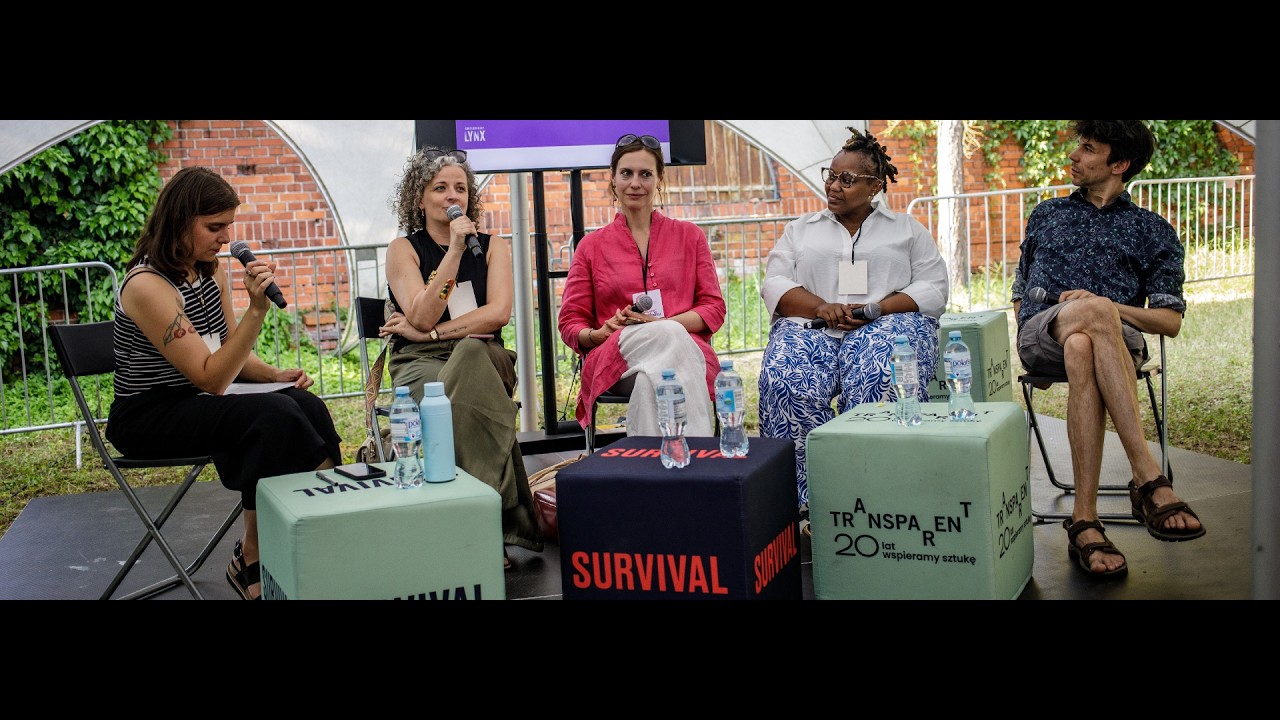
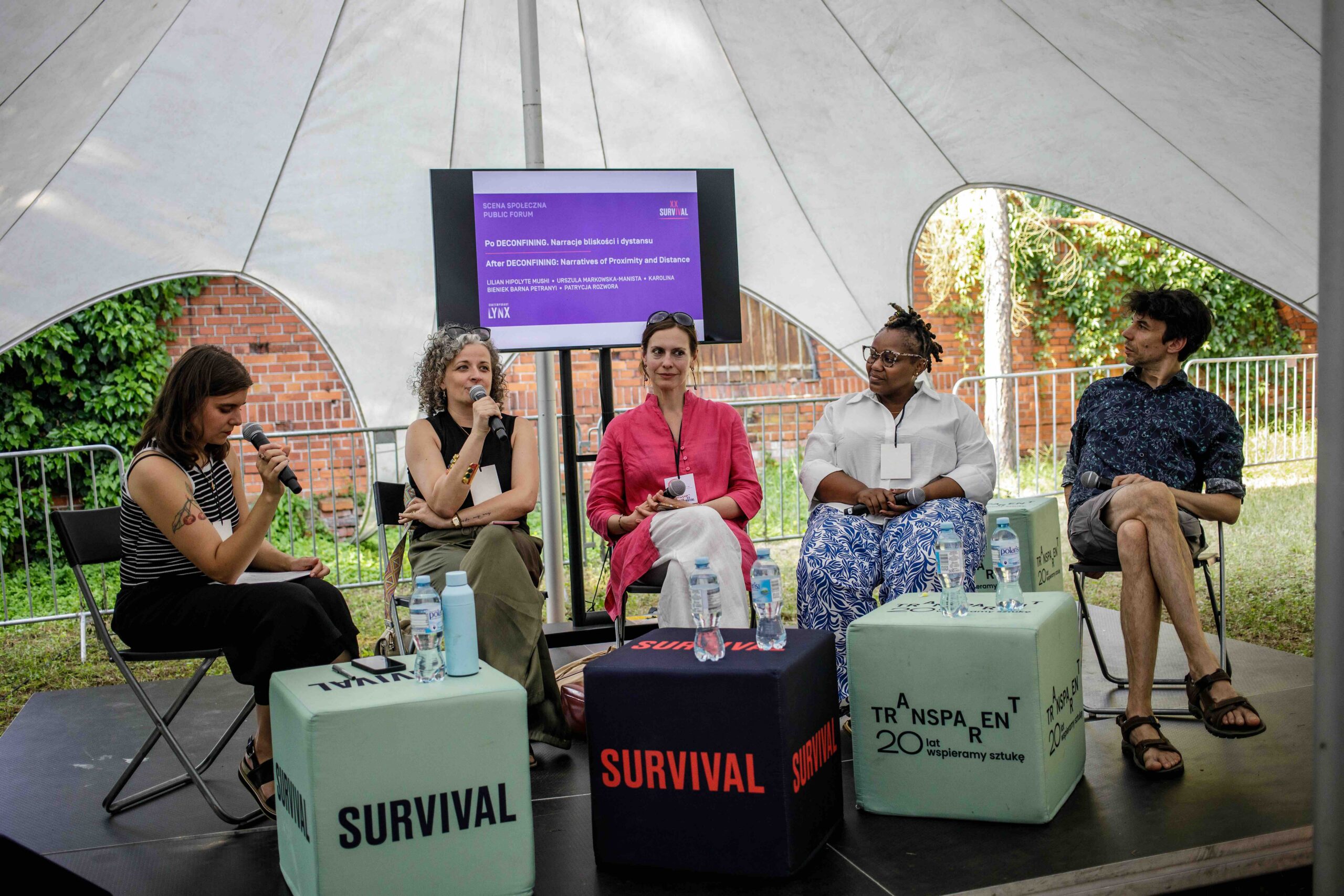
Sheltered under a tent to protect against the sun, Contemporary Lynx was honoured to host and moderate the Public Forum’s discussion After DECONFINING: Narratives of Proximity and Distance. The panel was planned as a closing conversation reflecting on DECONFINING – Arts, Culture and Policies in Europe and Africa, a multi-year international project developed between 2022 and 2026.

To mark and celebrate the past years of artistic collaboration across Central and Eastern Europe and East and South-Eastern Africa, four international guests were invited to speak about their contributions, experiences and takeaways: Karolina Bieniek, Director of the Art Transparent Foundation, Lilian Hipolyte Mushi, Director of Nafasi Art Space in Dar es Salaam, Tanzania, Urszula Markowska-Manista, professor at the University of Warsaw and co-editor of the DECONFINING publication as well as Barna Petrányi, Managing Director of Pro Progressione in Budapest, Hungary. The conversation was moderated by our colleague, Patrycja Rozwora.
Rather than focusing solely on exhibitions, publications or institutional outcomes of DECONFINING, the speakers reflected on what was built between them: trust, friendship, shared knowledge and new ways of working together. The conversation explored themes such as artistic mobility, cultural diplomacy, decolonisation, international cultural policy and cross-continental artistic collaboration. It also touched upon the structural inequalities that continue to shape cultural exchange — including visa regimes, access to funding and restricted freedom of movement.

The discussion ultimately considered what the future of Europe–Africa cultural cooperation might look like at a moment of political uncertainty, shifting funding priorities and changing global relations. It weighed whether the relationships created through projects such as DECONFINING can continue beyond the structures that initially made them possible.
You can watch the entire panel discussion here: Art, Collaboration & Decolonisation: Europe Meets Africa