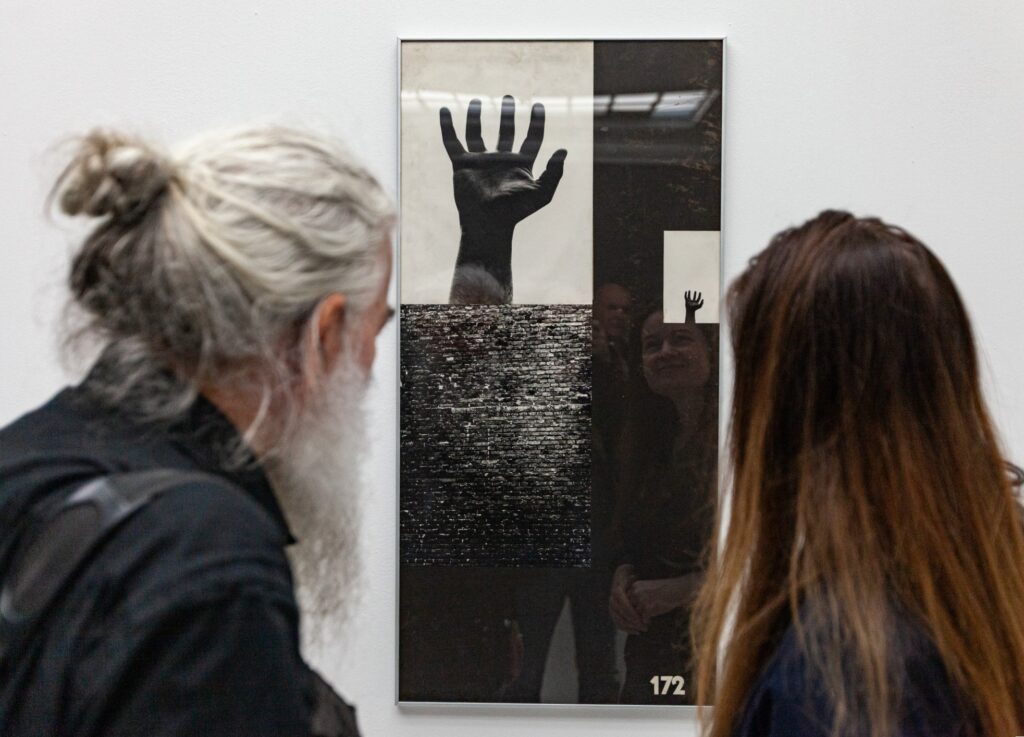
By primarily working with film, performance, and sound installation, Annika Kahrs navigates the interstitial spaces where social and scientific constructs collide. Although Kahrs, a Berlin-based artist, has exhibited widely outside her home country, including Asia and the Americas, it is the German capital that will soon host the artist’s most extensive survey exhibition to date. Kahrs’ immersive sound and video installations, which investigate and blur the boundaries between noise and music, will be on view at Hamburger Bahnhof beginning in November 2025.
In keeping with Kahrs’ interdisciplinary style, the exhibition is built upon three components – sound, video, and live performance – and unfolds as a celebration of the cultural and social resonance of music as a theme central to her work. In her interview with Contemporary Lynx, Kahrs reflects on the forces that have shaped her artistic practice, elaborates on her upcoming show, and reminisces about past projects.
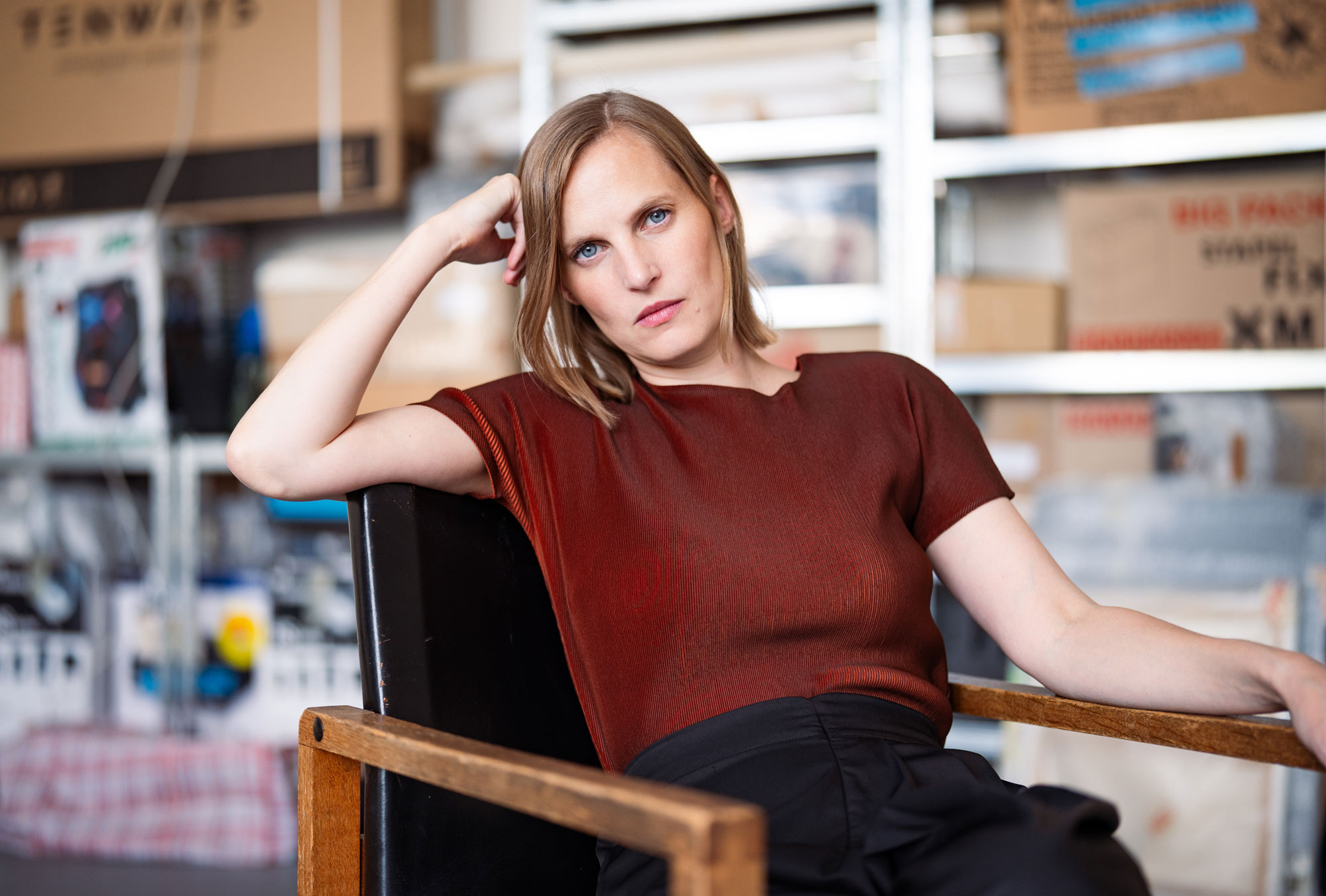
Niccolò Lucarelli: How come you decided to be an artist?
Annika Kahrs: I don’t think there was a single moment when I decided to become an artist. I’ve always been drawn to art and music, even though they didn’t play a significant role in my family. When I was in school, I was eager to study art. I couldn’t imagine anything more exciting at the time. The idea of being in a place where everyone shared a passion for art, working in a studio together, and discussing their ideas felt like a dream. It was only after my studies that I truly understood what it means to work as a freelance artist, with all its complexities. It’s a wonderful profession that I deeply love, but it involves so much more than “just” creating art. You have to build your own infrastructure, establish visibility as an artist, and work hard to maintain it. Financial survival is a significant part of the equation, of course.
The profession also has a dual nature: it’s highly social, yet it requires periods of isolation to focus on your creative work. It’s interesting to reflect on how I once imagined life as an artist, versus the reality of it. But I don’t think that there is only one single path to building an artistic career. There are countless routes and opportunities to explore. That was quite overwhelming for me right after my studies. Over time, though, I’ve carved out my own path and structure, and I’ve come to appreciate the many positive aspects of this profession. Travelling, collaborating with people from different places, professions, and disciplines have become integral to my practice. I really value these collaborations and have made them an essential part of how I work.
“The profession also has a dual nature: it’s highly social, yet it requires periods of isolation to focus on your creative work. It’s interesting to reflect on how I once imagined life as an artist, versus the reality of it.”
— Annika Kahrs

N.L.: Looking at your body of work, one can’t help but be astounded by the multiplicity of media and disciplines it spans. Is there a central thematic core in your artworks that you would like to define?
A.K.: In my work, I am particularly interested in exploring the boundaries of what is generally understood as music. I examine the cultural and social functions of music, its communicative aspects and its formal nature. Through my performances, films, and sound installations, I explore the roles music and sound – acoustic information – play within different social, cultural, and political contexts of coexistence. This exploration has led to a diverse range of projects and collaborations.
For instance, during my residency at Casa Baldi in Olevano Romano, Italy, I collaborated with the intergenerational orchestra Banda Musicale di Olevano to create an experimental parade through the village’s alleyways, streets, and squares. The resulting work, La Banda (2024), reflects on the importance of music-making for communities in rural areas affected by demographic shifts. Interestingly, the orchestra included many young people, prompting questions about the significance of communal music-making for them. What role does music play in their lives? How do they perceive their community in Olevano, and what prospects do they see for their future in this place?
Another example is my sound installation My Favorite Music (2020), which examines the acoustic appropriation of public space at Hamburg’s central train station (Hamburger Hauptbahnhof). In 2001, ambient and classical music began playing at the station as a deterrent to loitering and sleeping – a strategy used globally to control public spaces, though its effectiveness is highly questionable. What I find particularly striking, in a negative sense, is how an art form is employed in this context with the intention of driving certain groups of people away. Having lived in Hamburg for many years, I was always curious about the station’s music. Whose private playlist are we hearing? How is the soundtrack experienced by commuters and others who frequent the station? And how do the travellers and the people who stay there contribute to its broader soundscape? Building on these questions, I recorded the classical music played at the station together with the environmental sounds for the sound installation. The work also includes personal interviews with individuals who inhabit this space – such as street-newspaper vendors (Hinz&Kunzt Magazine), buskers, and passersby – asking them about their relationship to music and their favourite songs.
Science, and its intersection with art, music, and sound, often plays a significant role in my practice as well. In my film Gravity’s Tune (2023), I collaborated with composer Louis d’Heudières and musicians from Los Angeles to interpret the acoustic signals that enabled the first detection of gravitational waves. Dr. Keith Thorne, a physicist at the LIGO (Laser Interferometer Gravitational-Wave Observatory), appears in the film as a scientific narrator and, metaphorically, as an orchestra conductor. In Gravity’s Tune, we used the acoustic recordings from astrophysics to spark fundamental questions about how these sounds inspire our imagination and illuminate phenomena that are otherwise nearly impossible to conceptualise. My goal was also to challenge our understanding of hearing, sound, and music through these “unusual” auditory experiences. Dr. Thorne once described LIGO as “the quietest concert hall in the world” during our early email exchanges. I found this idea profoundly poetic, and it became a key inspiration for the film, bringing together musicians and the scientific community in a unique collaboration. The project became a deeply interdisciplinary exchange, revealing the many connections between science and music.

N.L.: But you also experiment with music. What is the goal of the research on this medium? Do you feel that music has the ability to convey emotions or sensations in ways that other media might not capture as effectively?
A.K.: Music as a means of communication and translation plays a central role in my practice. I am particularly interested in challenging conventional listening habits by disrupting and reconfiguring them through this semiotic system. I also like music as a material because of its inherent temporal dimension. Time and how it is perceived can be very well visualised by means of music. But maybe most importantly, I really like working with sound and music because it’s fun. In my filmic works, sound and image coexist as equal components, constantly reacting to and influencing one another. The sound is never subordinate to the image. Instead, it juxtaposes and complements the visuals, creating a dialogue between the two. I would probably never use music merely as background; it always serves a more active role. I use music and sound to explore and convey complex systems, emotions, and relationships. They allow me to communicate abstract or intricate ideas in a way that feels immediate and direct to the audience.
Interestingly, in my work, music often comes into being during the process itself – whether in the filming or the performance itself. Performers generate sound or music through their actions and knowledge. I typically create a framework of action within which performers can operate freely. A very typical example of this process is an early work of mine, Strings (2010), where I asked a classical string quartet to play a Beethoven composition while gradually switching their positions and instruments. After each round, they would move one place over, taking up a different instrument, one they usually couldn’t play. The flawless ensemble slowly started to fall apart. The performance became a balancing act between fragility and chaos: an unexpected note here, a few seconds of silence there, shifting between light and sharp dissonances. Noticeably unsure, the musicians fought their way through the score. Together, the musicians must find a way to adapt to the situation, and they did so masterfully, with a great deal of humour.

N.L.: I’d say you have quite an eclectic career. For instance, the lines drawings were inspired by accounts from homesick sailors you interviewed, and Playing to the Birds required the help of birdkeepers. What drives you to seek out unconventional co-creators? How do such encounters influence you?
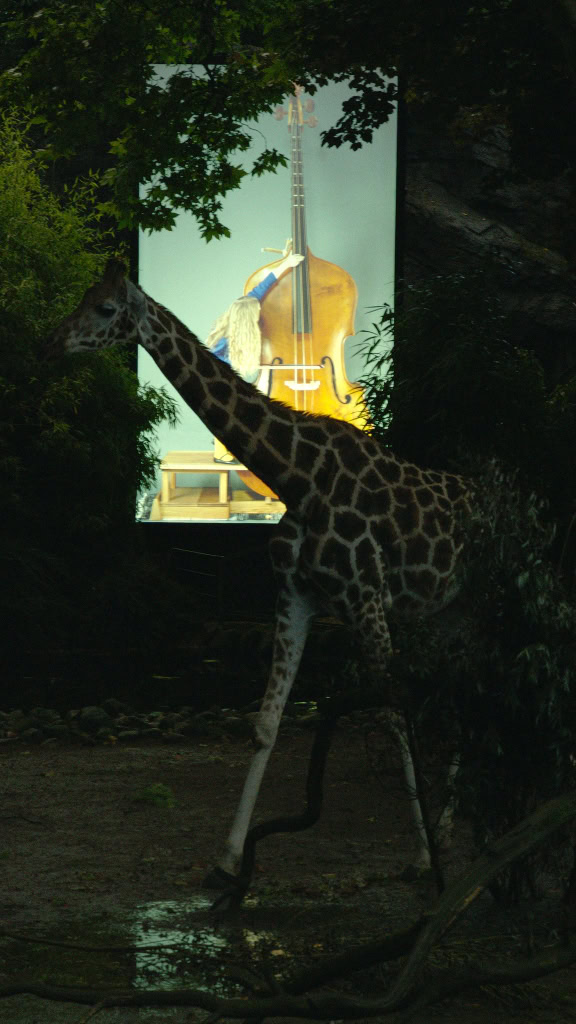
A.K.: What always fascinates me is immersing myself in entirely different professional worlds and fields of knowledge. For example, when I collaborated with the magician Jan Logemann on a performance in 2015, I quickly realised that developing a magic act is surprisingly similar to creating a performance or a work of art. The thought processes can be remarkably alike. Incidentally, magic tricks are often developed in studios, much like an artist’s work. In many of my projects, we work in unique locations or with diverse protagonists. For the video and sound installation Infra Voice (2017), we created a composition for giraffes and the octobass – a rare, four-meter-high contrabass-like instrument that sounds like a blend of a tractor and the creaking of an old ship. This project brought unexpected challenges: first, we had to figure out where and how to film with giraffes and then find someone who could play the octobass. Fortunately, I had the opportunity to collaborate with musician and composer Guro Skumsnes Moe on this project. As the owner of an octobass, she created a captivating composition specifically for the project.
One of my most ambitious projects, Le Chant des Maisons (2022), was created for the 16th Lyon Biennale in France. It was set in the abandoned church of St. Bernard and involved over 30 performers, including a youth choir, a brass band, an organ builder, and carpenters. During the shoot, the musicians interacted with the carpenters as they simultaneously constructed a wooden house inside the church. The filming process was exhilarating but incredibly demanding. We had only one day to capture everything, which really tested our limits. None of it would have been possible without the support of my team and the Lyon Biennale team. For me, the creative process often begins with a conceptual idea, without worrying too much about how it will be executed. We start from scratch, and as a team, we work through the challenges and logistics along the way. It’s always an adventure, and often, when you approach people with an unusual idea that excites them, they’re eager to jump on board and help bring it to life. That collaborative spirit is one of the most rewarding aspects of these projects.
“It’s always an adventure, and often, when you approach people with an unusual idea that excites them, they’re eager to jump on board and help bring it to life. That collaborative spirit is one of the most rewarding aspects of these projects.”
— Annika Kahrs
N.L.: In the current cultural climate, it feels nearly impossible not to ask: as a female artist clearly concerned with social issues, do you view yourself as a “feminist artist”? Do you think such framing would help audiences gain a deeper understanding of your work, or do you sometimes find the gendered lens limiting?
A.K.: I consider myself a feminist, and addressing gender inequality is naturally important to me, as I am directly affected by structural disparities as a female artist. Unfortunately, gender inequality remains a significant issue in the art world, including in Germany. Female artists, or more precisely FLINTA*(Female, Lesbian, Intersex, Non-binary, Transgender, Asexual – ed.) artists, continue to earn less than their male counterparts and are still frequently underrepresented and undervalued in museums, galleries, and auction houses. I believe it’s particularly important for male artists to step up, engage, and actively support efforts to eliminate these inequalities. Structural problems like this cannot be resolved solely by the groups they affect.
However, recent developments in Germany have brought new challenges. Berlin has approved a €130 million cut to its cultural budget for 2025 – a 12% reduction. This decision has sparked widespread shock among artists and cultural institutions, as it threatens to destabilise Berlin’s already precarious arts scene. These cuts not only endanger the infrastructure supporting cultural production but also disproportionately impact underrepresented groups, including women, by reducing access to resources and opportunities. Projects in the fields of inclusion and diversity are particularly hard-hit, with funding cuts of up to 100%. These reductions further exacerbate existing inequalities, making it even more difficult for marginalised communities to participate in and contribute to the cultural landscape.

N.L.: What really shines through in our conversation is, in my view, the unrestrained versatility of your practice… which makes it seem futile to guess what you might have in store for the future. Could you give us a glimpse of what’s to come?
A.K.: This year promises to be very exciting, as we are working on several new projects and exhibitions. One of the highlights will be the production of a new body of work for my solo exhibition at Hamburger Bahnhof – Nationalgalerie der Gegenwart in Berlin, opening in November 2025. This exhibition will be structured around my three core artistic components: live performance, film, and sound/music. The show will also feature the most comprehensive selection of my work to date, spanning the last 15 years. It will include a dedicated performance program that continues into 2026 at various venues throughout Berlin.
I’m also contributing a new commissioned work to the second edition of Biennale Son in Sion, Switzerland, which opens at the end of August 2025 and runs until November. This event celebrates the growing significance of sound in contemporary art and emphasises the interdisciplinary nature of artistic practices. By showcasing installations, sculptures, two-dimensional and text-based works, films, performances, concerts, and plays, the Biennale seeks to dissolve the often rigid boundaries between artistic disciplines, revealing their interconnectedness.
Annika Kahrs
November 14, 2025 – May 3, 2026
Hamburger Bahnhof – Nationalgalerie der Gegenwart
Berlin, Germany