



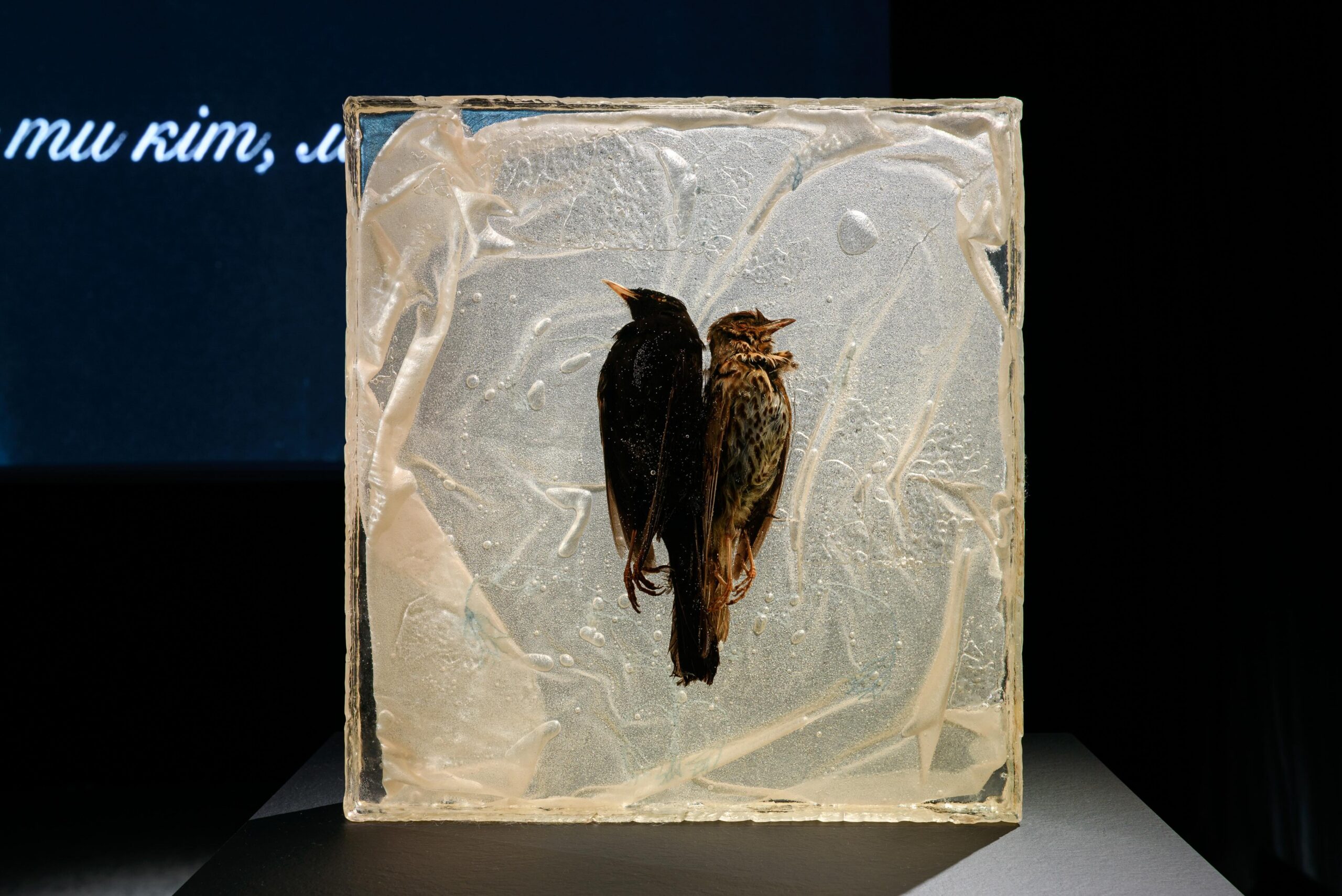
In a transparent block, two birds lie back-to-back on an embroidered fabric so thin it is almost see-through. At first glance, they seem serene and tender, like two lovers sleeping peacefully on a delicate sheet. Only then does the realisation hit — what we are looking at are two dead bodies encased in epoxy forever. Now it is too late to avert the eyes. The charming floral embroidery that surrounds the birds transforms their death into a tale. A tale equal parts beautiful and violent.
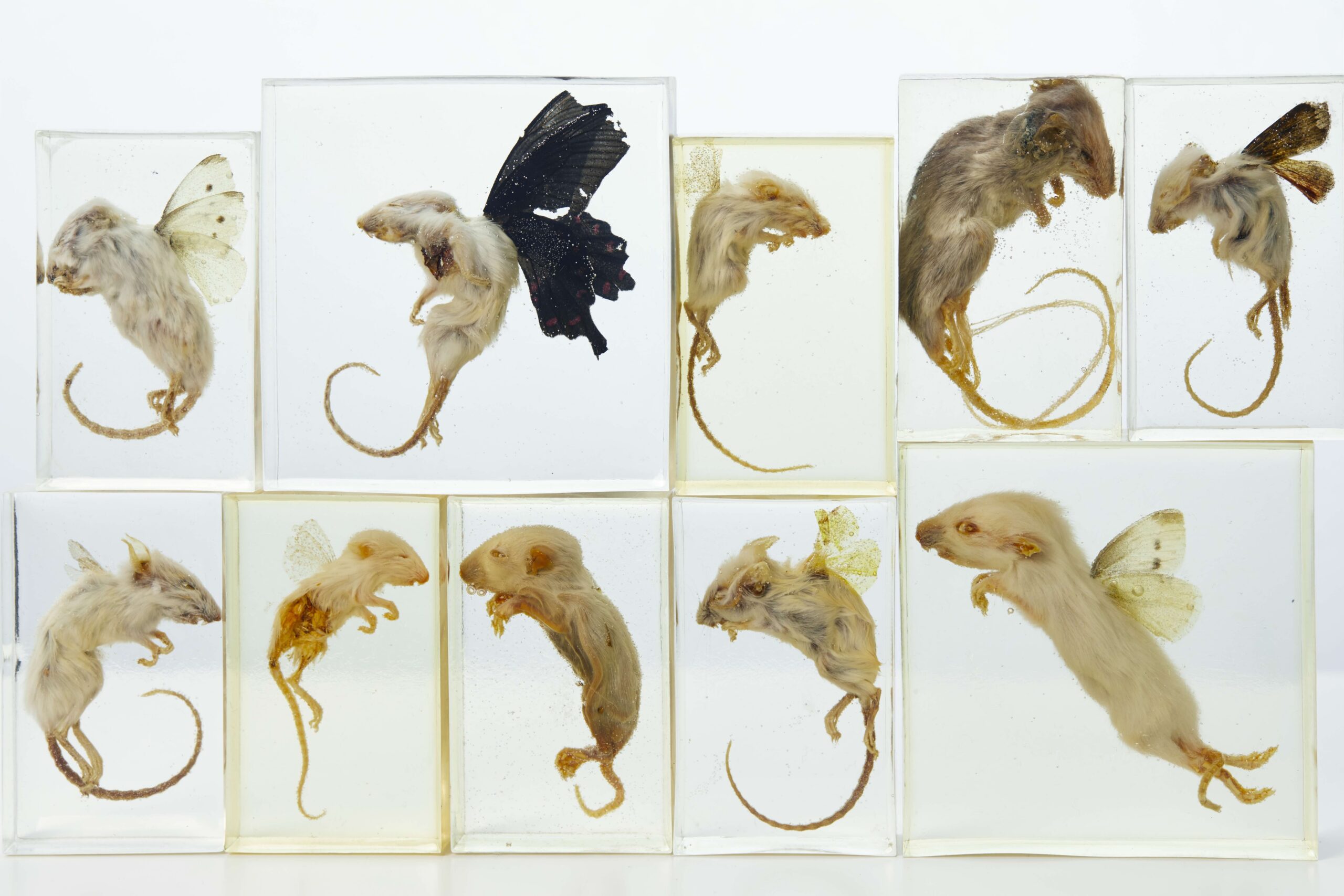
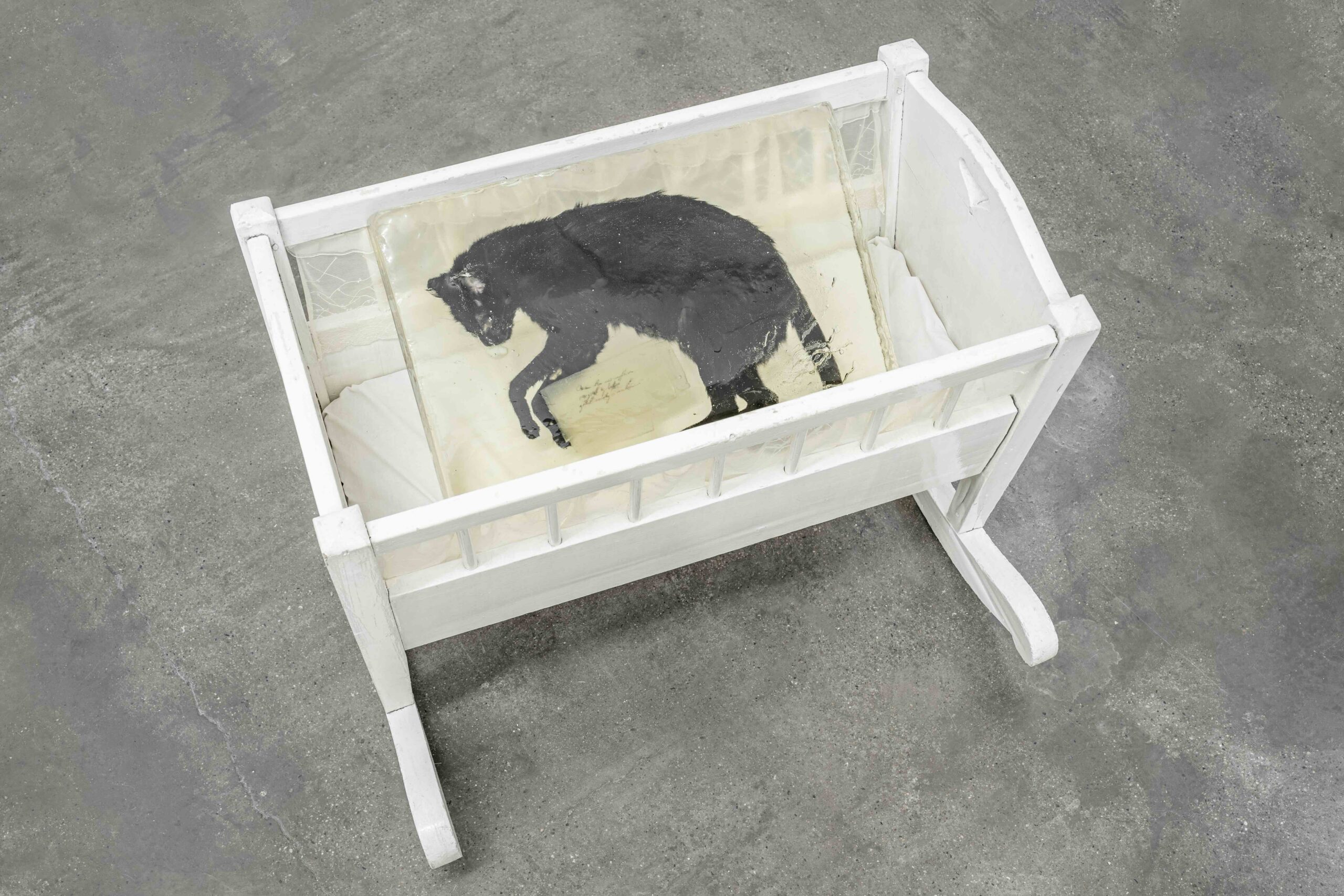
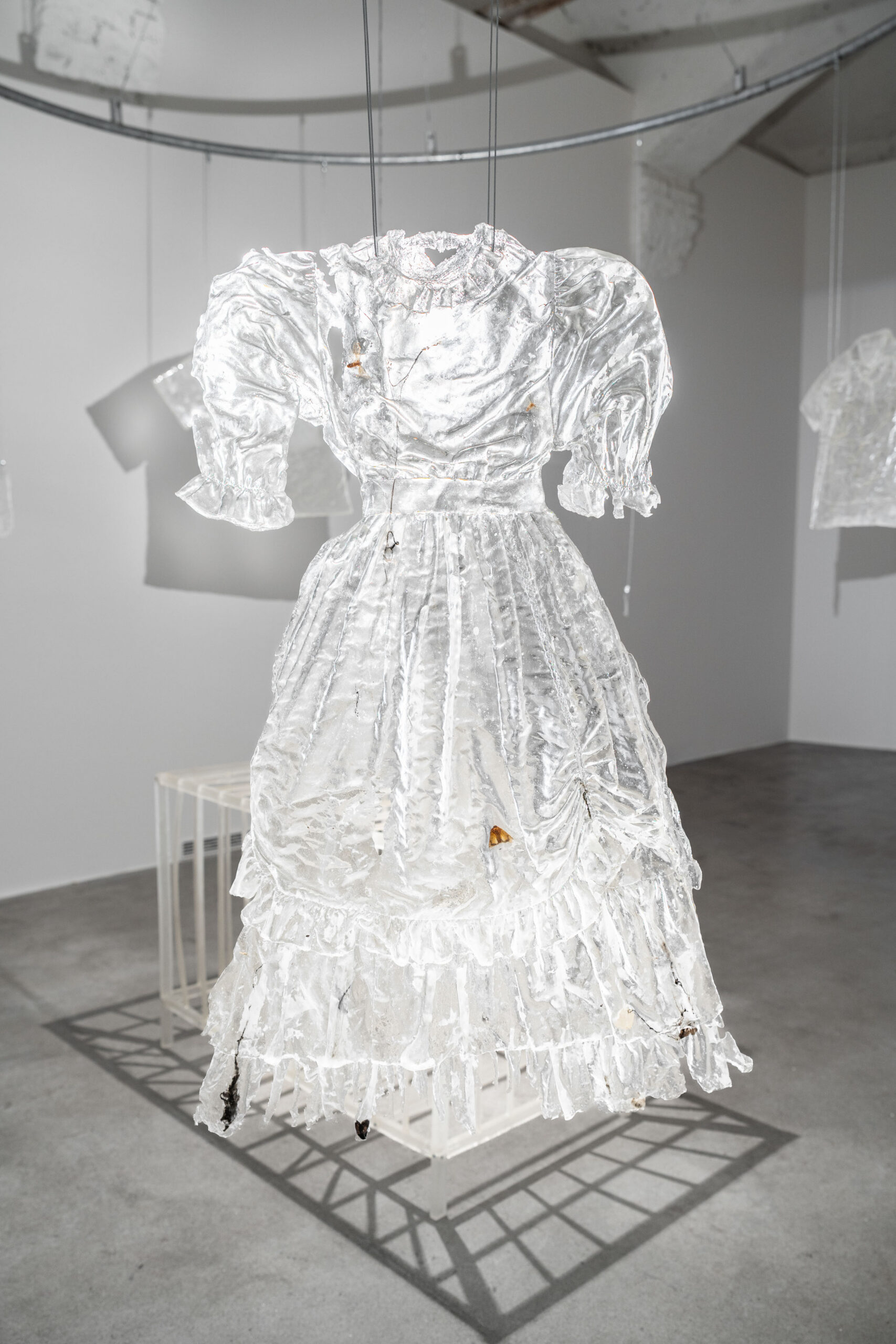
The Birds (2024), part of the Confession exhibition from the same year, is one of a series of similar works in which Margarita Ivy casts animal bodies in epoxy. Among the works in the exhibition are a mouse holding a needle, small animals with butterfly wings attached, and a cast of the artist’s childhood dress, filled with cobwebs and insects. Fairytales and the artist’s childhood memories are contrasted with the awareness of the fragility of existence.
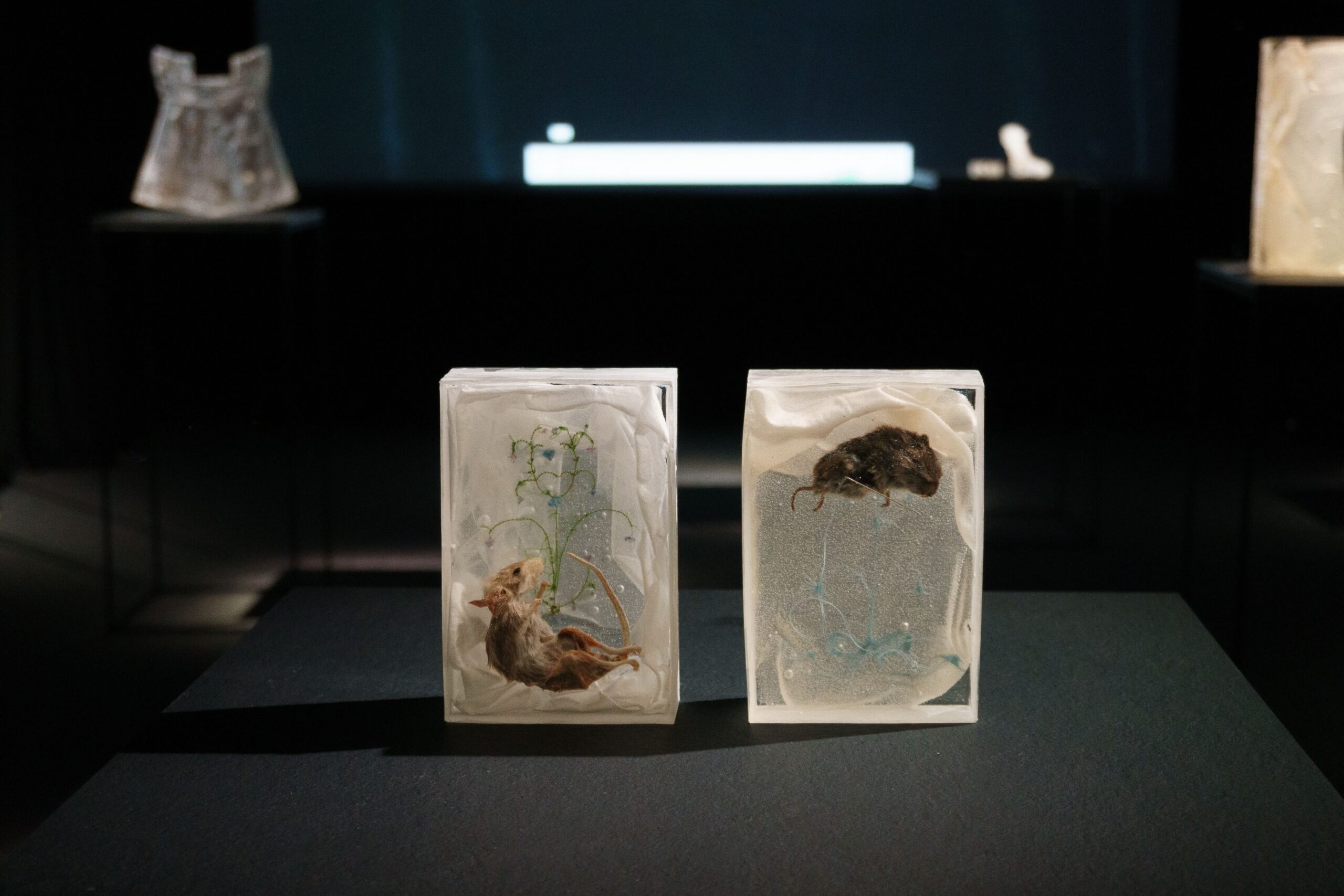
Another work from Confession (2024) is a mouse embedded in resin, alongside a floral embroidery piece inspired by traditional Ukrainian needlework. The mouse and embroidery are arranged in such a way that it seems as if dainty flowers are growing out of the animal’s body. In this paradoxical way, the artist mimics the process of decomposition, which she herself stopped from happening by preserving the mouse’s body. Paradox and contrast are vital in all of Ivy’s projects.
Memories in Formaldehyde
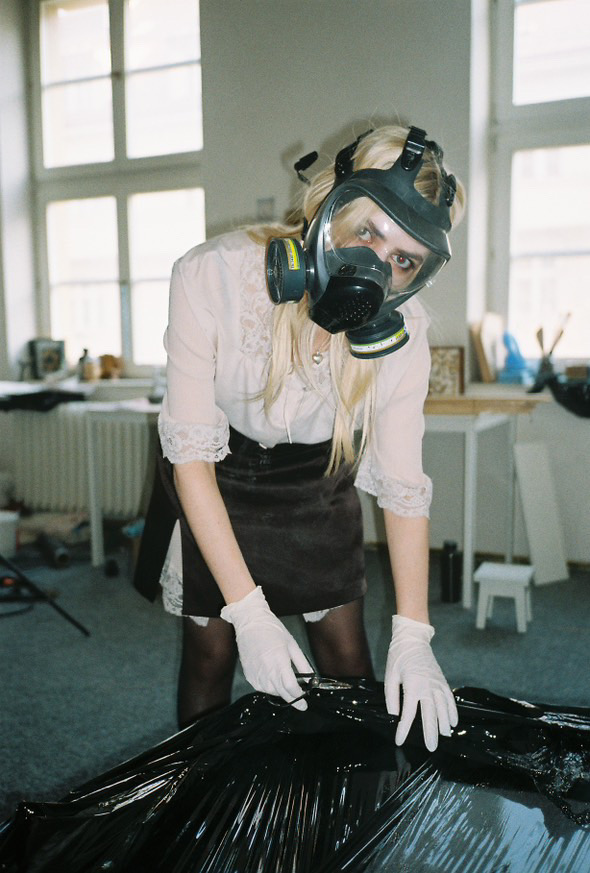
Behind her sentimental, romantic compositions stands a deeply scientific, toxic process in which Ivy dips the animals into a formaldehyde bath before placing them in airy epoxy environments. Although in the finished works the animals seem naturally and tenderly placed, Ivy creates them while wearing an anti-fume mask and gloves so as not to poison herself. Through this process, she explores preservation as an act of care, seeking to restore dignity to what has been forgotten or discarded.
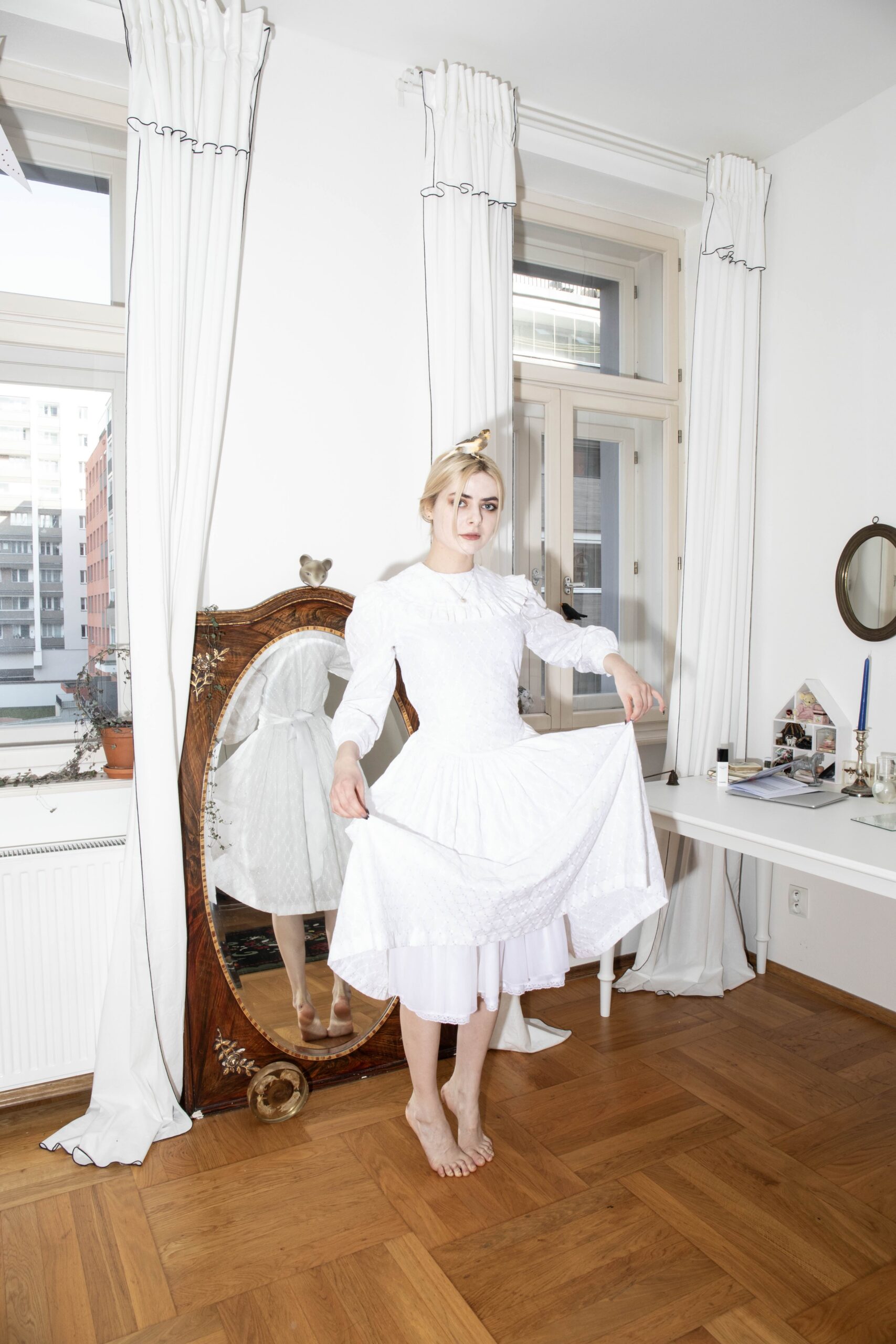
Born in Zaporizhzhia, Ukraine, the artist grew up surrounded by industrial landscapes, folklore and family histories of loss and survival. Her art is heavily influenced by her childhood memories and the lullabies her grandmother used to sing to her before bed. Death was not only a natural element of these songs, but also of her childhood. There is a thin line between tenderness and violence that constitutes the focal point in Ivy’s art, where childlike wonder is merged with the artist’s earliest memories of death and grief. It mirrors the duality of life itself — the same child who cries at their pet’s death tears the butterfly’s wings away.
Through this process, she explores preservation as an act of care, seeking to restore dignity to what has been forgotten or discarded.
The artist reveals the atmosphere of her childhood home through her short-form film Ой, ти кіт, мій муркіт (2024). In this motion picture, the camera follows a goat, a hedgehog and cats around an empty flat, while a voice in the background tells stories of that space and the animals and people who used to live there. The atmosphere is peaceful; it is clear that the narrator’s ancestors had a deep appreciation and love for animals. However, each tale ends in a tragedy. The stories appear to be cautionary tales, their darkness akin to that found in the original stories of the Brothers Grimm.
Through her ancestor’s stories, Ivy aims to explore the impact of trauma on their worldview. Simultaneously, these topics open the door to the broader story of the Ukrainian nation’s collective trauma, passed down through generations via upbringing, hidden patterns and fairy tales.
Through her ancestor’s stories, Ivy aims to explore the impact of trauma on their worldview. Simultaneously, these topics open the door to the broader story of the Ukrainian nation’s collective trauma, passed down through generations via upbringing, hidden patterns and fairy tales.
The Past is Unescapable
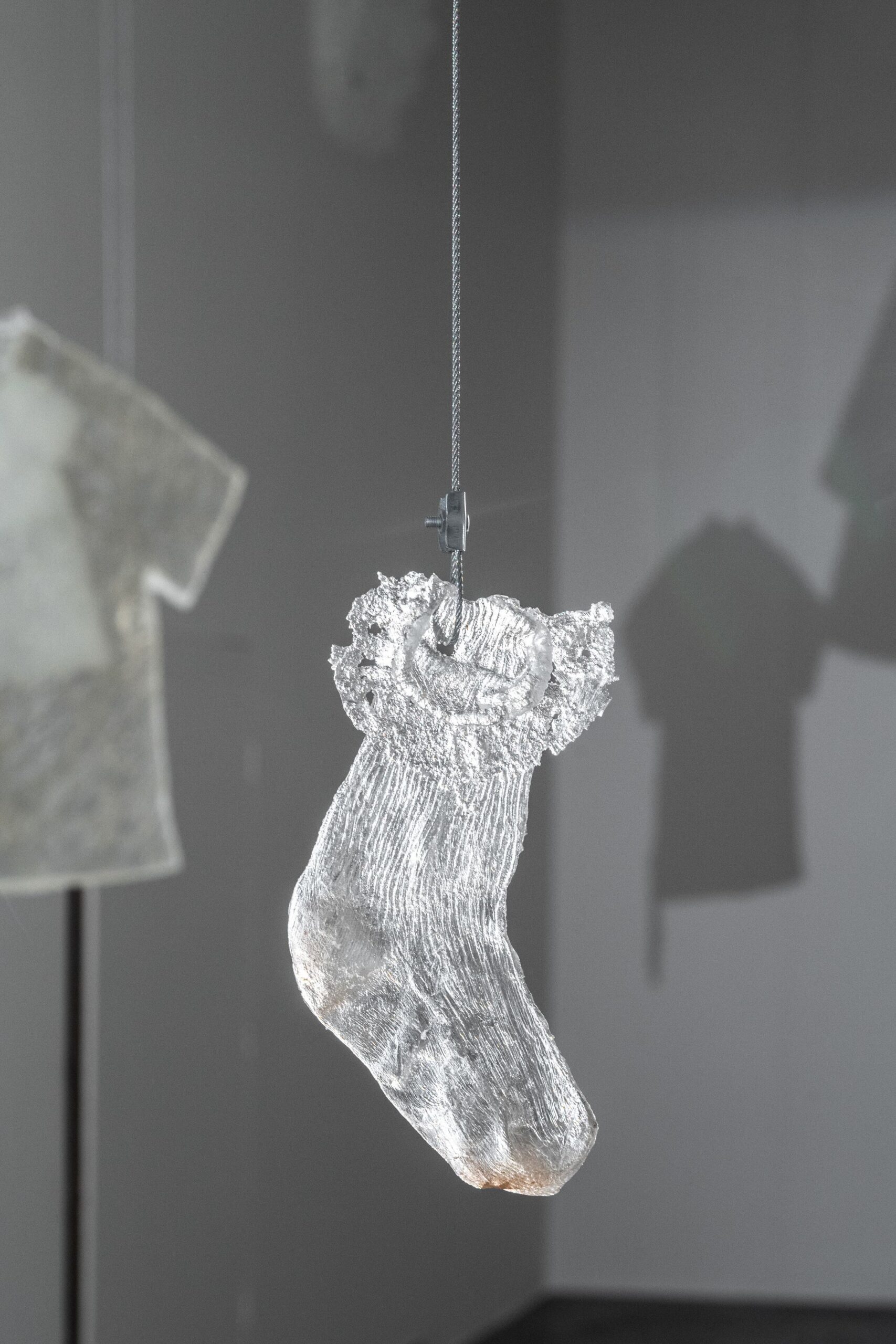
Her most recent work is the exhibition You can’t return, you are here (2026), created in collaboration with Slovak artist Bystrík Klčo. The installation consists of objects cast in epoxy, arranged like a baby’s nursery. On the floor, in the centre of the room, stands a translucent life-sized crib. Upon closer inspection, it becomes obvious that this is not a regular bed. The crib has bars not only on the sides but on top as well, which turns it into an inescapable trap. Over the crib looms an exceptionally large baby mobile. Instead of adorable animals or vehicles, the objects hanging from the mobile are epoxy casts of clothes: a glove, a sock, a baby dress, a shirt. The pieces of clothing have a ghostly appearance; they seem cold, frozen in time. Stark and unpleasant light in the room casts additional shadows of the objects onto the walls.
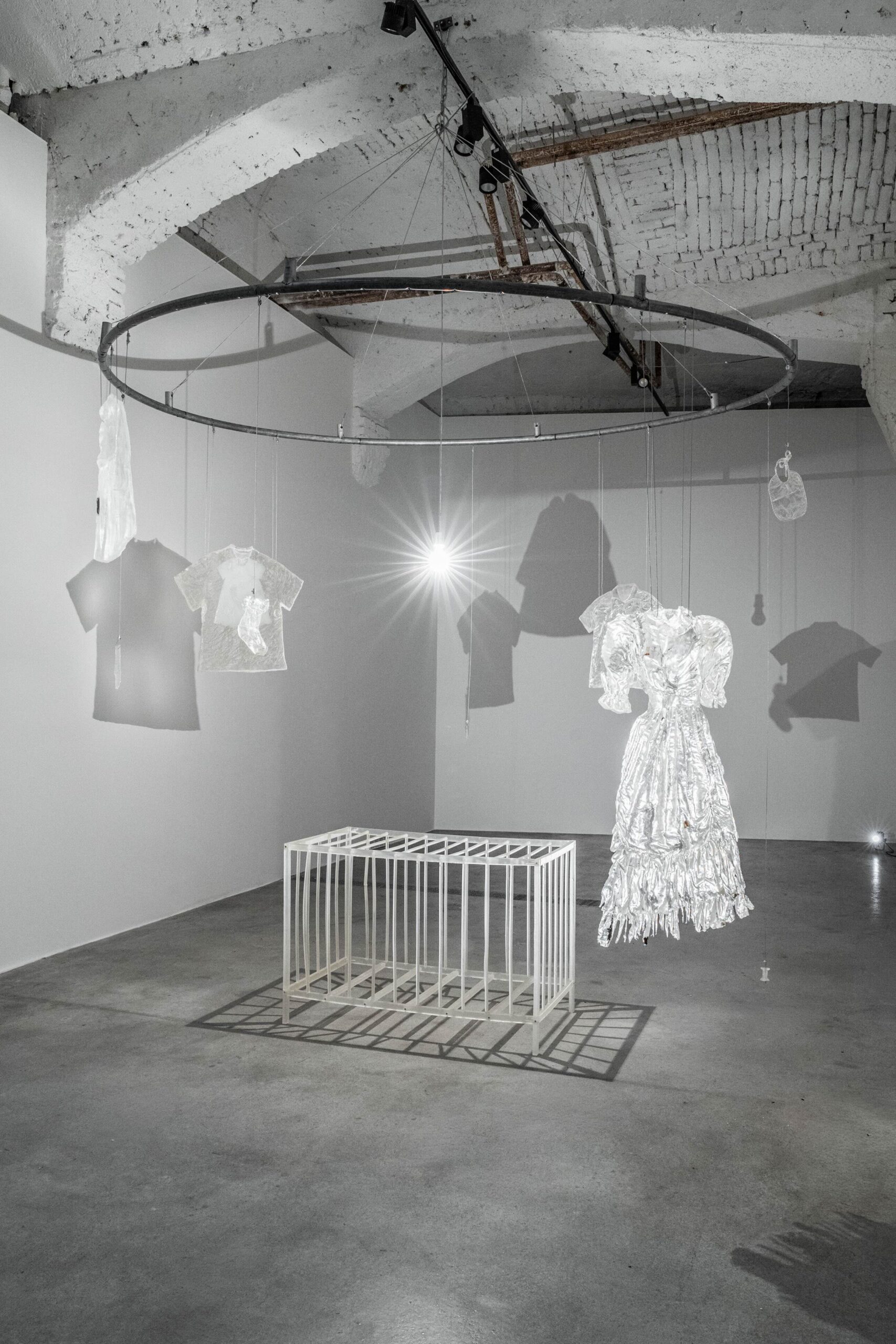
While Ivy’s individual works usually treat contemplating mortality as a process that can bring solace and understanding instead of darkness, in this collaborative project the consequences of growing up surrounded by death come to the fore. The installation invites the viewer to imagine a child trapped inside an always ongoing parade of the deceased. Here, as the title suggests, the past is unescapable; it is not something we can return to, as it is always present in our everyday life. What we know from the past reappears before us — slightly different and with a new significance, but still shaping our identity.
The installation invites the viewer to imagine a child trapped inside an always ongoing parade of the deceased. Here, as the title suggests, the past is unescapable; it is not something we can return to, as it is always present in our everyday life.
Ultimately, Margarita Ivy’s works ask questions about the value and price of remembering. Is it tender or violent to pass down the tragic stories of the past? Is it better to preserve memories or let some things be forgotten? The artist does not offer clear-cut answers but rather invites viewers to evaluate their relationship with their own past.
BIO
Margarita Ivy (b. 1998) was born in Zaporizhzhia, Ukraine. Now based in Prague, Czech Republic, she completed a BA in Visual Arts Studio III at the Academy of Arts, Architecture, and Design. She is currently pursuing a Master’s Diploma in Fine Arts Studio III at the same academy. Her works have been exhibited in numerous group and solo exhibitions in the Czech Republic and Slovakia. She is represented by the Karpuchina Gallery and has taken part in art fairs such as Contemporary Istanbul and Art Fair Kraków.