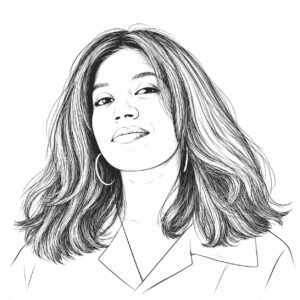
Latvian artist Miķelis Murnieks (b. 1995) repositions sculpture as a site where systems of perception unfold. Working with ready-made objects, engineered mechanisms, and carefully constructed installations, he explores how ordinary materials encode behavioural patterns and social expectations. In his work, industrial objects, technological processes, and everyday rituals emerge as quiet infrastructures that shape perception long before viewers become conscious of their influence.

Based in Amsterdam since completing his Master’s at the Sandberg Instituut’s Dirty Art Department, Murnieks has developed a practice that merges sculptural investigation with social critique. Moving fluidly between sculpture, installation, and kinetic systems, he constructs spatial situations where familiar objects become carriers of layered symbolic meaning. Through subtle shifts in context and functionality, he exposes the fragile assumptions embedded in everyday encounters with material culture.
Recontextualisation forms the conceptual backbone of Murnieks’ practice. Drawing a parallel with literal allegory, the artist uses symbols, materials, and objects as conceptual triggers through which broader socio-political narratives emerge. What may first read as a formal sculptural gesture gradually unfolds into a reflection on cultural automation, the habitual mechanisms through which societies shape perception, decision-making, and behaviour.

Craft and Material Intelligence
Although his works often incorporate mechanical systems and kinetic movement, Murnieks’ approach to making remains deeply rooted in craftsmanship. Raised by a seamstress and an engineer – in a family shaped by manual and technical knowledge, he developed an early sensitivity to the histories and embedded intelligence within materials.
In an era where digital fabrication increasingly mediates the translation of ideas into objects, Murnieks deliberately maintains a hands-on methodology. Many of his works are meticulously fabricated by hand, balancing technical precision with the subtle irregularities that preserve a material’s physical presence. These imperfections, rather than flaws, become traces of care and process, evidence of the dialogue between maker and material.


This emphasis on craft also reflects a broader conceptual concern: the relationship between human agency and automated systems. By combining handcrafted structures with kinetic mechanisms, the artist creates environments where the boundary between control and autonomy becomes ambiguous.
A significant articulation of these ideas emerged in Murnieks’ 2024 solo exhibition at Kim? Contemporary Art Centre in Riga. Behavioral Sink, curated by Eliza Elizabete Ramza, transformed the gallery space into a scenographic environment populated by fountains, circulating water systems, and kinetic sculptural elements. The title references the concept of the “behavioural sink,” originally coined by ethologist John B. Calhoun to describe the breakdown of social behaviours in overcrowded animal populations. Murnieks extends this idea into the realm of contemporary society, using water as both a material and metaphorical medium to explore the pressures shaping collective life.
In the exhibition, water moves through sculptural systems that oscillate between organic flow and engineered control. The shifting states of the liquid, contained, redirected, and constantly circulating, mirror the rhythms of modern socio-economic structures. Within this framework, the installations become spatial diagrams of constraint and adaptation, suggesting how environments, both physical and ideological, shape internal psychological states.

Rather than illustrating a narrative directly, Behavioral Sink invited viewers to inhabit a system. Sound, motion, and reflective surfaces created an immersive experience where sculpture operated less as an object and more as a dynamic condition.
Questions of perception and participation continued in Murnieks’ 2025 kinetic installation, The Game. The work consists of an asymmetrical table where stepper motors move magnets beneath a stainless-steel surface, causing cups placed above to continuously shuffle across the tabletop. The installation references the classic street “shell game” in which participants attempt to track a hidden object as it moves between cups. Yet in Murnieks’ version, the process is automated and endless. The cups never stop moving, and the viewer never discovers what lies beneath them.
Installed in a shop window in Riga’s Old Town, The Game functions simultaneously as sculpture, performance, and public spectacle. Passersby encounter a familiar structure of play and deception, yet remain permanently excluded from its resolution. The work reflects broader global tendencies toward manipulation and participation within opaque systems, economic, technological, or political. Much like the street con it references, the installation positions the viewer as a potential participant while quietly revealing the futility of attempting to master the game’s rules.

Choreographies Between Object, Viewer, and System
Across his practice, Murnieks positions sculpture not as a static form, but as a “choreography of relationships.” Objects interact with mechanical processes, viewers navigate spatial environments, and symbolic meanings unfold through observation and time.
Found materials, industrial surfaces, and engineered structures become elements within broader conceptual frameworks that probe how cultural norms and power relations are embedded in everyday objects. What appears neutral – a cup, a sheet of steel, a circulating fountain – gradually reveals itself as part of a network of expectations and social codes.

Within these constructed environments, Murnieks’ installations function as experimental spaces where perception itself becomes the subject of inquiry. By subtly destabilising the familiar, he invites viewers to reconsider the often invisible infrastructures shaping how we interpret and navigate the world.
At the centre of this exploration lies a deceptively simple question: how do objects teach us to behave? Through carefully engineered sculptural systems, Murnieks exposes the quiet frameworks guiding perception and interaction. Materials circulate, mechanisms repeat, and objects shift just enough to interrupt habitual recognition. In these subtle displacements, the artist reveals the choreography unfolding between individuals and the systems they inhabit.

As his practice continues to evolve, Murnieks remains committed to exploring the intersection of material processes, movement, and social symbolism. His installations do not offer clear answers; instead, they invite viewers to slow down and question the seemingly neutral objects and mechanisms surrounding them. In doing so, they expose the invisible architectures of behaviour embedded within contemporary culture.
Over the past decade, Murnieks has presented his work widely across Europe, building a trajectory that spans major galleries, cultural institutions, and public interventions. His recent solo exhibitions include Behavioral Sink at Kim? Contemporary Art Centre in Riga, Latvia, and Nieuwelingen at Van Eesteren Museum in Amsterdam, Netherlands, while group exhibitions such as Gen Z at MO Museum in Vilnius, Lithuania, and Superglue, or Inventing the Friend at CAC Vilnius, Lithuania, have further expanded his presence in the region. Internationally, his work has appeared in Ring Ring Ring at Pal Project Gallery, Paris, France, and Eyes Peeled at Gallery Glovebox, Dublin, Ireland, alongside shows at Arti et Amicitiae and the Melkweg in Amsterdam, as well as public art projects and festival interventions in Spain.