





June 6 – June 28
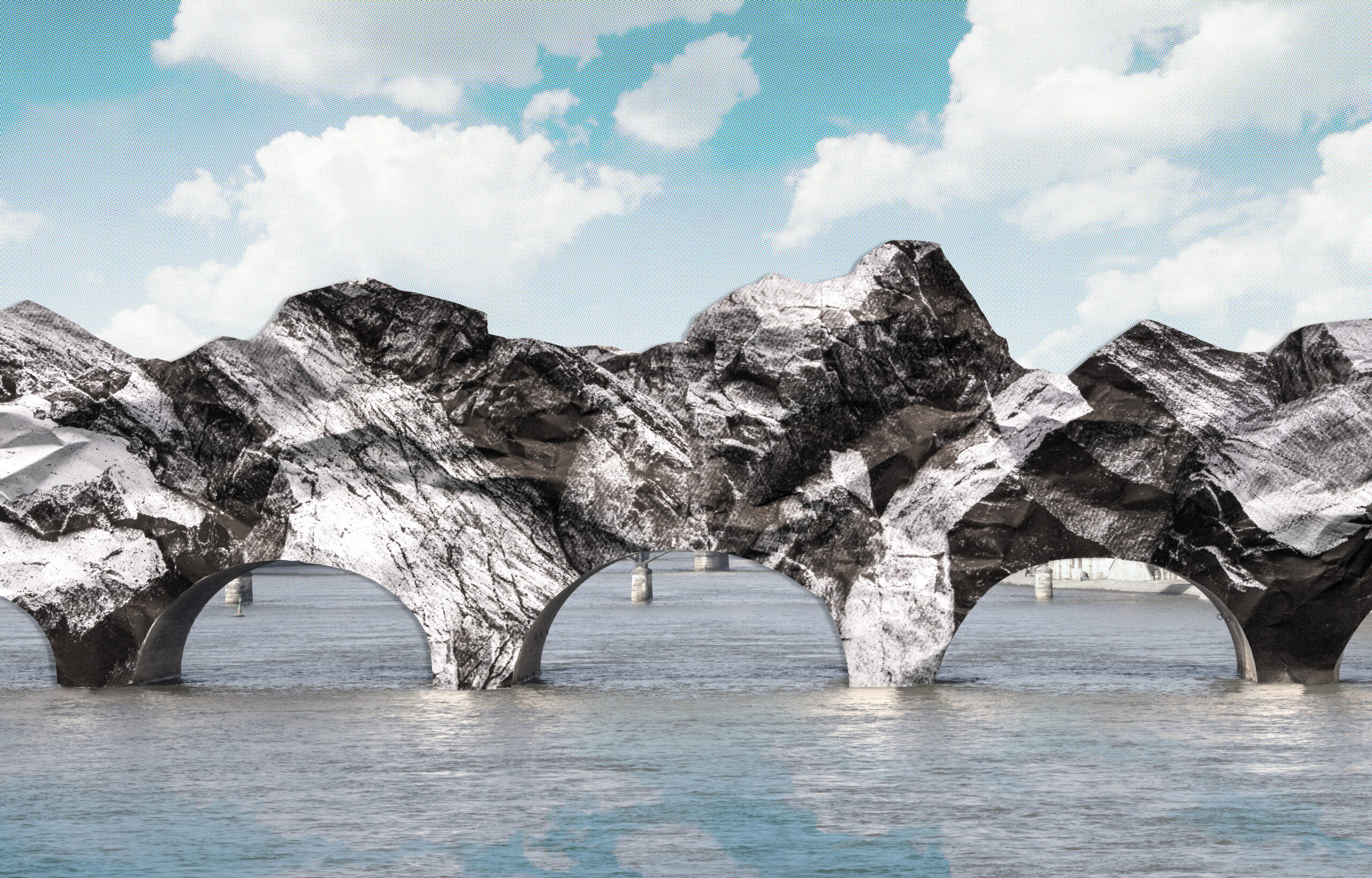
La Caverne du Pont Neuf, a temporary artwork conceived by JR, will rise at the heart of Paris. On view from June 6 to 28, the installation will pay tribute to Christo and Jeanne-Claude’s The Pont Neuf Wrapped, which marked its fortieth anniversary in 2025. It will offer Parisians and visitors a time-limited opportunity to experience an ephemeral reimagining of the city’s oldest bridge.
The project is facilitated by L’ Amicale des Ponts de Paris endowment fund. The installation will not use any government sources. It will be funded by the sale of JR’s works along with private support including Snap Inc., Bloomberg Philanthropies, Paris Aéroport and Salesforce. La Caverne du Pont Neuf will be accessible free of charge, 24 hours a day, 7 days a week. It will also be possible to view it from a multitude of viewpoints, whether walking or cycling, from the banks of the Seine, the high quays and a series of nearby bridges, as well as from the water thanks to riverboat services, river shuttles and cruises on the Seine.
Given its monumental scale, La Caverne du Pont Neuf will also be visible beyond the immediate surroundings of the Pont Neuf, much like the aerial panorama from the top floor of the Eiffel Tower. Over its three weeks on view, visitors will be able to chart their own path through the French capital to experience the art installation from different angles.
Allowing art to question our relationship with the city
At the genesis of La Caverne du Pont Neuf, JR’s vision was inspired by the quarries from which the bridge’s stones were extracted and emphasizes the origins of Paris’ historic architecture. The artwork will ultimately juxtapose the raw and wild with the refined elegance of the City of Light, creating a dialogue between the past and the present.
The Pont Neuf, which translates to “New Bridge” was completed in 1607, and was the first bridge in Paris that did not use wood and was built entirely of Lutetian limestone, known as Paris stone. The bridge’s limestone, used to build many of Paris’ buildings and landmarks, was sourced from quarries in the Paris Basin. It was also the first bridge in the city that included paved sidewalks, facilitating pedestrian use and Parisian street life. In addition to its enduring public use, the bridge continues to be heralded for its rich history and picturesque views of the Seine.
“My vision for this project is rooted in both the past and present of this iconic bridge, ” JR explains. “I admire the legacy of Christo and Jeanne-Claude, and I share their idea that the mission of art is to make us think, to question what is familiar to us. The debate that a public art project can provoke is of equal value to its realization. Art is a transformation, and a way of renewing the way we look at the world around us. Through the dream of La Caverne du Pont Neuf, this is what I hope to make possible in Paris” .
“More than forty years after Christo and Jeanne-Claude wrapped the Pont Neuf, Paris’s oldest bridge is set to be transformed once again thanks to the imagination of an artist. JR is known for his monumental works around the world, but it is to his home city, Paris, that he returns for his next creation. Following his installation at the Opéra Garnier, which had already challenged the way we see the city, he once again invites us to see Paris in a new perspective” , adds Emmanuel Grégoire, Mayor of Paris. “As JR and his teams prepare to set up, Parisians are eager to admire this work of art as it takes shape under their eyes. It will be a great moment for the city, one that will mark its architectural history and once again draw the eyes of the world to the heart of Paris, ” he concludes.