




October 1 – November 30
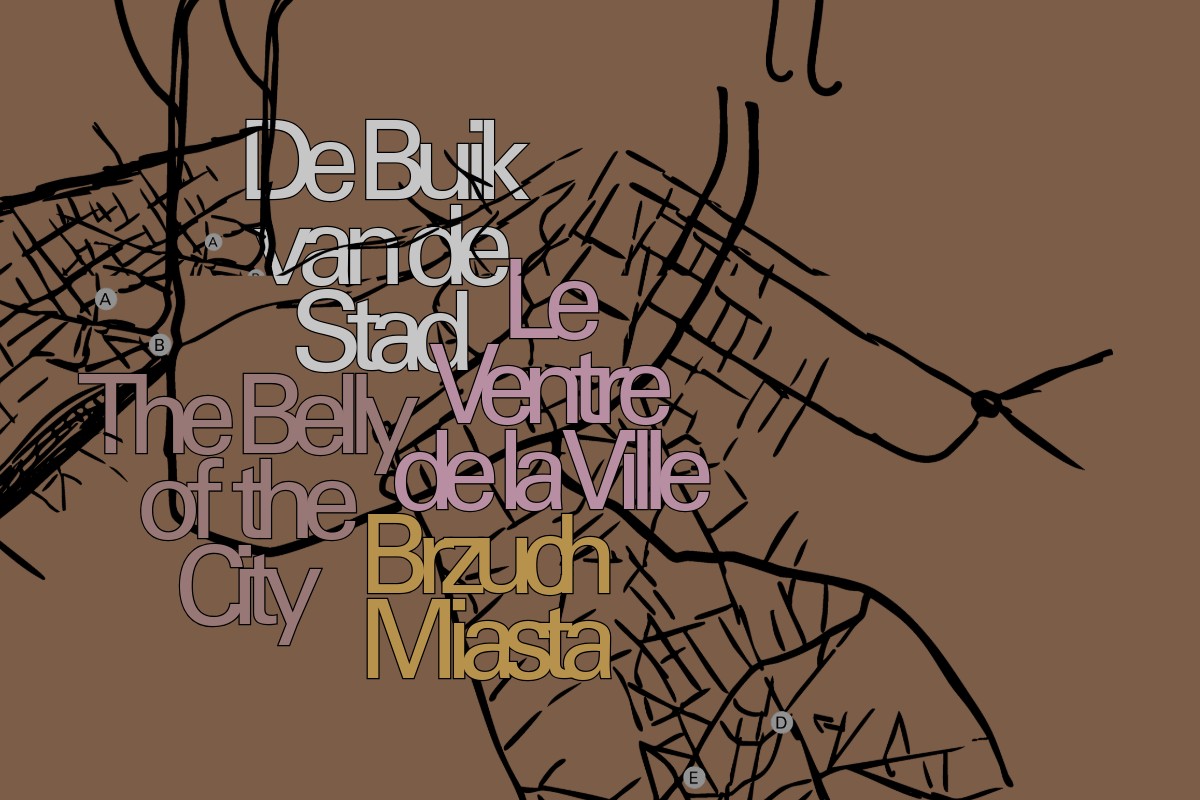
The Belly of the City is an exhibition unfolding across Brussels, embedded in the city’s polyphonic, ethnically diverse fabric and in the places that nourish it: markets, street stalls, migrant grocery stores, community gardens, compost heaps and herb gardens, canteens, bars, and delivery vans.
The Belly of the City is an exhibition unfolding across Brussels, embedded in the city’s polyphonic, ethnically diverse fabric and in the places that nourish it: markets, street stalls, migrant grocery stores, community gardens, compost heaps and herb gardens, canteens, bars, and delivery vans.
Through this exhibition, artists investigate the systems and infrastructures of food supply—its supply chains and waste streams—but above all approach food as a cultural and geopolitical issue. The exhibition explores these questions through the perspective of the Polish diaspora: its flavours, culinary traditions, and the choices that accompany them.
How does the everyday infrastructure of food—together with the largely invisible systems of food policy, production, trade, and distribution—influence our health, our identities, and the places we inhabit? Who decides what this system looks like? Who bears its hidden costs? And what might a more equitable food system look like?
Geopolitics unfolds on our plates before it ever reaches the corridors of power. Food is political long before it becomes a question of calories. Wars over territory are also wars over soil, water, and microorganisms. Cargo ships traversing the oceans are the floating arteries of the global food system. Who has the right to cultivate the land, and under what conditions? Where are the battles over natural resources, farmland, monocultures, and crop diversity being fought? How can we cultivate the soil without depleting or destroying it? Whose stomach will remain empty? These questions ultimately determine where borders are drawn, how people migrate, and what future awaits entire communities and species. Power over food is power over others.
The destruction of crops and the blockade of food transport have become instruments of political pressure in some parts of the world, while elsewhere hunger has given way to its structural counterpart: obesity and food waste. Whether full or empty, our stomachs continue to tell the same story—that of inequality.
As Maciej Jakubowiak observes in Historie ludowe: Brzuch (People’s History: The Belly), the history of humanity may be told as a history of exploitation, but equally as a history of social movements, colonialism, serfdom, and migration. “Ultimately, however, it is about hunger. Ultimately, it is about food. Ultimately, it is about the belly.”
The challenge of feeding ten billion people places cities at the centre of this struggle. They are becoming key arenas in the fight for food justice and equitable access to food. Food functions simultaneously as a weapon, a means of exchange, and an infrastructure of survival. It is also a marker of taste and social status, a mechanism for reinforcing class divisions, and a driver of the planetary crisis. For every calorie of food produced in the field, approximately two calories of fossil fuel are used, with a further eight to twelve calories required for processing, packaging, transport, and storage. A profound transformation of the food system towards agroecology and food justice is therefore essential: reducing food waste, lowering agricultural emissions, shortening supply chains, and improving access to fresh, minimally processed food.
The Belly of the City approaches food as infrastructure: a network of material, emotional, and political relationships that shape our bodies, our memories, and urban space. Its point of departure is the food landscape of the Polish diaspora in Brussels—a constellation of flavours, forms of hospitality, hybrid species, and culinary traditions that have migrated with people and continue to evolve within their new environment.
Every movement of a food ingredient is an act of translation—from one soil to another, from one language to another—and every translation produces something new: a hybrid economy, a hybrid ecosystem, and an identity that can no longer be traced back to a single place of origin.