


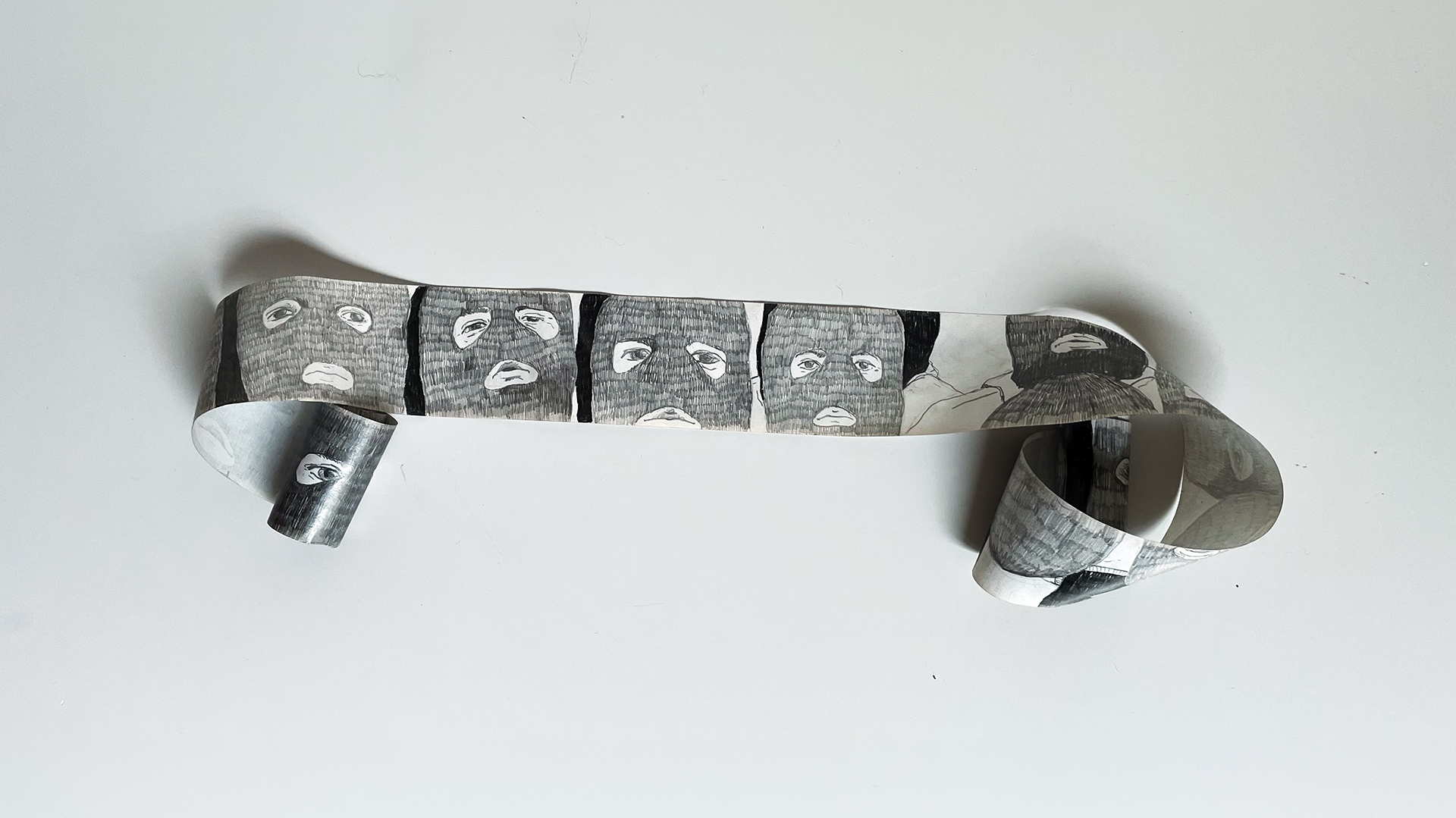
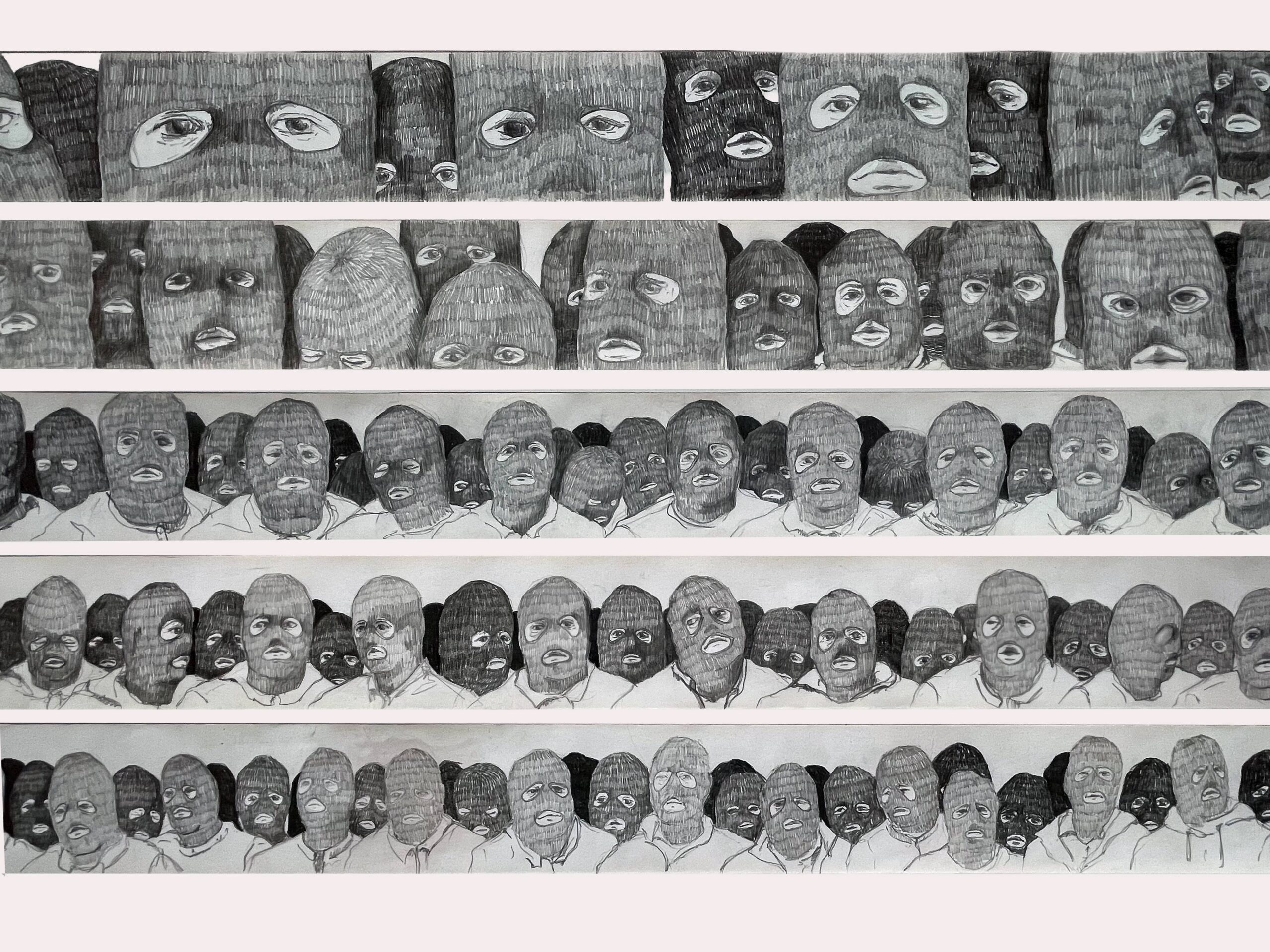
A cinematic quality emerges as you walk alongside Receipt [Rachunek], Anastazja Jarodzka’s work at the Wrocław Drawing Triennale 2026. It seems almost to move with you: balaclava-clad faces creep closer and closer until their eyes fill the receipt paper’s frame, as the title suggests. The work reveals a paradox about balaclavas: while they notoriously erase individuality, they also bring together people united by a common goal or value, whether through protest or crime.
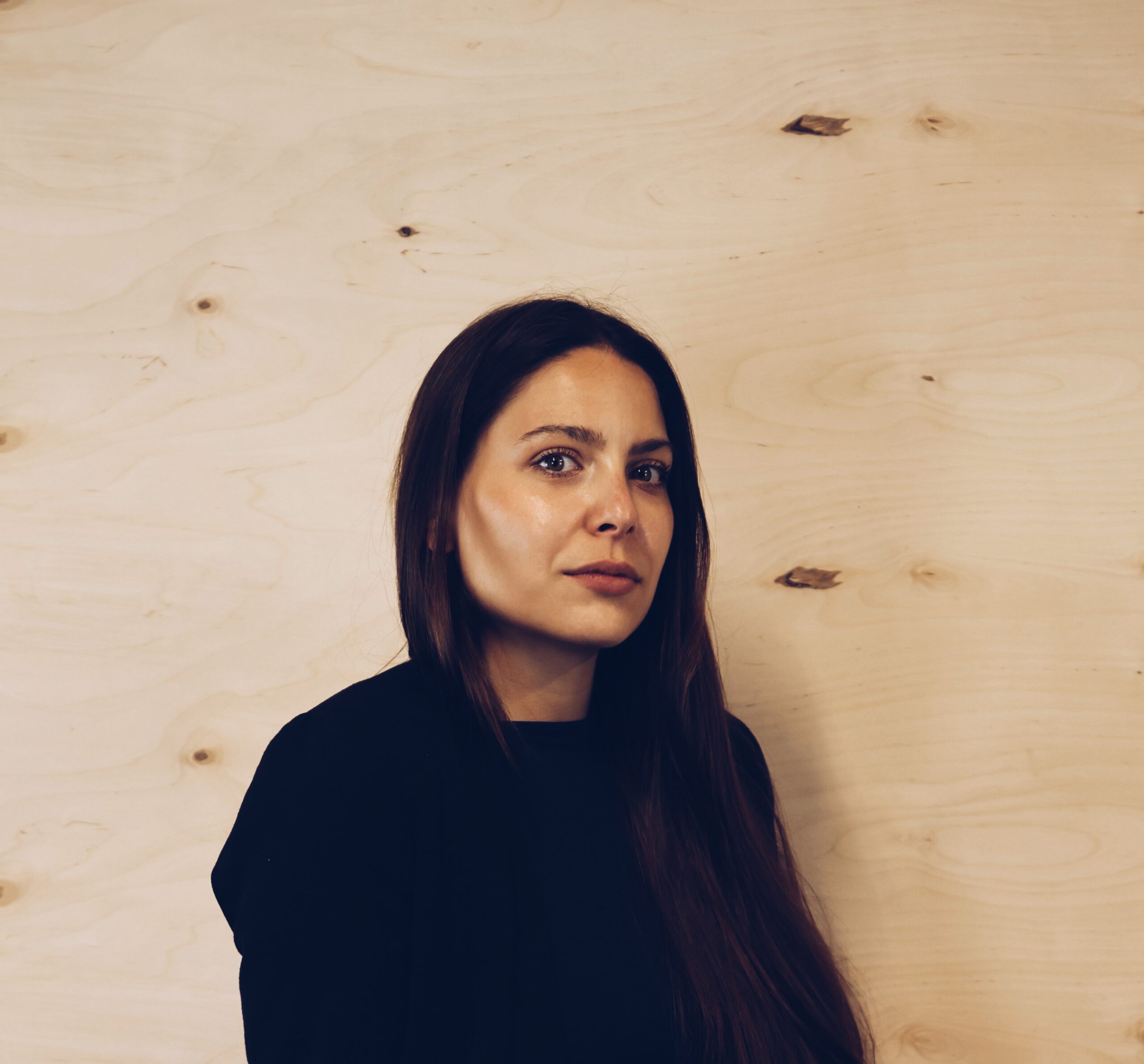
Anastazja Jarodzka, a Wrocław native, is a visual artist and Doctor of Arts. She focuses primarily on site-specific installations, drawing, and collage, using found objects and artifacts. Her work undertakes heavy-hitting subjects, such as the climate crisis in relation to society and politics. Additionally, she reflects on consumerism and polarization resulting from these issues.
Receipt was presented with the Contemporary Lynx Special Award at the Triennale’s opening evening, held at the Museum of Architecture in Wrocław. Hosted by the Eugeniusz Geppert Academy of Fine Arts, the event has been held since 1965. This year’s theme was RMX, exploring the culture of “remixing,” repetitiveness, and the relationship between art and algorithms. From nearly 400 entries worldwide, 18 finalists were chosen to exhibit their work.
Following the award ceremony, we spoke to Jarodzka about the paradox at the heart of Receipt, the role of collective action in times of crisis, the personal experiences that inform her work, and the multifaceted nature of Wrocław’s history.
Sophia Kalinowska-Werter: Your work explores balaclavas as a symbol of unity, whether in a group united in protest or in a gang fight. Despite the increasingly polarizing times we live in, do you believe we, as a society, can find unity around a common phenomenon, feeling, or goal?
Anastazja Jarodzka: I feel that we’ve ended up in a difficult time to be alive. We are experiencing a climate crisis, wars, a migration crisis, and the sixth mass extinction — all at the same time. These problems, among others, have increasingly intensified over the past few years: the pandemic, the crisis at the Polish-Belarusian border, the war in Ukraine, and the dynamic development of AI. We’re actually stuck in one big, constant, multifaceted crisis. It all evokes the feeling of functioning in the absence of permanence, accompanied by anxiety. I think that many people feel the same way. It’s hard to tell what the future holds, but certain signs give me hope for renewed harmony. For example, the recent midterm elections in the United States and the students’ victory in the early elections in Serbia have created hope for some reunification.
We’re actually stuck in one big, constant, multifaceted crisis. It all evokes the feeling of functioning in the absence of permanence, accompanied by anxiety.
At the same time, I see a certain paradox here. Unity, even when it’s in the name of a just cause, is always directed against something. A great example is the climate strike initiated by Greta Thunberg. One extremely determined person created a global youth movement. It supports climate activism whilst opposing inaction: young people have come together because of adults’ failure to act. It’s hard for me to predict what the world will look like in 10 or 15 years, but if the development of artificial intelligence continues in the same direction, it could spark a global upheaval. The balaclava represents this ambivalence well: it unifies those who wear it while defining the borders of where the “other side” stands.
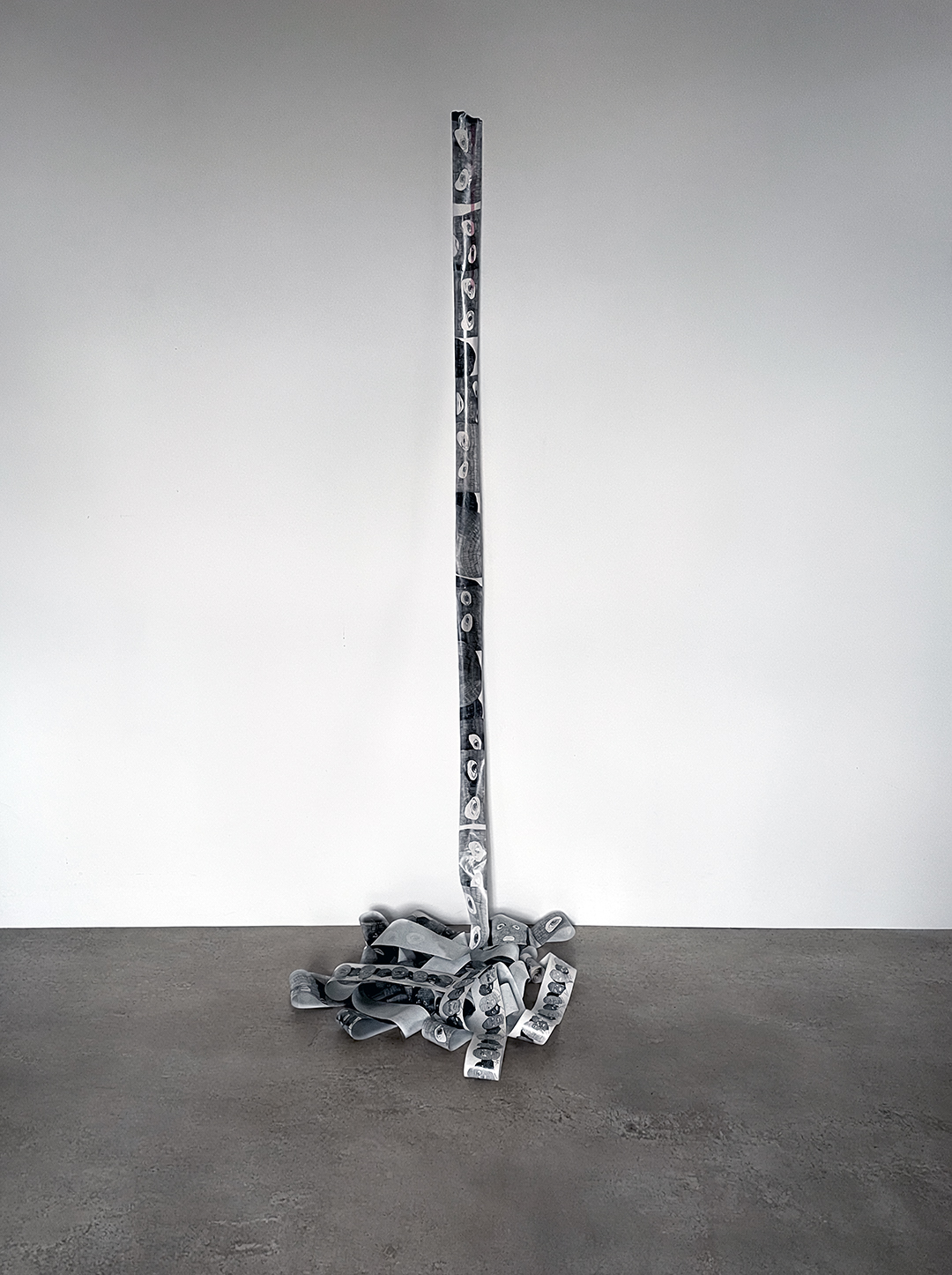
SKW: Receipt is a long, sprawling drawing that the viewers must walk along to experience in its entirety. During the creative process, when and how did you realize that the length and format were an integral part of the project?
AJ: The drawing was made on a receipt I found in a backyard near my home. Part of it was lying unrolled on the ground. I immediately knew I wanted to do something that incorporates its length. During that period, I was delving deeper into balaclavas as a symbol of resistance. I looked at protest photos, riots, and Pussy Riot’s demonstrations. I had broached the subject of societal polarization before, but I hadn’t looked at the problem from both sides. Division is, at the same time, unity: each side is internally unified. Due to its length, the drawing itself becomes a wall — a division. You can’t see all of it in one look. To see it in its entirety, the viewer has to walk along the pedestal on which the receipt lies. This requires some effort and involvement. In this way, the viewer becomes a participant and can decide for themselves which side to take.
I had broached the subject of societal polarization before, but I hadn’t looked at the problem from both sides. Division is, at the same time, unity: each side is internally unified.
SKW: Do you have a personal connection to or experience with any of the samples you referenced in Receipt?
AJ: I don’t have a lot of experience in that area. In 2020, I took part in the Women’s Strike [Strajk Kobiet] protests following the Constitutional Tribunal’s ruling restricting access to abortion. It was an example of mass solidarity because a boundary that many people had considered immovable was crossed. The power of that unity contributed to record voter turnout in the 2023 election and a power shift in the government.
Receipt also has a personal level to it. I created it over the course of a year, during which I was in therapy. It was then that I learned that sometimes we are our own worst enemies. However, there are also moments in which we question the order, norms, or expectations imposed on us. That’s when the inner figure in the balaclava becomes a dissident.
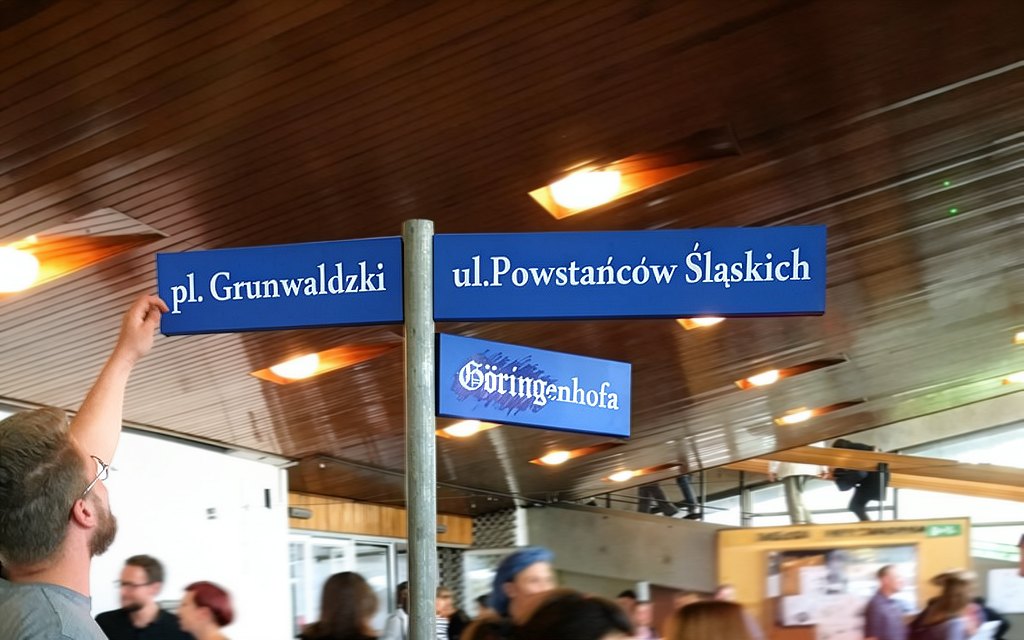
SKW: An earlier project of yours, Po niemiecku (In German), features an interactive installation in which viewers can scratch copies of Wrocław street signs to reveal their former German names. It explores the city’s German background, which for some is a touchy subject. Where does your fascination with pre-war Wrocław stem from?
AJ: That is a collaboration I did with my friend Patrycja Sap. We created it for the 15th Survival Art Review under the theme of Stratification. This term, borrowed from art history, served as a starting point for the curators to examine the layers of social and economic changes that have taken place in Wrocław.
This city’s distinctive history stirs a range of emotions. Some find it fascinating and worth exploring; others believe it should be erased. Patrycja and I both grew up in the so-called “reclaimed territories,” and, like most people of our generation, were raised hearing stories about the wartime experiences of older generations. I grew up in a former German neighborhood. At my elementary school, there was a sign next to the nameplate describing how there used to be a forced-labor camp for women and children. I remember it as terrifying, but at the same time, living in a place built by the Germans seemed completely normal to me. In our project, it’s the viewer who decides how much they want to uncover what lies beneath the scratch-off layer. I think this work clearly shows that history exists, whether it is comfortable or not and regardless of whether we want to uncover it.
SKW: As a young, up-and-coming artist developing her craft, what’s next for you? Will you continue to explore the medium of sketching, or head in a different direction?
AJ: I use a range of mediums in my practice. My recent works have been installations made of found objects, and earlier I worked in collage. Challenging overproduction is of great import to me: I work with found objects, and they often determine which tools I’ll use. Receipt marks a return to classical techniques for me. I think I’ll continue to explore them in the near future.
Receipt marks a return to classical techniques for me. I think I’ll continue to explore them in the near future.