



Who choreographs the dance when a cut can stop a body in mid-air? At InShadow, Lisbon’s international screendance festival, that power belongs as much to the editing room as to the stage. Its 18th edition brings 65 videodance films from 27 countries into competition, alongside documentaries, animation, live performance and installations. Yet the organisation behind the festival has spent more than 25 years trying to secure a space of its own. As independent venues disappear across Lisbon, filmmaker and festival co-director Pedro Sena Nunes asks what it takes to give artists room to experiment when the rooms themselves keep disappearing.
My connection to Lisbon’s experimental arts scene is personal. I worked with EIRA and ZDB as a performer and choreographer, and my sense of the city still owes much to encounters between artists who might otherwise have occupied quite different stages. In the mid-to-late 1990s, Festival Atlântico, curated by my friend Natxo Checa Ruestes, brought artists such as ORLAN and Stelarc to Lisbon. In their hands, even the shape and reach of the human body were open questions. Experiments in New Portuguese Dance and encounters between live performance and the moving image gave those questions other lives across the city. It is with that Lisbon in mind that I ask Pedro Sena Nunes where he places InShadow today.
Alex Mirutziu: Against this history, where do you position InShadow, which you co-direct with Ana Rita Barata, within Lisbon’s contemporary dance and screendance landscape? How experimental is the scene today, and how have the relationships between artists, independent spaces, and cultural institutions evolved? What kinds of artistic risks are still possible in Lisbon?
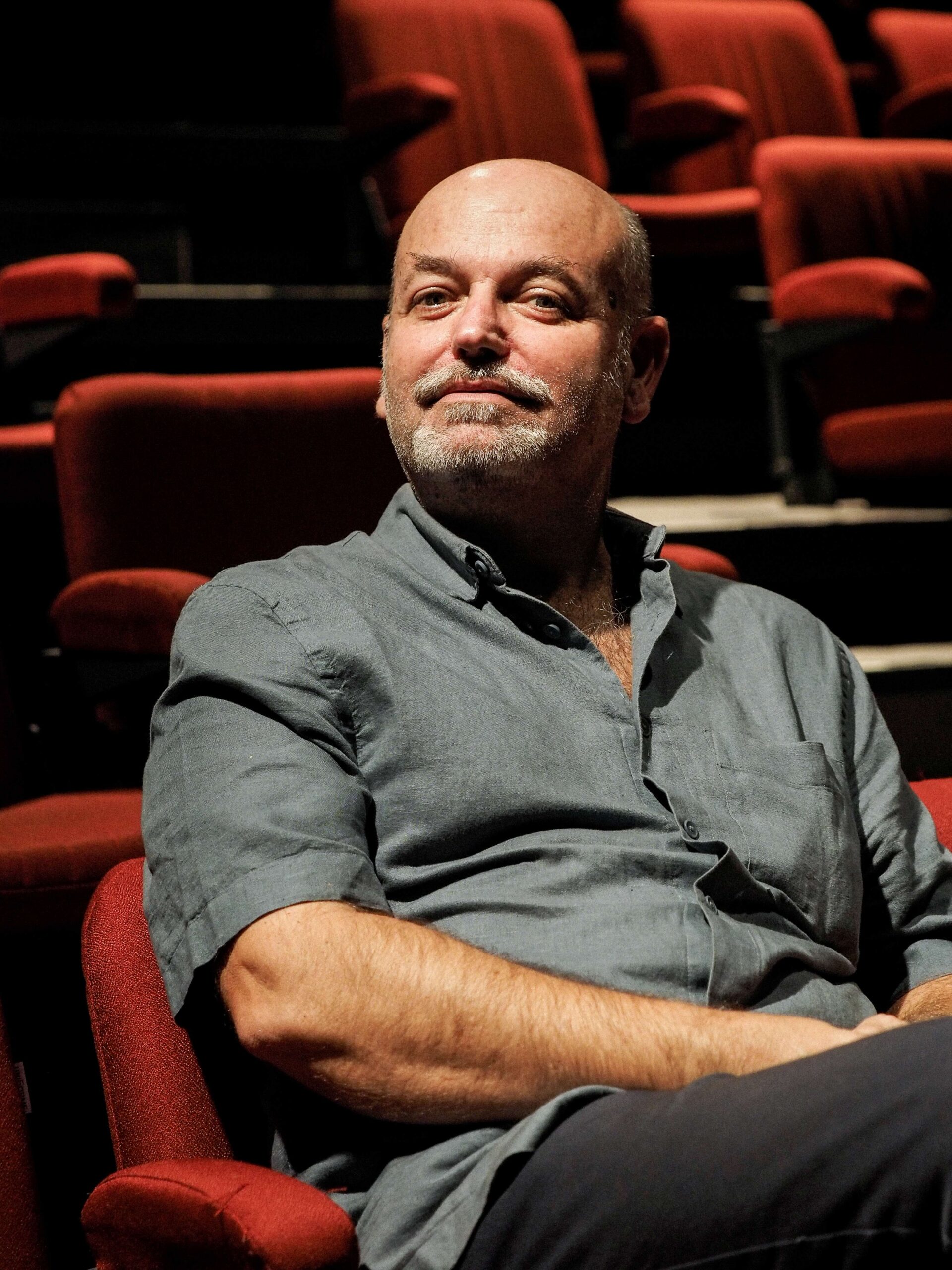
Pedro Sena Nunes: Placing InShadow in a direct line from the experimental practices of 1990s Lisbon would be a stretch. Those initiatives were important in shaping the city’s innovative landscape, but InShadow emerged from a different context and with a different purpose. Founded by Vo’Arte in 2009, it developed as a platform for artistic practices that connect dance, cinema and technology. Its role is to create encounters between artists, works and audiences, bringing international perspectives into dialogue with the local cultural context.
From the beginning, the idea has been that InShadow should be a home for artists, whether they come from Portugal or are temporarily based in Lisbon. It is a place where different backgrounds, generations and perspectives meet, where established and emerging artists share the same space, and where unexpected relationships can develop.
Over seventeen editions, the festival has built a network of relationships with artists, independent structures, cultural institutions and educational organisations. These partnerships take it beyond a single venue or artistic community, across different spaces in Lisbon and to audiences with different ages and backgrounds.
If we compare Lisbon’s experimental landscape in the 1990s with today, the context has changed considerably, particularly in the relationship between independent structures, cultural institutions and international networks. Yet the need for spaces where artists can take risks, experiment and work outside established formats remains. Screendance still occupies a relatively peripheral position, with limited production and exhibition opportunities, although it has gained visibility and there are more opportunities for encounters around it.
The experimental nature of a cultural scene cannot be measured only by the presence of radical proposals. It also depends on the conditions available for artists to research, create, present their work and build long-term relationships with audiences. Today, independent structures face considerable challenges in terms of resources, sustainability and continuity. Cultural institutions and public funding are part of this ecosystem too, although the relationship between institutional frameworks and artistic freedom is not always straightforward. There is also a risk that experimentation becomes institutionalised and, in the process, loses some of its critical edge, becoming something more predictable, or even packaged. The challenge is to create structures that support artistic research without neutralising its uncertainty.
The experimental nature of a cultural scene cannot be measured only by the presence of radical proposals. It also depends on the conditions available for artists to research, create, present their work and build long-term relationships with audiences. Today, independent structures face considerable challenges in terms of resources, sustainability and continuity.
It’s important to note that in the last seven years, several independent spaces have closed in the city of Lisbon because financial conditions have become suffocating, coupled with property speculation. This is an unprecedented scenario. Many young people have sought to leave the country, which is distressing.
For Vo’Arte, as well as the InArt Festival and CiM — a dance company that integrates dancers with and without disabilities — having a physical space, beyond being an objective, has been a struggle for over 25 years, and it is becoming increasingly difficult to imagine such a space.
For InShadow, the challenge is to remain a space for artistic research, while simultaneously creating conditions for works from different areas to circulate and reach diverse audiences. The programming also consists of sowing possibilities. It is impossible to know exactly what will emerge from an encounter, how a work will be received, or what audience it will attract. This uncertainty is part of the process and is worth preserving.
AM: InShadow describes itself as a meeting point between body, image and technology. Yet the relationship between cinema and dance is not necessarily a harmonious one: the camera can liberate movement from the physical limitations of the stage, but it can also impose its own logic upon the body. As both a filmmaker and artistic director, where do you locate the moment when the camera stops documenting movement and begins choreographing it? And what can cinema reveal about the body that live performance cannot?
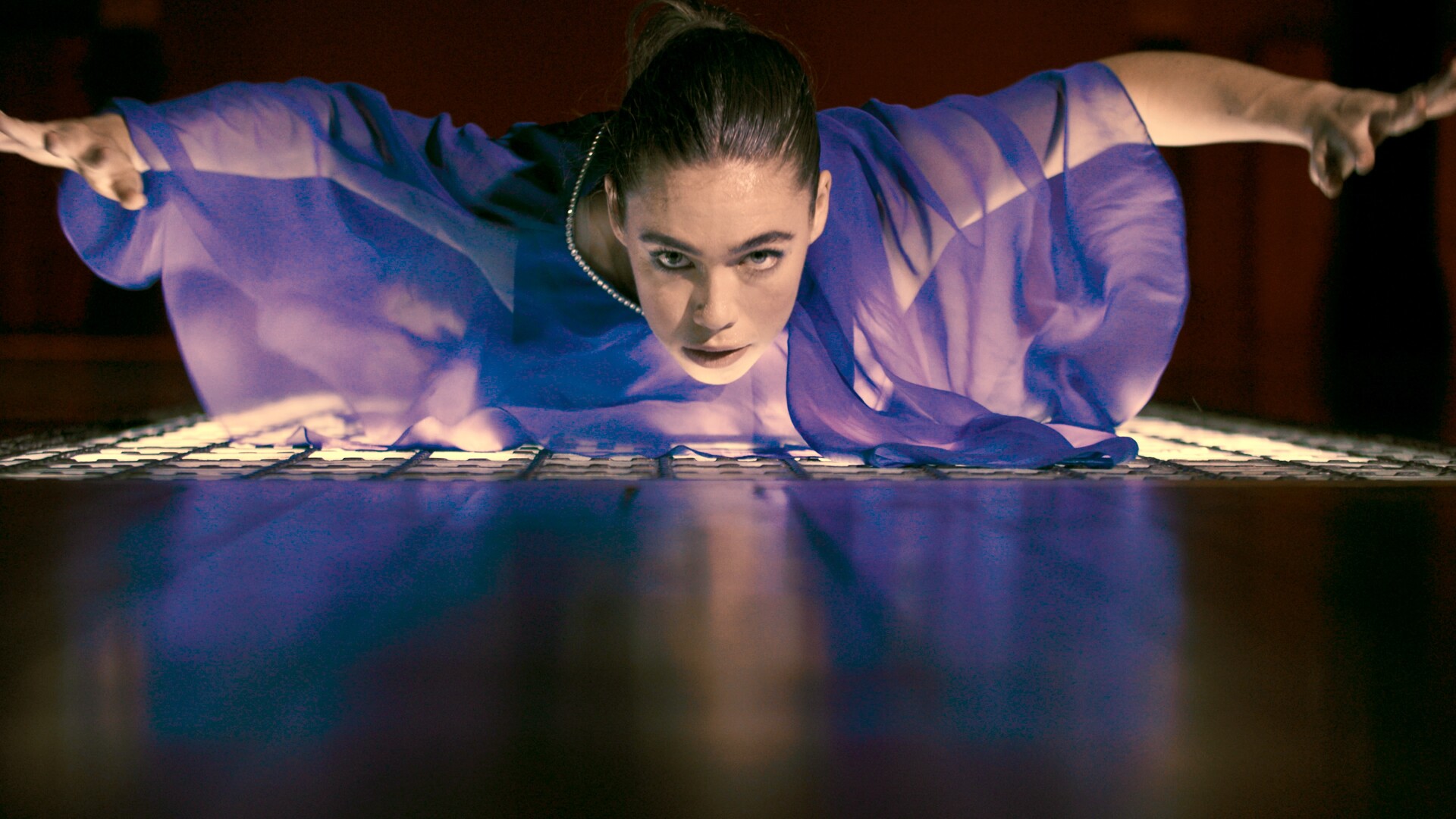
PSN: This question is very unsettling; I’m very glad you addressed it. In fact, there isn’t a precise moment when the camera stops documenting movement and begins choreographing it. The documentary “tone” is present from beginning to end — there’s just another layer that overlays it. And so, we can say that the two processes can happen simultaneously. The camera becomes an active participant when it begins to determine or redirect movement. It’s simply another way of constructing a joint choreography that so characterises screendance.
Every cinematic decision — framing, camera movement, duration, editing, perspective and the relationship between sound and image — shapes the body’s experience. The camera is never entirely neutral; it assumes the subjectivity of what we call “point of view”, whether that of a character, a narrator, or, more regularly, the person directing the film. Even when it seems to observe, even when it is static, it is already constructing a relationship with movement.
Along with my personal interests as a film director, and in direct relation with Ana Rita Barata, a very restless choreographer in the world of ideas, we have been thinking together, since the first editions of InShadow, about our interest in testing the limits of dance in its direct relationship with still and moving images. We asked ourselves: What happens when the intersection of the languages of dance and cinema challenges the choreographic gesture and becomes part of the process of creating image and sound?
Every cinematic decision — framing, camera movement, duration, editing, perspective and the relationship between sound and image — shapes the body’s experience. The camera is never entirely neutral; it assumes the subjectivity of what we call “point of view”, whether that of a character, a narrator, or, more regularly, the person directing the film.
In 2025, InShadow recognised different artistic dimensions through separate awards for Best Choreography, Best Videography and Best Videodance. The categories allow different contributions to be acknowledged, but they also show how hard it is to separate elements that are interconnected within the same work. This year, the workshop Corpo-Câmera-Movimento, led by Denise Matta, explores precisely this relationship between body, camera and movement. It reflects an interest in the camera as an active participant in the creative process, rather than just a recording device.
Cinema is neither an extension nor a substitute for the live presence of the body. They are
entirely different experiences, different media, with different possibilities. Screendance allows the creation of a universe of impossibilities for the body, offering another way to represent it.

AM: The festival’s name, InShadow, suggests a particularly interesting paradox: cinema depends on light to make things visible, while the body often communicates through what remains concealed, fragmented or inaccessible. In an image-saturated culture, where bodies are increasingly exposed, measured and digitally reproduced, could screendance offer a different politics of visibility? Is there still something about the human body that resists being turned into an image?
PSN: In the text accompanying this year’s edition, we wrote: “Light is not seen; it lets itself be seen.” I think this is an important starting point for understanding the relationship between visibility, the body and the image. A shadow is not simply the absence of light or another word for darkness. It is produced by light, and reminds us that seeing always involves both illumination and concealment. And sometimes what remains in the shadows tells us as much as what is directly illuminated.
However, visibility is not necessarily the same as recognition. Showing more of the body does not necessarily mean knowing it better. Being visible does not always mean having control over how we are represented. There is an enormous depth in abstraction, in refusal, in hiding or eclipsing something, in what an image chooses not to show. Sometimes the image becomes more powerful when it leaves space for ambiguity and imagination.
A shadow is not simply the absence of light or another word for darkness. It is produced by light, and reminds us that seeing always involves both illumination and concealment. And sometimes what remains in the shadows tells us as much as what is directly illuminated.
This is where screendance can become particularly interesting. It is not necessarily iconoclastic, nor does every work set out to challenge established representations. Yet the field has increasingly made room for bodies and experiences that are less visible in conventional imagery, including older bodies and bodies that do not conform to normative expectations.
In this edition, Ana Vitória’s Skiagrafia: uma fantasmática do corpo explores the relationship between shadow, absence and female invisibility. She extends this investigation by inviting participants to explore shadow as a space for other presences, memories and absences inhabiting the body. The exhibition programme also includes works such as Threshold of Shadow and Preto sobre Preto, which contribute to a wider exploration of visibility, perception and the image.
Beyond the body’s physical representation, we are interested in its emotional landscapes, its contradictions, and the experiences that shape how we inhabit the world. I don’t think the body is necessarily resistant to becoming an image. Rather, I believe no image can fully contain the complexity of a body. There will always be experiences, memories, identities and contradictions that exceed what can be represented. Perhaps the question is not whether everything can be made visible, but who controls that visibility, who has the possibility to be seen on their own terms, and what possibilities exist beyond the image.
In a light-hearted tone, I’ll share that the festival began as an international competitive showcase, titled Dance Without Shadow, where we already wanted to embrace the concept of a certain “impossible”, recalling the famous cowboy Lucky Luke who was faster at shooting than his own shadow.
I’ll conclude by observing that the shadow of InShadow is especially luminous.

AM: The 18th edition brings together 65 videodance films in competition, alongside documentary, animation, performance and installation. Such diversity inevitably raises questions about the boundaries of screendance as an artistic language. When selecting works, what distinguishes a film that merely contains movement from one in which movement becomes the organising principle of cinematic thought? Can a film be choreographic without showing a dancing body at all?
PSN: The competitions are built on submissions received through an open call, which brings in works from different countries, artistic backgrounds and creative contexts. This international dimension is fundamental to InShadow, as it gives access to a wide range of approaches to the relationship between cinema and movement.
The presence of movement alone does not make a film choreographic. What matters is the role movement plays in the film’s construction. The selection process is inevitably intuitive. We can identify certain qualities and discuss criteria, but it is difficult to reduce a work’s experience to a set of measurable parameters. It is important not to impose overly rigid criteria — we appreciate that the definition of screendance is quite flexible and allows room for experimentation.
A simple test helps: if rhythm, duration, spatial composition or the relationship between images were removed, would the film lose something essential? If so, movement is functioning as an organising principle rather than merely as an element within the frame. In fact, what we appreciate most is thinking of the editing itself as a performative experience with choreographic weight. And yes, a film can be choreographic without showing a dancing body. Movement can exist in the camera, in the editing, in the transformation of an object, in the rhythm of a landscape or in the relationship between sound and image. It can also emerge from natural phenomena: water, wind or other forms of movement. Or even an encounter between two matches or a dance of a crane.
The presence of movement alone does not make a film choreographic. What matters is the role movement plays in the film’s construction.
The 2026 International Videodance Competition is a collection of social and political readings of the world we live in, a compelling portrait of contemporary anxieties. The aim is to recognise different ways in which movement can generate cinematic thought. Selection is also about identifying artistic processes that challenge existing conventions and open new possibilities for the language of screendance.
We value the risk and the error of those who seek to invent new ways of writing for image and sound in the face of technological progress. We seek to ensure that the limits of screendance also serve as a space for free exploration, and in this sense, we want to keep this challenge present in our programming, where younger artists have space to revise their visions.
AM: This year’s programme includes Devising With Machines, a masterclass exploring artificial intelligence in creative writing and performance, as well as Who The Fck Wrote This* by the Greek group SMouTh, where text is generated and transformed live through the interaction of voice, performance and AI. As technological systems increasingly participate in artistic decisions, how do you understand the changing relationship between human intention and machine-generated material? Might the imperfections, hesitations and unpredictability of the performing body become more significant precisely because they cannot be fully programmed?
PSN: The relationship between body and technology has been central to InShadow since its early editions. The interest has never been in presenting new tools for their own sake, but in how they influence artistic processes, challenge established languages and generate new forms of interaction.
The masterclass and SMouTh performance show that what matters here is the dialogue between human intention and machine-generated possibilities. I see artificial intelligence not as a substitute for human creativity, but as a tool that can extend and amplify our capacities. It can produce unexpected associations, generate material and disrupt established creative processes. But using a technological tool is not, in itself, an artistic proposal. Context, intention, selection and responsibility remain essential.
The challenge is for these technologies to take part in artistic creation without removing the critical and human dimensions that give it meaning. Experimentation is welcome, as long as the tools and the consequences of introducing them into creative processes are also questioned.
Setting the human body against technology also calls for caution. That opposition can lead to an unnecessarily dystopian view and does not align with my own experience of working with these tools. Screendance is already a mediated practice: the body is enlarged, zoomed in, accelerated, decelerated, cut, amputated, transformed by the camera, editing and the cinematographic process itself. At the same time, error and imperfection can be significant artistic events. Much of the singularity of a work may emerge from a human lapse, hesitation or unexpected response, precisely the things that a system designed to optimise and refine may tend to correct. The question is not simply whether the body is programmable, but what kinds of meaning emerge from what cannot be fully anticipated.
The challenge is for these technologies to take part in artistic creation without removing the critical and human dimensions that give it meaning. Experimentation is welcome, as long as the tools and the consequences of introducing them into creative processes are also questioned.

AM: Dance is traditionally understood through the presence of a moving body, while cinema can preserve its traces long after that movement has disappeared. Can absence itself become a form of choreography? And what happens when cinema no longer records the body but confronts its disappearance, transforming movement into memory, duration or something that resists representation?
PSN: Cinema has a unique relationship with time. It preserves gestures, movements and performances that no longer exist in the present. Every recorded image is a trace of something that happened, something unrepeatable, and it also makes it possible to experience that moment differently in the future. Absence and the traces of what is no longer there thus can become driving forces in the construction of a film.
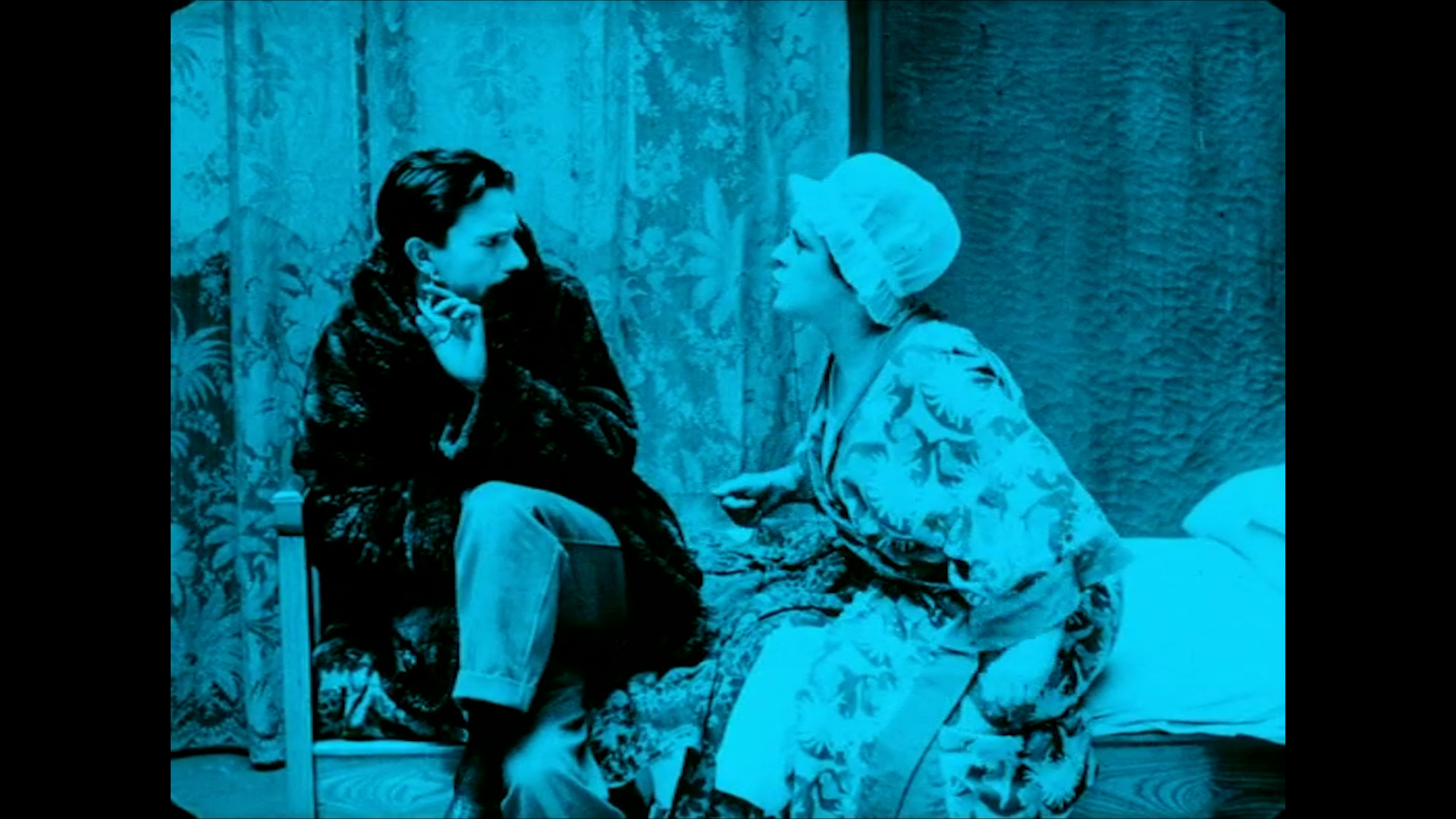
But an image is not only a record; it becomes part of an artistic memory that can be revisited, questioned and reinterpreted. This is particularly visible in the special programme at the Cinemateca Portuguesa this year. Films such as Rhythmus und Tanz (1932) and Martha Graham: A Dancer’s World (1957) allow contemporary audiences to encounter bodies, gestures and practices from other historical moments. These images preserve traces of performances that cannot be repeated in their original form on stage.
Spectators’ imagination also plays an important role. What is not present in the cinematic image does not necessarily remain empty. The viewer’s intuition can complete, transform or extend what is suggested on screen. In this sense, the spectator becomes an active creative element in the experience of the work. Cinema also works with what remains outside the frame. The off-screen world — what is unseen but evoked through sound, narrative or suggestion — can become just as significant as what appears on screen.
Perhaps one of cinema’s most fascinating possibilities is its ability to let the unseen keep shaping our perception.
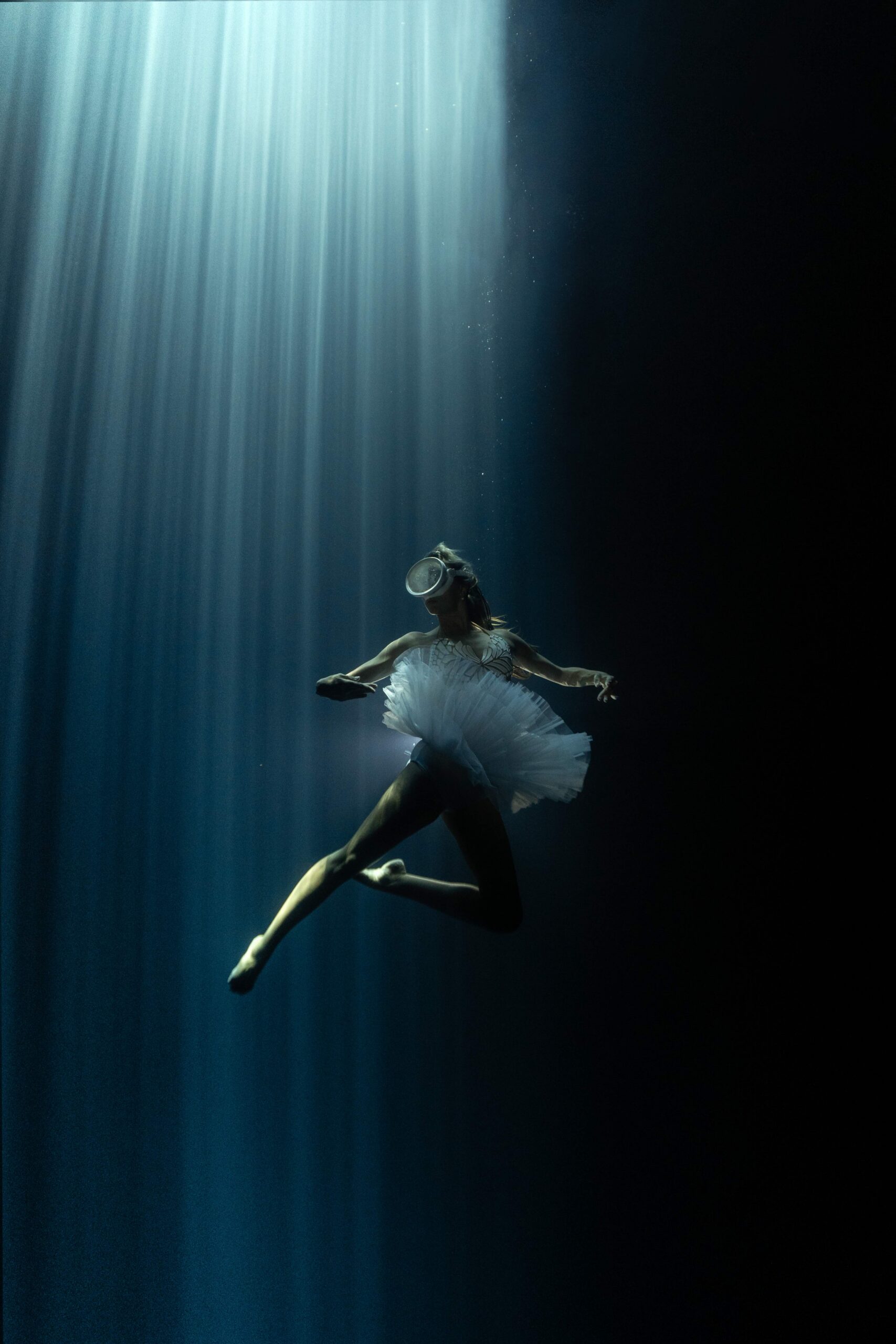
AM: Eighteen editions into InShadow, screendance occupies an intriguing position between cinema, choreography, visual art and technological experimentation, without belonging exclusively to any of them. Having worked across filmmaking, education and interdisciplinary artistic production, do you believe screendance should seek greater recognition as an autonomous art form, with its own critical language and institutions? Or is its real potential precisely in remaining unstable, continually questioning what a film, a performance or even a body can be?
PSN: I’m really enjoying the way your questions are structured. We’ve actually had seventeen editions and are now in our eighteenth; it’s incredible how time flies and how the festival’s concept has adapted over the years. It’s what fascinates us.
Answering your question, these two positions are not necessarily contradictory. Greater recognition can bring visibility and better conditions for artists, but it can also lead to overly rigid criteria that limit the field’s openness and creative freedom. Festivals, juries and awards need categories to organise their programmes and recognise artistic contributions, and InShadow has developed these structures over the years, including awards that distinguish different aspects of screendance. But categories should not become limits on what artists can create. They are tools for recognition, not definitions of the language.
The sharing of knowledge and the development of new audiences are equally important because the future of screendance depends on people discovering and engaging with it critically. Education and audience development have been part of the festival for many editions. Workshops, masterclasses, and activities for children and young people offer different forms of engagement with the body, moving images and contemporary artistic practices.
The real potential of screendance lies in its openness to other disciplines, technologies and forms of expression. Its instability is not a weakness, provided there are structures capable of supporting its development. The aim is not a final definition of screendance, but an exploration of what it can become in a space where artists, audiences and ideas can meet, challenge one another and generate possibilities that did not exist before.
The real potential of screendance lies in its openness to other disciplines, technologies and forms of expression. Its instability is not a weakness, provided there are structures capable of supporting its development.
This openness also depends on the support of the institutions and partners that make the festival possible, including the Portuguese Ministry of Culture and the City of Lisbon. As we continue with the eighteenth edition, we remain committed to supporting emerging artists and engaging younger generations, who are not only our audience but also the creators shaping the field today. Together with our partners, we hope to keep InShadow a vibrant platform for screendance and its future.
InShadow – Lisbon Screendance Festival
13 November–18 December 2026
Lisbon, various locations