






What can a mountain tell us about the place we call home? It can be a landmark, a living ecosystem, a source of collective memory or a landscape that changes with every encounter. Painting offers a way to explore these relationships, translating the natural world into images shaped by individual experience, cultural background and artistic imagination.
The 2026 E.SUN Art Awards bring these perspectives together around Yushan, Taiwan’s highest mountain, also known as Mount Jade. Organised by E.SUN Financial Holding, E.SUN Bank and the E.SUN Culture and Education Foundation, the 4th edition of the competition, held periodically since 2012, invites artists to explore the mountain’s ecological and cultural significance. This year’s expanded thematic framework also considers how music communicates emotions across languages and cultures.
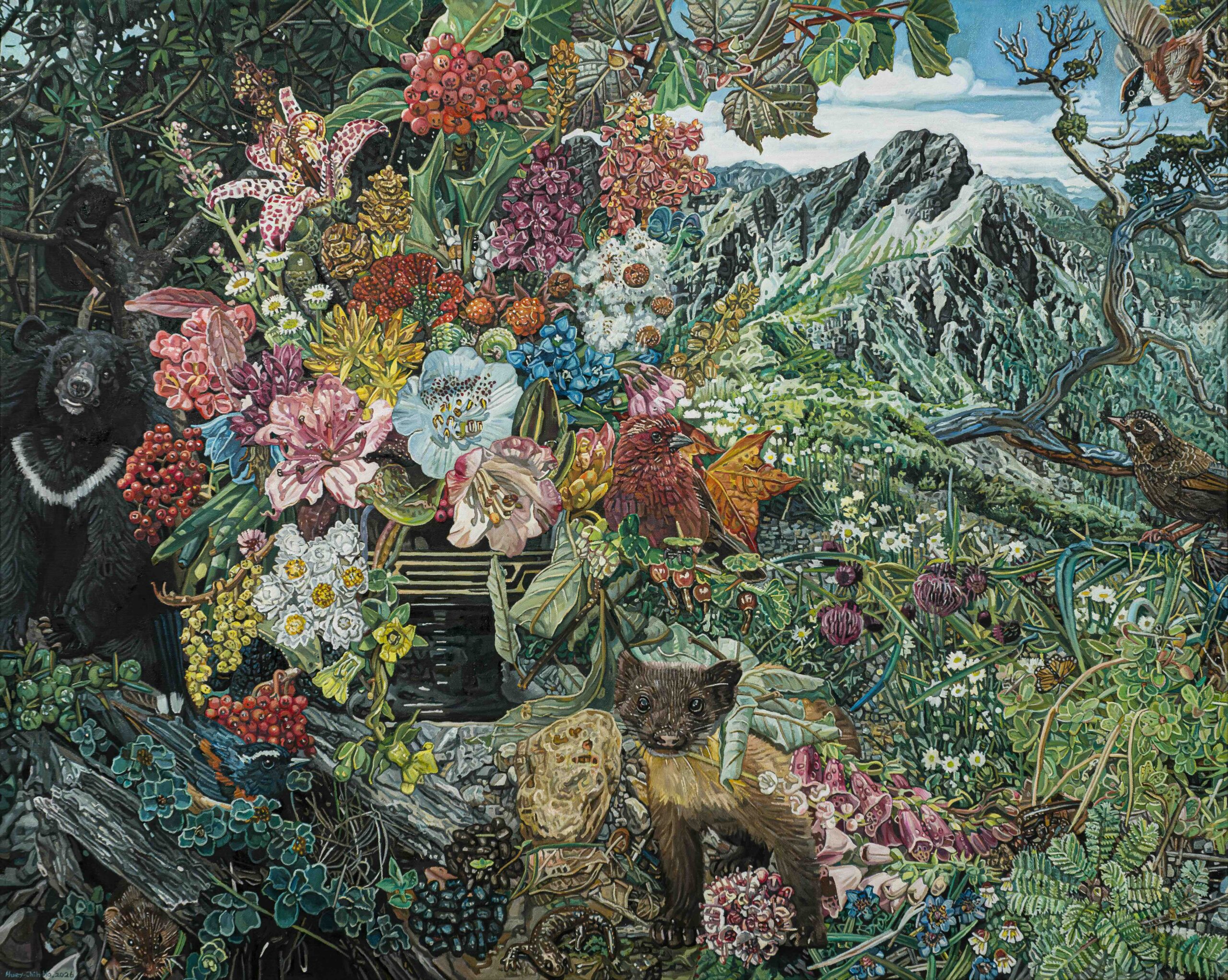
The competition recognises artists across the General Public, International and Student categories, with first prizes awarded to Huey-Chih Ho for The Ecological Beauty of Yushan, Yuki Ideguchi for Taiwan’s Roof and Jin Qian Chen for The Yushan Banquet: A Feast For All Beings, respectively.
Yushan, whose name translates as Jade Mountain, holds a distinctive place in Taiwan’s natural and cultural imagination. Through the E.SUN Art Awards, artists are invited to engage with this landscape and consider what it means to represent a place whose significance extends beyond its physical appearance.

Feeling the Mountain
A mountain is never simply a geographical feature. It carries meanings accumulated through stories, encounters and the ways people learn to see a landscape. Yushan, whose name translates as Jade Mountain, holds a distinctive place in Taiwan’s natural and cultural imagination. Through the E.SUN Art Awards, artists are invited to engage with this landscape and consider what it means to represent a place whose significance extends beyond its physical appearance.
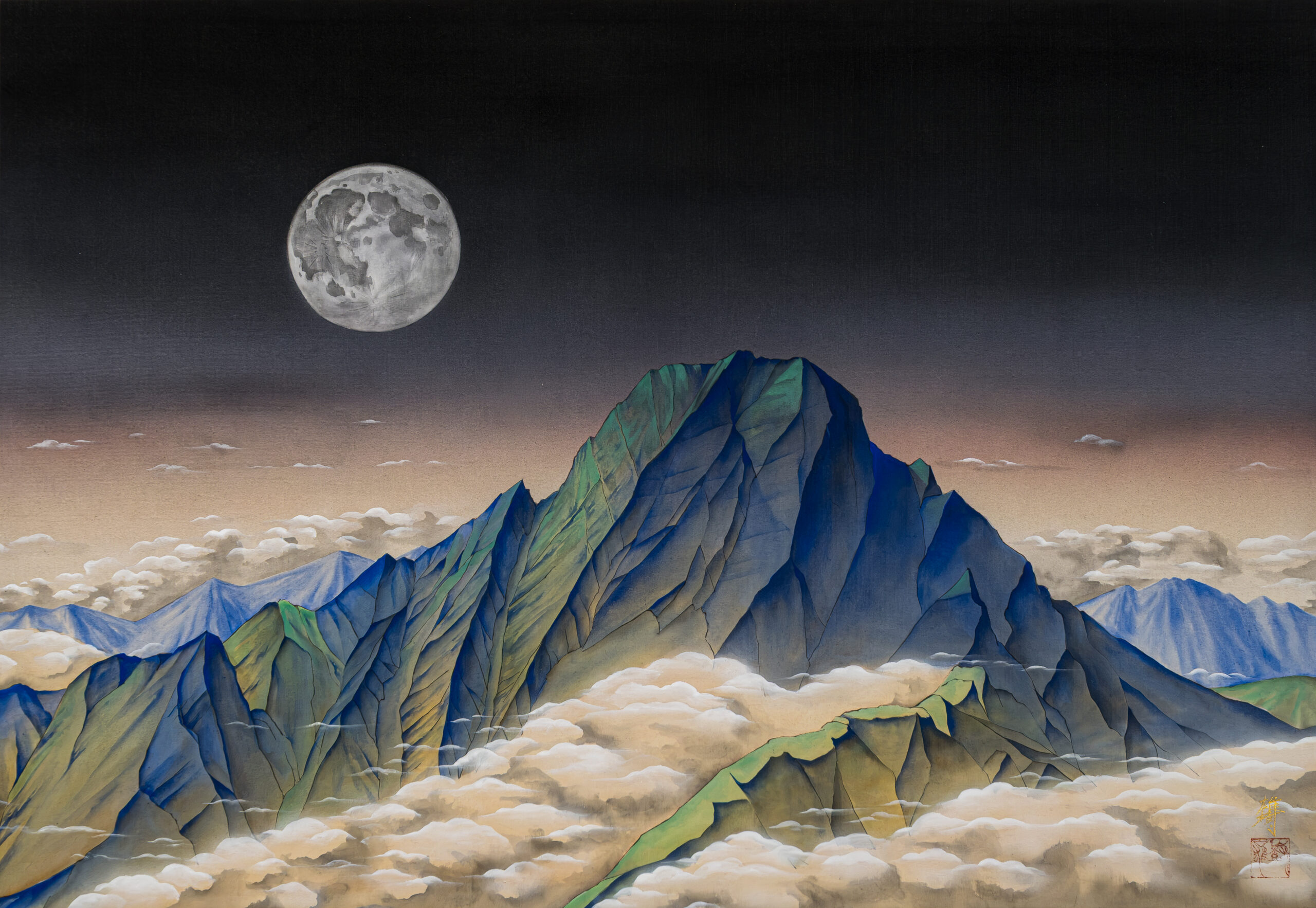
The winning works suggest several possible points of entry into this subject. In the International Category, Japanese artist Yuki Ideguchi took home the First Prize for his piece titled Taiwan’s Roof. Rooted in classical Japanese painting techniques, Ideguchi layered natural mineral pigments on silk to construct an evocative, tranquil spiritual world around the mountain.
We can see a slightly different approach in Tsai-En Lee‘s Pole of Inaccessibility—Yushan, which received a Special Selection in the General Public Category. It evokes the idea of a place defined by its distance from human access. In the context of the E.SUN Art Awards, the title invites us to consider Yushan beyond its familiar image as a mountain landmark: as a landscape whose scale, remoteness and ecological complexity challenge our desire to explore, understand and possess the natural world.
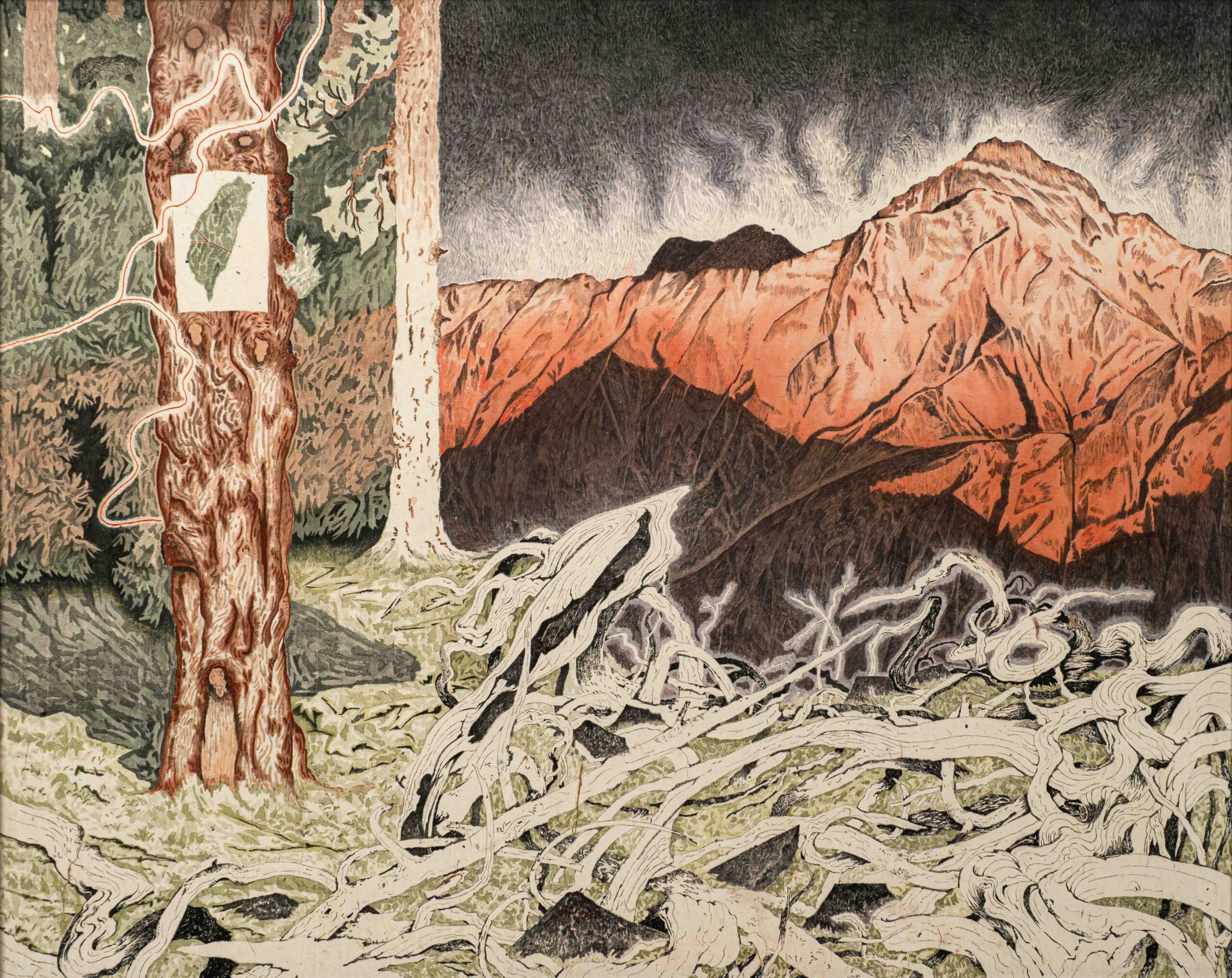
A mountain may be recognisable to many people, yet each artist approaches it from a particular position. The resulting image can capture an encounter with nature while also revealing the values and associations that make that encounter meaningful.
A Landscape Shared Across Borders
The international category brings together artists whose different backgrounds offer opportunities to reconsider how a particular place can be represented.
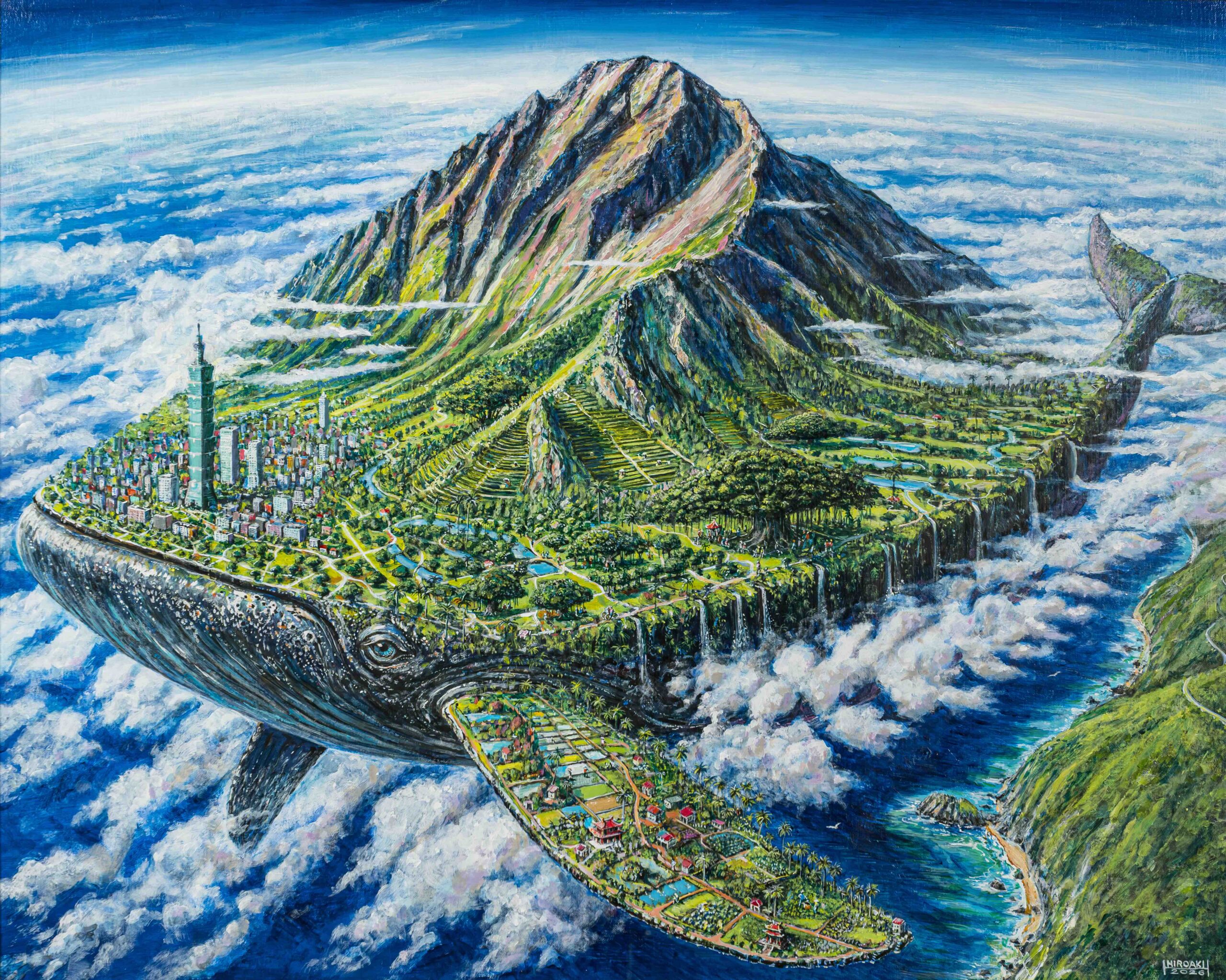
Hiroaki Hyodo (Japan), whose work Flying Whale: Yushan received a Special Selection, imagines the mountain, its bustling cities and rural landscapes resting on the back of a soaring whale. This surreal image brings nature and everyday human life together, transforming Yushan into an imaginative world where the boundaries between the natural and the urban dissolve.
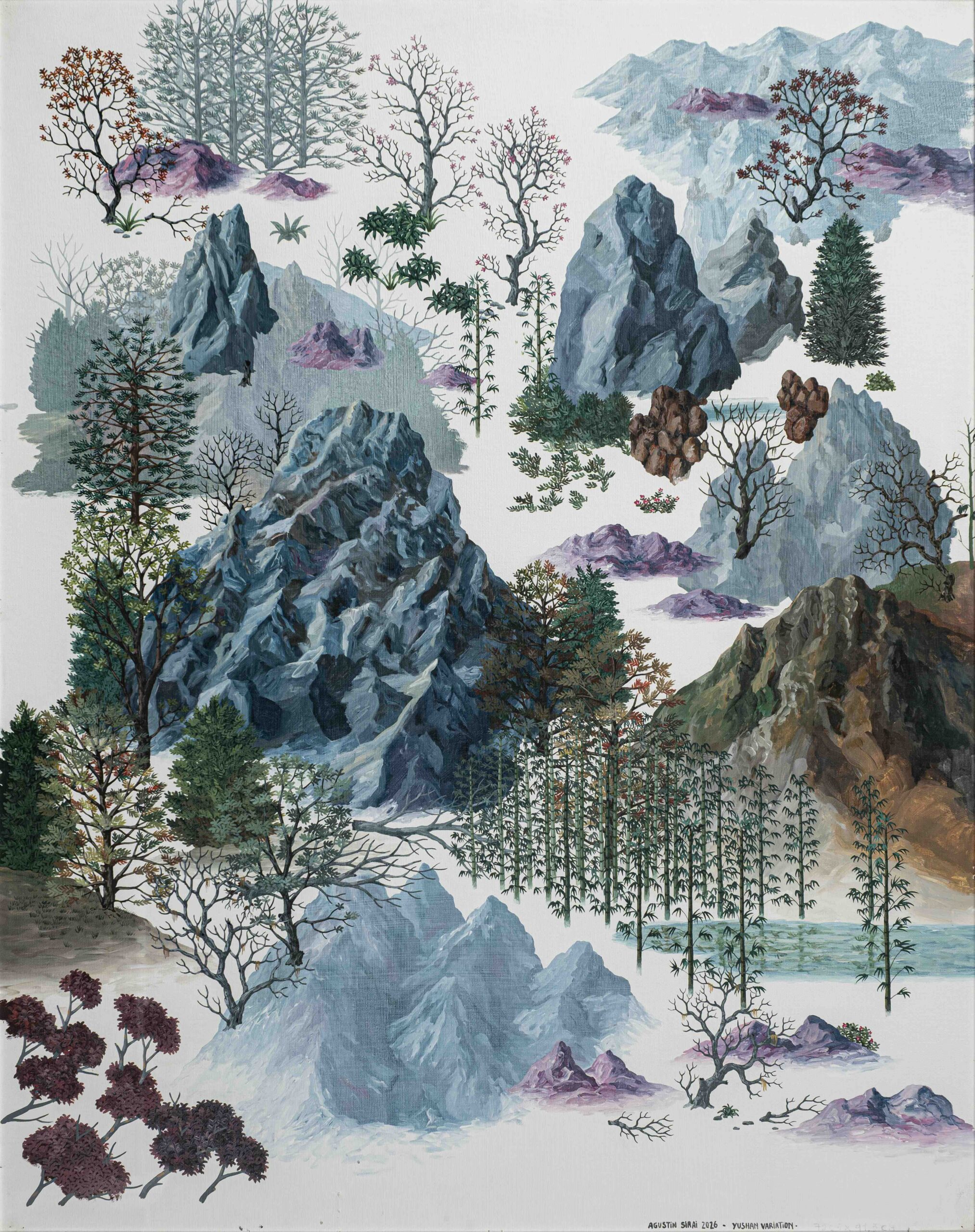
Meanwhile, Agustin Sirai (Argentina), whose Yushan Variation also received a Special Selection, reimagines the landscape through recurring visual motifs such as bamboo, stones and mist, interspersed with areas of negative space. These elements are fragmented and rearranged, creating a sense of dissociation from the landscape as a coherent whole. Through this interplay of repetition, separation and reconstruction, Sirai breaks down the familiar image of Yushan and reassembles it into a new visual composition, where the relationship between the individual elements becomes as significant as the landscape itself.
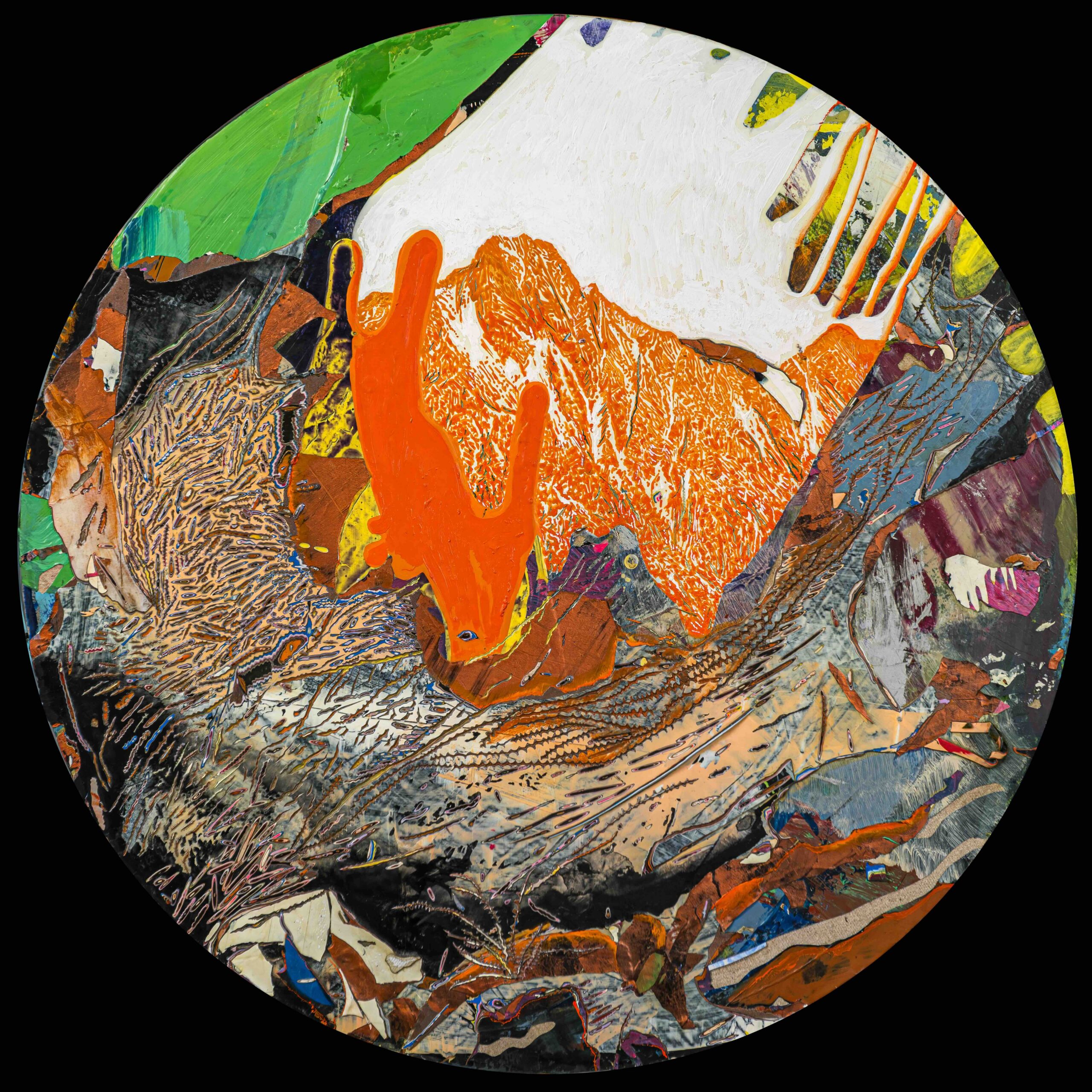
Hiroto Wada (Japan) takes a markedly different approach in Picture of the Phantasm of Scattering Jade, which received a Special Selection. The work presents a landscape charged with expressive, almost intrusive thoughts, navigating the space between abstraction and figurative representation. This tension offers a distinctive way of approaching Yushan as a sacred mountain, balancing the recognisable features of the landscape with a more subjective, imaginative vision.
Yushan National Park encompasses a complex natural landscape, and painting can draw attention to the relationships between its visible features and the wider systems that sustain them.
Nature as a Living System
The ecological dimension of the competition asks artists to consider the environment as more than a scenic backdrop. Yushan National Park encompasses a complex natural landscape, and painting can draw attention to the relationships between its visible features and the wider systems that sustain them.
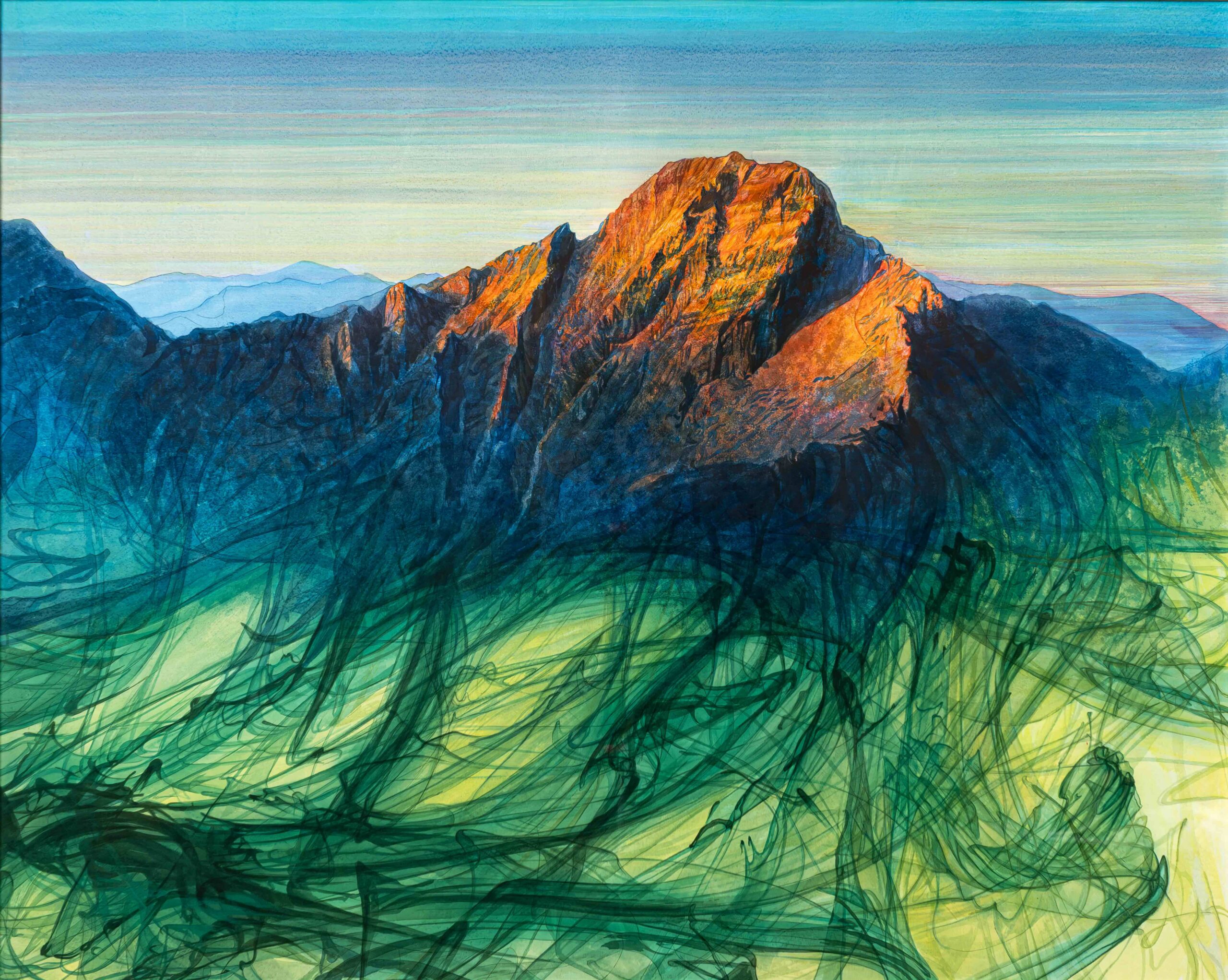
This concern is reflected in the title of Huey-Chih Ho’s The Ecological Beauty of Yushan, awarded first prize in the General Public category. Through its layered details, rich colour palette and depiction of interconnected ecosystems, the work evokes the diversity of life that makes up the mountain landscape. The interplay between different species suggests a network of mutual dependence, in which individual elements contribute to a broader ecological balance. Together, they form a mosaic of coexistence and symbiosis, highlighting the relationships that sustain the natural world.
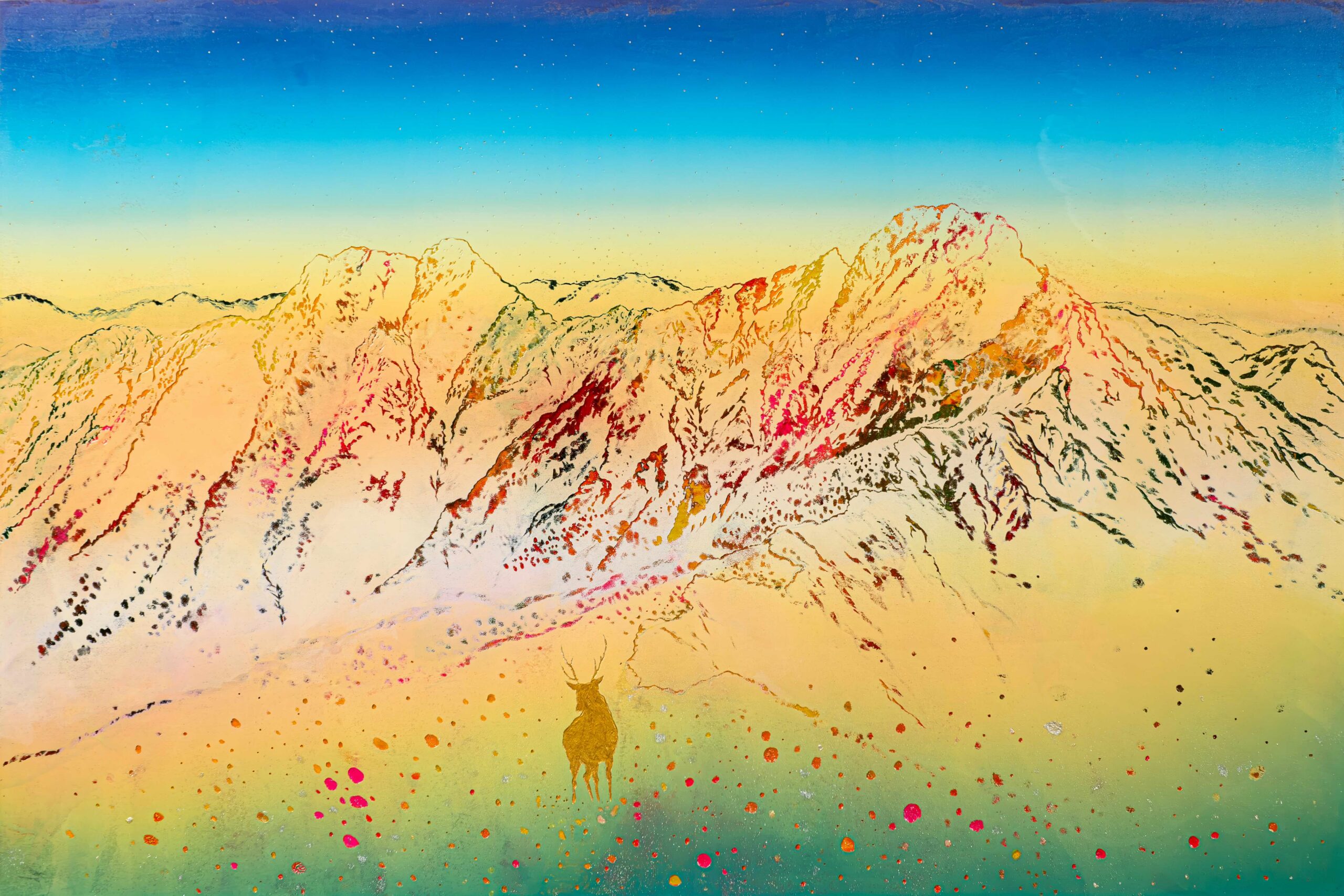
Other recognised works introduce different approaches to the mountain’s natural character. Ya-Lan Yu’s Mountain Glow, Deer Silhouette brings light and solitude together, suggesting a landscape experienced through fleeting encounters. The relationship between illumination and an animal’s presence evokes the rhythms of observation: the mountain becomes meaningful through details that may appear only briefly. Mu-Chi Hsieh’s Mountain Scape, by contrast, reimagines Yushan through the visual language of the digital age. Reducing its topography to blocks of colour and textured surfaces, the artist explores the tension between the mountain and its digital representation. The flickering textures offer a contemporary perspective on a landscape whose image is increasingly shaped by the ways we see and experience the world through screens.
Such approaches are valuable because environmental awareness often begins with noticing connections. A landscape becomes more than a distant view when the viewer is encouraged to consider its individual forms of life. The challenge for the paintings is to make these relationships perceptible through colour, composition, texture and the handling of paint; the awarded paintings do so, turning an environmental subject into a particular visual experience.
When Music Becomes an Image
The inclusion of music expands the scope of the 2026 competition. Sound unfolds through time, while a painting presents an image that can be encountered all at once or explored gradually. Bringing the two into conversation invites artists to consider how rhythm, harmony, movement and emotion might find expression on a static surface.
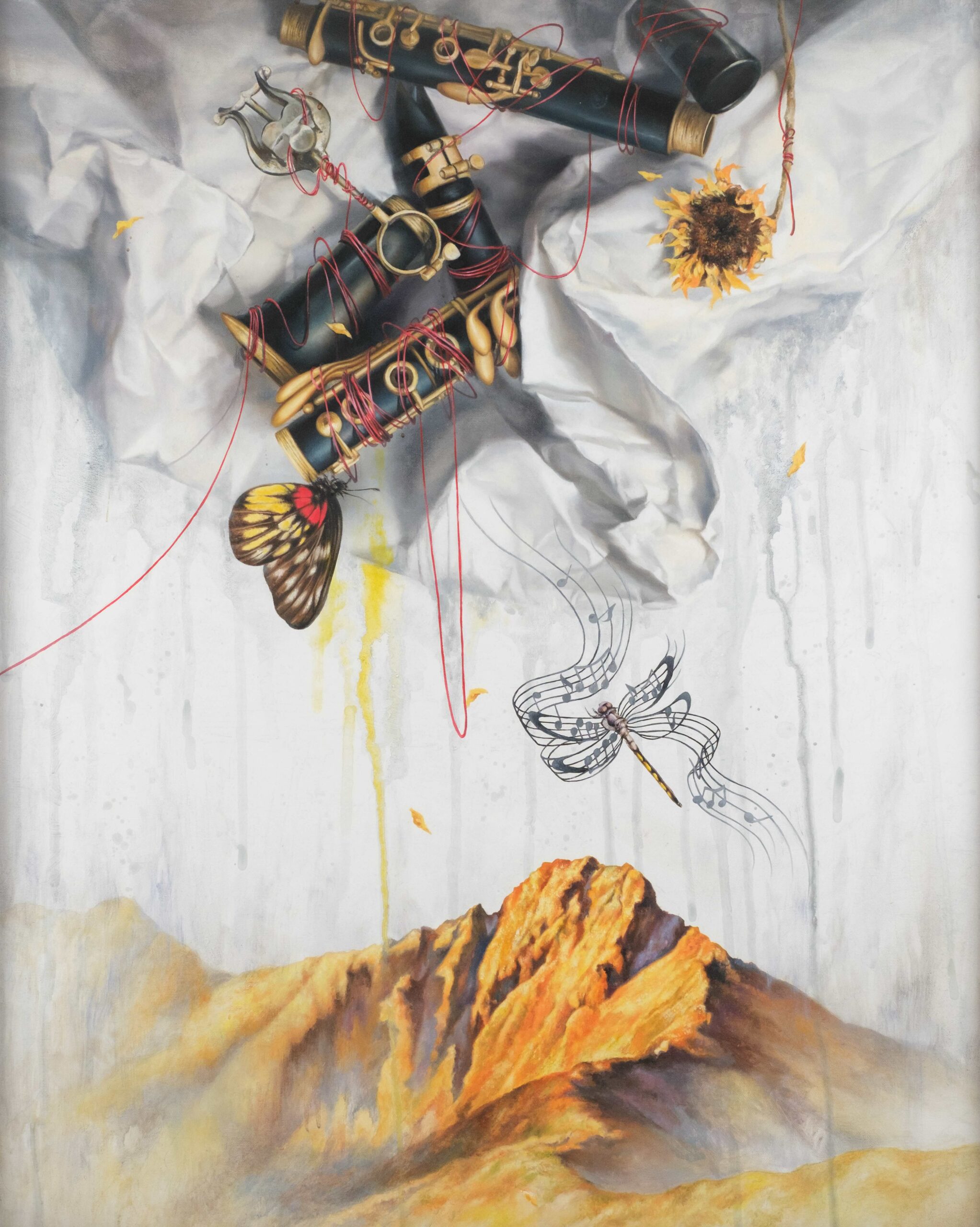
Several titles among the student winners suggest an interest in this relationship. Pin-Jie Shiu’s Echoes of Yushan, recognised with a Special Selection in the Student Category, evokes the resonance or lingering sound as well as the stillness of a landscape in relation to the notes. Symphony of the Earth, by Ying-Li Juang, similarly connects music with the natural world, inviting the possibility of hearing a landscape as an arrangement of opposite elements.
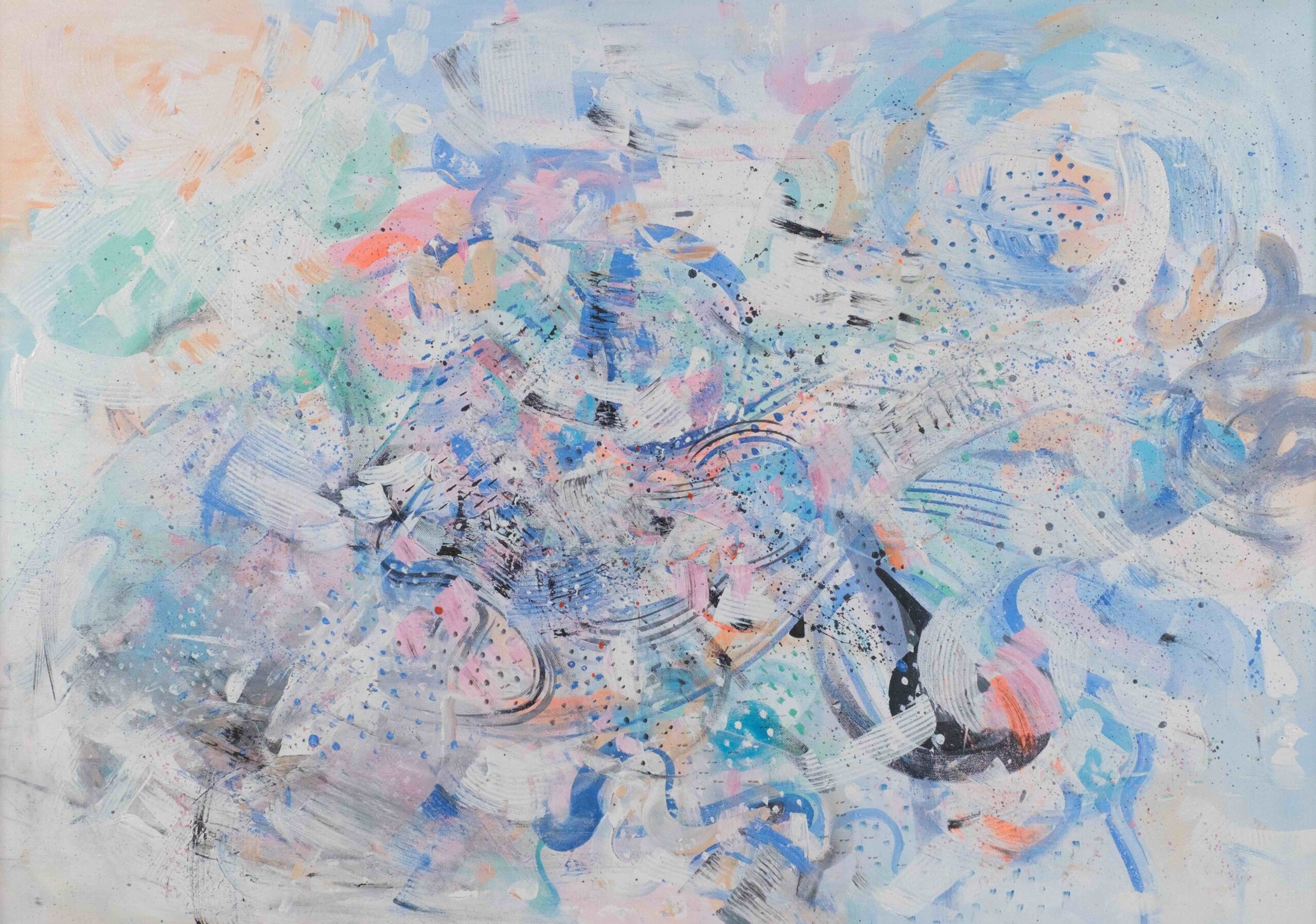
Resonance, by Sin-Yu Cai, approaches the relationship between music and visual expression through dreamlike imagery. Undersaturated hues and fluid lines translate melodies into a visual language, demonstrating how music can reverberate within us long after the sound itself has faded. The artist evokes an emotional afterlife of sound — an echo that settles in the heart and leaves a lasting impression.
New Perspectives on a Shared Landscape
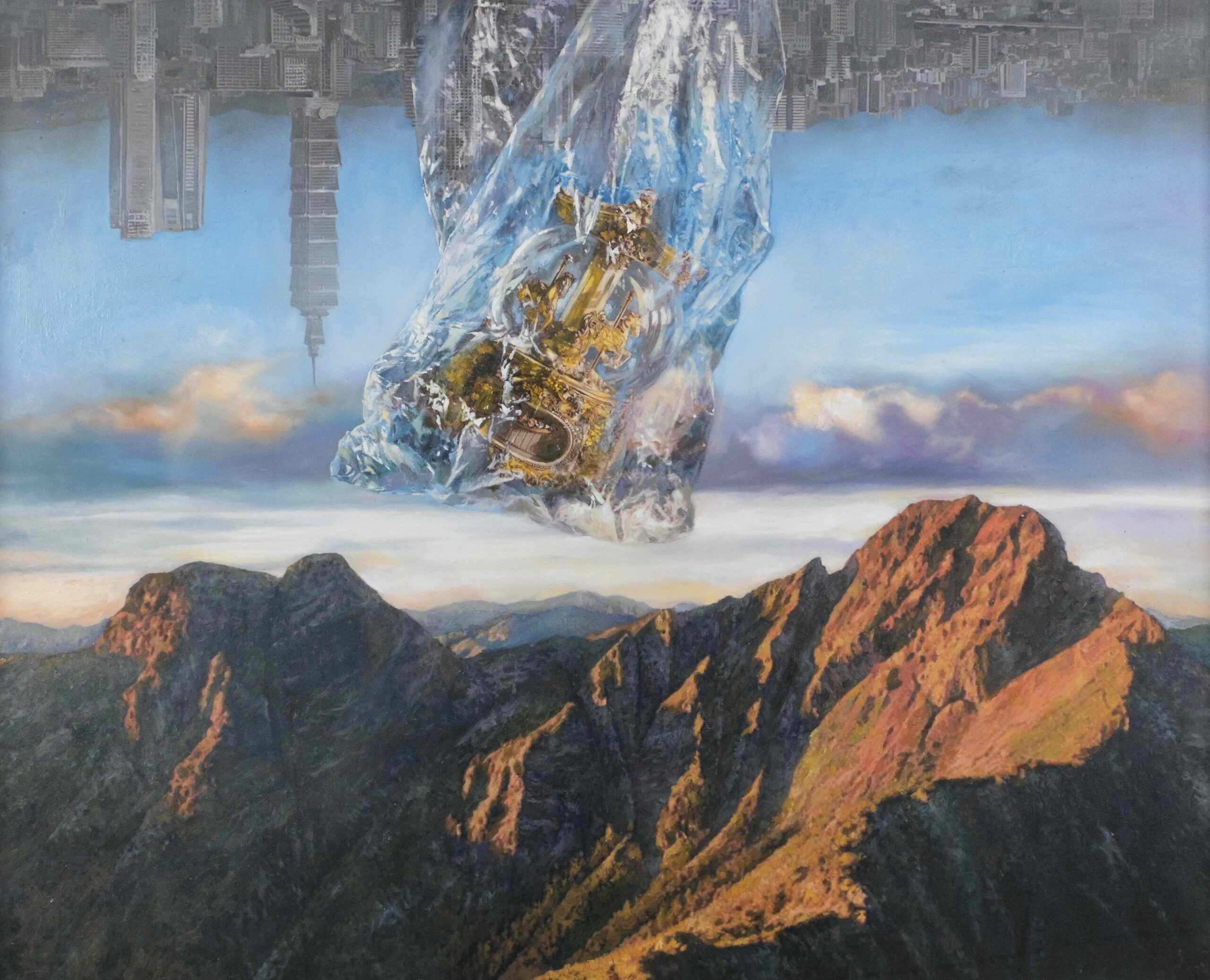
The student-winning title The Yushan Banquet: A Feast For All Beings by Jin-Qian Chen
introduces a final perspective on the mountain: one of gathering and shared presence. The idea of a feast suggests a setting in which different participants occupy the same space, while the phrase “all beings” extends that invitation beyond human company. In the context of the awards, it offers a way to consider the mountain as a place of coexistence, bringing ecological awareness into a social and cultural frame.
Its themes of landscape and music provide a common framework, while each work offers an individual point of entry into the relationship between art and the world around us.
Across the three categories, the competition creates space for artists to approach Yushan from different positions and through different visual languages. Its themes of landscape and music provide a common framework, while each work offers an individual point of entry into the relationship between art and the world around us. Seen together, they have the potential to encourage viewers to look more closely at a landscape that may be unfamiliar to some and deeply significant to others — and to consider how painting can shape our understanding of the places we share.
Winners will be officially recognised at an awards ceremony in Taipei on 4 December 2026. Following the ceremony, the winning paintings will be presented as part of the E.SUN Art Awards’ exhibition programme, extending the competition beyond the judging stage. The touring exhibition will take place across multiple venues, with official tour schedules and locations to be announced soon.


