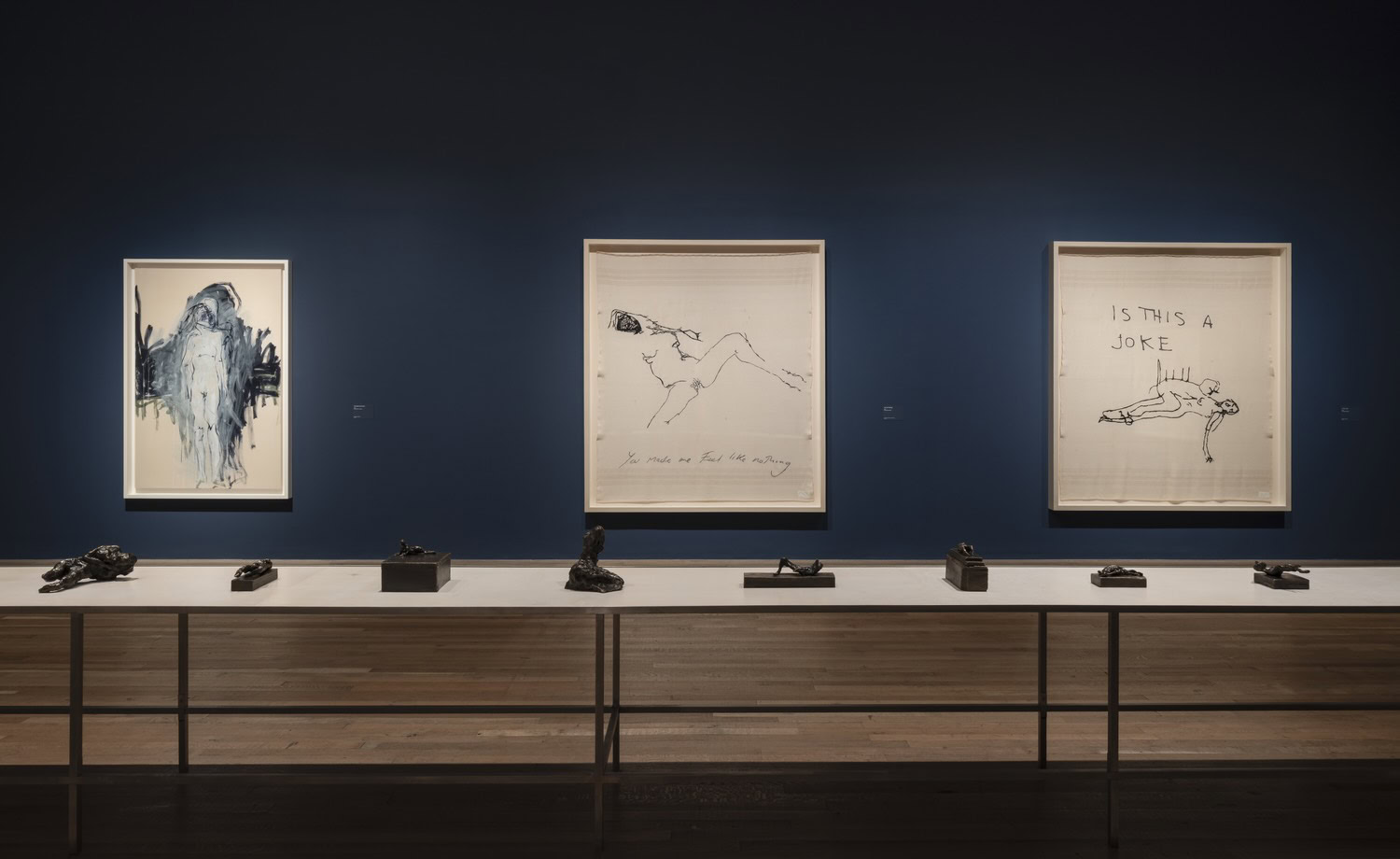
Upon entering Tracey Emin’s exhibition in Tate Modern, you are greeted in one of two ways: either by the harrowing account of Emin’s childhood rape and the public shaming that followed, or by the euphoric melody of Sylvester’s 1978 hit You Make Me Feel (Mighty Real), accompanied by footage of the artist dancing with infectious energy. The two succeed each other in the video Why I Never Became a Dancer (1995), and it’s up to chance which one you walk into first. Though they seem contradictory, Emin finds a way to embody both.

She is spirited, bold, and painfully raw. Her work beckons and pulls us in, forces us to lean over, look closely and listen. Really listen.
She has been splashed across tabloids, while critics have sought to diminish both her and her work. She has withstood rape, shame, abortion and cancer. Yet through it all, she has persisted, reaffirming time and again her place among Britain’s greatest artists. Dame Tracey Emin.

Unwavering in her candour, she takes on visceral, human experiences. Starting from her own life, yet paving the way for a more universal language, forging a space for others to feel seen and heard. Case in point — I have never stood in an exhibition so consistently surrounded by people with tears in their eyes. Tate’s vast rooms became an intimate sanctuary, shrouded in hushed reverence. In a show so saturated with words, from the quilts to diary pages and video works, the audience remained captivated by what she has to say throughout it all.
Unwavering in her candour, she takes on visceral, human experiences. Starting from her own life, yet paving the way for a more universal language, forging a space for others to feel seen and heard.
A Life Revisited
In A Second Life, her largest exhibition to date, spanning forty years of practice, Emin takes us on a journey through her life. Starting in her hometown of Margate, which she abandoned at 15, moving to London to pursue art, we are swept onto a rollercoaster of highs and (mostly) lows.

Thirty-two handwritten pages of Exploration of the Soul (1994), an intimate diary-like format tracing time from her birth to the age of 13, introduce us to Emin’s childhood and the cultural backdrop that informed much of her later life and work. Emin’s words seem to skin her alive, traversing into her soul, until we’re left standing in a pool of bloody innards. Though written as an adult, the text has the quality of a pure, unbound child’s train of thought. We witness a young consciousness making sense of what’s happening around her and to her. From a small-town upbringing and being exiled as the Other due to darker skin, her parents’ turbulent relationship, and sexual experimentation with her twin brother, to being sexually abused by the age of ten and raped by the age of thirteen.
‘for me my childhood was over – I had/ become conscious of my own physicality – Aware/ of my single presence – I had become open/ to the ugly truths of this world –/ And at the age of thirteen I realized there was a/ danger in beauty and innocents [sic] – I could not/ have both –/ This would be something I would/ battle with for the rest of/ my life.’ [Exploration of the Soul, 1994]

This tangible heartbreak is present throughout the show. The most haunting room, perhaps, holds her 1996 video work How It Feels. Filmed on the streets of London, it follows a 33-year-old Tracey who recounts the story of her first abortion. The leisurely stroll creates the illusion of an intimate conversation between the viewer and the artist, casting us as a close friend she confides in rather than a stranger. Her way with words kept the viewers rooted to their seats for the full 22 minutes. And then they stayed to watch it again. I know, because I stayed too.
‘I felt something slip, and as it slipped I put my hand there and what I held between my thigh and the palm of my hand was a fetus, kind of mashed-up fetus …’ [How It Feels, 1996]
On the wall opposite the video projection is a cluster of small monoprints, each inhabited by a tiny woman. Their jagged contours map out exhausted, sometimes anguished bodies. Gangly silhouettes of awkward, pitiful human beings shouting in very meek voices that something’s wrong. I almost wanted to reach out, hold them in the palm of my hand, and reassure them that everything will be okay.
Less is More
In Emin’s work, it’s often the simplest, most imperfect forms that speak the loudest. Her handwritten notes, riddled with spelling mistakes. The crude prints. A simple video of her speaking. She has a directness which is at once unfiltered, yet marked by her innate poetics.
However, the neons sprinkled around the exhibition work against this instinct. Their pop-art gloss carries an unshakable association with modern art galleries of the 2010s, and here they clash with everything around them. Hung close to the ceiling, barely legible, their occasional lyricism is undercut by their own decorativeness.
Tellingly, one hangs directly behind My Bed (1998) — here lit by spotlights, contrasting against the dark, navy walls — as its succinctness is what makes it a groundbreaking piece. Shortlisted for the Turner Prize in 1999, the only thing it won was a slew of new insults. Surrounded by discarded condoms, vodka bottles, blood-stained underwear, cigarettes, a pregnancy test, the seminal installation stands as a relic of the artist’s life in the ‘90s. But for the first time, it doesn’t seem to be living a life of its own. It’s still. Frozen and preserved, presented more like a finding in an archaeological museum, taped off so as not to contaminate the air around it.
In Emin’s work, it’s often the simplest, most imperfect forms that speak the loudest. Her handwritten notes, riddled with spelling mistakes. The crude prints. A simple video of her speaking. She has a directness which is at once unfiltered, yet marked by her innate poetics.
The idea of a bed resurfaces throughout Emin’s work — as a symbolic space of rape, of illness, of recuperation. It permeates her paintings and her stories. It can be distressed, stained in bodily fluids, or stripped bare, but it is a constant to which she crawls back when in need of surrender. A site of conflict and contradictions. For Emin, it was a place she stayed in during the days of her deepest depression. Falling in and out of consciousness as she hit rock bottom. She says the bed saved her life.

A life that has been saved multiple times. Her brushes with death were, unfortunately, abundant. Most recently, in 2020, she was diagnosed with a severe case of bladder cancer. Emin underwent complex surgery, resulting in a hysterectomy and removal of her bladder, ovaries, urethra, lymph nodes, part of the intestine and half of her vagina. Leaving the body scarred and significantly changed.
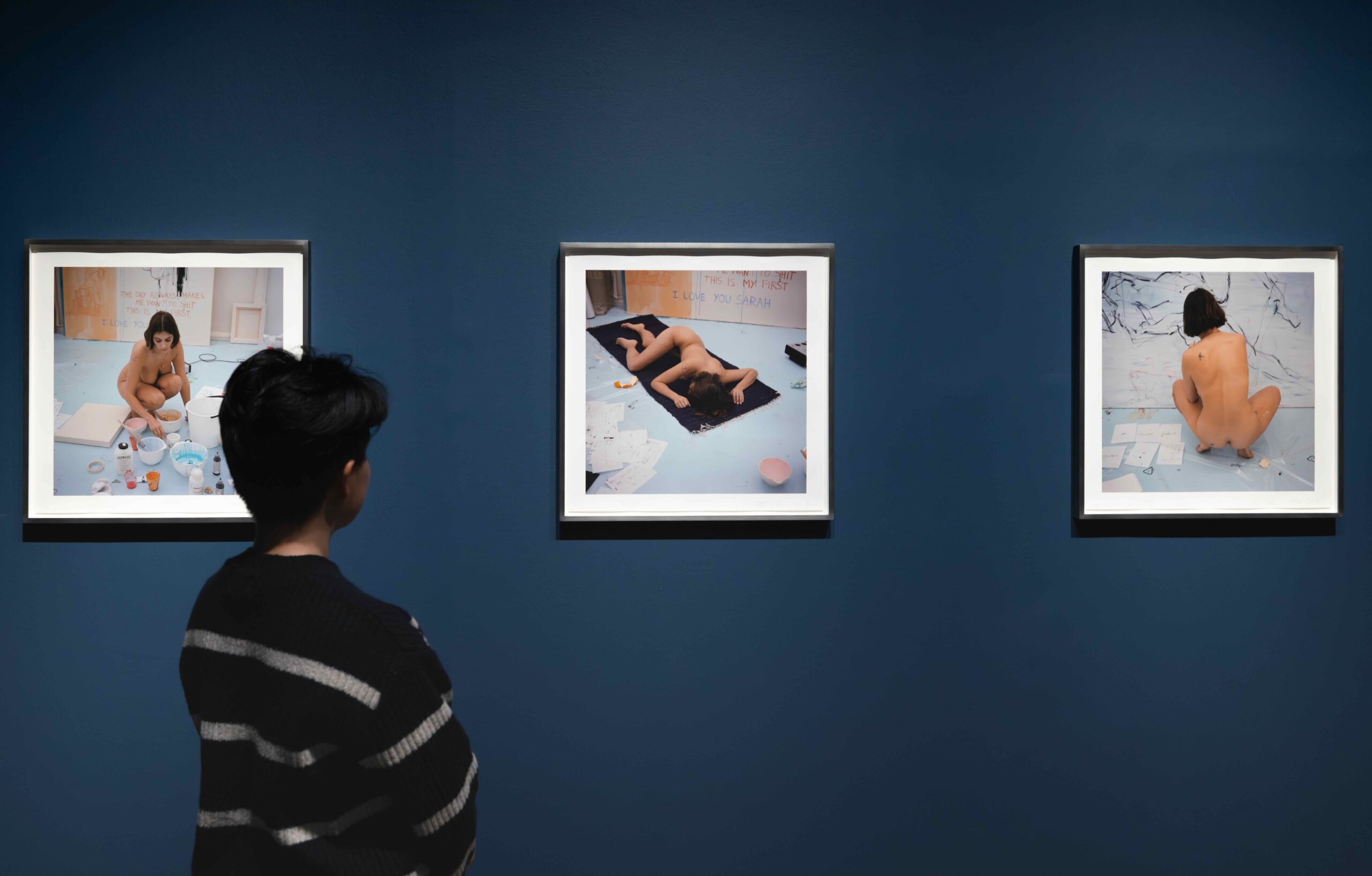
While Emin has had a difficult relationship with her body image, now she feels more appreciative of it than ever. We see this reflected in a small connecting room, a narrow corridor of Emin’s own curation, lined on both sides with glass cases displaying intimate photographs. But the intimacy is of two sorts. On one hand, there’s a series of sexual, erotic Self-portrait polaroids from 2001, and opposite them, there are striking photographs of the artist’s bleeding stoma. An alien mound, protruding from the body, dripping ‘blood tears’, as she calls them. On the surface, the two sets of images may seem like polar opposites, yet she treats them both with the same grace and finds space to reconcile. And though the juxtaposition seems so obvious it’s bordering on cliché, Emin’s almost naive honesty charms me once again.

Life After Life
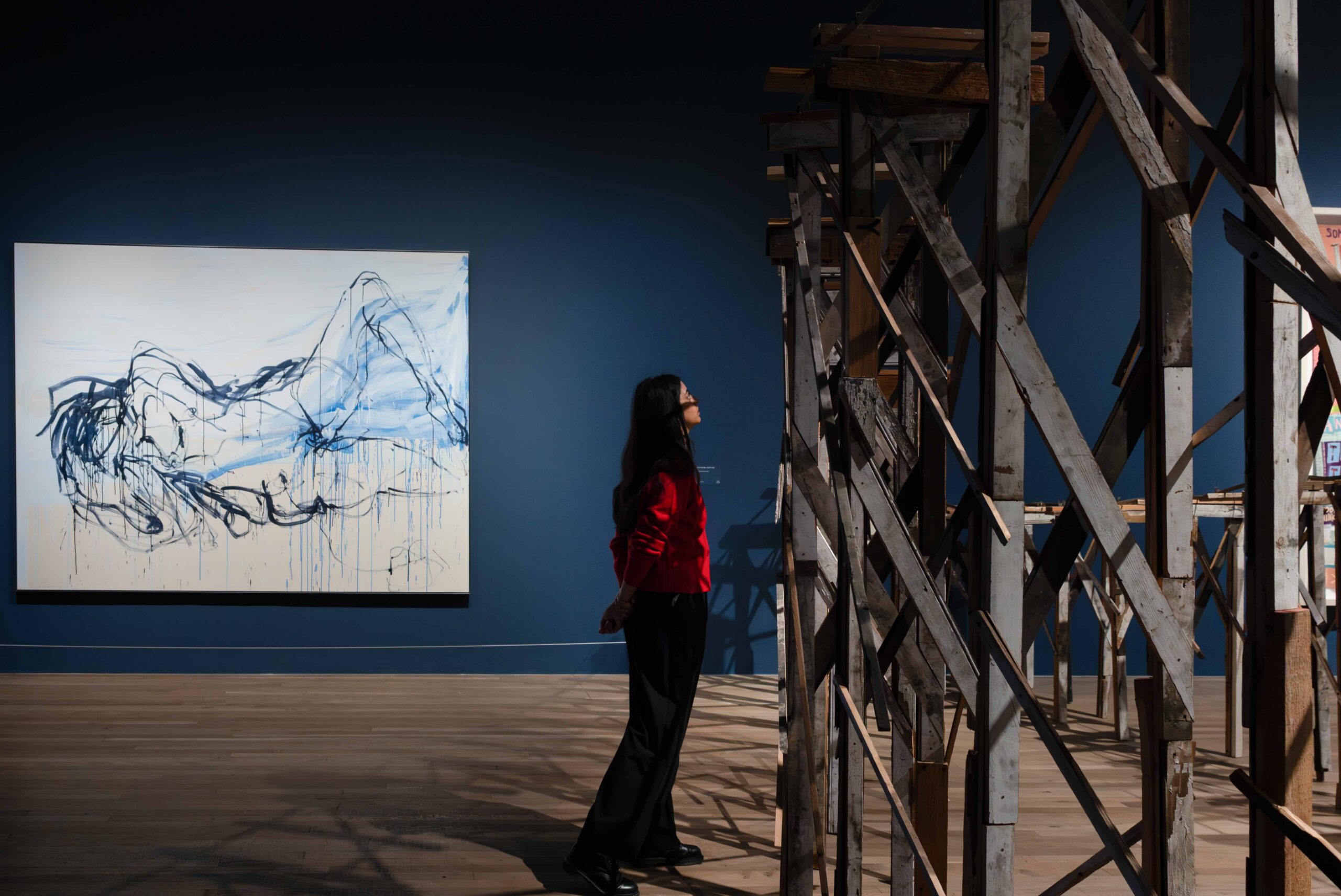
The show closes with a room of recent paintings that speak to triumph over death and determination in the face of hardship. The exhibition ends a bit painting-heavy, to the point where the works start to dilute each other, overworking similar imagery for varied themes, with a few exceptions like I was too young to be carrying your Ashes (2017-2018), portraying the artist carrying her mother’s urn or The Crucifixion (2025), depicting all three crosses on the mount of Golgotha. Between them stands Emin’s death mask, which she cast in 2002, at the age of 39. Defiant and transcendent. The room is split by the axis of life and death, marking the time before and after her illness. The first life and the second life.
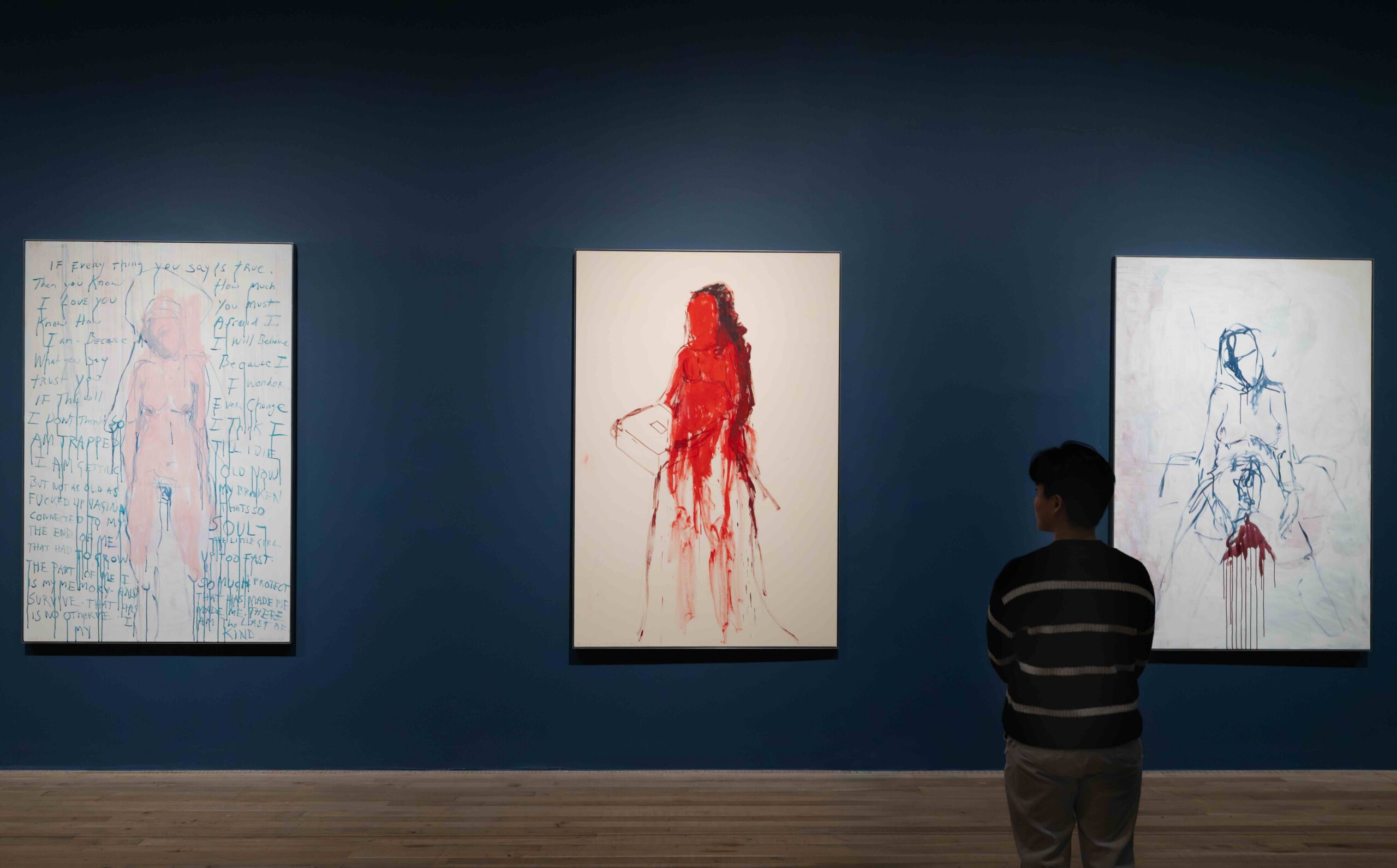
The space ends with a striking painting from 2023, I Watched Myself Die and Come Alive. Now, at 63, she leaves the rooms behind and enters a new chapter. By this point, A Second Life has made clear that the chapter itself is the medium. Emin has always sold us the raw material of survival, and that’s what makes her — her. Here, increasingly, she sells us the narrative of survival, and the two are not quite the same thing. The paintings in this last room are weaker than the diary pages or the quilts, not because of their visual qualities, but because a life story that keeps declaring its own rebirth eventually asks to be believed rather than felt.
Emin has always sold us the raw material of survival, and that’s what makes her — her. Here, increasingly, she sells us the narrative of survival, and the two are not quite the same thing.