







To look at Ziyi Yan’s (b. 2001, Shandong, China) whirlpools of indigo fluid, candied volcanoes and stretched nylon skins is to unsettle your preconceptions of what a body looks, feels and moves like. Through multimedia sculptures and paintings, the Glasgow-based artist examines how gender, sexuality, illness and ageing manifest in the body, and what societal norms are placed upon them.
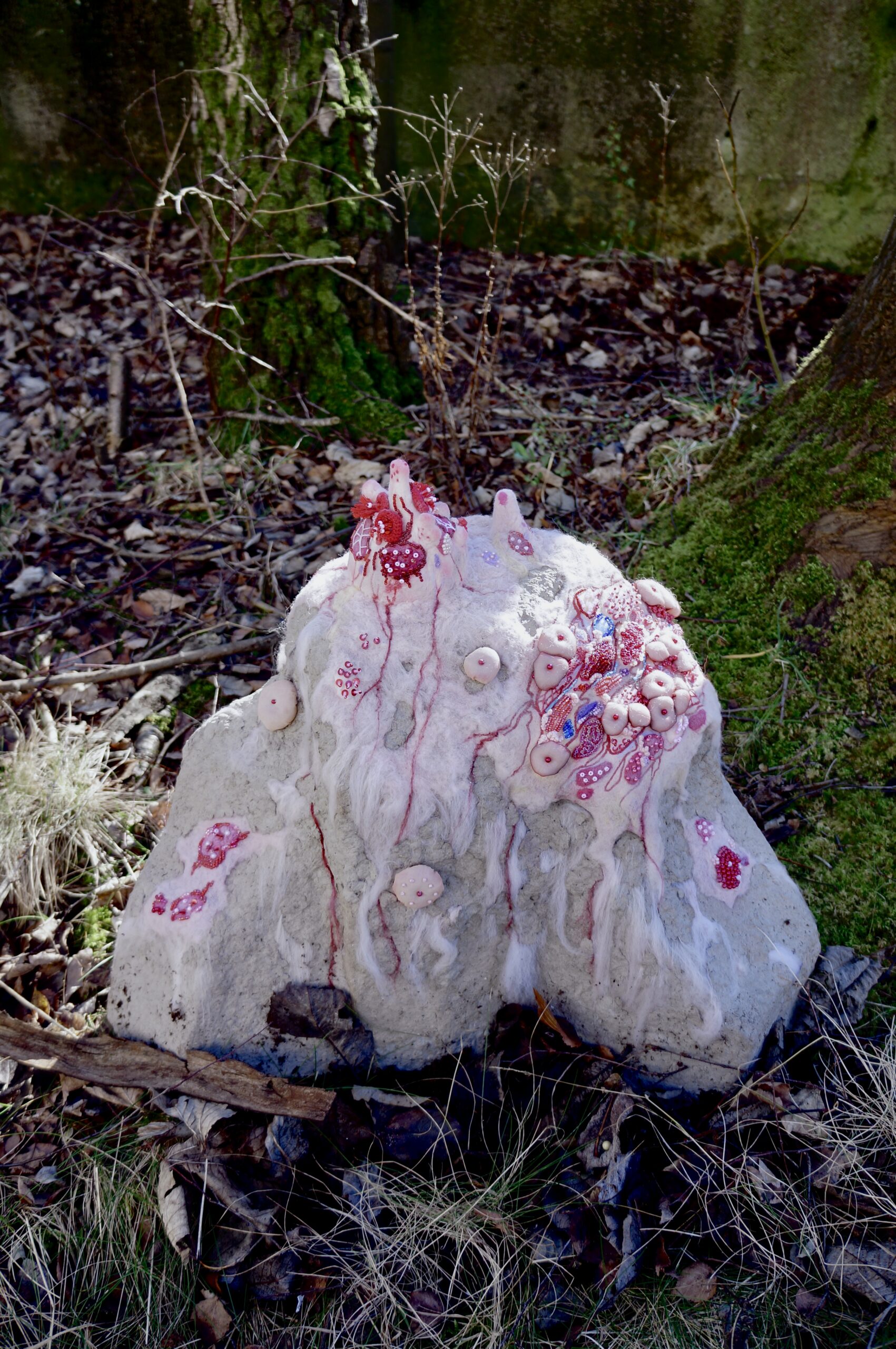
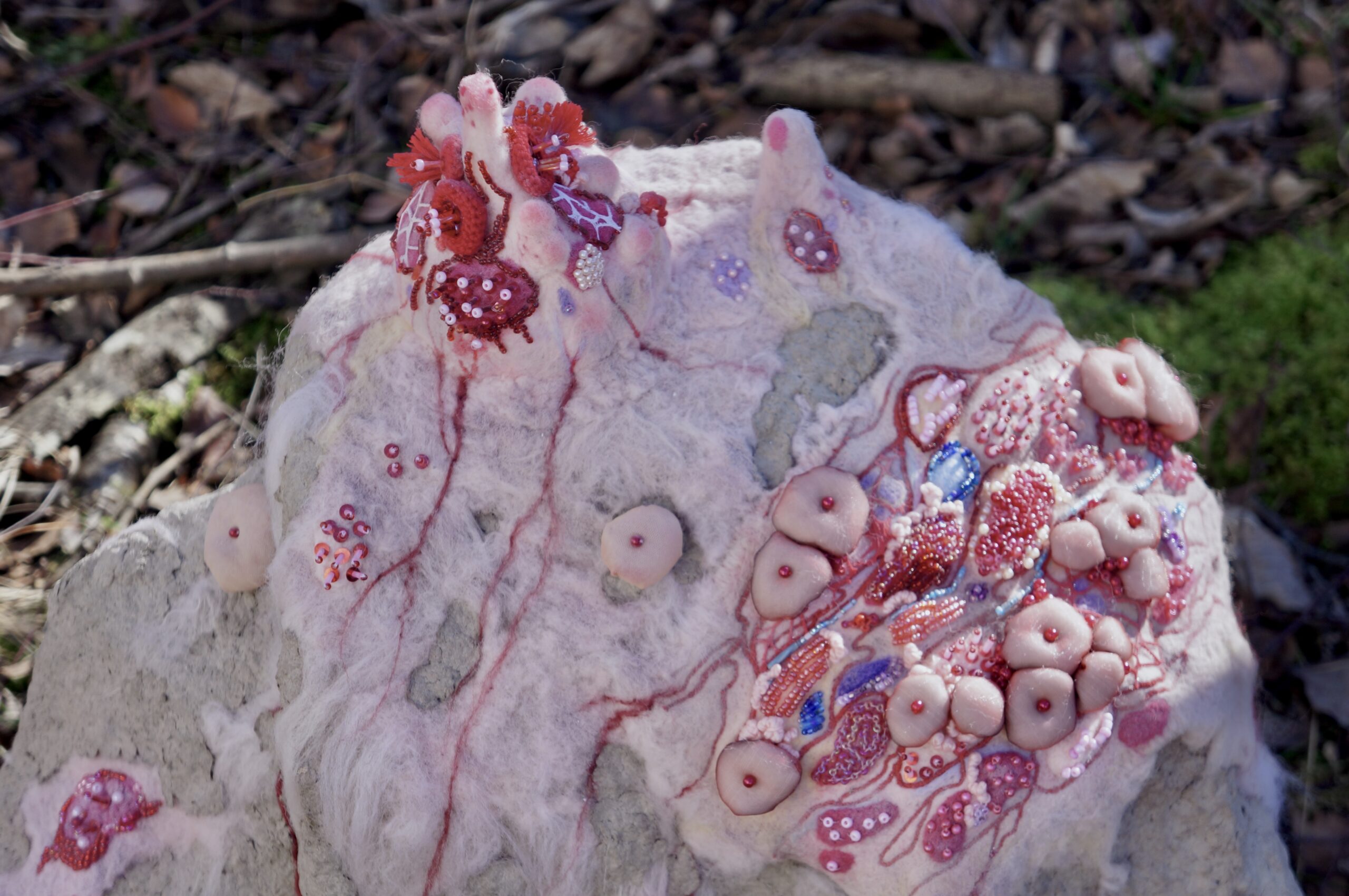
What the body records (2026), a felt soft sculpture of organ-like forms in fleshy shades, raises questions of societal expulsion. Like Louise Bourgeois and Alina Szapocznikow, who shaped swollen forms from resin and polyurethane to comment on illness and pain, Yan adorns her flesh-like form with puffy buttons that evoke the doughnut-shaped cervix, stirring both disgust and intrigue. What is usually seen only in intimate encounters or medical examinations becomes public display. Julia Kristeva defines the abject in Powers of Horror (1982) as the expulsion of what threatens identity, something historically projected onto women’s bodies. By encrusting her bulbous sculpture with these cervix-like jewels, Yan dismantles the conventions of what we deem visibly acceptable bodies.

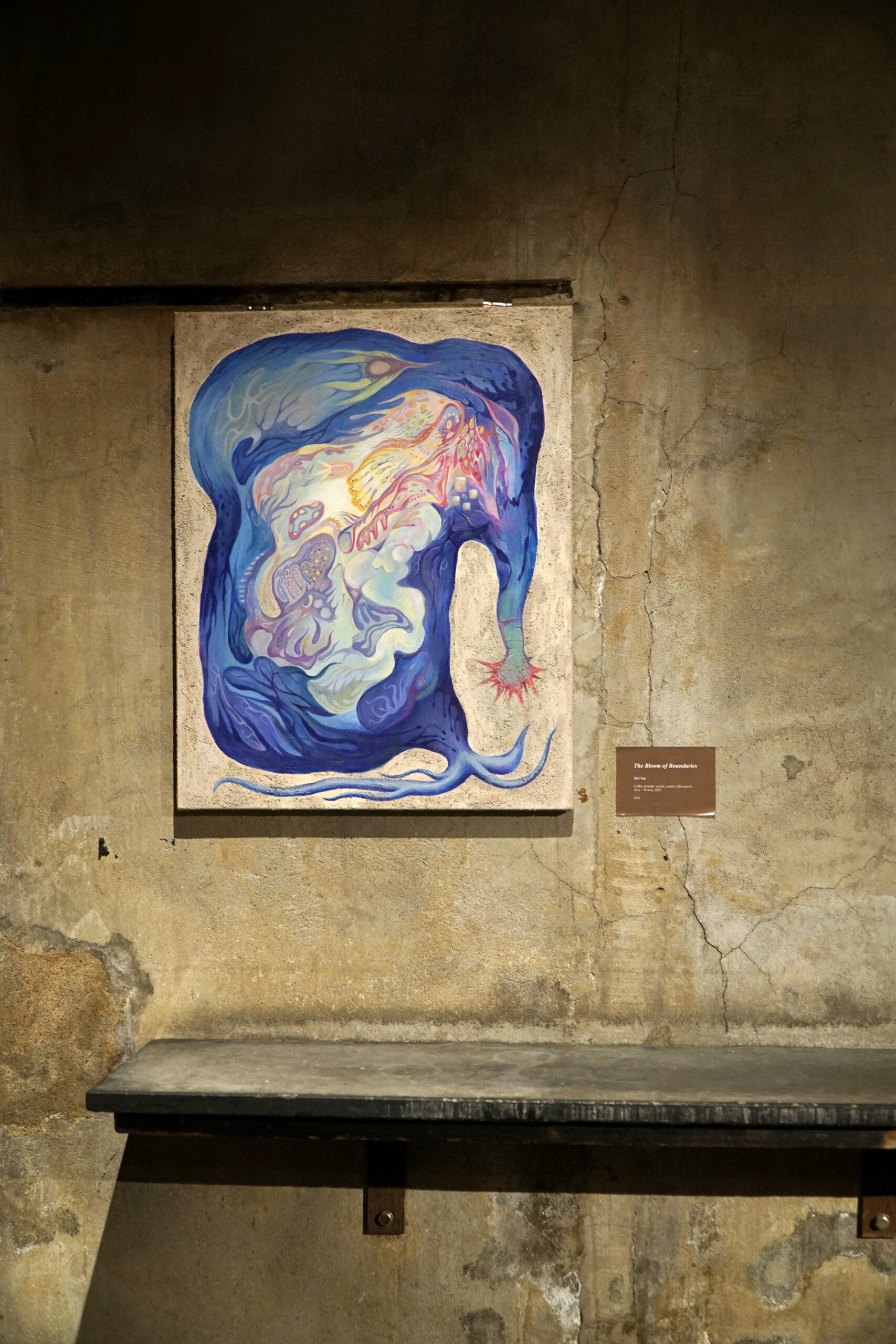
Similarly, the fluidity of paint in works such as The Bloom of Boundaries I (2025) transgresses normative bodily borders. An iridescent, sac-like form drifts across the canvas, resembling a biological specimen yet also recalling the Rorschach inkblot, as if examining external and internal worlds. Snaking and spilling beyond any fixed edge, the amorphous creature defies any fixed bodily state. As Elizabeth Grosz argues, bodily boundaries are gendered: female bodies are often framed as leaky or uncontained, which justifies their social regulation (Grosz, 1994). Through fluid brushstrokes and milky glazes, Yan’s painting refuses to be contained. She joins a long lineage of women artists, such as Lynda Benglis, whose expressive visual language resists the policing of women’s bodies.
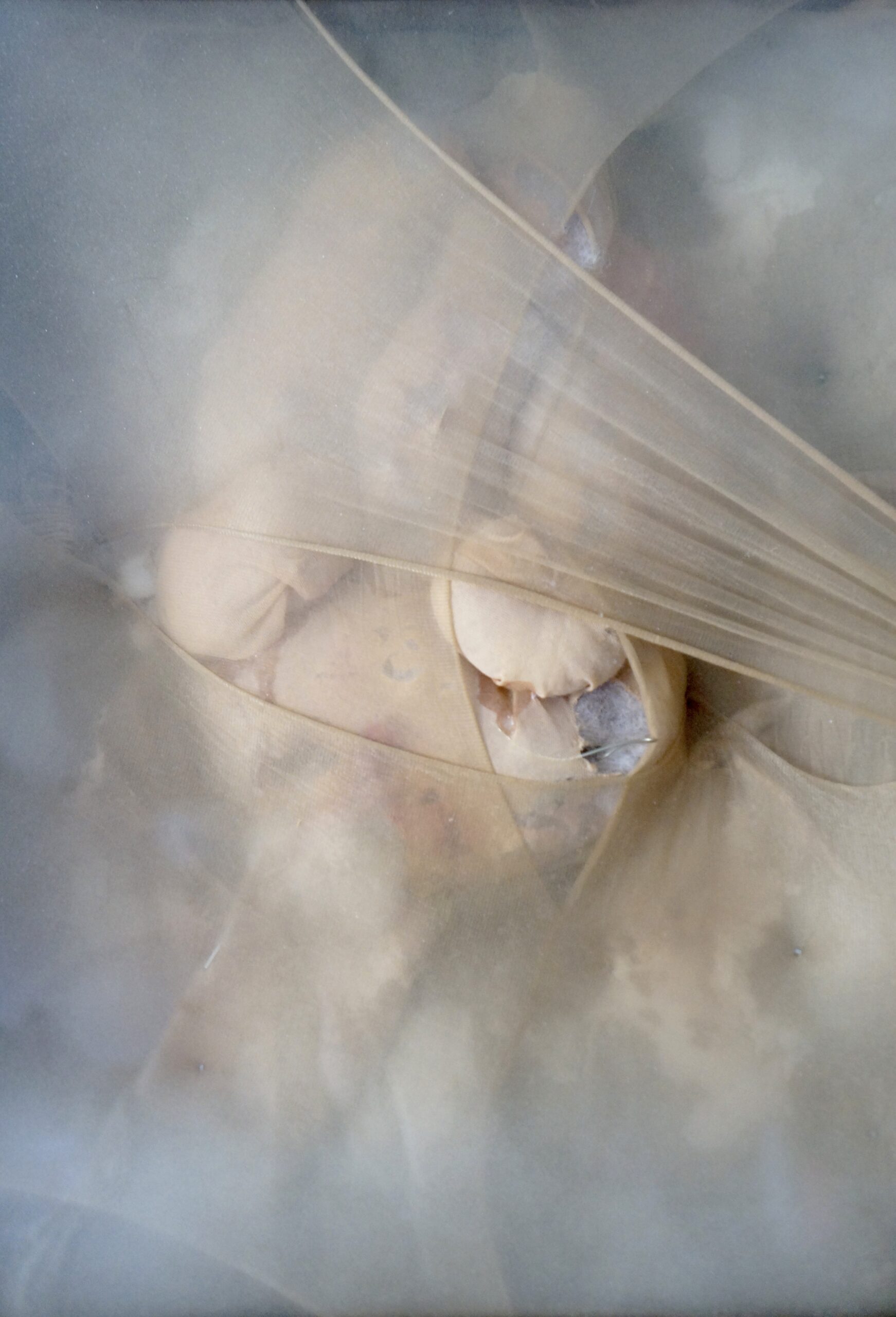
Enfolding (2026) breaks beyond the two-dimensional canvas, disrupting the conventions of mixed-media painting. Limb-like boulders wrestle beneath a swathe of nylon that spills over the frame, reaching toward the viewer. In Queer Phenomenology (2006), Sara Ahmed argues that space is shaped by the bodies that inhabit it: ‘orientations’ repeated over time make some spaces easy to inhabit and others hostile. Read this way, Enfolding asks who is permitted to perform this movement. The elasticity and malleability of nylon heighten this disquiet, making Enfolding a queer form that departs from the normative body.

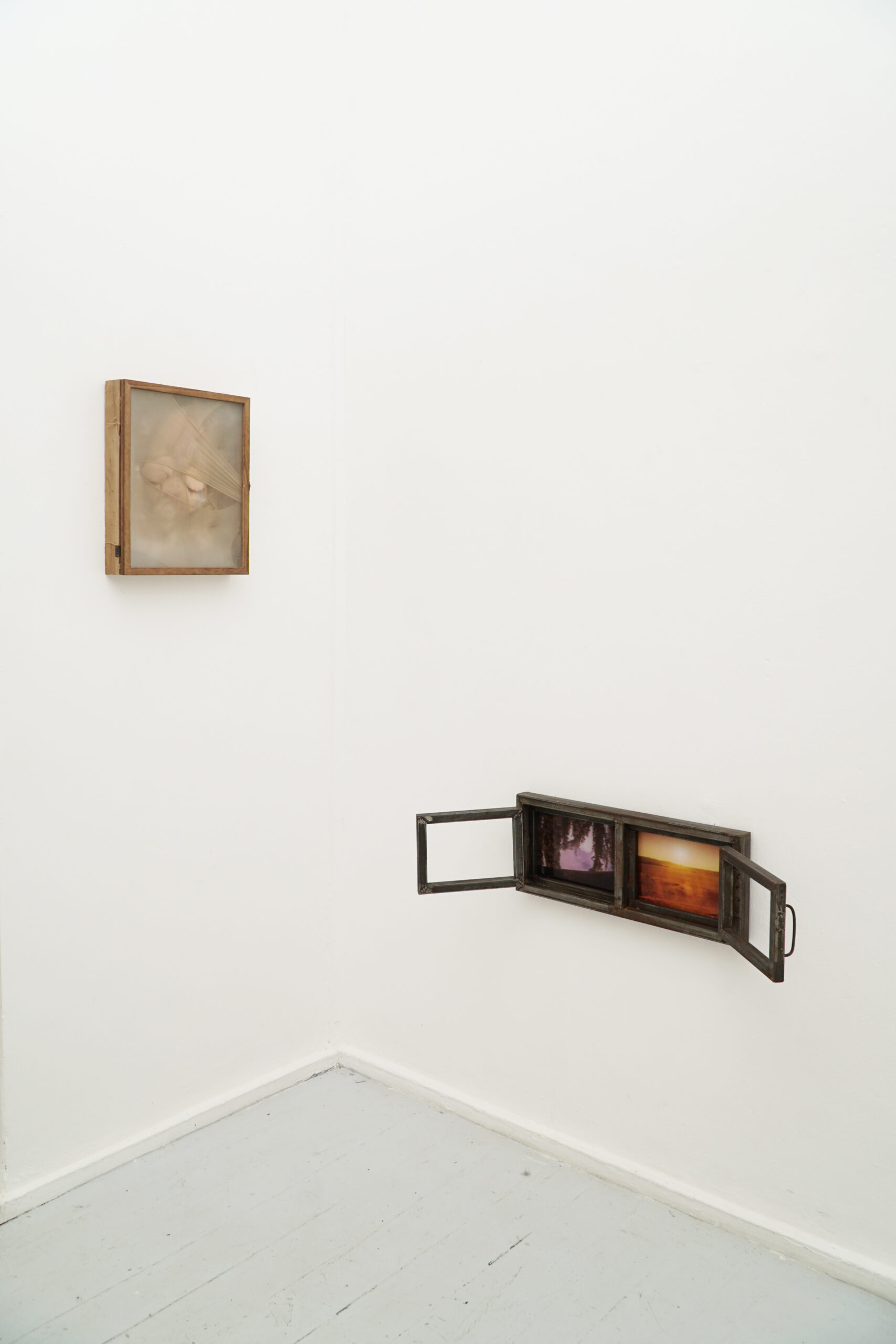
Across paint, fabric and soft sculpture, Yan turns fluidity and elasticity into a means of resistance. Her unusual materials and expressive, dynamic compositions refuse to settle into fixed borders, just as the bodies they evoke refuse to conform to a single standard. In making the viewer confront what is usually hidden, leaking or stretched beyond its limits, Yan does not simply depict an alternative body; she asks who defines the normative body in the first place.
Artist’s website: here