



Would you like to turn a fleeting thought into a digital image? Do you notice plants growing between paving stones when you walk around the city? How would you transform discarded infrastructure into a thriving cultural centre? These are just some of the questions that can be a starting point for discovering this year’s Arte Laguna Prize finalists’ exhibition. The artists selected for the show take very different approaches, but their works encourage us to look more closely at the world around us — and perhaps reconsider what we thought we knew.
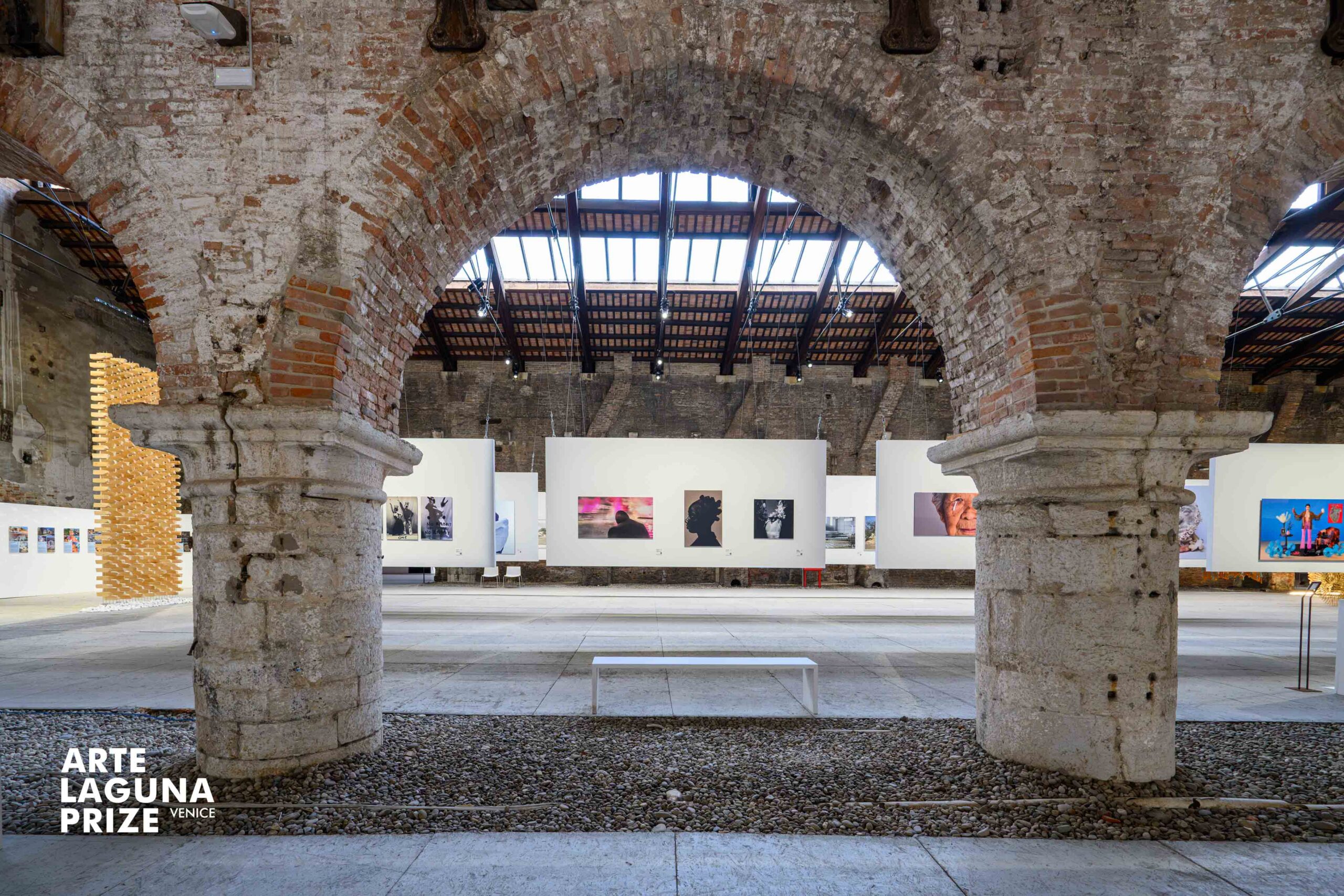
The exhibition opened on 6 November at Arsenale Nord in Venice, bringing together 240 finalists from over 50 countries. This year’s presentation spans the 20th and 21st editions of the Arte Laguna Prize, with the overall winners of both editions announced at the opening: Georgian artist Elene Tavadze, recognised for her stop-motion animation Elene Dariani (2024), and Belarusian artist Kseniya Khamiankova, known as theatrical_hunt, awarded for her photographic series ROUTINE (2026). The exhibition is open to visitors until 29 November 2026.
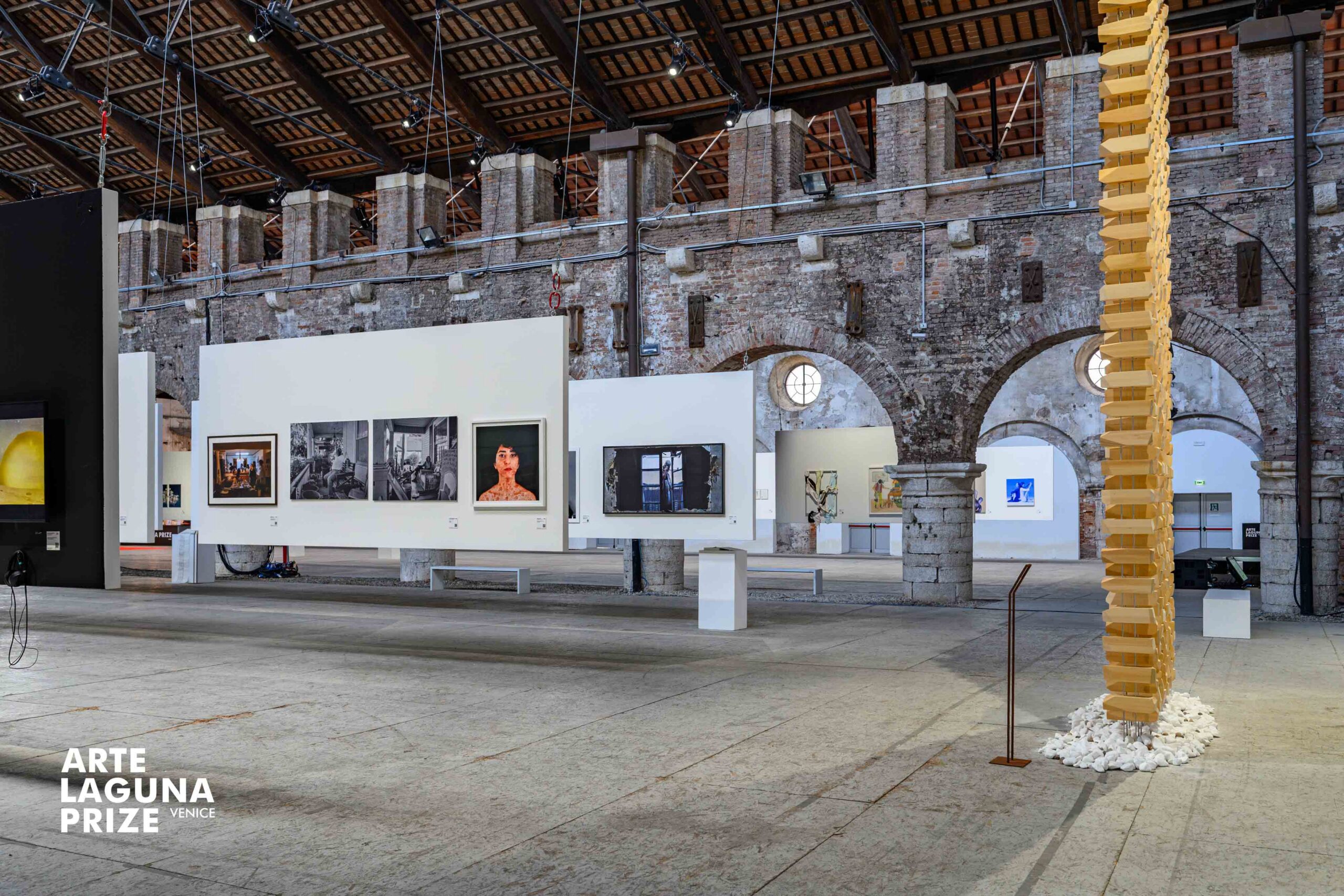
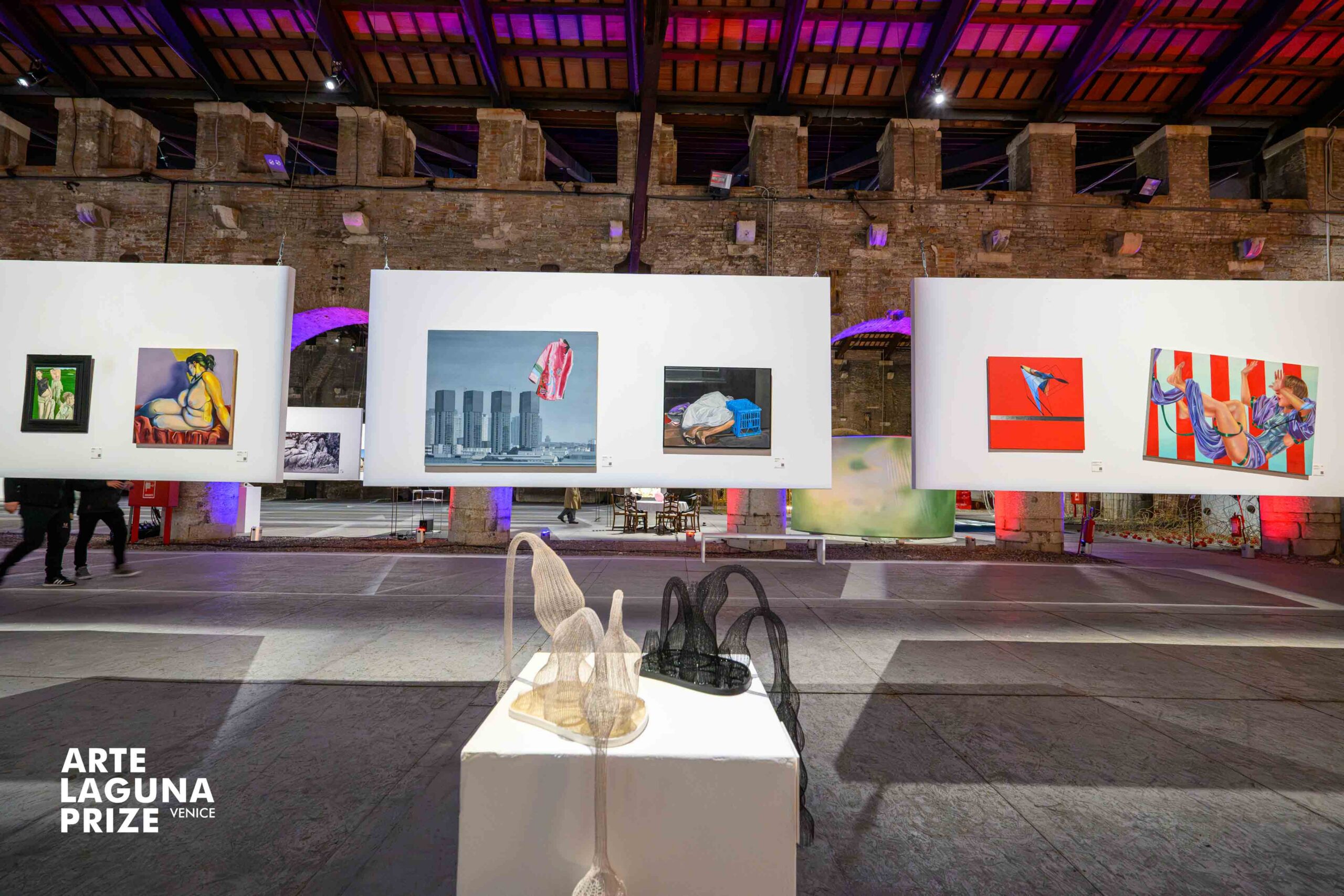
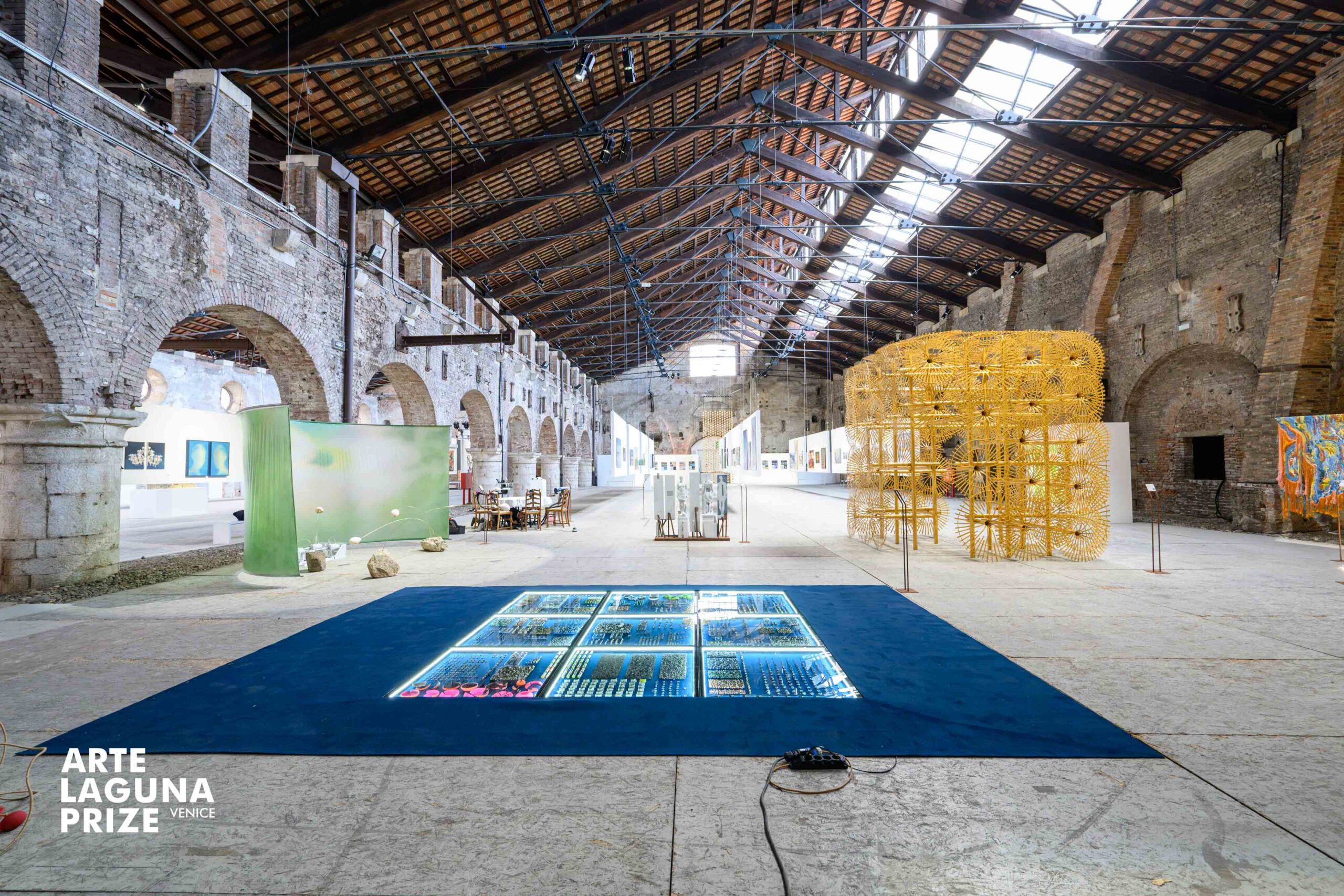
Among the many works on display, we have selected ten projects that caught our attention for their distinctive perspectives and approaches. Spanning photography, video, sculpture, installation, digital art and more, they explore subjects ranging from personal and collective memory to ecological awareness, the relationship between humans and technology, and diverse forms of personal expression. Together, they offer a glimpse into the variety of practices and ideas shaping contemporary art today.
ROUTINE (2026) by Kseniya Khamiankova (theatrical_hunt)
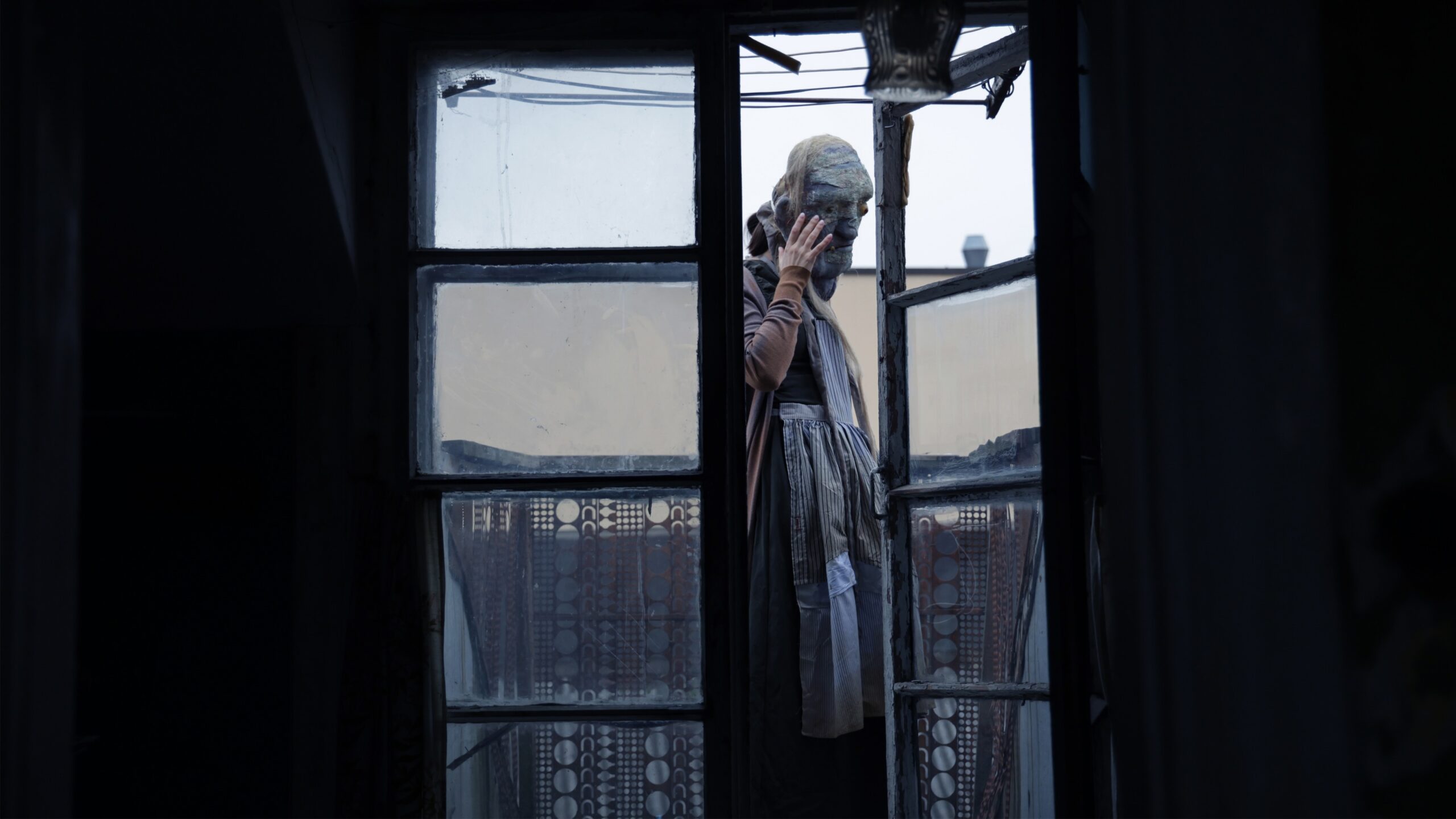
The overall winner of the 21st edition of Arte Laguna Prize, created by the Belarusian artist known as theatrical_hunt. This eerie, large-scale photographic series is based on Franz Kafka’s 1915 novella Metamorphosis, which tells the story of Gregor Samsa, who wakes up one day to find himself transformed into a huge insect. Khamiankova’s photographs reflect on the moment in which the family’s cleaning woman discovers the dead body of the transformed Gregor, who ultimately died after being unwanted and neglected by his family.
The artist doesn’t illustrate Kafka directly. She is more interested in creating conditions that allow people to experience the emotions evoked by the situations depicted in his works. In this series of photographs, she focuses on anxiety — a pervasive sense of being out of place amid familiar objects. Shot in an abandoned apartment in Vilnius, the images picture a woman standing on a balcony, framed by the window with peeling layers of paint. There are several photographs in the series, with only one showing the scene as a whole, while the others centre on its fragments, heightening the overall ambiguity.
The woman holds a grotesque mask depicting an ageing, seemingly decaying face, its surface peeling away, much like the paint on the window. As the artist explains, everyone in her interpretation of Kafka’s story wears a mask except Gregor, because the real transformation takes place among those around him. The masks obscure the characters’ emotions and motivations, leaving viewers uncertain about what lies beneath their expressions. This sense of ambiguity echoes Gregor’s own experience of waking up in an unfamiliar body, left isolated and rejected.
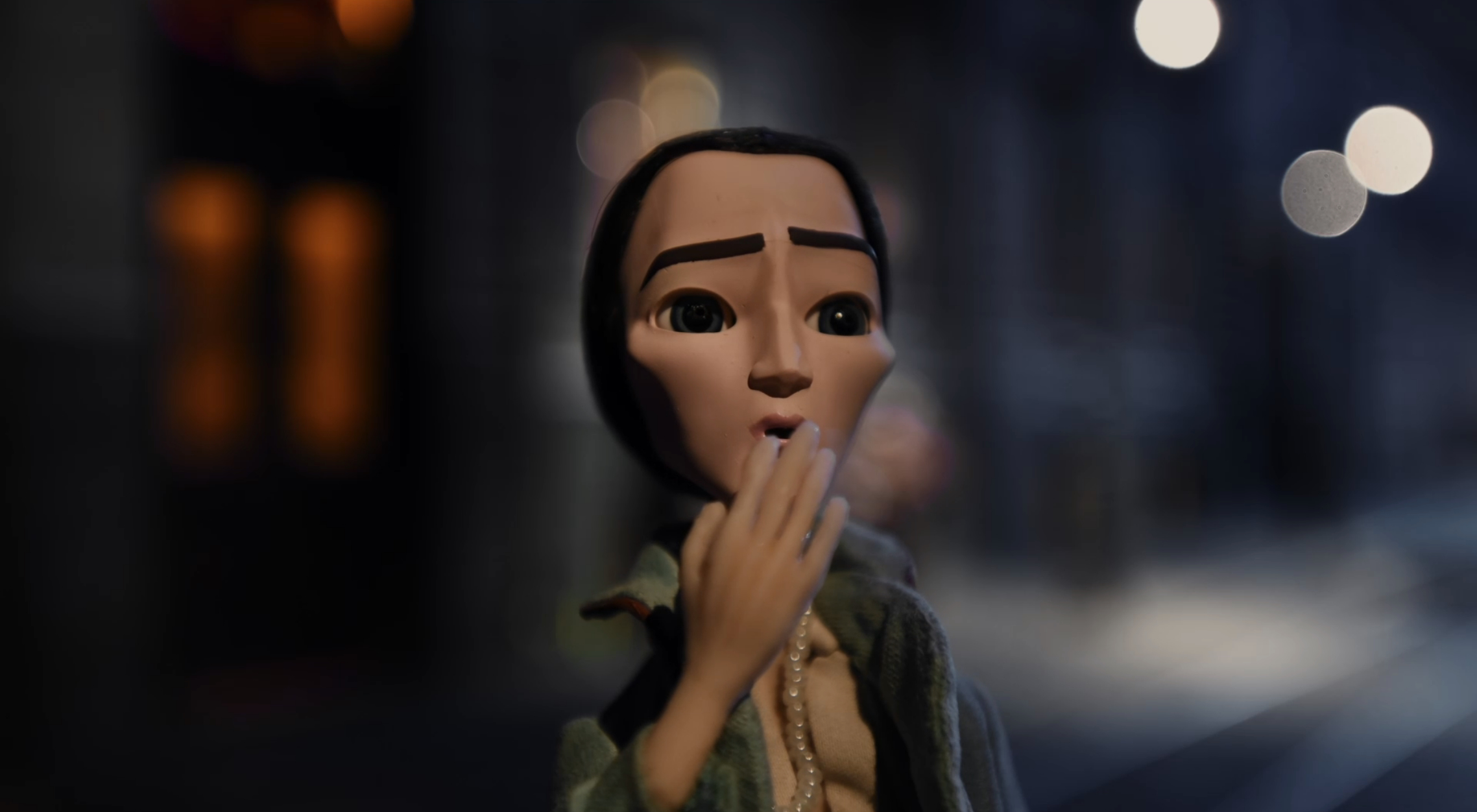
Elene Dariani (2024) by Elene Tavadze
The overall winner of the 20th edition of the Arte Laguna Prize, this stop-motion animation by Georgian artist Elene Tavadze tells the story of Elene Dariani, long regarded as a fictional persona created by the Symbolist poet Paolo Iashvili. She is now believed to have been inspired by Elene Bakradze, a woman with whom the poet shared an unfulfilled love. The discovery sparked renewed debate about the true authorship of the poems and inspired Tavadze to offer her own interpretation of the story.
The animation explores the emotional dimension of the story, blurring boundaries between fiction and facts. One of the central figures is a black cat, a symbol of Iashvili, who always stays nearby Elene, even when she shares intimate moments with her husband. The animal becomes a way to give shape to a love that could only be realised through imagination and poetry. For Tavadze, however, it is more than a story of two people. The animation allows her to spotlight the liberating power of creative expression — how art can give form to feelings that might otherwise remain unspoken, and how these intimate experiences can resonate with others across generations.
In their decision, the competition jury also highlighted the materiality of Tavadze’s work. The tactile qualities of the carefully constructed puppets give the film a distinct physical presence, while the painstaking process of stop-motion animation that brings them to life contrasts with the accelerated pace of contemporary life. Within the reality of the attention economy, the work invites us to pause and appreciate the time and skill the creative process takes.
Resonance – Atami (2023) by Kent Watanabe
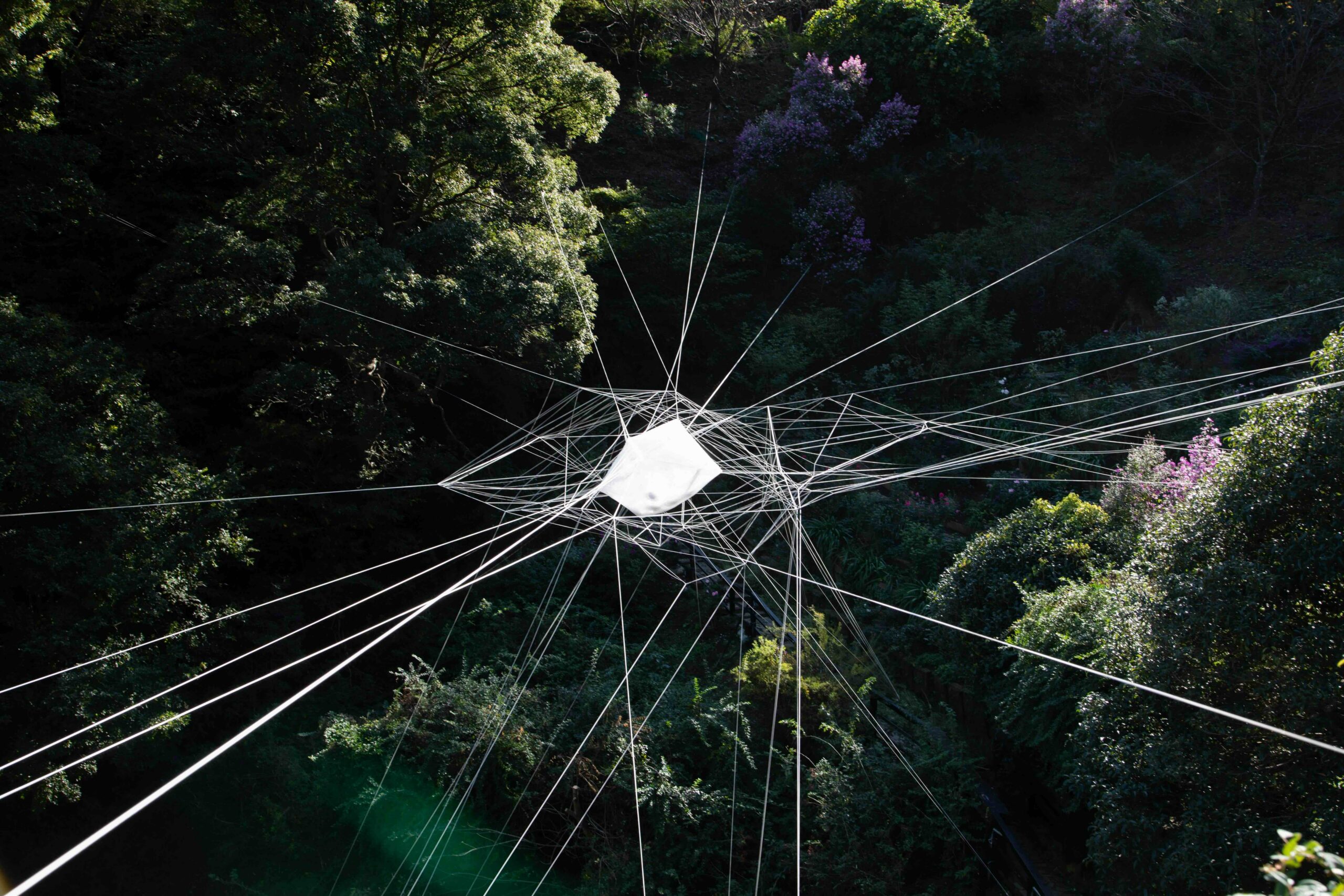
Kent Watanabe is a Japanese artist known for his land art works weaving threads, mesh and membranes throughout natural environments. Resonance was created in a valley on Japan’s Izu Peninsula, where the mountains meet the sea. A net of around 50 metres of cotton yarn is stretched between the trees of the valley, with a cocoon-like form at the centre — a symbol of life and constant transformation. Subject to the natural conditions of its environment, the work becomes an inherent part of it, drawing viewers’ attention to the somewhat invisible undulations of the valley and revealing a weave of relationships that give it its liveliness.
The work doesn’t focus solely on the natural relationships. Watanabe uses a drone to weave and spin the threads in midair, one by one. Moreover, the photographs of the installation taken at night reveal another layer: lights from the towns below are reflected in the threads, making the cocoon shine almost as brightly as the streetlights, becoming part of the intricate web. The work thus brings together natural forces and human-made technologies, suggesting that both are part of the same network of relationships.
Hello Bloom (2025) by Yun Ju Chen
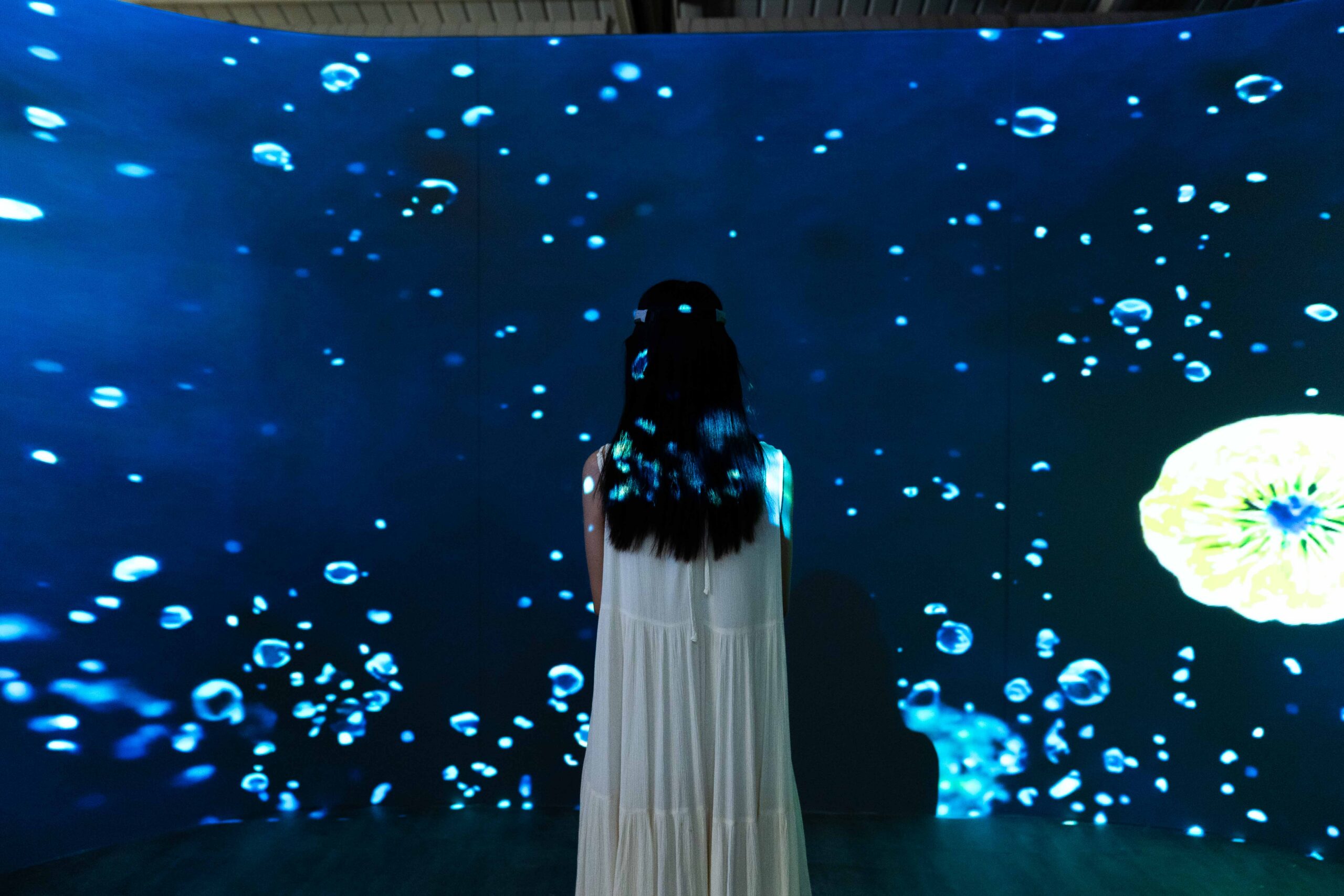
Taiwanese artist Yun Ju Chen explores the relationship between the human and digital worlds through an immersive, interactive installation that combines generative AI with brainwave-sensing technology. The work translates users’ brainwave data into digital flowers that bloom within a virtual landscape. Each interaction produces a unique result, but the flowers can be preserved in a digital “Memory Garden”, becoming visual traces of purely neural activity.
Chen’s project offers an intriguing thought experiment in the context of rapidly developing AI technologies and the possible futures they may bring. It is based on a vision of the year 2050, when humans might be able to generate entire environments through thought alone. In this imagined future, intention becomes the starting point of creation, while communication no longer depends on language or commands. Instead, thoughts themselves become a means of expression.
Interplay 1 (2025) and Interplay 9 (2026) by Julia Smirnova
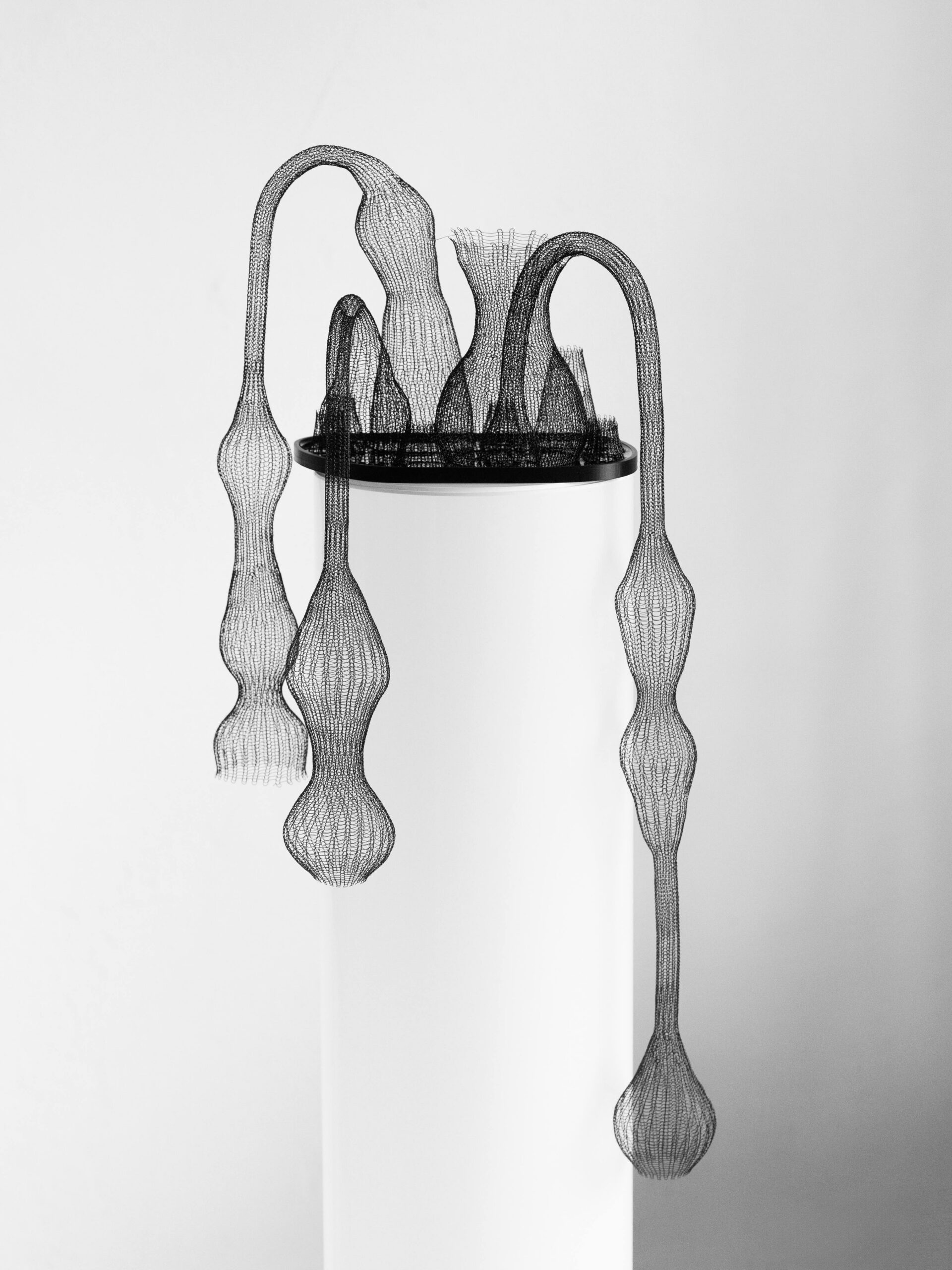
Julia Smirnova creates ephemeral-looking objects by crocheting copper wire into delicate, intricate structures. The two sculptures presented at the Arte Laguna Prize exhibition resemble a set of vessels standing on a platter. Yet their porous, fragile surfaces make them look more like remnants of long-gone objects, or sketches of something that has begun to lose its shape in our memory.
The works also have a surreal quality. Their elongated, drooping forms bring to mind Dalí’s melting clocks, and their structures seem to hover between the organic and the mechanical. A particular tension between material and form is present in these sculptures: they are made of a durable industrial material yet appear fragile, almost on the verge of dissolving, as if they were undergoing a transformation that has been momentarily suspended. The result is an impression of something caught in an uncertain state of becoming.
A Thousand Years of Dreaming (2024) by Paul Debashish
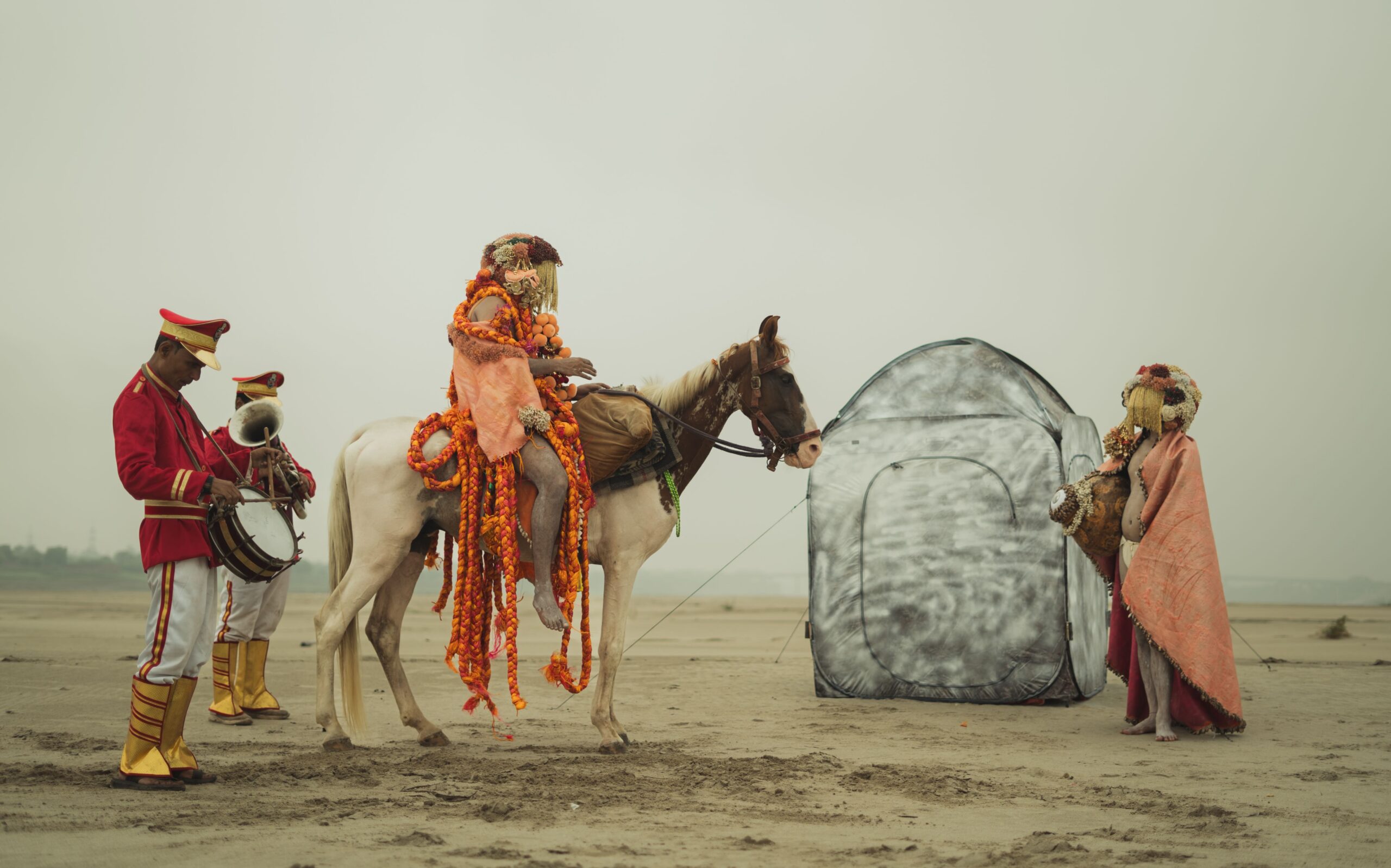
This performance-based film by Paul Debashish offers an intimate commentary on the lived experiences of queer people, whose identities and stories are often denied visibility and recognition. Set within the landscape of Varanasi, a sacred city where, as the artist describes, “death and ritual merge”, the performance unfolds across empty homes, ruins and ritual sites. The artist himself is at the centre of the work, his body covered with sculptural costumes made from ritual materials. These conceal his individual identity, transforming his body into a symbolic figure.
Transformation and fluidity are central to the performance, which draws on Indian myths and philosophies. The artist draws parallels between the queer body and these mythological figures, whose forms and genders are in a constant state of transformation. Yet the film is about more than representation. It becomes an act of resistance and a ritual of remembrance for those whose dreams of freedom were dimmed, while also imagining a future in which bodies and identities are no longer denied recognition.
Sottobosco / Micro Landscapes (2024) by Ivan Juarez
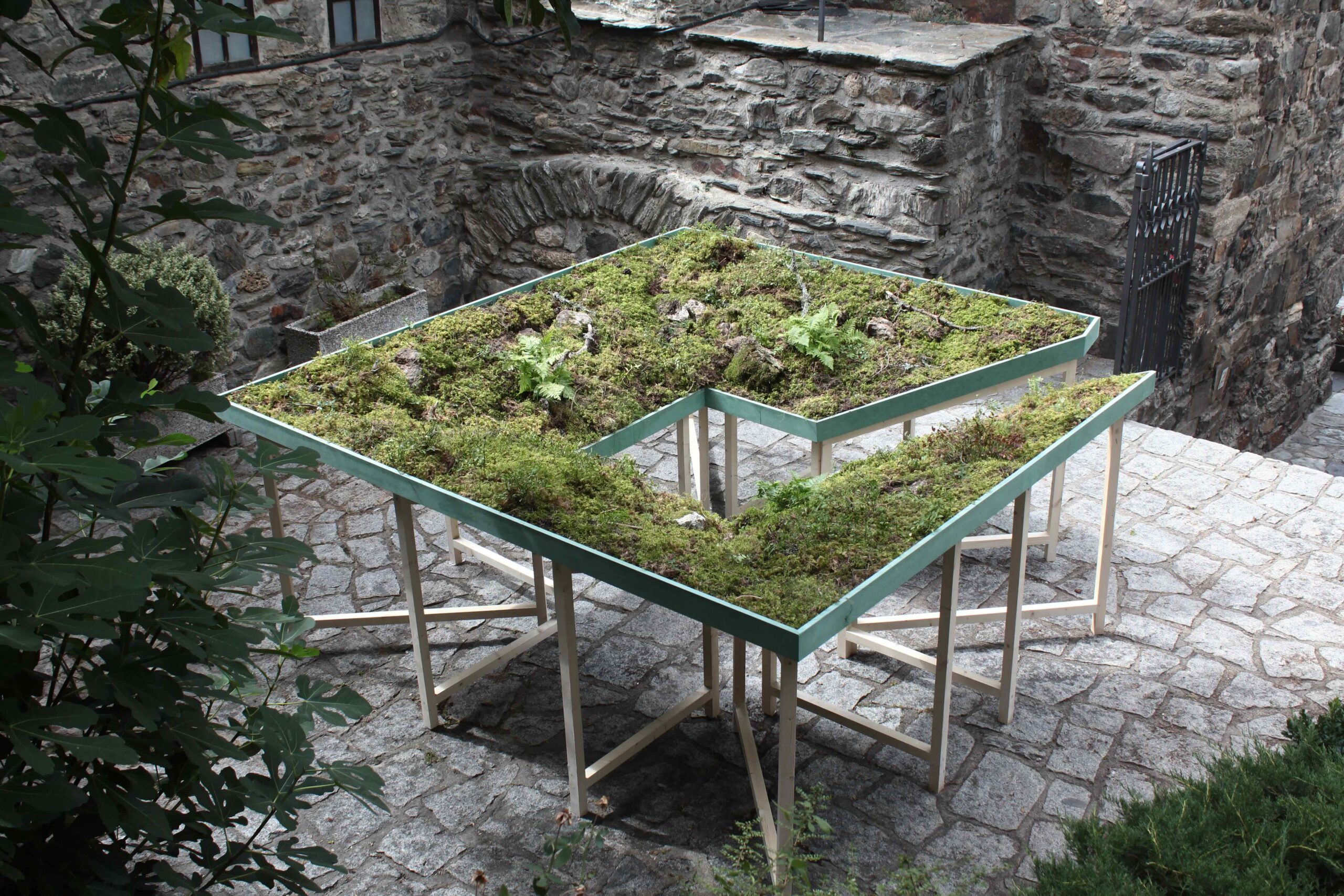
This project by Ivan Juarez is a tribute to a crucial yet fragile ecosystem of undergrowth microplants such as mosses, lichens and ferns. It takes the form of a bio-installation in a rectangular shape with an opening on one side, through which visitors can enter to interact more closely with the plants. The vegetation comes from the eastern Pyrenees in Andorra — a region rich in biodiversity and home to several protected areas of exceptional ecological value.
The project temporarily relocates a fragment of this forest micro-landscape, drawing attention to a world that often goes unnoticed. The undergrowth plays an essential role in maintaining the health of the forest by absorbing and retaining water, preventing soil erosion, creating habitats and enriching the soil with nutrients. By encouraging a close interaction, the installation seeks to foster a greater sensitivity to these fragile microhabitats and an appreciation of their ecological importance. Importantly, the fragment was returned to its original location in the forest after the exhibition, making the temporary relocation part of the project’s ecological approach.
Herbier Strasbourg (Location of Various Ruderal Plants) (2021) by Caroline Elisabeth Schmit
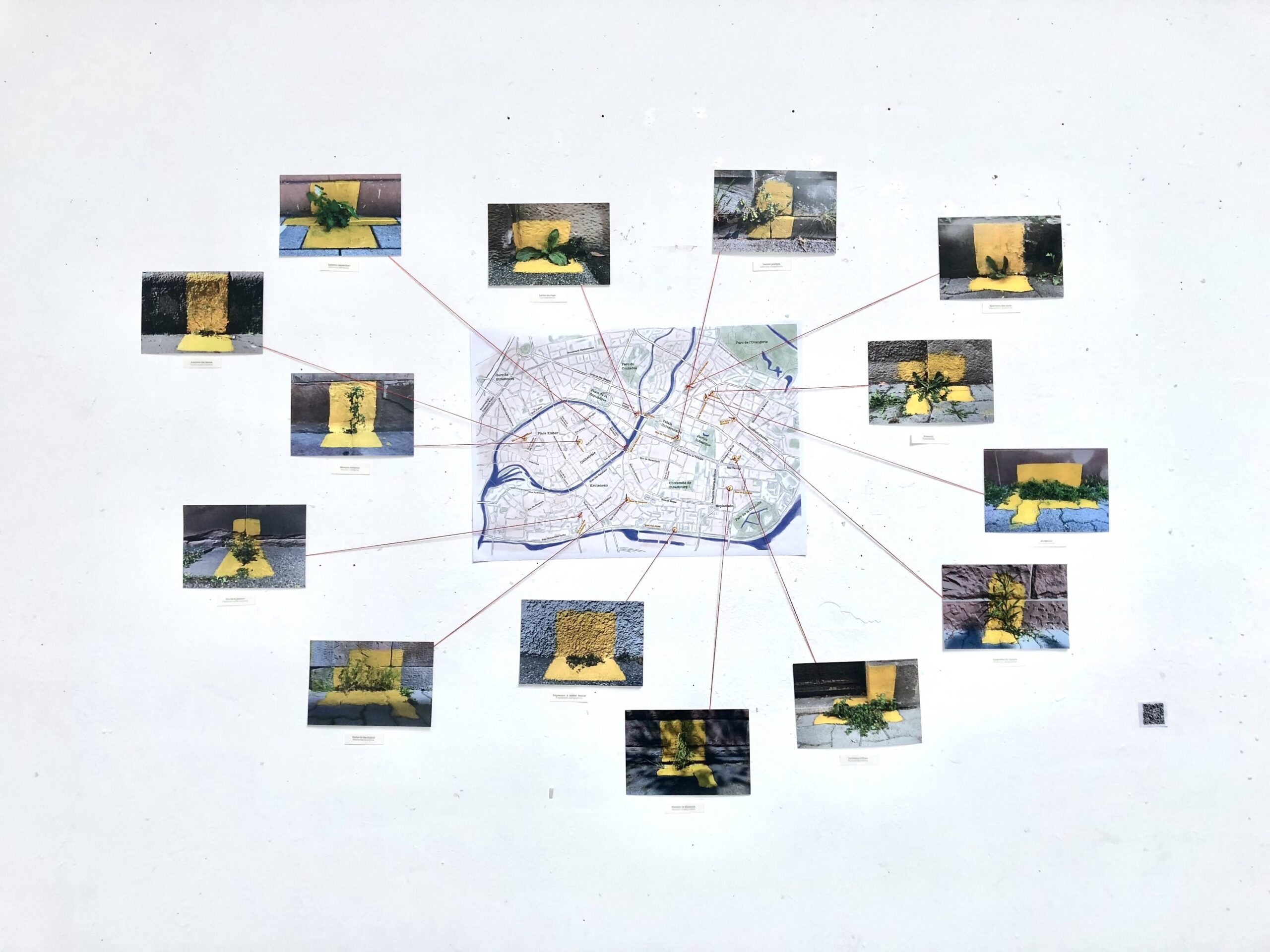
In her project Herbier Strasbourg, Luxembourgish artist Caroline Elisabeth Schmit also draws our attention to often-overlooked plant life, but that which grows in urban environments. She intervenes in the streets of Strasbourg by painting yellow circles around ruderal plants — species that grow spontaneously in places disturbed by human activity, such as pavements and cracks in the asphalt. She then marks their locations on a map and identifies each plant by its botanical name.
The project brings together photography, cartography and a simple gesture of street intervention to encourage a closer look at the natural world within the city. What is usually dismissed as weeds becomes something worth stopping to observe. Schmit’s map is publicly accessible online, inviting residents and visitors to discover these plants for themselves. In this way, the work turns an ordinary walk through the city into an opportunity to recognise the diversity and resilience of urban nature.
Blooming Time (Ofofo) (2021) by Hao Li
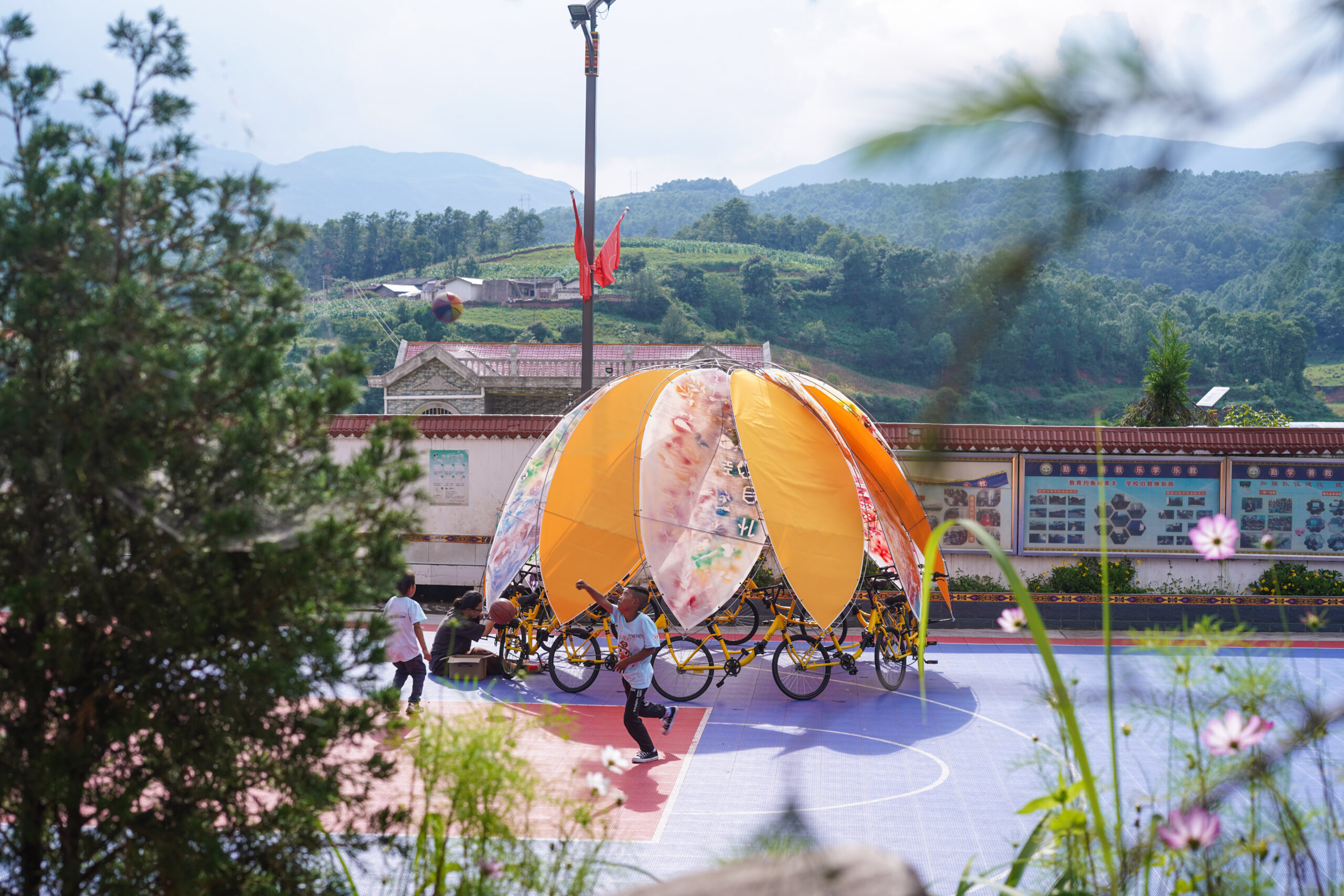
Chinese artist Hao Li transformed the remains of a failed bike-sharing venture into an interactive installation that brings together art, play and education. Made from discarded shared bicycles, the work takes the form of a carousel that visitors can set in motion through collective effort. In doing so, it shifts the bicycles from their original purpose of individual transportation towards an experience based on cooperation and shared enjoyment.
The project also serves as an educational platform, particularly for children in rural areas who have limited access to learning opportunities. Through hands-on workshops, participants use tools, assemble structures and learn by making things themselves. By turning discarded objects into a space for participation, Li challenges the logic of consumerist waste while encouraging creativity, problem-solving skills and a sense of agency.
Resp.tuning (2026) by Megumi Naito
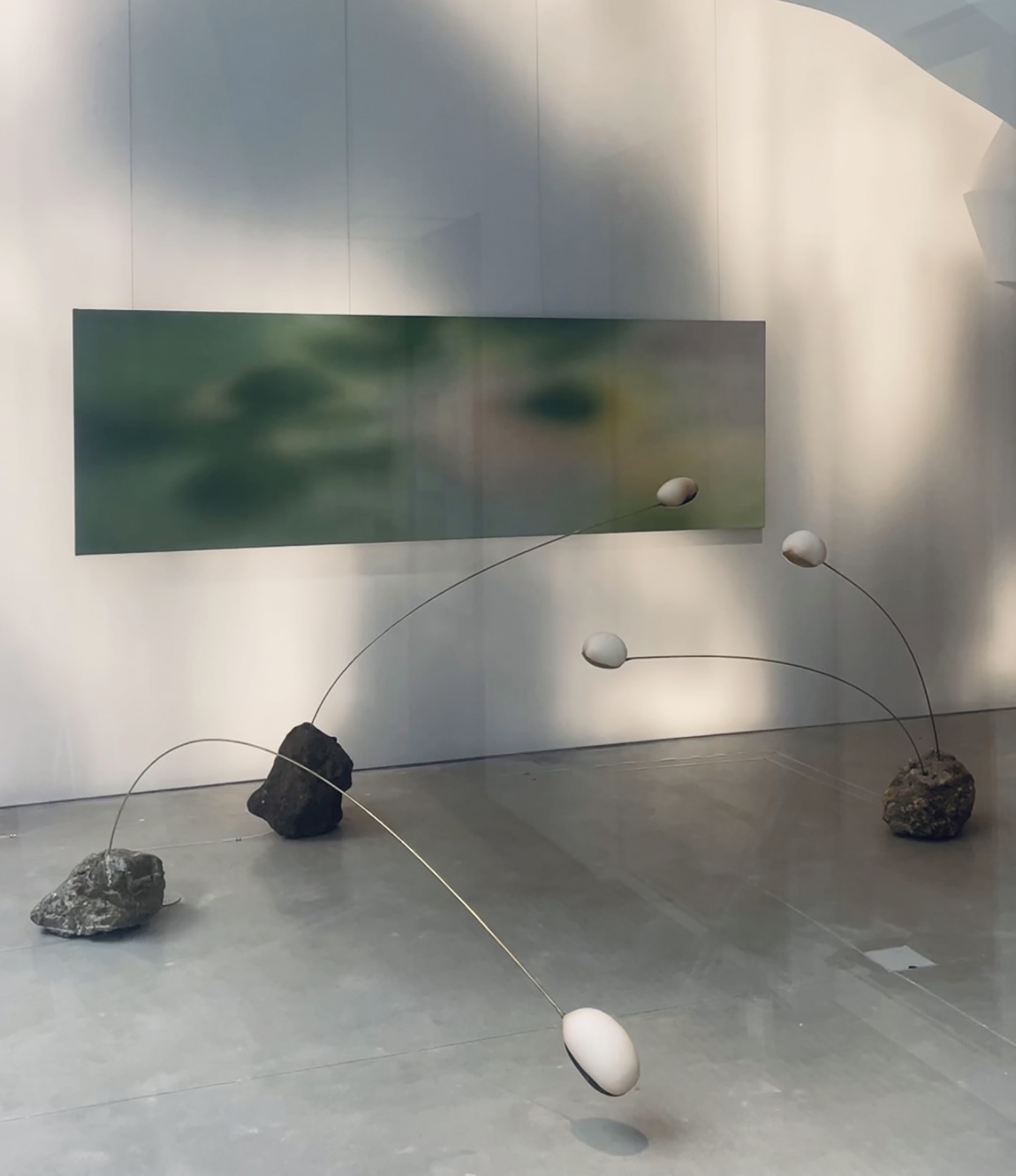
Japanese artist Megumi Naito explores the relationship between living organisms and their environment through a series of kinetic sculptures. In Resp.tuning, soft, cocoon-like forms reminiscent of skin and cells are connected to stones by brass pipes through which water continuously circulates. This movement sets the forms in motion, making them bend, rise and pause in a rhythm that recalls the slow growth of a plant.
The work is part of Naito’s wider resp. series, a title drawing on the words respiration, response and respectively. Rooted in the artist’s memories of witnessing breath at the threshold between life and death, the series reflects on the rhythms and movements that connect living beings with their surroundings. In Resp.tuning, the steady movement of the sculpture is subtly disrupted by the flow of water. The sound of it circulating through the work invites viewers to listen more closely and consider the rhythms within their own bodies, as well as their connection to the wider natural world.