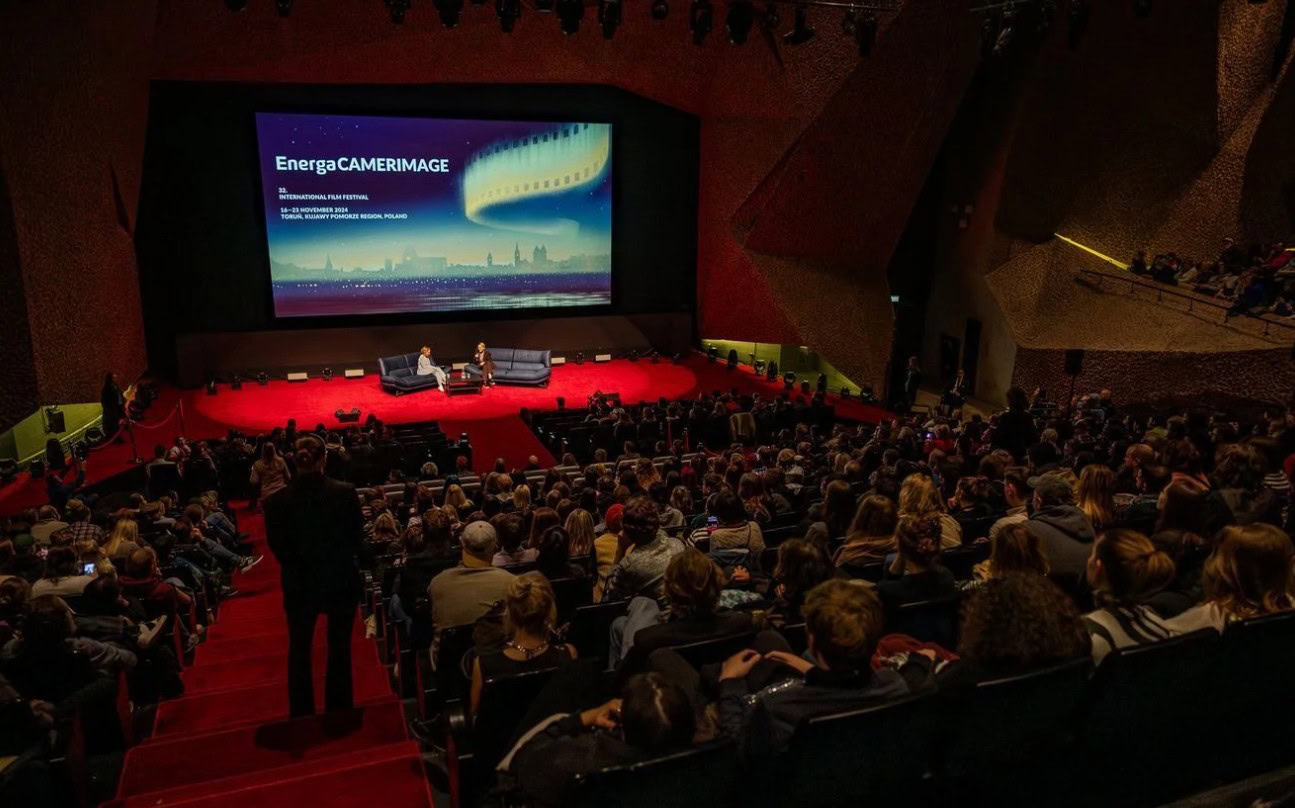





Refracting every possible shade of light, shadow, and emotion, EnergaCAMERIMAGE International Film Festival unveils a grand celebration of cinema for its 33rd edition. From exciting films, outstanding filmmakers, meetings, and presentations of modern film technologies, to a unique atmosphere and incredible experiences, the world’s leading festival devoted entirely to the art of cinematography, once again turned Toruń into a cinematic kaleidoscope.

Established in 1993, Camerimage has evolved from a local celebration of camera craft into a global summit where directors of photography, auteurs, and image-makers meet to redefine what cinema can look and feel like. This year’s edition brings together well over a hundred films across competitive and special sections – from debut features to boundary-pushing documentaries, XR installations, and restored classics.
To choose only a few titles from such a selection is undoubtedly a difficult task. However, here’s a carefully curated selection of ten works standing out not only for their craft but also for their vision. Don’t miss them at the festival and later in the distribution!
Eleanor the Great
In her feature directorial debut, Scarlett Johansson takes on a tender yet surprising meditation on grief, ageing, and the quiet persistence of selfhood, with beloved June Squibb, giving a subtly luminous performance as Eleonor, a 94-year-old woman whose routine is raptured by the death of a close friend. Rather than turning inward, Eleonor’s mourning becomes a courageous re-engagement and re-establishment of herself in her own life as she moves back to New York after living in Florida for decades.
Loss here is not a melodrama but a series of tactile encounters, allowing the story to move with a humane rhythm. Eleonor is stubborn, comic, and profoundly real. Johannsson’s debut is strong in its restraint, with its intimate cinematography (by Hélène Louvart) and a domestically lyrical score (Dustin O’Halloran). But be warned – bring tissues with you.

Sand City (বালুর নগরীতে)
Another debut feature-filmmaker, Mahde Hasan, leads his audience through a quietly intense, visually arresting exploration of urban fragility. Set against the industrial sprawl of Dhaka, the film weaves two parallel narratives – Emma (Victoria Chakma), a young woman from an ethnic minority, scavenges sand each week for her cat’s litter; Hasan (Mostafa Monwar), a glass-factory worker, begins stealing silica-rich sand to realise his entrepreneurial dream of making glass. A chance discovery – a severed finger in Emma’s sand-litter – becomes a haunting metaphor for loss, memory and the porous lines between dream and ruin.
Balancing between social drama and a poetic essay, Hasan builds the world of sand, where the visual layer is simultaneously granular and monumental. This Bangladeshi film won the Proxima Grand Prix award at Karlovy Vary 2025.

The Testament of Ann Lee
Almost unbearably beautiful in its conviction and emotion, Mona Fastvold’s historical musical drama retraces the extraordinary life of Ann Lee, the founder of the Shaker movement, as she abandons everything familiar and leads her followers into a radical new spiritual order. Set in late 18th-century England and colonial America, the film channels its heroine’s ecstatic faith and austere idealism into a cinematic experience – a feverish and rapturous biopic.
At its heart is Amanda Seyfried’s towering performance, embodying Lee’s relentless conviction – vulnerable and fierce, devout and restless. Written by Fastvold and Brady Corbert, following their success of The Brutalist, The Testament of Ann Lee provides layers upon layers of gender, power, faith, and exile woven into the stage of community, departure, and re-settlement.

Hamnet
Chloé Zhao, on the other hand, turns the familiar story of Shakespeare on its head, focusing instead on the private heartbreak of his family. Adapted from the 2020 novel of the same title by Maggie O’Farrell, with great lyricism and restraint, the film follows the quiet sorrow after the death of young Hamnet and how that loss ripples through the lives of his mother Agnes (Jessie Buckley) and his father (Paul Mescal).
Grief here is neither spectacular nor showy but felt, shivered through, and then transformed into art and remembrance. Łukasz Żal (Cold War, The Zone of Interest) uses extraordinary talents as a cinematographer to frame both the rural and theatrical settings in a melancholic light, echoing the great tragedy. As such, it all moves with the stillness of a soul in mourning. Profoundly devastating, yet not to be missed.

All the Mountains Give (همه کوه ها می دهند)
Iranian stark and haunting documentary by Arash Rakhsha moves with the quiet urgency of survival, immersing its audience in the gruelling lives of the kolbras – Kurdish men who traverse the deadly mountain border zones between Iran and Iraq carrying untaxed goods to help sustain their families. Filmed over six years, the film captures the evolving landscape of labour, land, identity, and the longing for something more than mere survival.
With sweeping widescreen frames, foregrounding human vulnerability within vast, indifferent landscapes, Rakhsha achieves a truly haunting political and social-realist picture. Extraordinarily well-shot and deeply moving.

Sentimental Value
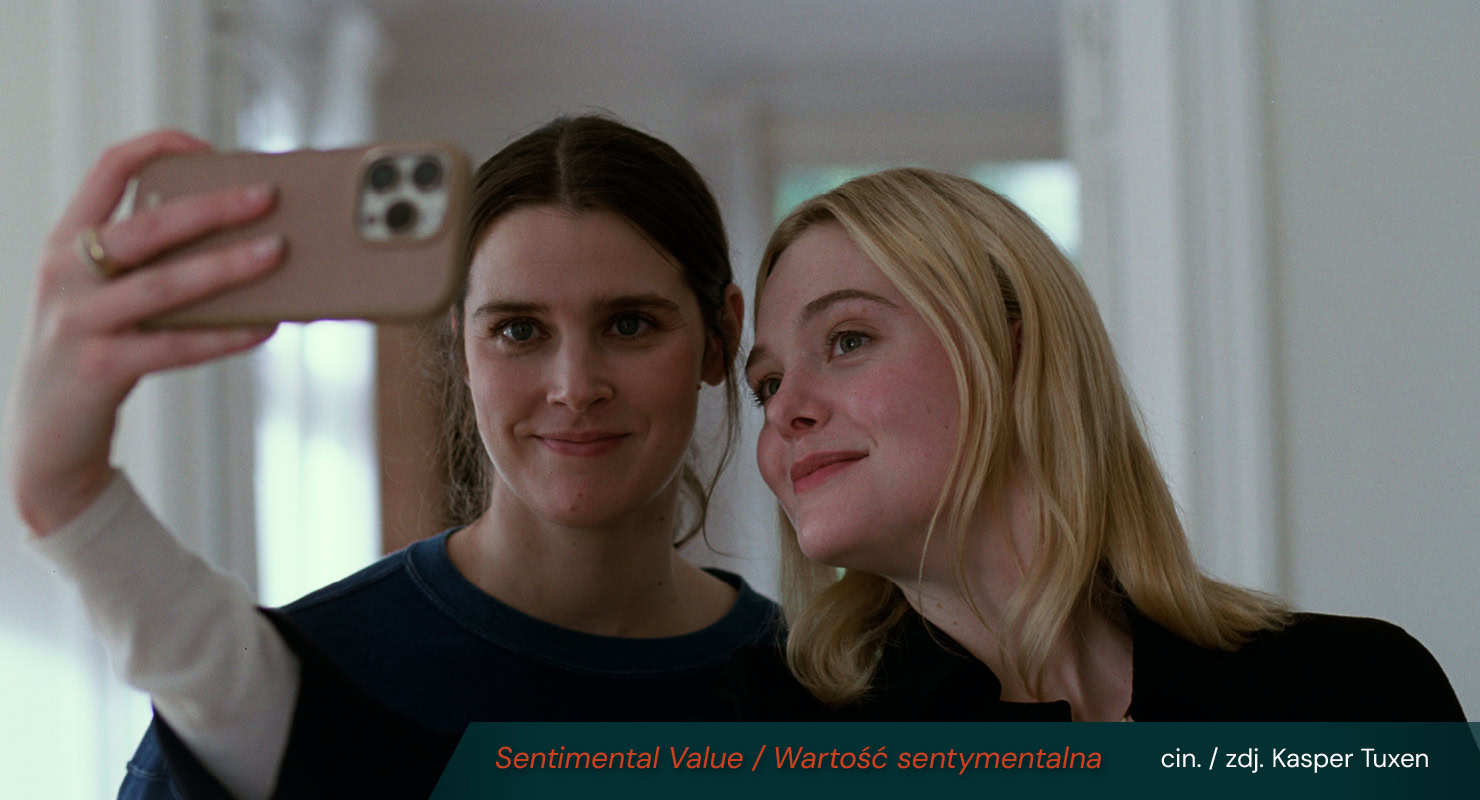
The winner of this year’s Cannes’ Grand Prix and Norway’s entry for Best International Feature Film at the Academy Awards, Joachim Trier’s comedy-drama (with arthouse sensibility) is refined, provocative, and deeply felt. Two sisters – Nora (Renate Reinsve), an actress trying to escape the weight of her past, and Agnes (and Agnes (Inga Ibsdotter Lilleaas), a more grounded historian figure. When their estranged father Gustav (Stellan Skarsgård), a once-famous filmmaker, returns offering redemption in the form of a movie meant to heal old wounds. Nora rejects the role. Gustav turns to a young Hollywood star (Elle Fanning) instead — a decision that forces the family to confront not just each other, but the house, the memories, the fractures they never fixed.
It’s a film that moves with the subtle insistence of lived lives, with the camera lingering on the quiet ache, resulting in a composed, elegiac texture – the past is always present.
Reedland (Rietland)
Set amidst the silent reedlands of the Dutch countryside, Sven Bresser opens his feature debut with Johan Gerrit Knobbe) performing his daily ritual: slicing through reeds, burning their tips, returning home to the same routine. The discovery of a young girl’s corpse on his land jolts that stillness into something else – a vast sense of responsibility and guilt that he cannot yet decode.
Dialogue is sparse, yet the sense of community echoes both with calm and tension: the crippling familiarity of small-town life becomes a lens through which suspicion and isolation creep. What begins as a crime narrative slowly becomes a study of a man haunted, shifting the film from a quiet rural drama into a subtle, creeping moral thriller where the landscape itself seems complicit in the darkness. The Netherlands’ entry for Best International Feature Film at the Academy Awards.

Train Dreams
Clint Bentley’s subtly majestic adaptation of Denis Johnson’s novella honours a life lived in parallel to moments of vast historical change. Robert Grainier (Joel Edgerton) is a logger-turned-railroad labourer in the early 20th-century Pacific Northwest, who carves tracks into a landscape that is both beautiful and brutal. Moving through decades: marriage to Gladys (Felicity Jones), a dream of home, and the merciless passage of time, it all becomes a meditation on memory, silence, and the traces we leave behind.
It’s less about drama and more about the accumulation of small moments, asking us to consider the grandeur of ordinary lives – and to see that even the man who seems insignificant may, in fact, leave something that outlasts the forest he felled.
There will be a Q&A with Joel Edgerton and Adolpho Veloso after the screening on November 20.

Iron Winter
Bursting from the icy expanses of Mongolia’s Tsakhir Valley, Kasimir Burgess has created a formidable documentary that fuses elemental landscape, cultural transmission, and climate urgencies into an immersive cinematic expedition. Over the course of one relentless season, the film follows two young herders — Batbold (age 18) and Tsagana (22) – as they lead a 2,000-strong herd of horses through bitter sub-zero terrain, attempting to revive an ancestral migration ritual that had stopped in the face of modernity.
Visually, Burgess and cinematographer Benjamin Bryan envelop viewers in the austere grandeur of the Mongolian steppes. More than simply a document of an extreme environment, Iron Winter is an environmental cinema, using the landscape and labour as narrative devices, with the journey unfolding like a rite of passage and a struggle for cultural survival.

Silver
Another stark, visceral documentary descends into the depths of humanity and industry. Natalia Koniarz transports us to the heart of Bolivia’s venerable silver‑mine region—where the ground is rich and the air heavy with dust, danger, and legacy. Through the faces of a young boy, a veteran miner and a rural woman, Koniarz crafts an immersive narrative of labour, extraction, and survival.
Technically precise and artistically ambitious, Silver uses documentary form as a vehicle for sensory immersion rather than purely expositional narrative. With executive production by Paweł Pawlikowski, it premiered at the 29th Ji.hlava International Documentary Film Festival, where it won the main prize, as well as awards for cinematography and regional representation.

EnergaCAMERIMAGE Film Festival
November 15-22, 2025
Toruń, Poland