



On the occasion of the Catawiki auction running from 6 to 16 November, we have selected ten artworks from the Contemporary Lynx x Catawiki Collection that deserve a closer look. Spanning generations, movements and artistic approaches, the collection brings together iconic figures of modern and contemporary art, post-war experimentation, and artists shaping their practices today.
From familiar images transformed into new artistic statements to works exploring the expressive possibilities of photography, painting and graphic design, this selection reflects the diversity of art collecting. Each piece offers a distinct perspective, inviting us to look beyond the familiar and discover unexpected connections between artists, ideas and mediums. These works reflect the freshness of a collection that brings established names into conversation with artists whose practices continue to evolve.
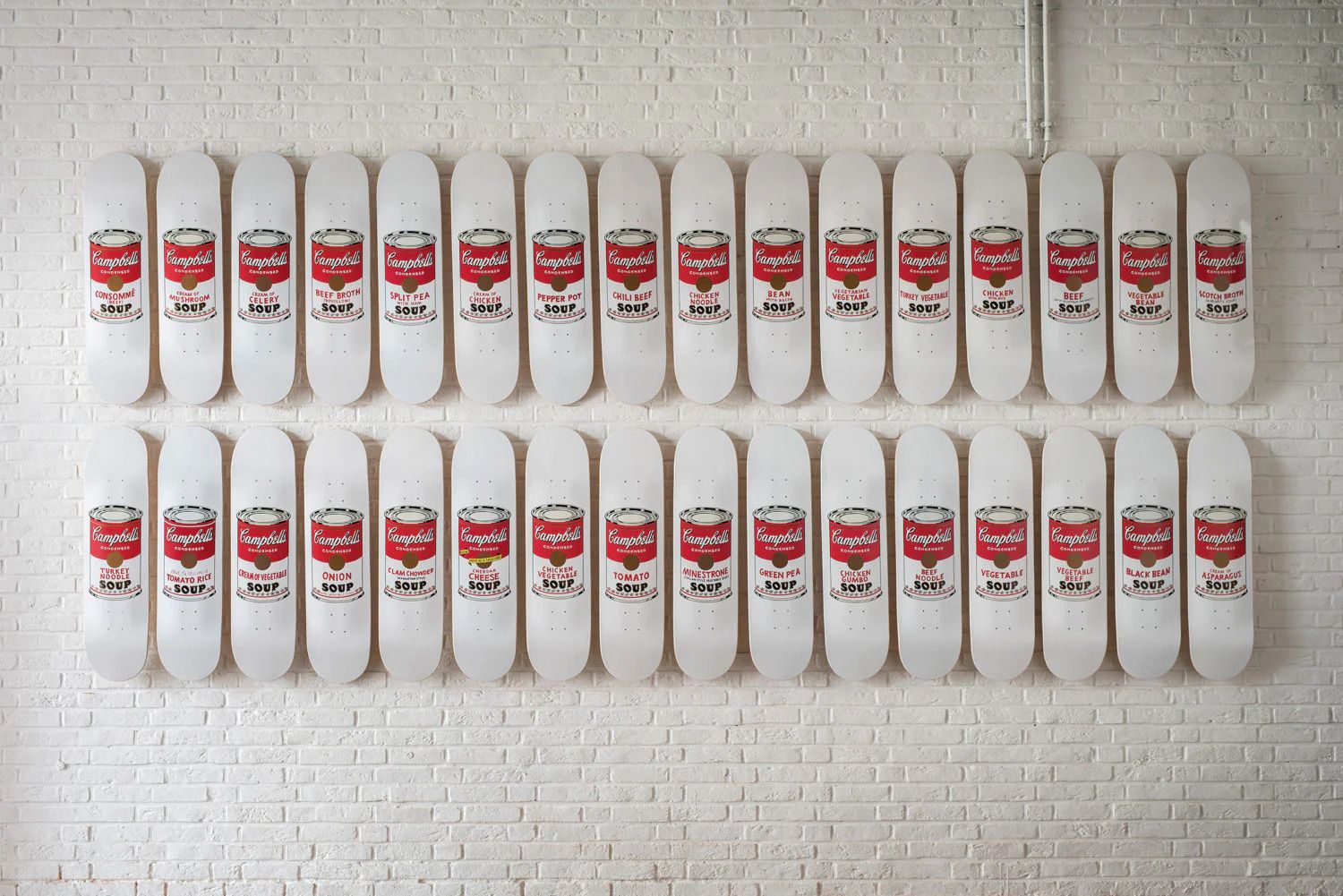
Andy Warhol, 32 Campbell’s Soup Cans (2016)
Starting with the modern classic — only a few images have become as closely associated with Pop Art as Andy Warhol’s Campbell’s Soup Cans. First presented in 1962, the original series brought an everyday supermarket product into the gallery, challenging the distinction between commercial imagery and fine art. This edition, produced by THE SKATEROOM in collaboration with the Andy Warhol Foundation for the Visual Arts, translates the iconic image into a set of 32 skateboards, accompanied by a container resembling a Campbell’s soup can. Limited to 100 sets, the work brings Warhol’s fascination with repetition, branding and consumer culture into a contemporary context. It also raises an interesting question about how an artwork changes when it moves between media — from painting to collectable design and functional objects.
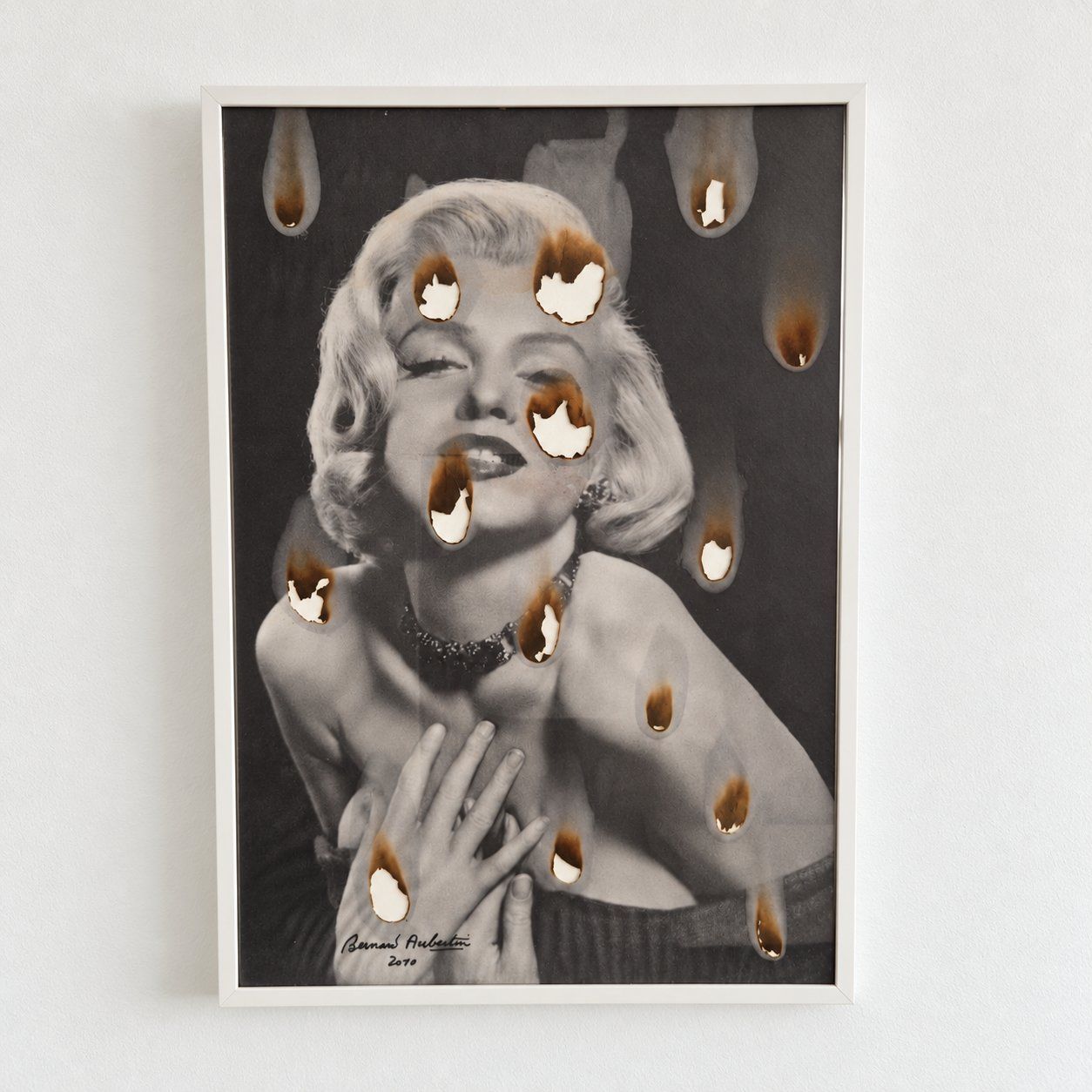
Bernard Aubertin, Affiche brûlée – Marilyn (2010)
Our other choice is a signed work by Bernard Aubertin. The French artist, associated with the international ZERO movement, developed a practice in which fire became both a medium and an active force, transforming the surface of his works through combustion. In Affiche brûlée – Marilyn he subjects this familiar image to an unpredictable material intervention — the flame leaves its traces directly on a poster depicting the Hollywood icon, interrupting the image with scorched marks and burnt openings. The intervention brings together two seemingly distant worlds: the carefully constructed glamour of celebrity imagery and the radical experimentation of post-war art. Aubertin’s gesture also recalls his broader interest in fire as a force capable of destroying and creating at once, leaving the artwork marked by the physical event of its making.
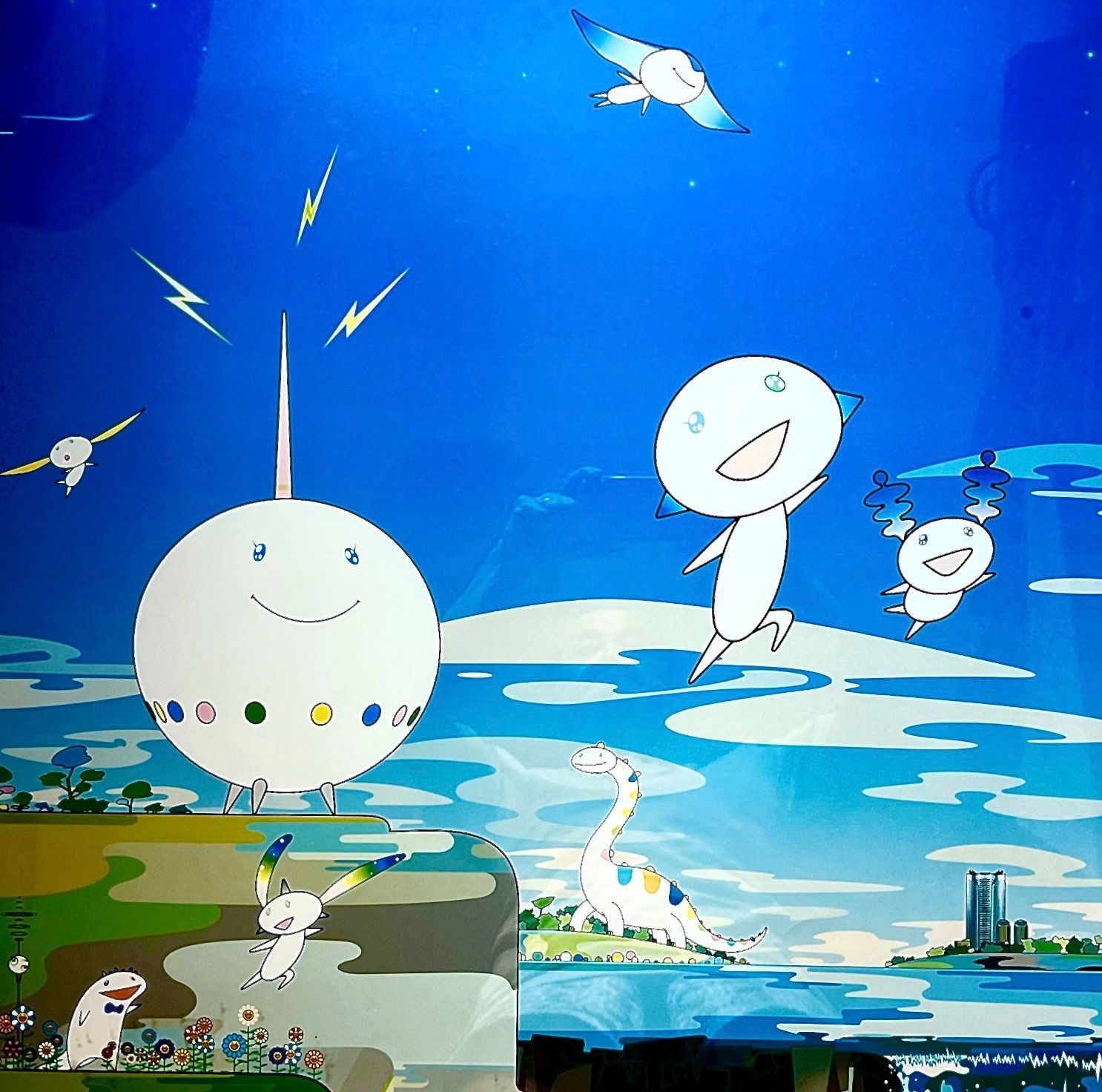
Takashi Murakami, Planet 66 (2004)
Takashi Murakami’s Planet 66 offers an entry point into the artist’s distinctive visual universe, where Japanese popular culture, traditional artistic references and contemporary commercial imagery converge. Murakami’s concept of Superflat aesthetic draws on the flatness of manga and anime, as well as the visual traditions of Japanese painting and ukiyo-e. His practice deliberately moves between fine art and popular culture, questioning the boundaries that separate them. Murakami’s imagery often appears deceptively playful, yet its polished surfaces also reflect on the ways visual culture circulates, reproduces itself and becomes part of everyday life. Published by Kaikai Kiki in Tokyo, this signed and numbered lithograph belongs to a wider body of work that spans paintings, sculptures, prints and merchandise.
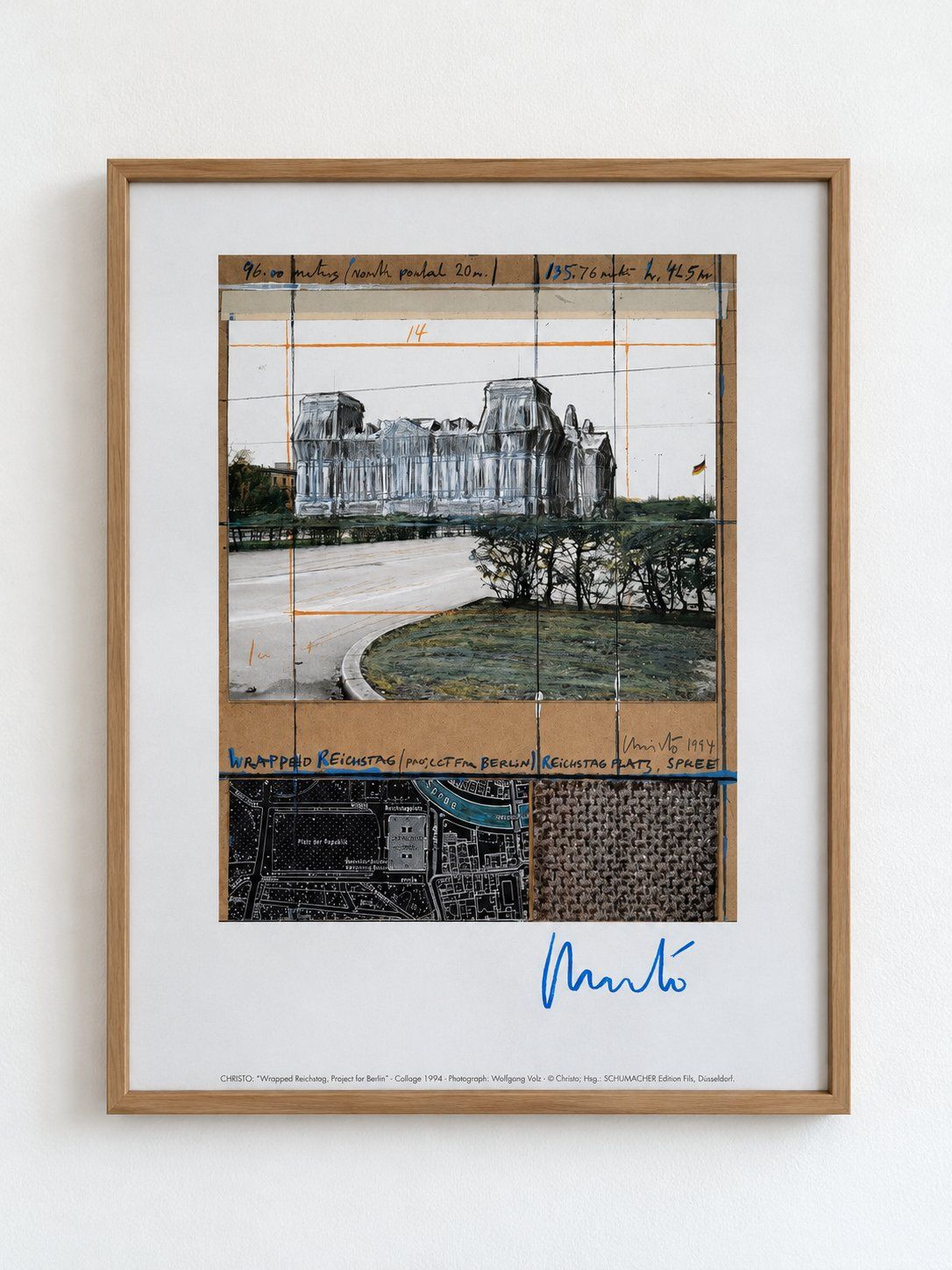
Christo, The Wrapped Reichstag (1995)
Another work chosen by Contemporary Lynx is The Wrapped Reichstag, which was a monumental art project by Christo and Jeanne-Claude realised in 1995 in Berlin. The German Reichstag was wrapped in a silver fabric for 14 days, presenting its architecture in a new light. The selected collage, including used silver foil and the original sketch, refers to this ambitious undertaking and preserves something of its material presence on a smaller scale. Christo and Jeanne-Claude’s wrapping projects invited viewers to reconsider familiar structures by temporarily concealing them. The Reichstag’s transformation also carried particular resonance in a city shaped by division and reunification. Although the installation existed for only fourteen days, its image continues to circulate as a powerful example of how art can change the way we experience public space and architecture.
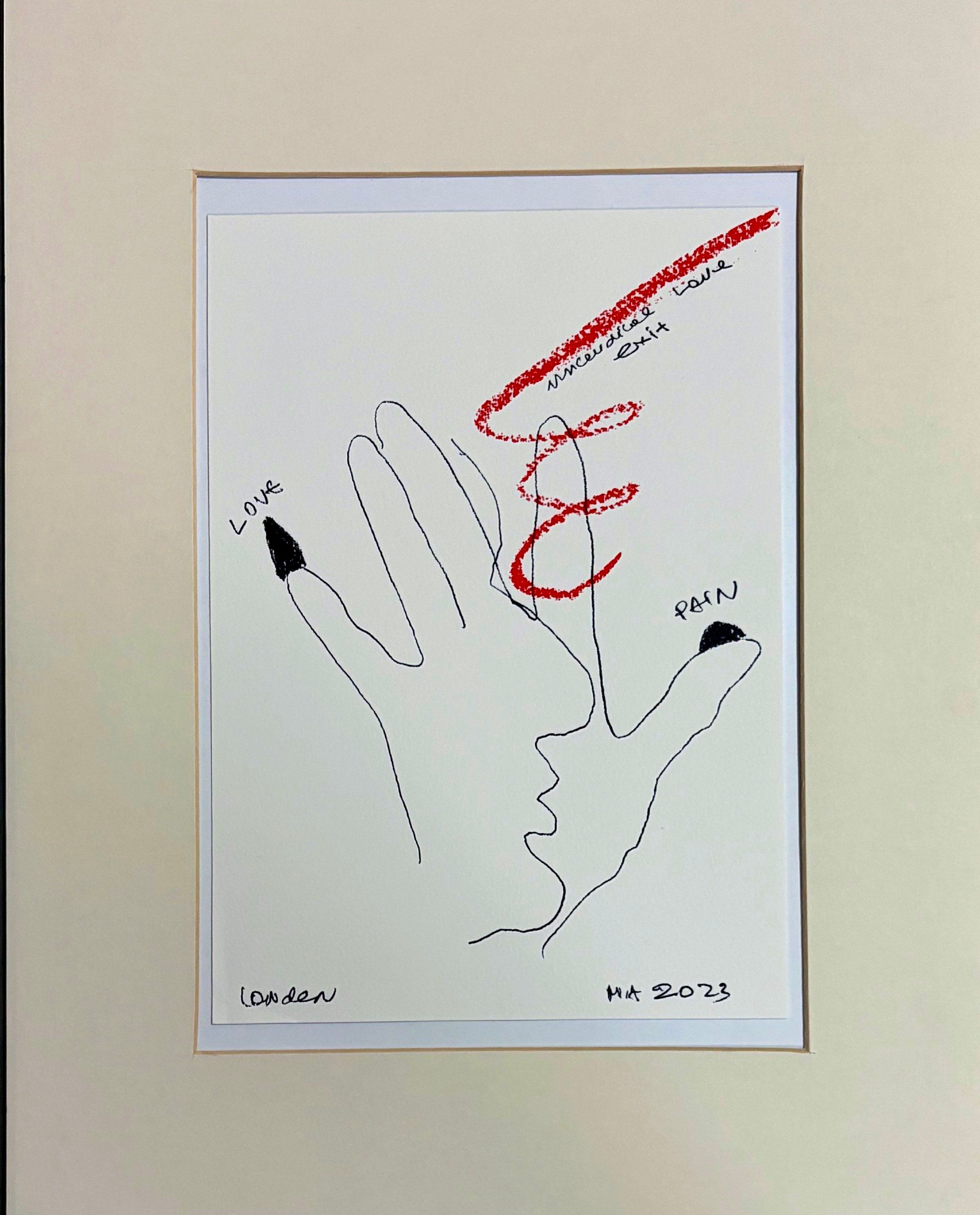
Marina Abramović, Unconditional Love – Left Hand (2023)
What if we could collect a trace of an artist whose performances test the physical and psychological limits of the human body? Marina Abramović turns towards a more intimate form of expression in Unconditional Love – Left Hand. The two-colour silkscreen is based on a drawing of the artist’s left hand, accompanied by an outlined face and handwritten text. Released as part of a series of three prints for CIRCA’s fundraising programme, the work connects Abramović’s long-standing interest in the body with the language of affection and personal reflection. The hand becomes both a recognisable physical presence and a means of communication, carrying traces of the artist’s own gesture onto paper. The edition was offered for a limited period around Valentine’s Day, bringing the artist’s work into a format accessible to a wider audience.
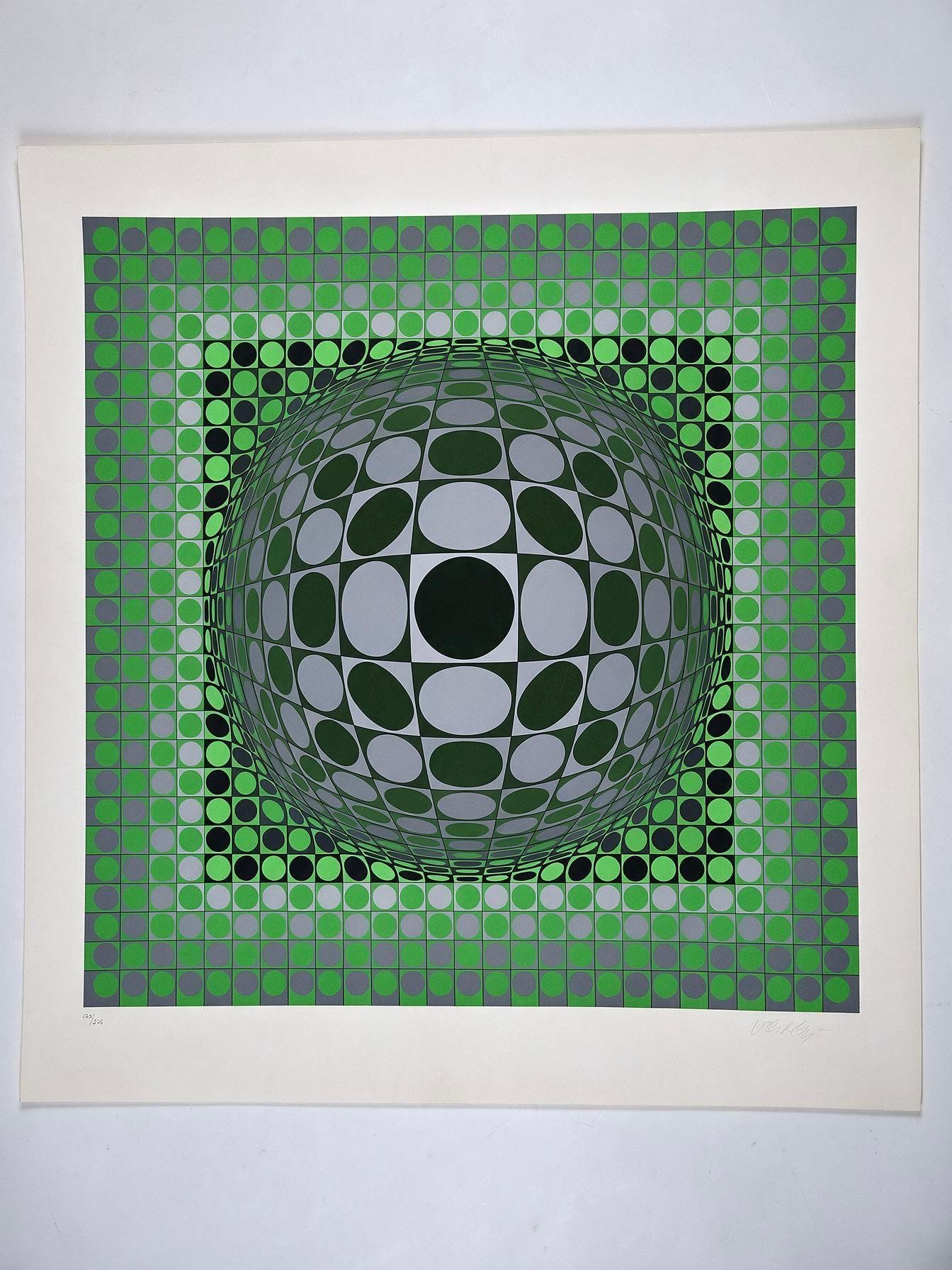
Victor Vasarely, Louisiana II (1983)
Victor Vasarely’s Louisiana II demonstrates the visual precision and optical experimentation that made him one of the defining figures of Op Art. Through carefully arranged geometric forms and colour relationships, Vasarely creates an image that seems to shift as the viewer’s eye moves across its surface. The composition challenges the apparent stability of the printed image, producing a sensation of depth and movement without relying on traditional perspective. Vasarely’s approach was informed by his background in graphic design and his interest in the relationship between art, perception and visual communication. In Louisiana II, the printed surface becomes an active visual field, inviting the viewer to experience seeing as a dynamic process.
Anna Khavro, Wrinkles Remember All the Sleepless Nights (2021)
Anna Khavro’s Wrinkles Remember All the Sleepless Nights approaches photography through an intimate, poetic language. The Polish artist creates photograms directly in the darkroom, using light-sensitive paper to record gestures and experiments with light and shadow. Her practice explores the threshold between visibility and disappearance, allowing images to emerge from processes that are partly controlled and partly unpredictable. The title of this gelatin silver print suggests a connection between the photographic surface and the body: wrinkles become traces of time, fatigue and lived experience. The work can be read as a quiet record of everyday life, where the absence of a conventional photographic subject leaves room for memory and emotional association. Khavro also returns photography to its elemental meaning as a drawing made with light, opening a space between abstraction and personal recollection.

Jan Saudek, Evita Lays! (2001)
Jan Saudek’s photographs occupy a distinctive space between staged photography, theatre and personal mythology. The Czech photographer is known for carefully constructed scenes, often featuring recurring models, intimate settings and hand-coloured photographic prints. Evita Lays! belongs to this highly personal visual language, in which the same model Evita becomes part of an elaborate, sometimes unsettling composition. Saudek’s photographs frequently combine sensuality with an atmosphere of melancholy, drawing attention to the tension between the body as a physical presence and the image as a constructed fantasy. His use of colour and staging gives the photograph a painterly quality, while the deliberate theatricality of the scene challenges the viewer’s expectations of photographic realism. Rather than simply documenting a moment, Saudek creates a world that seems suspended between memory, desire and imagination.

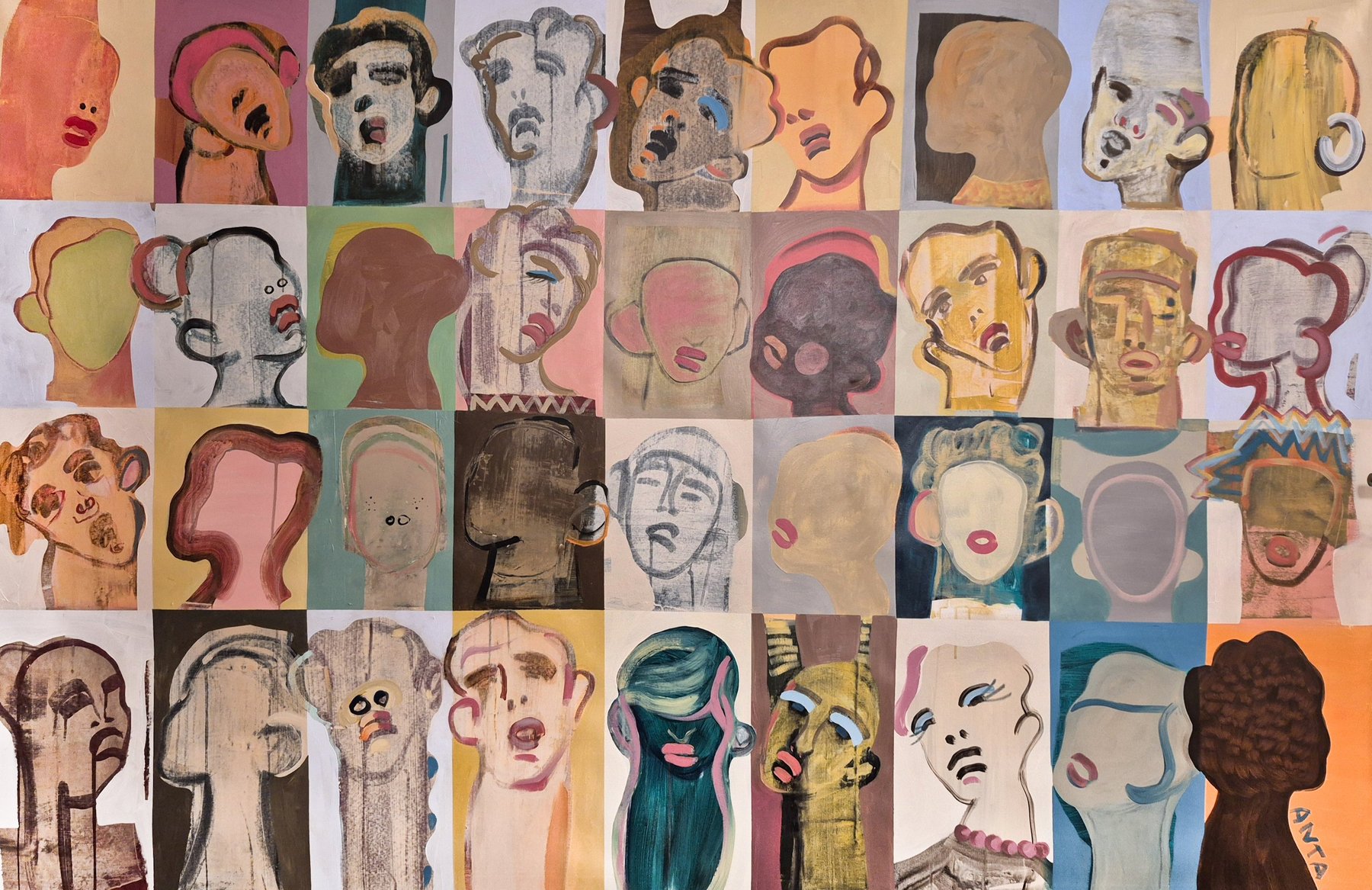
Kariko Ono, Heroes 25/26 (2026)
In Heroes 25/26, Kariko Ono (Karina Antończak) approaches the portrait as a study of memory and emotional presence. The acrylic painting reduces human figures to simplified silhouettes, allowing them to hover between recognition and abstraction. Arranged within a rhythmic compositional structure, the forms retain their individuality while contributing to a larger visual whole. The resulting tension between the personal and the collective gives the work a subtle social dimension: each figure appears to carry its own story, yet remains connected to the surrounding shapes. Ono describes her process as drawing from a bank of memories, which gradually move towards abstraction. This approach reflects her interest in the relationships between colour, line, weight and compositional forces. In Heroes 25/26, the portrait becomes a space where fragments of remembered experience take on a new visual form.
Óscar Leonor, Tres figuras (2026)
Óscar Leonor’s Tres figuras brings together figurative painting, abstraction and expressive gesture. The Spanish artist, who has developed his practice largely through self-directed study, treats drawing and painting as ways of exploring and understanding oneself. His work often combines different visual languages, including expressive brushwork, geometric forms, symbolic elements and moments of realism. Rather than following a predetermined composition, Leonor allows the painting to develop through improvisation, responding to the possibilities that emerge during the process. In Tres figuras, the relationship between the depicted forms and the painting’s material qualities becomes central. The figures provide a starting point for an image that unfolds through the interaction of gesture, colour, and structure.