



The Mediterranean connects continents, cultures and histories, but it is also a space marked by conflict and profound inequalities. Its shores hold stories of migration and exile, resistance and oppression, many of which remain largely absent from international media. The 2026 Jaou Tunis Biennale turns its attention to these overlooked realities, bringing together artists from across the Mediterranean and the Global South to explore what it means to live in an increasingly fragmented world.
Titled Becoming the Ocean, this year’s edition takes inspiration from Khalil Gibran’s image of rivers becoming the ocean: not through the loss of their individual identities, but through their expansion into something larger. Rather than seeking to preserve a world shaped by increasingly fragile social, economic and political structures, the Biennale asks what new forms of solidarity, memory and coexistence might emerge from recognising our interdependence. Organised by the Kamel Lazaar Foundation in collaboration with the Biennale de l’Image en Mouvement in Geneva and the Art Explora Foundation, the programme includes two major group exhibitions, alongside performances, concerts, debates and public events running until 22 November 2026.
Rather than seeking to preserve a world shaped by increasingly fragile social, economic and political structures, the Biennale asks what new forms of solidarity, memory and coexistence might emerge from recognising our interdependence.
The main exhibitions take place in two different parts of Tunis: the historic Medina and the multi-ethnic neighbourhood of Bhar Lazreg in La Marsa. Both offer space for individual works to be experienced without overwhelming the visitor. Yet their geographical and curatorial approaches differ: while Becoming the Ocean at the Medina brings together emerging artists from Africa, the Arab world, Asia, Latin America and their diasporas, Undertow / Contrecourant in La Marsa focuses more specifically on the Mediterranean as a space shaped by migration, exile, memory and cultural exchange.
A Glimpse into Overlooked Realities
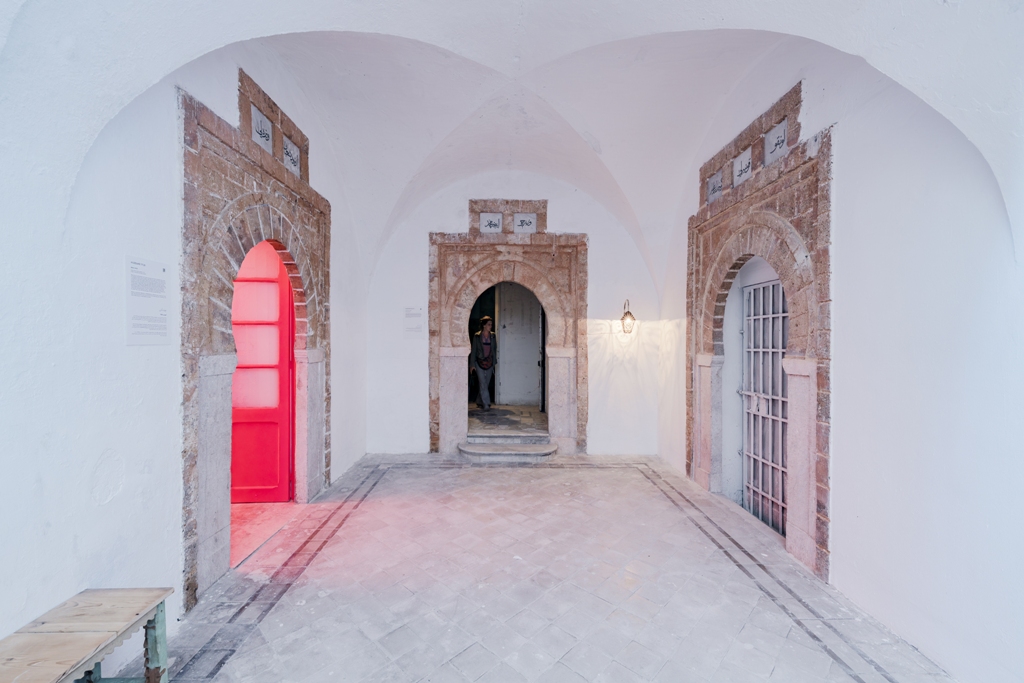
The nineteenth-century Caserne el Attarine, a monumental complex in the heart of the Medina, hosts Becoming the Ocean, an international group exhibition presented in collaboration with the Biennale de l’Image en Mouvement. The partnership marks the latter’s first appearance on the African continent. Bringing together sixteen emerging artists from Africa, the Arab world, Asia, Latin America and their respective diasporas, the exhibition presents works commissioned specifically for the occasion. This underlines Jaou Tunis Biennale’s role not only as a platform for exhibiting art, but also as a place for its production.
The exhibition brings together historical, anthropological, political and social research. One of its highlights is Unstrung, a 16mm collage by Sudanese writer and filmmaker Leena Habiballa, combining archival footage from television programmes and news broadcasts with sound recordings. The work explores how the dynamics of war in Sudan have permeated forms of creative expression, including song, dance, music and poetry. Looking at the aesthetics of the country’s militarised cultures, both past and present, and their appropriation of revolutionary aspirations, Habiballa reveals the ideological connections between sites of political violence and the construction of everyday myths.
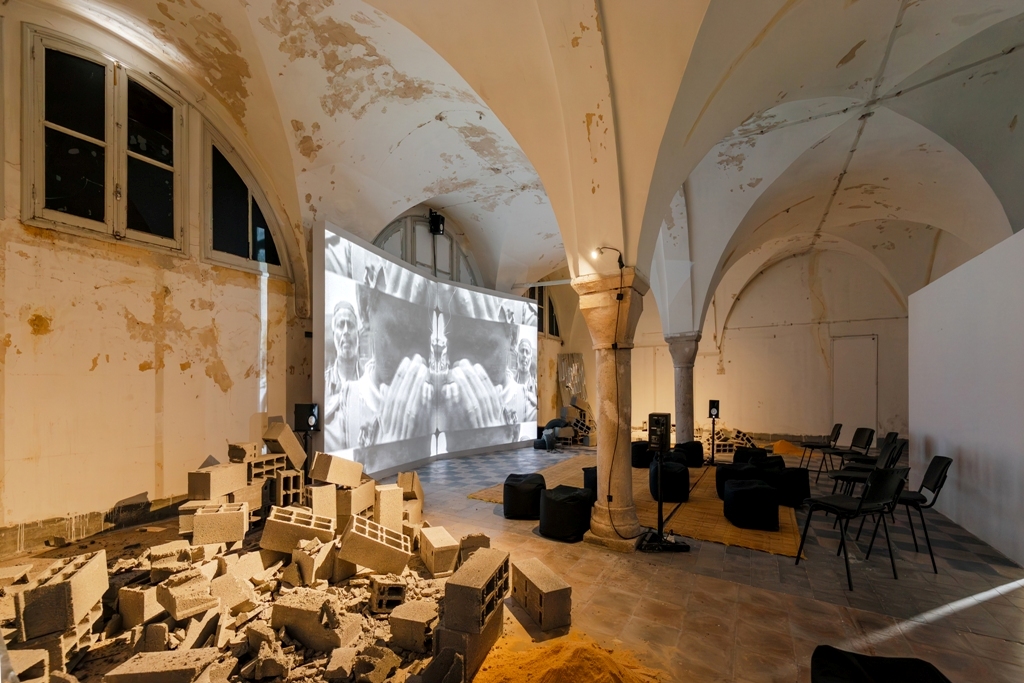
Bringing together sixteen emerging artists from Africa, the Arab world, Asia, Latin America and their respective diasporas, the exhibition presents works commissioned specifically for the occasion. This underlines Jaou Tunis Biennale’s role not only as a platform for exhibiting art, but also as a place for its production.
Other contributions tell stories from Palestine, Argentina, Jordan and French Guiana, among other places, drawing on experiences in refugee camps, mental health institutions and former prisons. Sometimes direct, sometimes metaphorical, these accounts of resistance and oppression confront difficult realities without resorting to easy answers. They offer a glimpse into a reality that is rarely covered by the international press.
Stories from the Mediterranean
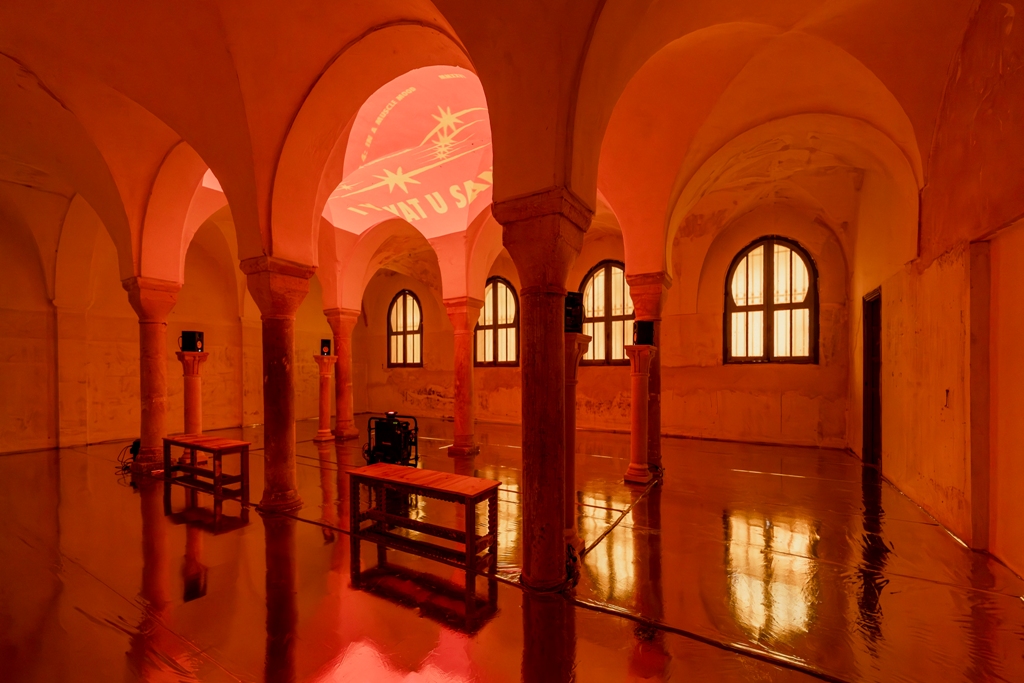
At the B7L9 Art Centre, Undertow / Contrecourant, curated by Amanda Abi Khalil and Danielle Makhoul and commissioned and produced by the Art Explora Festival, brings together twelve artists. Through photography, film, music and documentary material, the exhibition explores the Mediterranean as a space of migration, exile and memory, but also of family ties and cultural exchange. The artists address painful and often uncomfortable histories, drawing attention to the responsibilities of Western countries and to the wider socio-political and economic systems that perpetuate inequality, poverty and instability.
One particularly moving contribution is Sara Kontar’s Therefore, I Cut, a documentary photography project following three women in exile through the intimate ritual of cutting one another’s hair. The gesture becomes a metaphor for severing ties with the past. The women, including the artist herself, are Syrian refugees who fled to France around 2016. Photographed in intimate black and white, the artist’s mother and two of her friends become the protagonists of a story about displacement, disorientation and mutual support. The work captures both the difficulty of making sense of exile and the bonds that help people navigate it.
An even more harrowing account comes from Liquid Traces. The Left-to-Die Boat Case, a documentary by the Forensic Oceanography collective. It reconstructs the events surrounding a boat carrying 72 migrants that departed from Libya in March 2011 and ran out of fuel in the middle of the Mediterranean. Despite being spotted by several vessels, including military ships and an Italian frigate, its distress signal went unanswered. After two weeks adrift, the currents carried the boat back towards Libya. By then, 61 people had died on board, while two more died shortly after reaching shore. Drawing on extensive research and documented evidence, the film exposes the failure of the United Nations and European countries to respond to the emergency and rescue those on board.
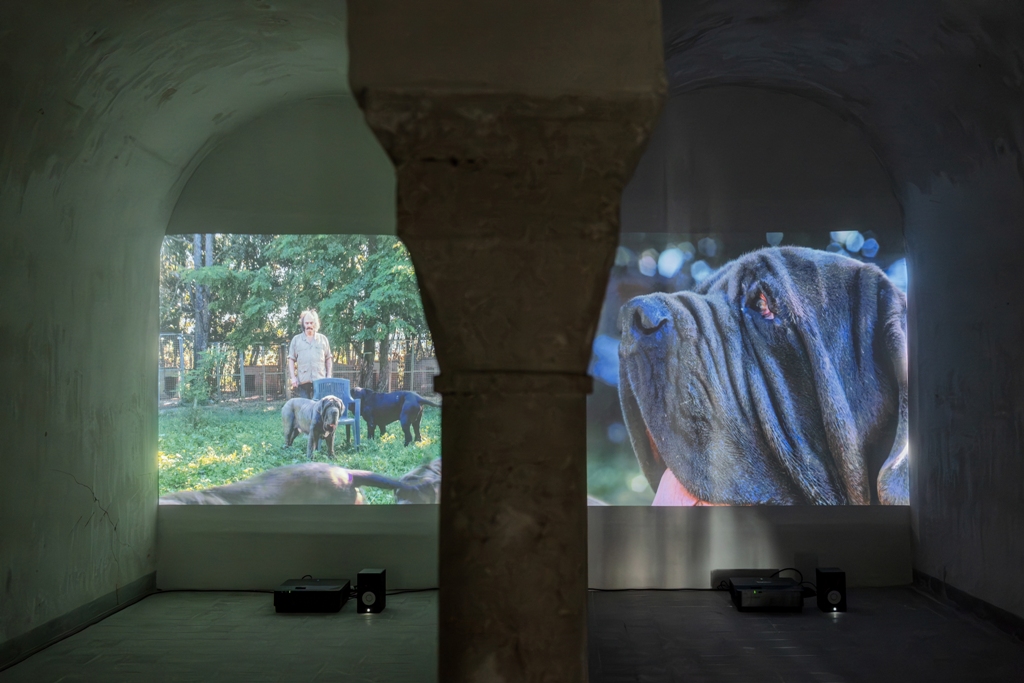
Research of this kind rarely reaches mainstream media, making exhibitions and initiatives such as Jaou Tunis Biennale important spaces for bringing it to wider attention. The exhibition also presents stories from Beirut, Iraq and Palestine, addressing migration and resistance through accounts that, despite their different contexts, are marked by the suffering that continues to shape our time.
Research of this kind rarely reaches mainstream media, making exhibitions and initiatives such as Jaou Tunis Biennale important spaces for bringing it to wider attention.
A Biennale of Protest
Compared with the 2024 edition, Jaou Tunis Biennale 2026 appears to adopt a more unified visual language, with a particular emphasis on photography and video. This is partly a consequence of its collaboration with the Biennale de l’Image en Mouvement, but also reflects the chosen subject. Documenting the Mediterranean and the stories connected to it calls for an approach that can convey specific realities often overlooked by international media. In this sense, the artists take on a role that might otherwise belong to journalists: addressing pressing issues and drawing attention to injustice.
By providing a platform for these voices, Jaou Tunis Biennale has established itself as one of the most significant contemporary art events in North Africa. Yet its importance extends beyond the exhibitions themselves. With substantial international partnerships and the active involvement of young Tunisians, including members of the organising team and dozens of volunteers, the Biennale also creates opportunities for cultural exchange and professional development. For many of those involved, it offers a window onto the international art world and an opportunity to gain experience that may inform their future work in Tunisia.
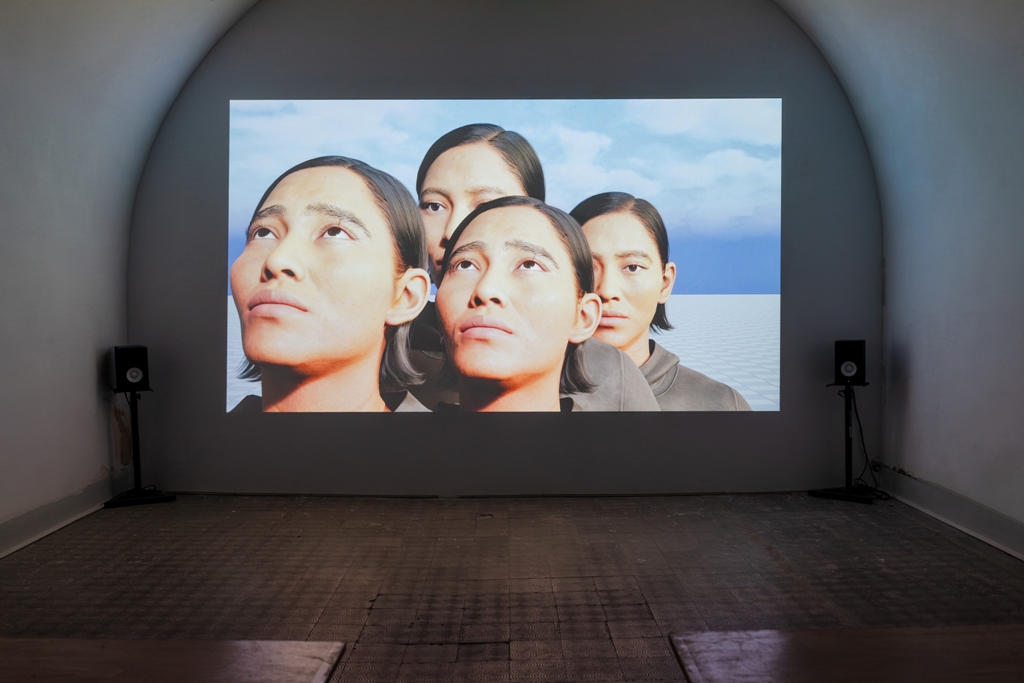
Culture, including art, cannot exist separately from the social realities surrounding it. At a time when Tunisia is also going through a delicate period of political and social readjustment, creating opportunities for young people to think critically, participate and take initiative is particularly important. In this context, Becoming the Ocean is both an invitation to reflect and an act of protest, drawing particular attention to governments’ indifference towards the human tragedies unfolding along migration routes.