



The exhibition at the Profile Foundation marks the first public presentation of a selection of works from Andrzej Skrzyński’s collection. Here, order is an illusion. Paintings, photographs, sculptures, and films coexist without hierarchy, generation, or medium dictating their place. Classic modernists sit alongside radical neo-avant-garde works, while overlooked or marginal artists share space with emerging talents.

For Skrzyński, the collection’s value is measured by the passion, curiosity, and intellectual capital he wishes to share with fellow art lovers. It is extensive and diverse enough that every visitor will discover pieces that not only provide aesthetic pleasure but also provoke reflection or a new way of seeing the world. This debut exhibition is an opportunity for the works to bring joy to other art enthusiasts.
We discuss the collection and Skrzyński’s enduring passion for art.

Monika Juskowiak: Before we move on to the exhibition, Between Images. The Latent Capital of Andrzej Skrzyński’s Collection at the Profile Foundation, I would like to ask about the nature of your passion for art and collecting. What first sparked your interest?
Andrzej Skrzyński: The conscious building of my collection dates back to the mid-1990s. Earlier, I had visited numerous art exhibitions, not only in Lublin, the city where I lived and studied, but also in Warsaw, Kraków, Wrocław, and Łódź, to which I frequently travelled. I loved reading books about art, browsing available catalogues, and looking through albums with reproductions of paintings and sculptures. A significant role was played by my late father, who was also interested in art, although he never collected it himself.
When I was studying medicine, Lublin galleries presenting the most recent art were very active, above all Galeria Kont, Galeria Biała, Galeria BWA, Galeria Sztuki Sceny Plastycznej KUL, and Galeria Labirynt. I tried to attend exhibition openings as often as possible; it was there that I formed friendships with artists and curators that last to this day.
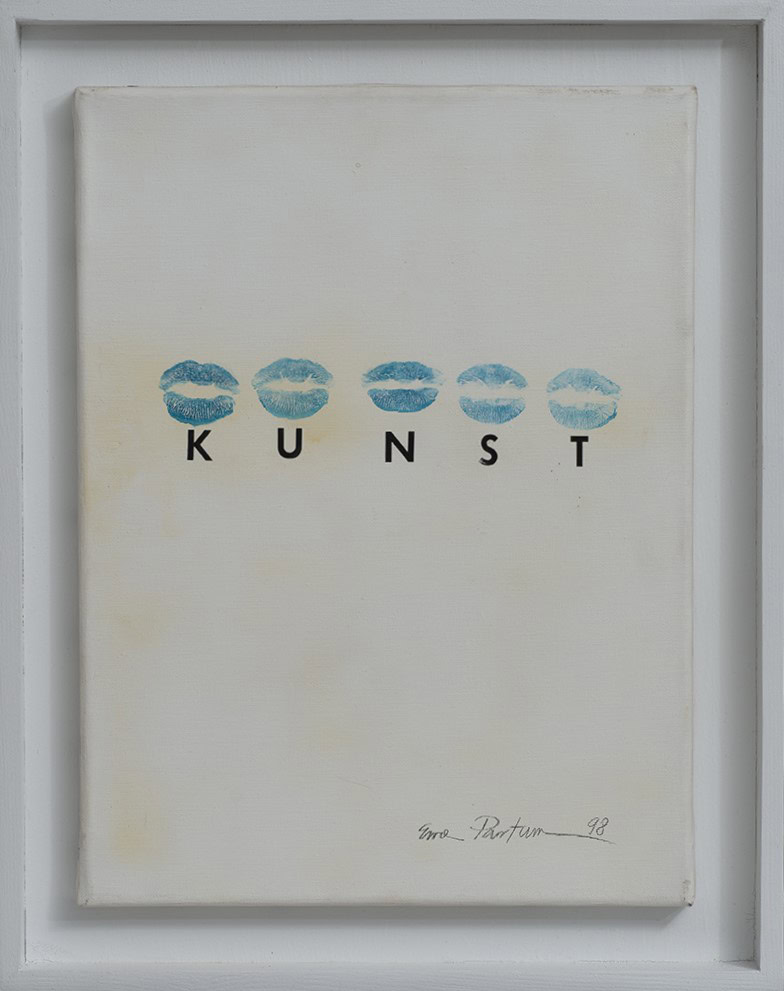
In the first half of the 1990s in Lublin, one could not only become acquainted with the most interesting phenomena of contemporary art presented in galleries and at the Regional Museum at the Castle, but there were also theater festivals, performances, contemporary dance events, literature and poetry festivals, screenings of ambitious films, and concerts by some of the most interesting rock bands. But it was in Lublin that I saw original works by Alina Szapocznikow, Magda Moskwa, Henryk Stażewski, Andrzej Wróblewski, Teresa Tyszkiewicz, Andrzej Partum, Ewa Kuryluk, Jan Lebenstein, and Władysław Hasior for the first time. It was also when the idea of creating my own art collection began to take shape – a collection in which the artists mentioned above would constitute its foundations.
Many years passed, but eventually all of these great, brilliant artists found their way into my collection. From today’s perspective, I believe that it was precisely the Lublin milieu, the city’s art-friendly atmosphere, together with my medical and botanical education and reflections on the human condition, that had the greatest influence on the shape of this collection.

MJ: Would you agree that your collection has been shaped more by intuition and symbolic meaning than by a systematic or market-driven approach?
AS: While building the collection, I never thought about investing. Of course, over time, the works of, for example, Alina Szapocznikow, Wanda Czełkowska, Henryk Stażewski, Erna Rosenstein, Jerzy “Jurry” Zieliński, Jan Dobkowski, Andrzej Wróblewski, and Teresa Tyszkiewicz reached very high prices. This was indeed an added value. However, the prospect of future profit was never a criterion for selecting works for the collection; only the artistic value of the work and the personality of the artist whose work I wanted to acquire mattered.

MJ: The list of artists in your collection includes figures such as Magdalena Abakanowicz, Zofia Rydet, Tadeusz Rolke, Jerzy Treliński, Jadwiga Sawicka, and Natalia LL. Are there artists among them who particularly reflect your way of thinking as a collector?
AS: Each of the artists mentioned is a great personality of Polish art. All of them are also very close to me. The single word ZŁA, painted by Jadwiga Sawicka in black paint on a pink background, carries a multitude of associations. Natalia LL’s photographs from the Post-Consumer Art series are emblematic works of Polish feminist art.
The portrait of Borowski with prisms over his eyes, authored by Tadeusz Rolke, is one of the most outstanding photographic portraits of artists in Polish art. It corresponds well with portraits of my favourite writer, poet, and theatre creator, Miron Białoszewski, by Marek Piasecki, as well as with the object by Agnieszka Polska made for the film Sensitizing to Color, inspired by Borowski’s Artons.

MJ: What most often becomes the decisive factor when a work enters your collection: a spontaneous impulse or a theme that resonates with you on a deeper level?
AS: My collection is extensive. It includes painting, drawing, photography, sculpture, films (around thirty), documentation of performances, artists’ books, posters, and fashion. Every outstanding artist creates their own worlds, which I discover and which often surprise me. I treat collecting as a journey to many places previously unknown to me. These worlds are very often parallel, but they also intersect.
I try to acquire works not only by artists who fascinate me and whose oeuvre represents the discovery of another unknown world. But this is always a conscious choice based on familiarity with the artist’s work. Impulsive purchases also happen, although not often. When I see that an artist previously unknown to me creates works that resonate with those already present in my collection, and when the independent worlds created by that artist intersect with other independent worlds already existing in the collection, forming a new quality.

MJ: So the exhibition avoids divisions by medium, generation, or hierarchy. Do you see this as a conscious gesture of resistance toward the structures imposed by art history?
AS: I have always believed that art is one, either good or bad. Only artistic criteria matter. That is why, alongside the classics, the collection also includes works by artists of the younger generation. In my Lublin apartment, next to works by Ćwiertniewicz, Jurry Zieliński, Sempoliński, and Dwurnik, hang works by Natalia Załuska, Łukasz Stokłosa, Karolina Jabłońska, Konrad Żukowski, and Mateusz Sarzyński. These works enter into dialogue with one another and complement each other, even though they represent completely distant worlds.
“I have always believed that art is one, either good or bad. Only artistic criteria matter.”

MJ: As mentioned, the presented selection brings together both canonical figures and outsiders. Do you perceive shared tensions, themes, or strategies of influence that connect the works within the collection?
AS: It is true that alongside works by recognised artists, my collection also includes works by artists who created on the margins, whose life stories were tangled and often tragic. I am thinking above all of Henryk Morel, Zbigniew Tymoszewski, Janek Dziaczkowski, Przemysław Kwiek, and Krzysztof Jung.
Only recently has the work of Wanda Czełkowska, Jurry Zieliński, Teresa Żarnower, and Wojciech Ćwiertniewicz been rediscovered and properly appreciated. Artists working on the margins, outsiders who found their place in my collection, are exceptionally gifted, hypersensitive individuals who view the world from a different perspective.

MJ: The concept of “latent capital” appears as a key motif in the exhibition text. What does it mean to you in relation to art that you live with daily, rather than simply collect?
AS: I understand the concept of “latent capital” exclusively as intellectual capital, which should be shared with other people who love art. And that moment has now arrived. I have never treated the collection as a material or investment value that I would one day sell for more money than I spent on creating it.
“I understand the concept of “latent capital” exclusively as intellectual capital, which should be shared with other people who love art. And that moment has now arrived.”

MJ: Between Images brings a private collection into the public sphere. Does this moment of exposure alter the relationship between you and your collection?
AS: The exhibition at the Profile Foundation is the first public presentation of a selection of works from my collection. I believe that my collection is extensive and diverse enough that everyone will find at least a few works that, in addition to purely aesthetic experiences, will prompt reflection or perhaps a different way of looking at the surrounding world.
Perhaps my collection of artworks will inspire others to create new, wonderful collections. This first presentation is also a time for the works I have gathered to begin bringing joy to other art enthusiasts.

Between Images. The Latent Capital of Andrzej Skrzyński’s Collection
January 31 – March 21, 2026
Profile Foundation, Warsaw