



A translucent yellow veil of latex hangs from a suspended architectural structure. Its loose folds and sagging curves fall beneath a rigid framework of metal tubes. Stretched across the exhibition space, the material appears at once delicate and resistant. Its pale, almost milky surface catches and refracts the light while establishing an invisible boundary. Above it, dark panels form a horizontal plane.

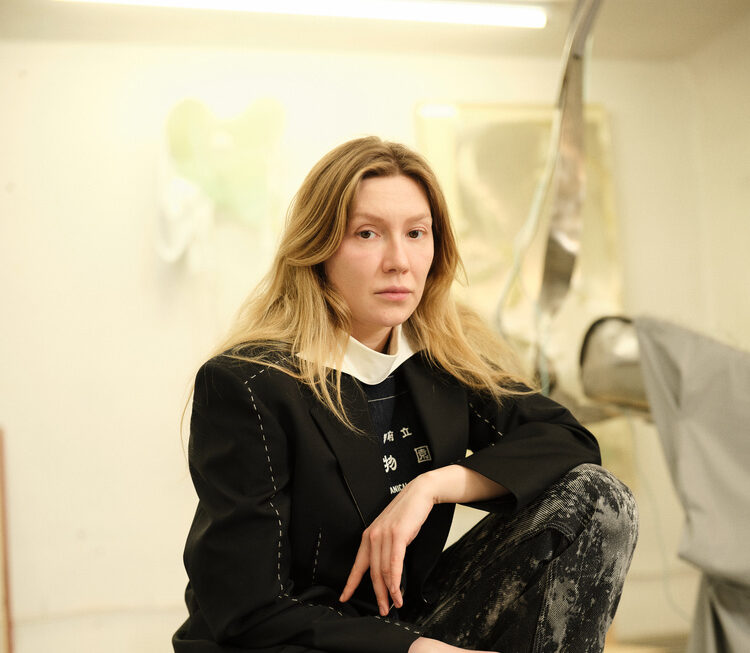
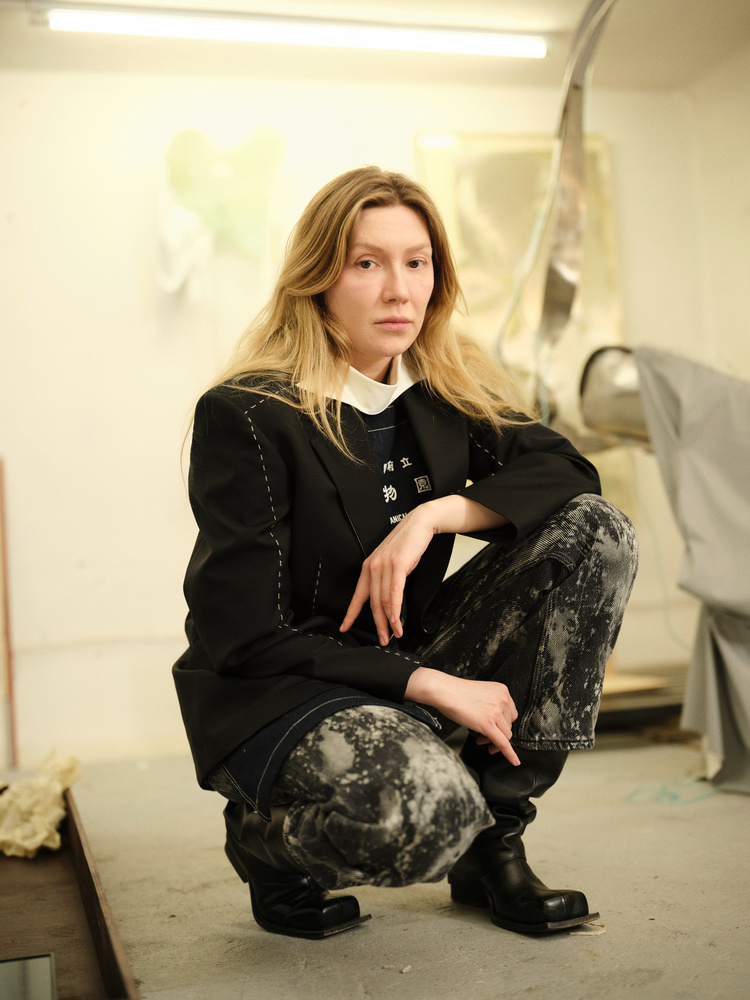
Linda Lach thinks negatively. She attends to what remains between things, to spaces that resist being named. Rather than directing the viewer towards a predetermined interpretation, her work allows meaning to gather tentatively, an approach she describes as “negative presence”. Rooms become places of suspension; objects hover between their intended purpose and their present condition. Protective layers and provisional environments unsettle established categories. Personal memories intersect with broader histories. Within these intervals, Lach finds thresholds from which to experience the world otherwise: through waiting and attending to processes that unfold without resolution. This sensibility enters all keys, all times (2026), her first institutional solo exhibition, commissioned by Salzburger Kunstverein.
Linda Lach thinks negatively. She attends to what remains between things, to spaces that resist being named. Rather than directing the viewer towards a predetermined interpretation, her work allows meaning to gather tentatively, an approach she describes as “negative presence”.
Against Standardisation
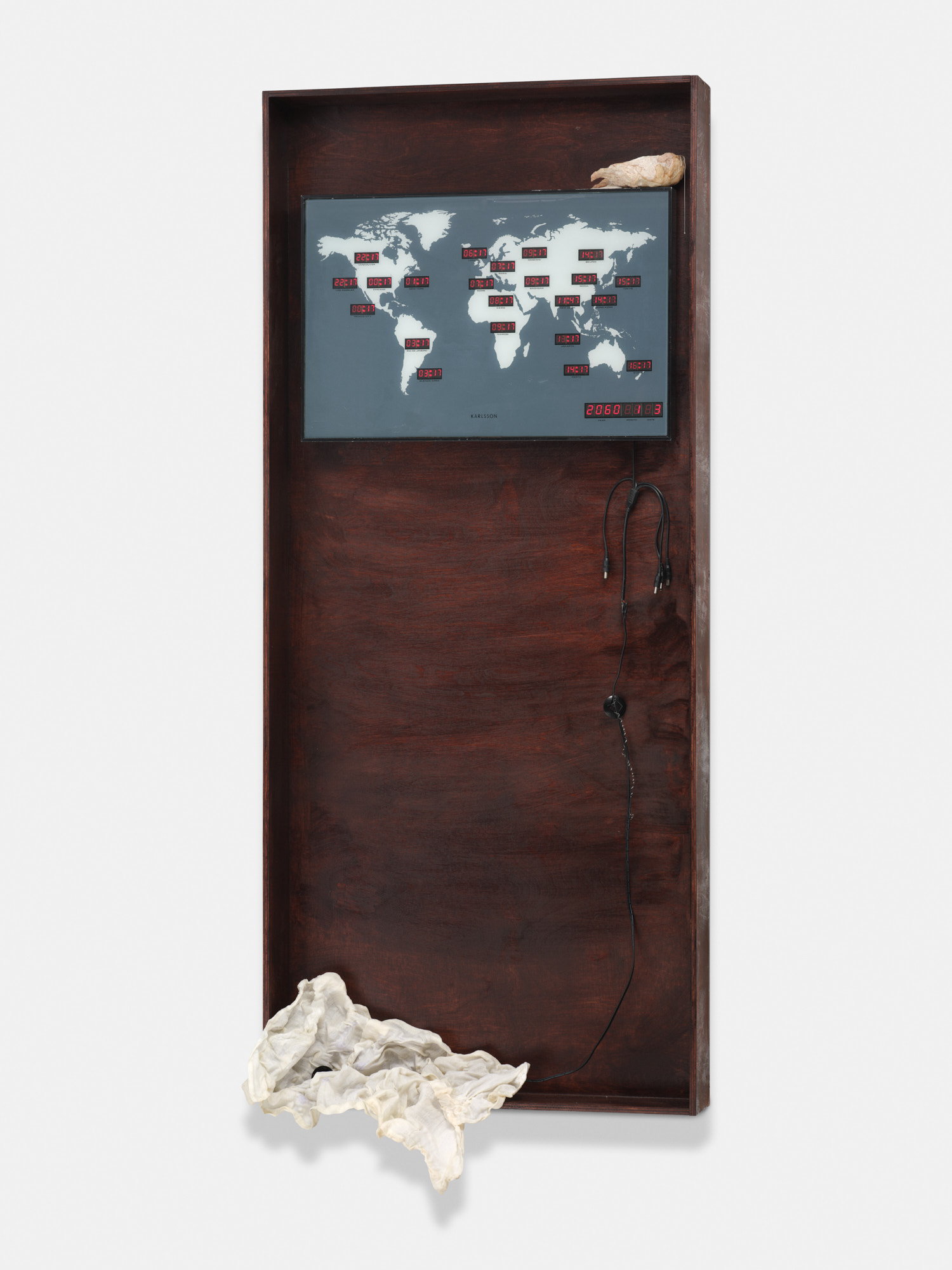
Below the yellow veil are two objects: a large scoreboard-like sculpture that appears to have fallen from a great height and rests somewhere between monument and debris, and a small video, scarcely larger than a postage stamp, showing a figure rotating their arm as if screwing in a light bulb, a gesture that recalls a childhood game in which a hand movement portrays the sun. Both objects resist immediate interpretation, their significance emerging gradually through association and recollection. Subjective memory further shapes how we relate to the world around us. For Lach, it acts as a “personal archive”: experiences that are not always accessible or clearly defined, but continue to influence the present. Her work gives form to traces that cannot be fully explained or verified.
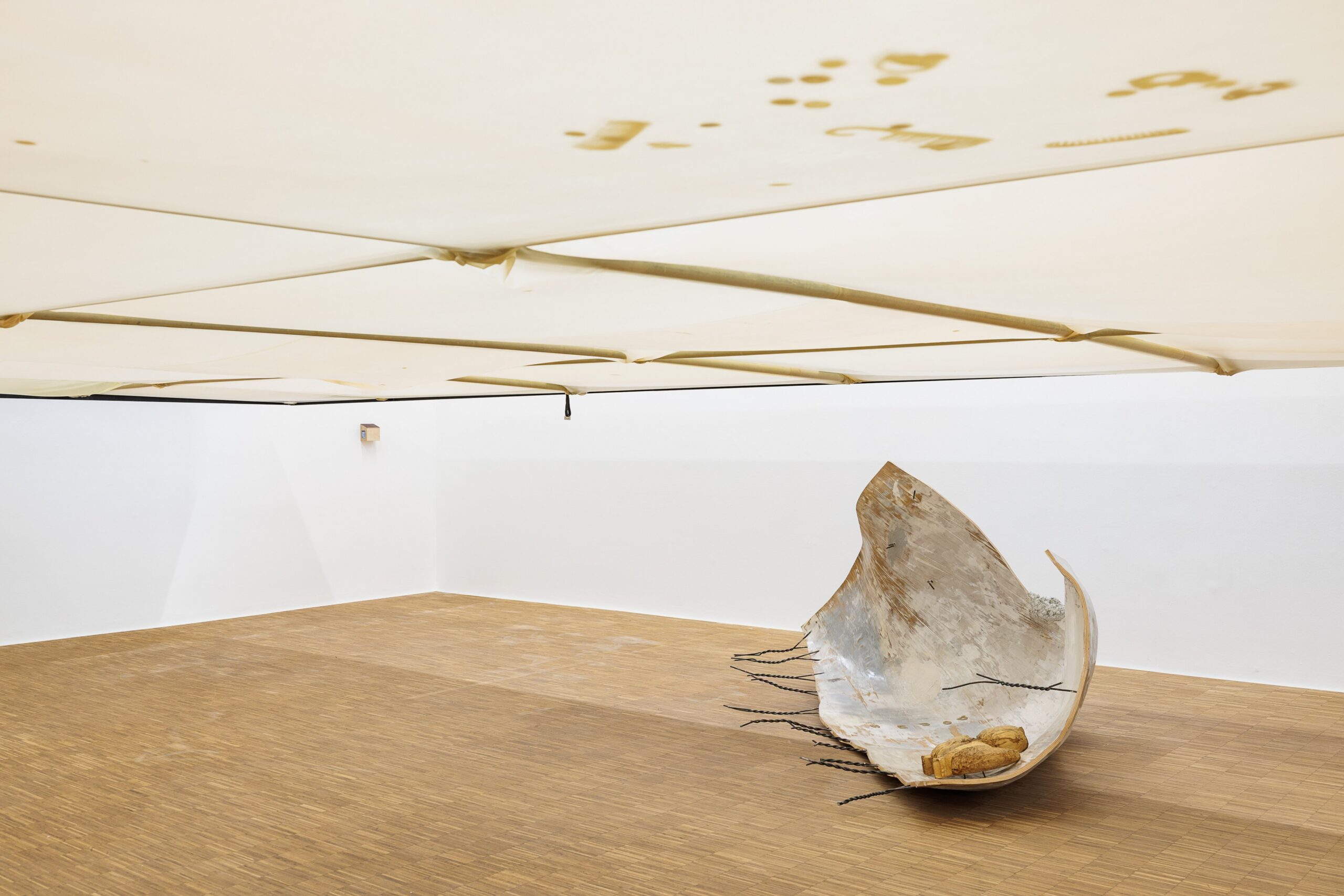
This uncertainty also points to the limits of standardisation, which for Lach is both a universal language that enables shared understanding and a process that inevitably comes at a cost. By translating complexity into rational, legible systems, it smooths over the variations, nuances and irregularities that distinguish one experience from another. Here, the video and the sculpture function as micro-disturbances: seemingly insignificant deviations that can carry an emotional weight that resists rational explanation. Ultimately, they expose the limits of factual description. Lach examines how standardisation shapes not only the objects around us but also our experience of time, space and possibility. Her work asks what is lost when everything becomes compatible and accessible, and what forms of resistance might emerge from that which remains unresolved, out of tune or difficult to fit into place.

The installation itself takes on the qualities of a waiting room. In Lach’s practice, this state of suspension is shaped by her own experiences of hospital visits and understood as both personal and political. It resists the reduction of a person to a body to be governed and measured. It is not passive; instead, it sustains attention to what emerges. This attentiveness also informs Lach’s understanding of change, which emerges through small disruptions rather than dramatic breaks. Such subtle shifts make room for other possibilities without the alienation that abrupt transformations can bring. The same discernment shapes Lach’s engagement with transitional spaces, where objects and people exist between one condition and another.
Lach examines how standardisation shapes not only the objects around us but also our experience of time, space and possibility. Her work asks what is lost when everything becomes compatible and accessible, and what forms of resistance might emerge from that which remains unresolved, out of tune or difficult to fit into place.
The Object as Threshold
A getabako is a Japanese shoe cabinet placed in the genkan — the entrance area where people remove their outdoor footwear before entering a home or institution. In schools and kindergartens, rows of individual compartments organise this daily passage between outside and inside. In Morning greetings will bear fruit (2026), Lach draws on this familiar object. She recreates it in oak rather than the traditional hinoki wood. The material substitution preserves the cabinet’s recognisable form while displacing it from its original context, turning the object into a double that carries both personal associations and broader cultural references.

The work emerges from Lach’s interest in vestibules and transitional spaces: the getabako embodies this in-between not only through its placement at the entrance but also through its function as a container for objects that move between the outside and the inside. Its particularity, though, extends beyond the functional role. It considers how cultural memories intersect with historical memory; the cabinet becomes a point of reflection on the ways objects transmit histories that are not entirely our own.

An Enduring Continuity
In her performances and installations, time resists linear progression: past and present overlap, fragments accumulate, and memories remain active beyond the moments to which they belong. Rather than seeking resolution, her work proposes a form of enduring continuity. More so, they do it with a sense of tenderness, through gestures that attend to human vulnerability. At Hembryo Rome, in a performance Shelly Wound (2025), Sofia Naglieri lay beneath an IV drip. Milk fell drop by drop: a visual pulse that unfolded in tandem with archival recordings of Lach’s family. Resin, latex, wax and paper were reclaimed and assembled into layered presences, giving material form to memories that preserve traces of lived experience. The milk, in turn, invited attentive listening and observation. The act is intimate, grounding broader questions of historical time and collective memory in something deeply personal. Intimacy itself is proposed as a form of resistance to the standardised historicisation of reality.
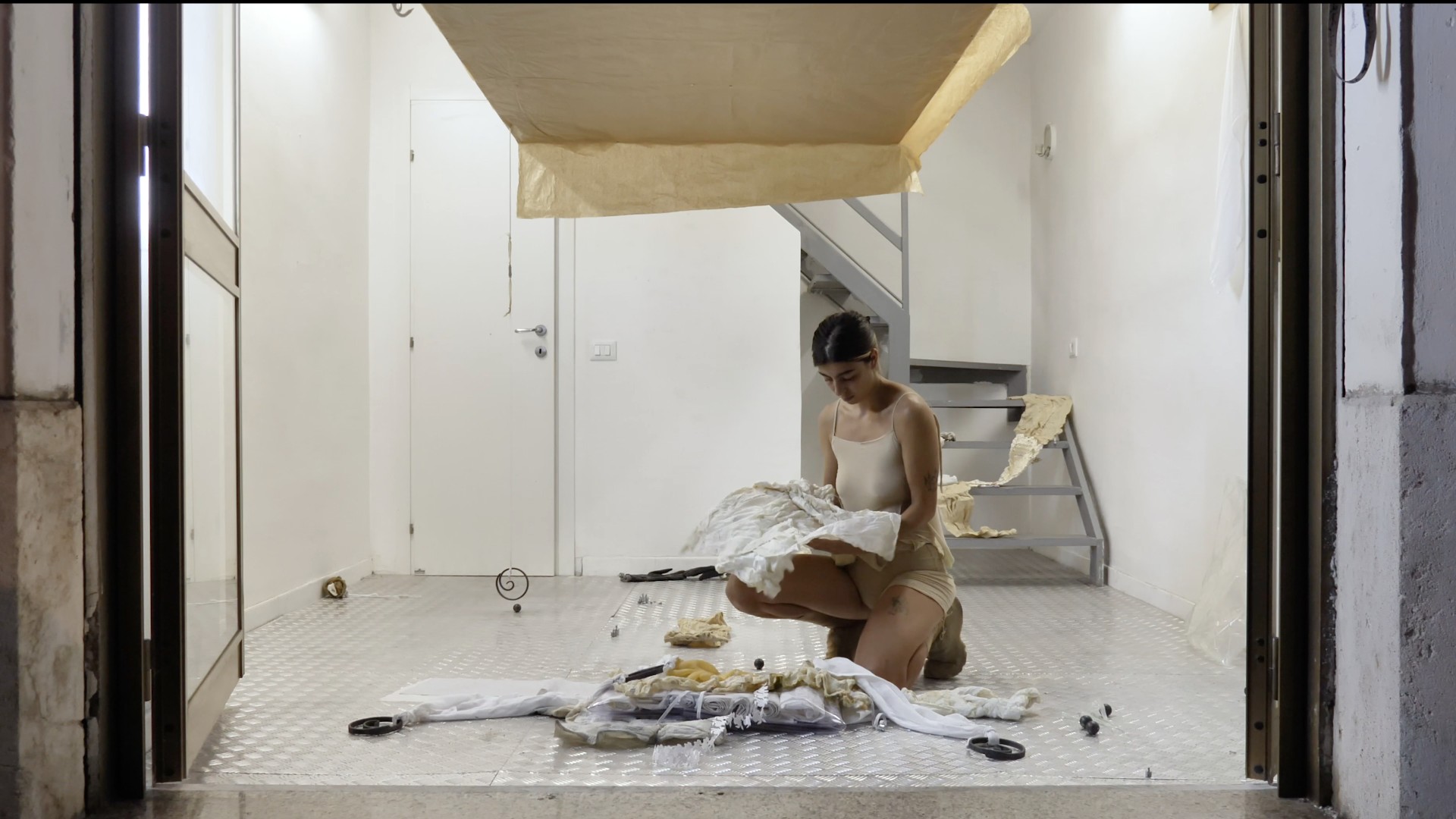
Human milk occupies a wider place in Lach’s practice, where its associations with nourishment, dependency and lost vitality bring questions of memory into the material world. Alongside milk, she works with materials such as wood, paper, cloth, resin, wax and latex. These materials are not neutral supports for her ideas: their textures, fragility and capacity for alteration contribute to the meanings they produce. Like our own lives, they bear the consequences of what has happened to them; once altered, they cannot simply return to their original state, just as the past cannot.
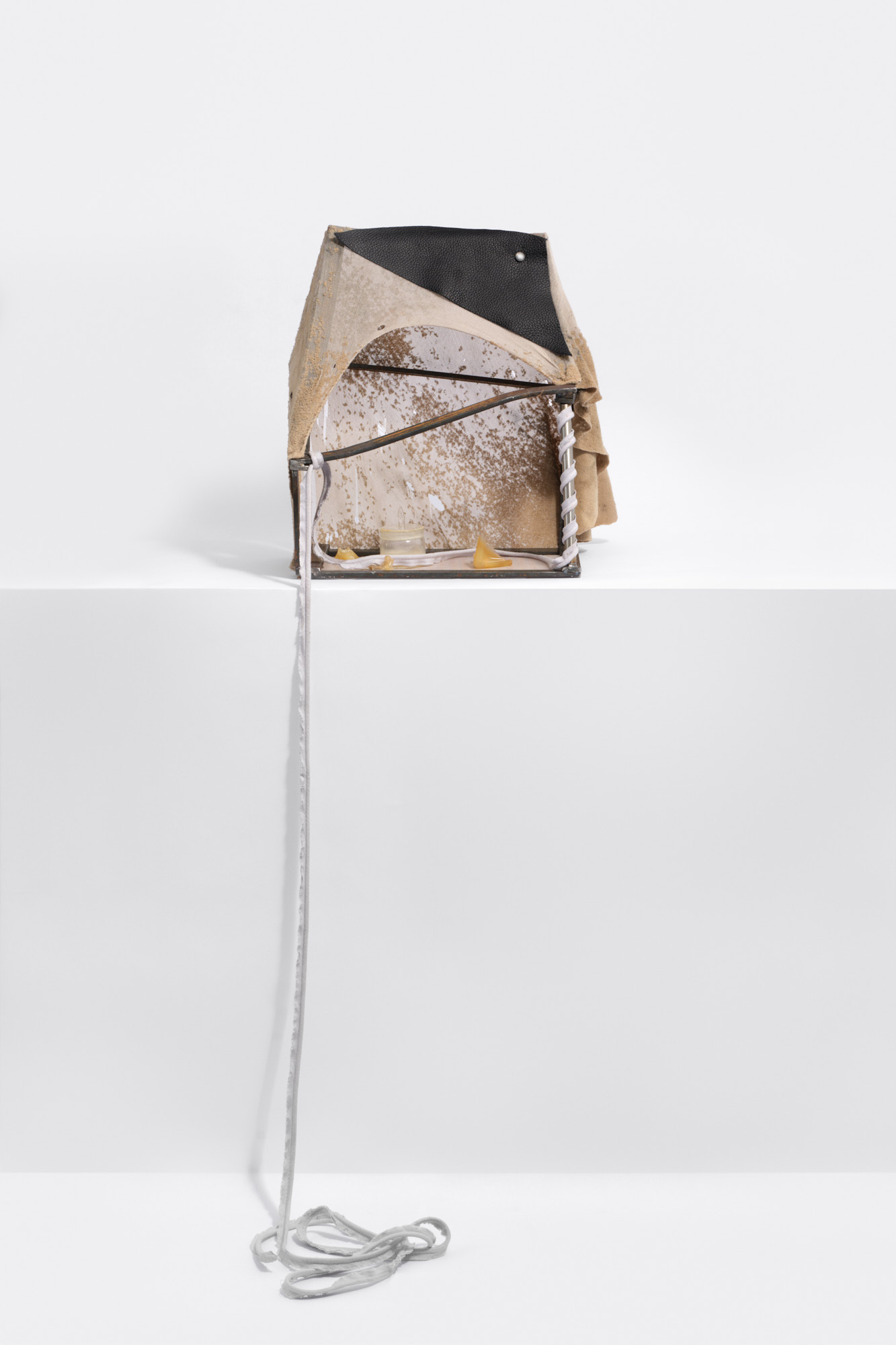
Material transformation thus becomes a way of thinking about memory: not as a stable record of the past, but as an accumulation of changes, traces and residues that continue to shape the present. In her practice, Lach translates these traces into visual forms, exploring how objects retain memories of past experiences while remaining open to change and interpretation.
Material transformation thus becomes a way of thinking about memory: not as a stable record of the past, but as an accumulation of changes, traces and residues that continue to shape the present.

BIO
Linda Lach (b. 1995) is a Warsaw-based artist. She’s a recipient of the Grand Prix for Best Diploma at the Academy of Fine Arts in Warsaw in 2022 and the Strabag International Art Award in 2023. Her works were featured in exhibitions at institutions across Europe, including Warsaw, Paris, Milan, Vienna, Belgrade and Basel. The artist is represented by Wschód Gallery.