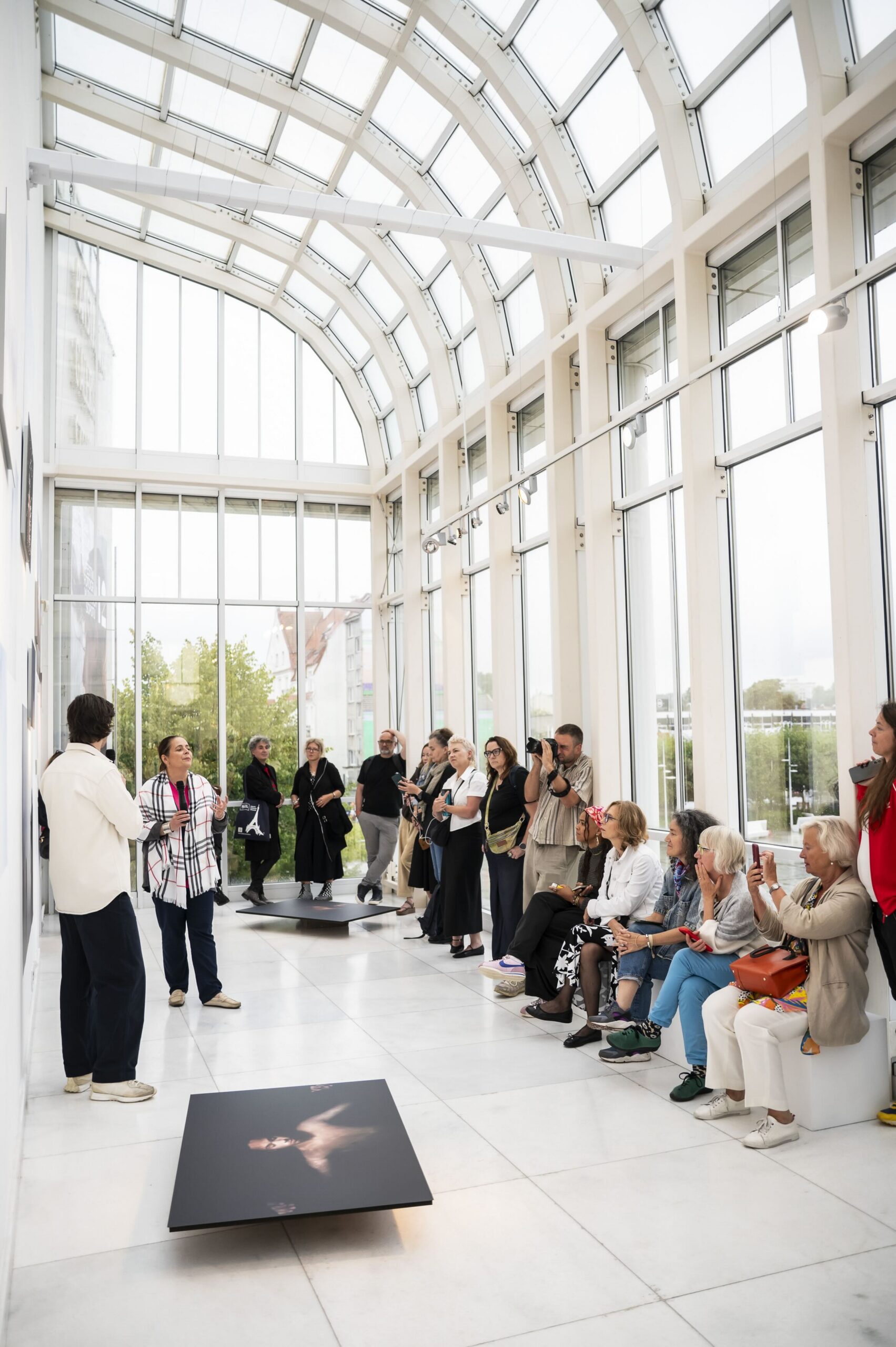


Borders have different dimensions — they can be physical, cultural, emotional or strictly visual. They have the power to determine our lives and futures. The 12th edition of the photography festival W Ramach Sopotu, which opened on 3 September under the theme Border, explores how these often-invisible boundaries shape how we understand ourselves and the world around us. Focusing on works developed during residencies in Sopot, the festival brings together three artists, whose projects approach the theme through different perspectives.
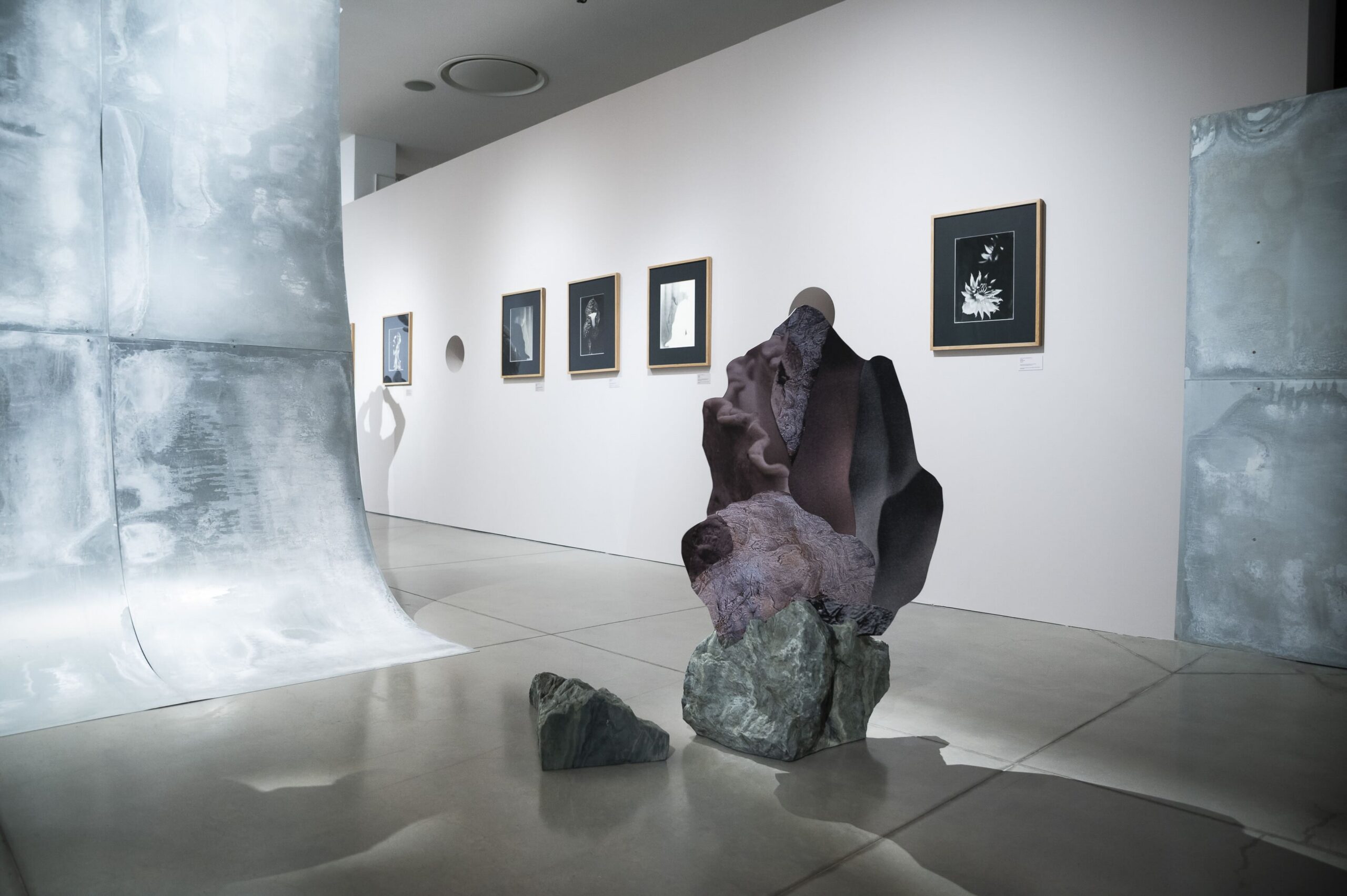
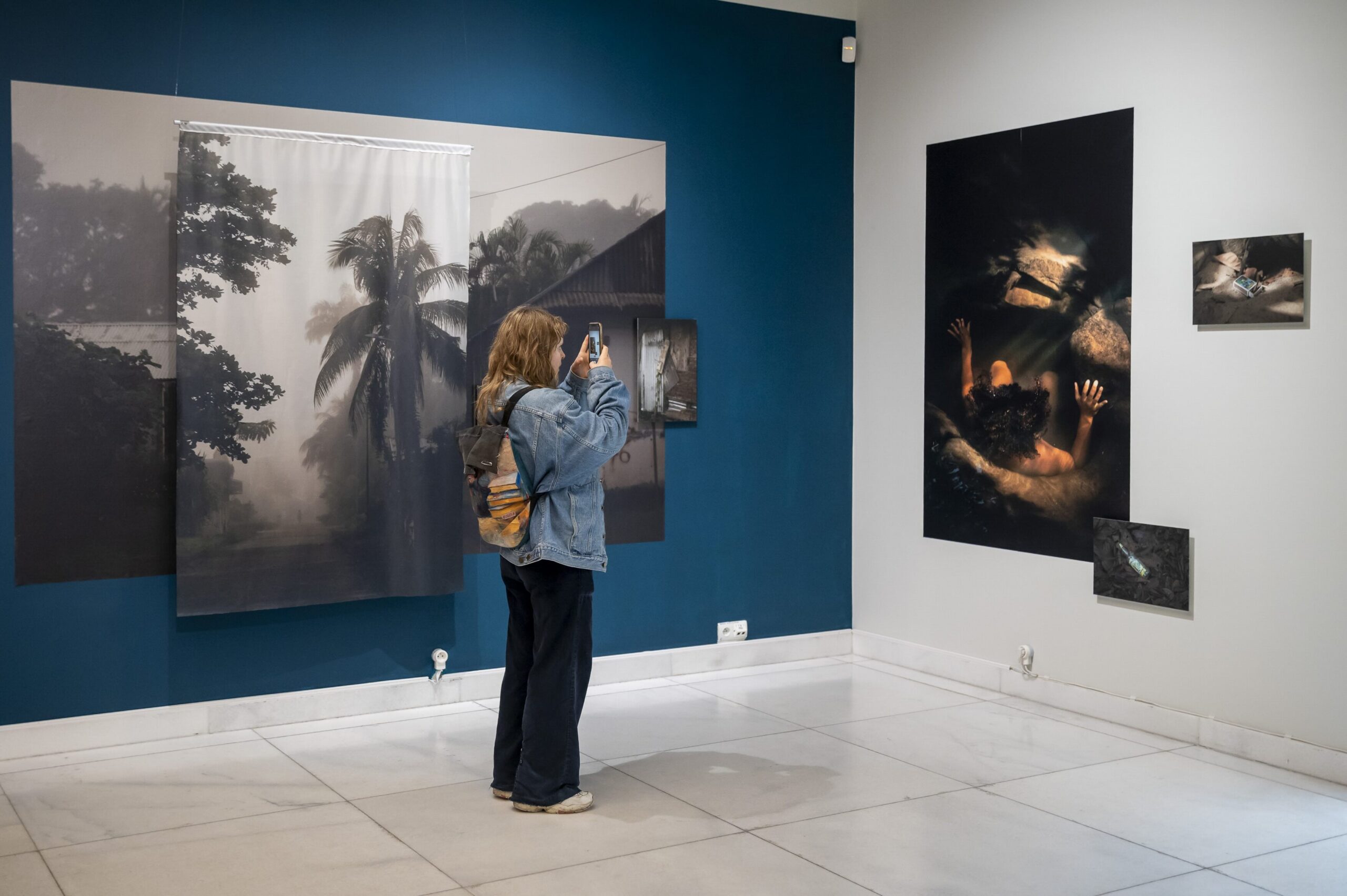
Water constitutes a shared point of reference for these projects. In Dziecko, które nosimy w sobie [The child we carry within], French artist Nyo Jinyong Lian combines staged photography, film, text projections and interactive activities to ask how we can practice ways of being that are yet to be named. Marta Bogdańska’s Ec(h)otony [Ec(h)otones] explores the transcendent nature of movement between sea and land, drawing on archival presentations of coastal life forms and Astrida Neimanis’s theory of hydrofeminism. Meanwhile, in Atlas fałd i bruzd [Atlas of folds and furrows] Anna Kędziora gathers visual traces of human impact emerging at the meeting points of different bodies of water, using scientific materials, archives and visual metaphors. The free projects are currently on view at the State Gallery of Art in Sopot in an exhibition curated by Mariola Balińska.
Apart from the headliners, the festival offers exhibitions by several acclaimed artists, situated in some of the city’s most iconic locations and architecture. They include works of Paweł Bownik, Magdalena Hueckel, Hejber, Agnieszka Rayss, and a plethora of French photographers.

Following the opening of W Ramach Sopotu, we talked to the festival’s veteran producer, Patrycja Tuchanowska-Ruszkiewicz, about the Polish-French partnership behind this year’s edition, the meaning of its main theme and how it runs through different presentations, and the different dimensions of the festival’s program.
Sophia Kalinowska-Werter: Magdalena Czarzyńska-Jachim mentioned that Planche(s) Contact, a residency-based festival in France, inspired the creation of W Ramach Sopotu. What were the biggest takeaways from that festival that were translated into the event in Sopot?
Patrycja Tuchanowska-Ruszkiewicz: Planche(s) Contact was based on a residency program, and that’s the element that we brought to Sopot. During the festival’s first edition, we focused exclusively on residencies, and the program included only the residents’ exhibitions and meetings with them. Year by year, the festival has evolved and expanded to include additional elements. We began to invite artists from abroad, and then came the idea of a single “guest” country. Following previous years featuring Ukraine, Denmark, Finland, Lithuania and Germany, the current guest country is France.
SKW: With France as its guest country, this year’s edition of the festival puts emphasis on a Polish-French collaboration. W Ramach Sopotu partners with the Polish Institute in Paris, French curators, and young artists from France. What has been the most valuable outcome of this collaboration? How do the French exhibitions and projects resonate with the main theme of this year’s edition — Border?
PTR: We are delighted that the Polish Institute in Paris has entered into a partnership with us, and we hope that it will also support us in promoting this partnership in France. Our collaboration with French curators has been an incredible experience, and it gives our Polish audience the chance to discover the French photography scene.
When Weronika Krzyżanowska-Balita and I began working on the festival, we asked Emmanuelle Halkin to organise an exhibition that would showcase the current landscape of photography in France. I hope that Shape of Stories, featuring the artists Maxime Riché, Charles Thiefaine, Jérémy Appert, Caroline Ruffault, Alice Pallot and Nathyfa Michel, will provide us with an excellent insight into that scene. Meanwhile, the exhibitions by Nelson Bourrec Carter and Gaël Bonnefons offer us the chance to discover French art in a completely different, yet equally fascinating light.

SKW: This year, the State Art Gallery in Sopot (Państwowa Galeria Sztuki w Sopocie) is showcasing photographs on all of its floors and has invited a broad range of artists. What can visitors expect? Was the exhibition conceived as a single narrative, or rather as a convergence of different approaches and photographic languages?
PTR: We are thrilled to have finally reached an edition in which the entire gallery has been filled with photography. This huge change has had a significant impact on what we can achieve. We are now able to showcase a greater number of exhibitions, including historical works by Fortunata Obrąpalska, which would not have been possible without the PGS’s space. Each exhibition presents a unique interpretation of the festival’s theme Border. It serves as a unifying element, whilst each artist’s approach is entirely different — and that is precisely what was so important to us.
In Dissasembly, Paweł Bownik transgresses the boundary between what is natural and what has been shaped by humans. Magdalena Hueckel explores the duality of our nature by assembling a new whole from fragmented elements in Nonduality. Meanwhile, Nyo Jinyong Lian, Marta Bogdańska and Anna Kędziora — this year’s residents — tackle the theme of water, which in Sopot is clearly a border of sorts, with each artist approaching it in a completely different way.
Each exhibition presents a unique interpretation of the festival’s theme Border. It serves as a unifying element, whilst each artist’s approach is entirely different — and that is precisely what was so important to us.
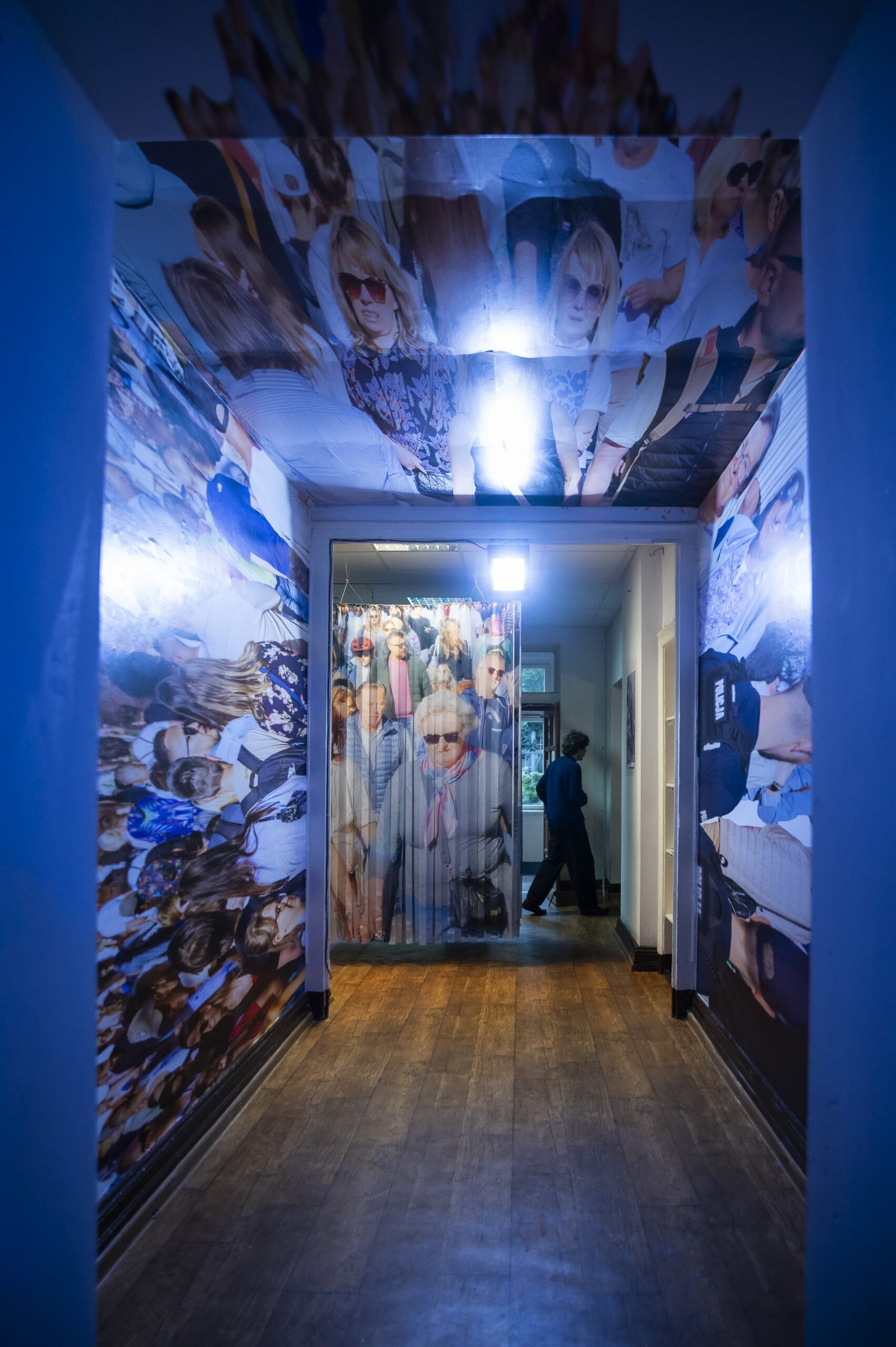
Visitors can also encounter works by Hejber, who travelled across national borders and recorded his observations on film, even though, as he himself says, he takes photographs because he is in a place — not because he is travelling there specifically to take photographs. Other than that, there are experimental works of Agnieszka Rayss, who uses new technologies to tell the story of the former border between Poland and the Free City of Gdańsk.
As you can see, the exhibitions vary, so I believe that everyone will find something of interest to them — both in the Gallery and beyond.
SKW: If you had to choose one feature about this year’s festival that is most intriguing, what would it be?
PTR: I have been a producer of the festival since its inception. I treat every artist, curator, and space extremely personally because I am 100% involved in the festival — so I can’t choose one element. I’m working to make it all interesting for viewers.
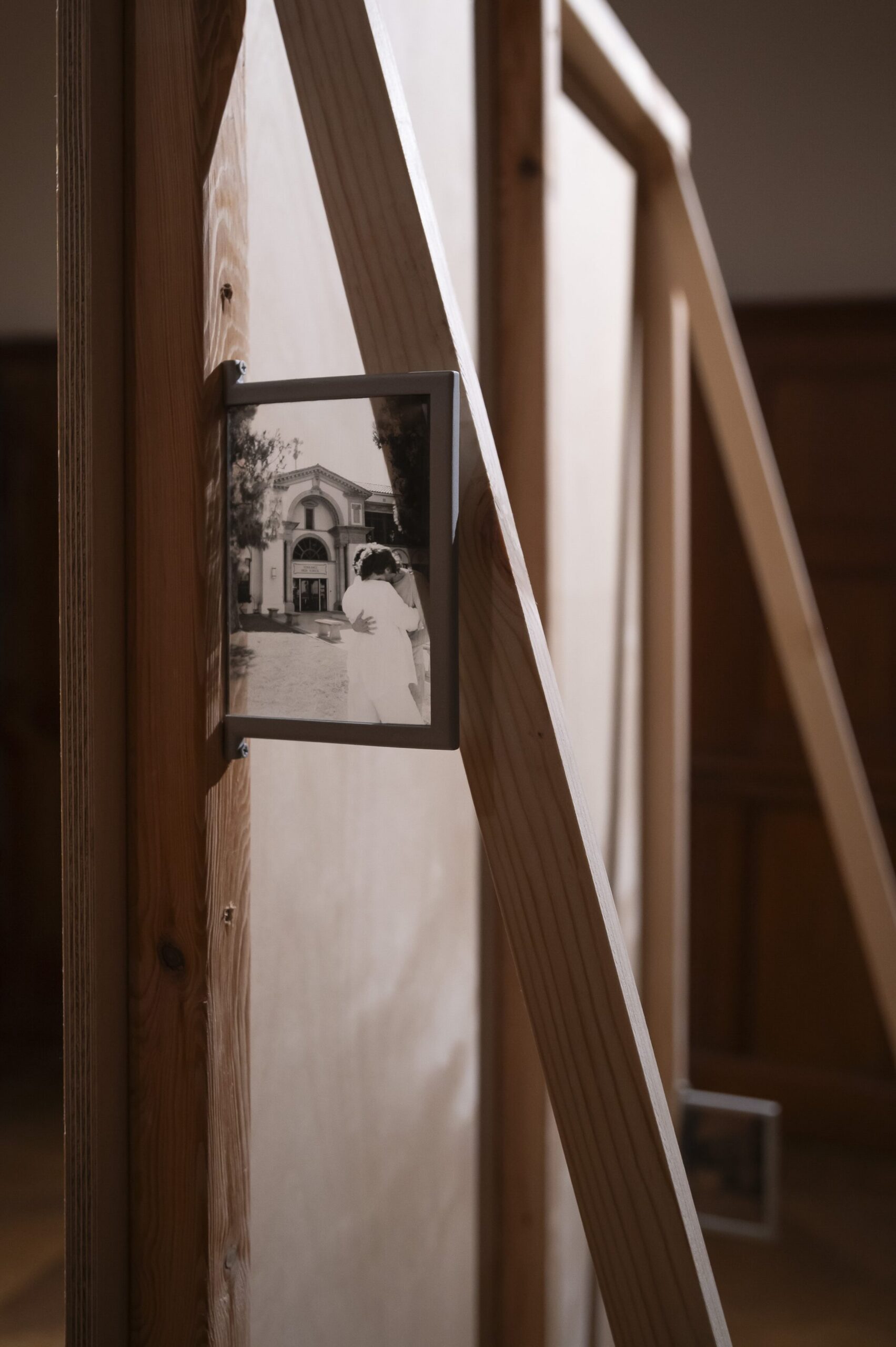
This year, we invited the architects from Miastopracownia to collaborate with us. They designed the exhibition sets at PGS, whilst Justyna Kropidłowska from ASTROLABIUM created an olfactory installation for the resident artists. These two new elements greatly enriched the excellent exhibitions and brought something fresh to our festival.
SKW: For years, the festival has gone beyond traditional exhibition spaces. Many projects are presented in small galleries, intimate settings, and venues temporarily adapted for exhibitions. What role do these spaces play in the festival’s program?
PTR: They play an enormous role! Our primary aim is to show people who wouldn’t otherwise be interested in artistic photography that it’s something wonderful. I believe that venturing beyond the gallery, to places you might stumble upon by chance, offers an opportunity to encounter art and to open yourself up to it. That is why, right from the start, we’ve been venturing beyond the gallery space — and this is a key part of the festival.
Besides, who doesn’t enjoy a stroll around Sopot? The way the festival exhibitions are spread out allows for a lovely walk amongst the art and the chance to visit new, lesser-known places.
Our primary aim is to show people who wouldn’t otherwise be interested in artistic photography that it’s something wonderful. I believe that venturing beyond the gallery, to places you might stumble upon by chance, offers an opportunity to encounter art and to open yourself up to it.

SKW: Over recent years, the festival has been consistently expanding its section dedicated to photography books. How was the book program conceived for this edition? Does it focus on a specific theme or selected collections?
PTR: The book exhibition program for this year’s festival naturally centres on the world of the French photobook.
The team — Paweł Klein, curator of the FFWRS photobook collection, together with the invited renowned designer Katarzyna Kubicka — has put together a selection of the latest publications on artists, designers, publishers, and French culture. The newest collection includes books awarded at French festivals and photography fairs.
The selection draws on the theme of Border in a multifaceted way. Furthermore, Katarzyna Kubicka presented a collection of private photobooks — publishing treasures gathered over the course of twenty years. Another integral part of this year’s exhibition is the presentation of the Photo Poche collection by the French publisher Actes Sud, represented by curator Geraldine Lay. For a public discussion panel, Katarzyna Kubicka and Geraldine Lay conducted an in-depth analysis of the differences in the publishing process in Poland and France. During that discussion, the topic of pushing boundaries in the concepts of designers and photographers was raised.
A particularly interesting element, linked to the educational aspect emphasised by the festival, is the collection of student photobook mock-ups presented by Jarosław Klups from the University of Arts in Poznań. These publications demonstrate the extent to which contemporary photographic publications are breaking away from the original conceptual framework associated with the photobook genre.

SKW: This is the 12th edition of W Ramach Sopotu. What has changed the most in the public perception of the festival over the years? How do you define its identity and role on the Polish arts scene today?
PTR: This year, we decided to carry out research that, I hope, will answer that question. However, considering the calibre of the artists who have applied for the residency in Sopot, I can confidently say that W Ramach Sopotu has established a fairly strong position amongst Polish festivals. It was extremely important to us to stand out and not copy others. I hope we’ve managed to do that. Judging by the number of people who turned up for the opening, it’s clear that I’m not the only one who’s been waiting all year for the next edition.
It was extremely important to us to stand out and not copy others. I hope we’ve managed to do that. Judging by the number of people who turned up for the opening, it’s clear that I’m not the only one who’s been waiting all year for the next edition.

SKW: The festival showcases both established artists and those just starting on their artistic journey. How do you foster dialogue between these different generations and stages of a career?
PTR: We achieve that by inviting them to the festival! We observe that the opportunity to take part in a student open-air workshop, in collaboration with the Sopot School of Photography and art colleges across Poland, attracts young artists and their peers, enabling them to get to know their more experienced colleagues and benefit from their knowledge and experience.
The youth also gain experience through preparing their exhibitions, which will go on to help them work on further individual projects. We can see that students who took part in previous editions of the festival are now coming back as audience members, and that’s brilliant!

SKW: A significant element of the festival is presenting works created during residencies. For any young or underrepresented artists reading this, how can they apply? What would your key advice be?
PTR: Everyone has an equal chance. During the Open Call, the jury reviews portfolios and residency ideas. My advice? Put together a portfolio and just try — maybe your idea will be the most interesting for next year’s jury. It’s important to remember that the photos must be taken in Sopot — and that’s the only requirement.
Special thanks to Julia Klewaniec for helping with constructing the interview.