



Once we recognise that the distinction between art and craft is obsolete, we begin to see craft as more than useful objects. For decades now, artists have been blurring the boundaries between the two, proving that the intellectual value behind textiles, ceramics or woodworking shouldn’t be treated as lesser than that of painting or sculpture. We can see that clearly at events such as the 2026 Venice Biennale, where works by artists like Dana Awartani, Sumakshi Singh or Amina Agueznay occupy national pavilions, standing firm alongside traditional fine art media and experimental practices. But craft can offer much more than merely proving it can be viewed as art’s counterpart.
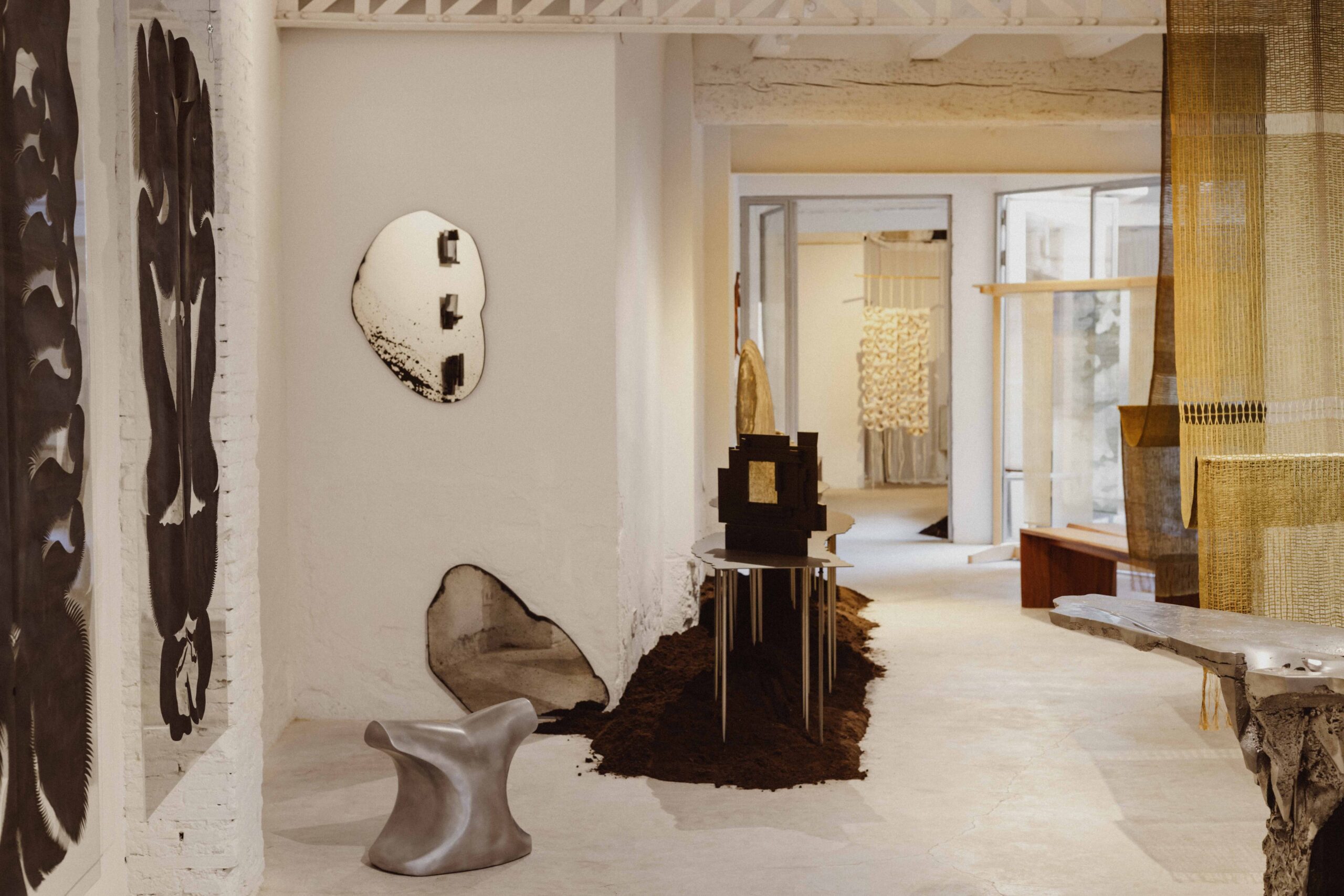
Artisan techniques and design methods are a repository of practices that can help us build a better future. Sustainability, community, creativity, ancestral knowledge and innovation are all embedded in their language. Taking part in Valencia Design Fest made this very clear — contemporary designers and artisans tackle issues of democracy or environmental crises, looking for solutions that are not only functional but also infused with creative energy and aesthetic sensibility.
The exhibition uses “craft” as a verb, demonstrating that alternative ways of functioning in the world can be found in the process of creating — ones that are based on care, attentiveness, respect and resilience.
Among them, a group of 19 Polish creators has been brought together in an exhibition under the telling title of Crafting Reality. In Search of Alternative Habitats. Curated by Alicja Głuszek and organised by the Institute of Creative Industries in collaboration with the Polish Institute in Madrid and the Adam Mickiewicz Institute, the exhibition uses “craft” as a verb, demonstrating that alternative ways of functioning in the world can be found in the process of creating — ones that are based on care, attentiveness, respect and resilience.
Using All the Senses
Upon entering the exhibition space, we first pass through a small café. The smell of coffee draws us further inside to discover what lies within its raw corridors. Crafting Reality takes place at Pasaje 94, a venue combining a café, an exhibition space and an architecture studio. Its blend of functionality and creativity perfectly reflects the ideas behind the exhibition. And so does the space itself — cracks in the concrete floor and fractures in the plaster that reveal the brickwork echo the works on display and their embrace of the irregular and the imperfect.
The exhibition unfolds across three thematic chapters, each examining how makers engage with materials and craft traditions. In the chapter We Are Roots: Updating Tradition, artists draw on traditional techniques as a starting point for experimentation. The other two chapters — We Are Earth: Resisting Anthropocentric Cataclysm and We Are Path: Designing Contemporaneity — are closely connected, both exploring our relationship with nature amid the environmental crisis. The former brings together artists who give materials greater agency, allowing them to become co-authors of the final form. The latter returns to the exhibition’s central premise, presenting works that draw on the principles of craft to imagine alternative futures.
Although the chapters offer distinct perspectives, their ideas overlap throughout the exhibition, and the division is not immediately apparent from the arrangement of the works. The pieces associated with different chapters are positioned side by side, revealing connections that go beyond the set categorisation and often touch on issues relevant to more than one chapter.
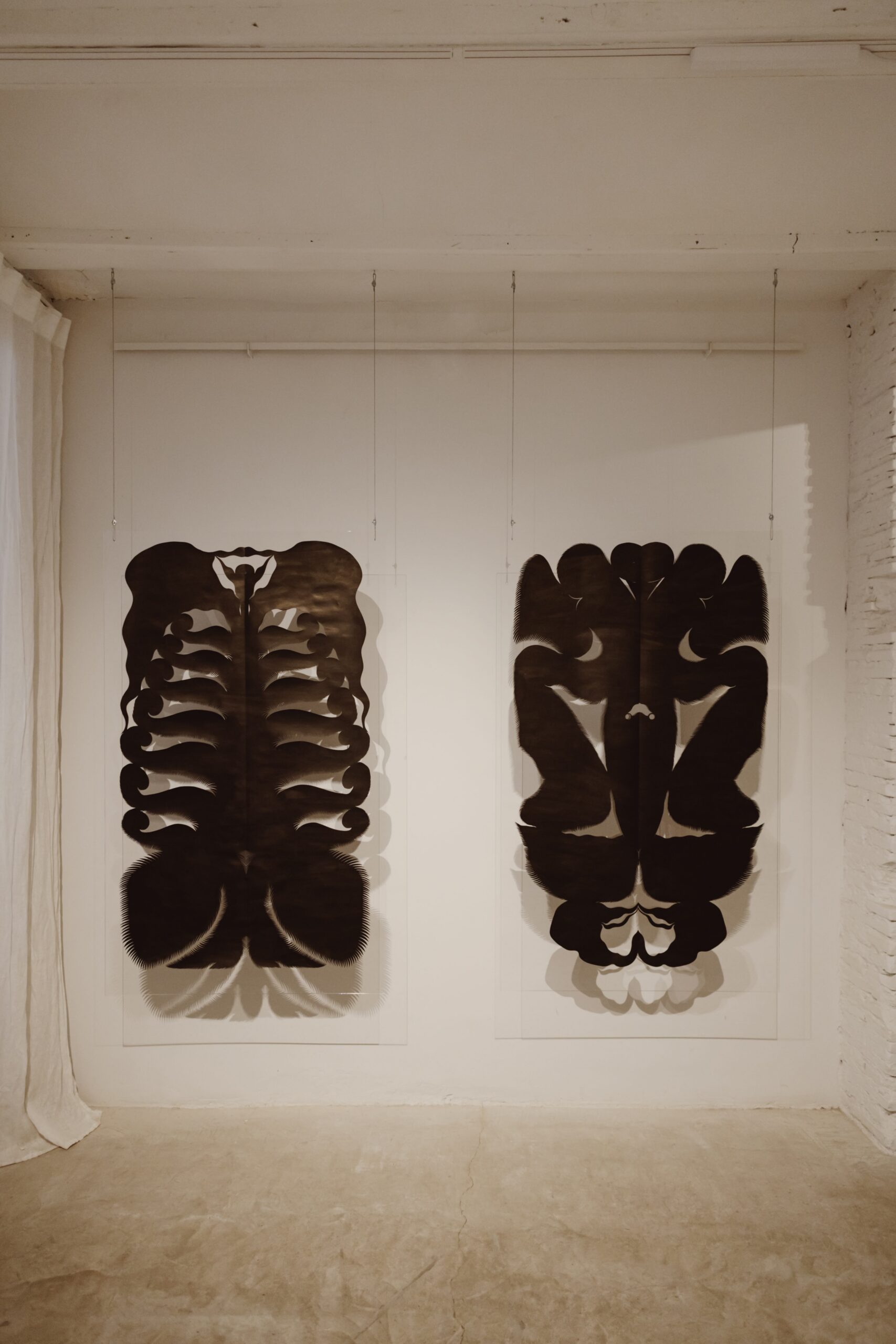
Just beyond the café counter, Agata Marchlewicz’s paper cuttings hang on the wall, their surprisingly large scale making them hard to miss. Drawing on paper-cutting traditions found across many cultures, including Polish, Marchlewicz merges vernacular aesthetics with contemporary graphic design. The resulting forms are enigmatic: at once looking organic and somehow familiar, they gradually dissolve into abstraction. Their bilateral symmetry immediately brings to mind inkblots from the Rorschach test, inviting viewers to project their own associations and interpretations onto the shapes.
Further down in the first room, Justyna Kosińska’s embroidered pieces from the series Molts similarly seem to hover between abstraction and organic form. The long, symmetrical black piece bears a close resemblance to Marchlewicz’s paper cuttings. But Kosińska’s forms fully come to life only as we approach them: the metallic embroidery thread glistens, and we begin to notice the individual threads, neatly arranged side by side. In this way, they resemble scales — precisely what the artist intended to evoke. The works recall patches of skin shed by a reptile, traces of transformation and the cycles of renewal all living beings undergo in one way or another. Knowing how much time and patience embroidery requires, it is difficult not to see these pieces as the product of a meditative process, an extended contemplation of change.
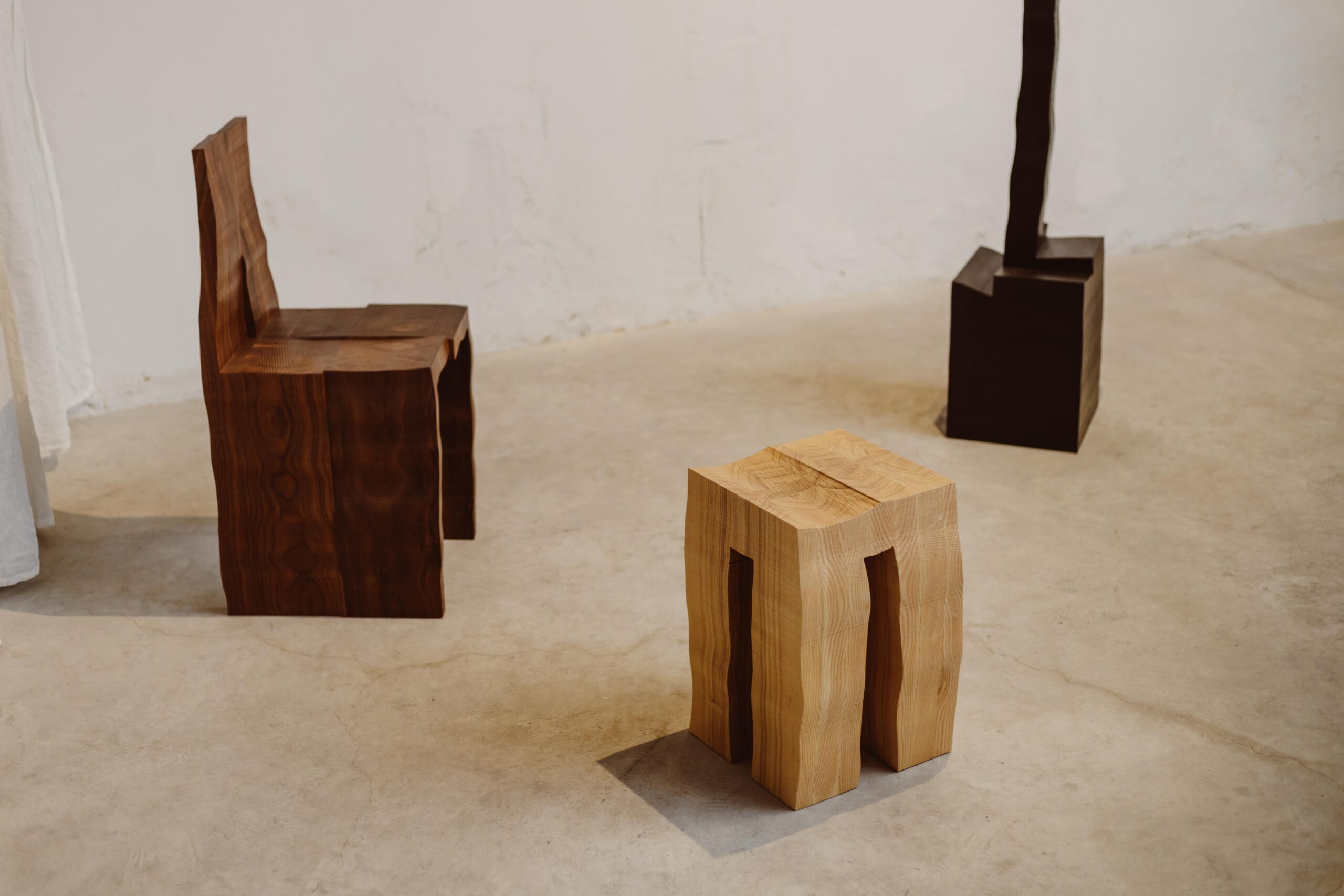
On the other side of the aisle from Kosińska’s works stands an unassuming bench, seemingly inviting visitors to pause, sit and take in their surroundings — which I did, only to realise a moment later that I was sitting on a part of the exhibition itself. But this gave me a better chance to look closer at its form. Made by Jakub Przyborowski, the mahogany bench consists of two pieces of wood joined almost seamlessly along one side. What might initially appear to be a single piece that has split in two reveals, on closer inspection, two separate boards. Their shape echoes the branching form of a tree trunk, making the relationship between the material and the object’s form an integral part of the work.
Fortunately, we were allowed to touch the objects — something that I often miss when encountering artworks. In the usual gallery and museum settings, we are restricted to using only part of our senses: mostly sight, with hearing being a close second. Yet craft is an inherently embodied practice. Being able to touch the result allows for a more intimate connection for the viewer. This is particularly relevant here, as the exhibited works are not merely objects to be observed: many retain a functional dimension and invite a degree of interaction to reveal their full potential.
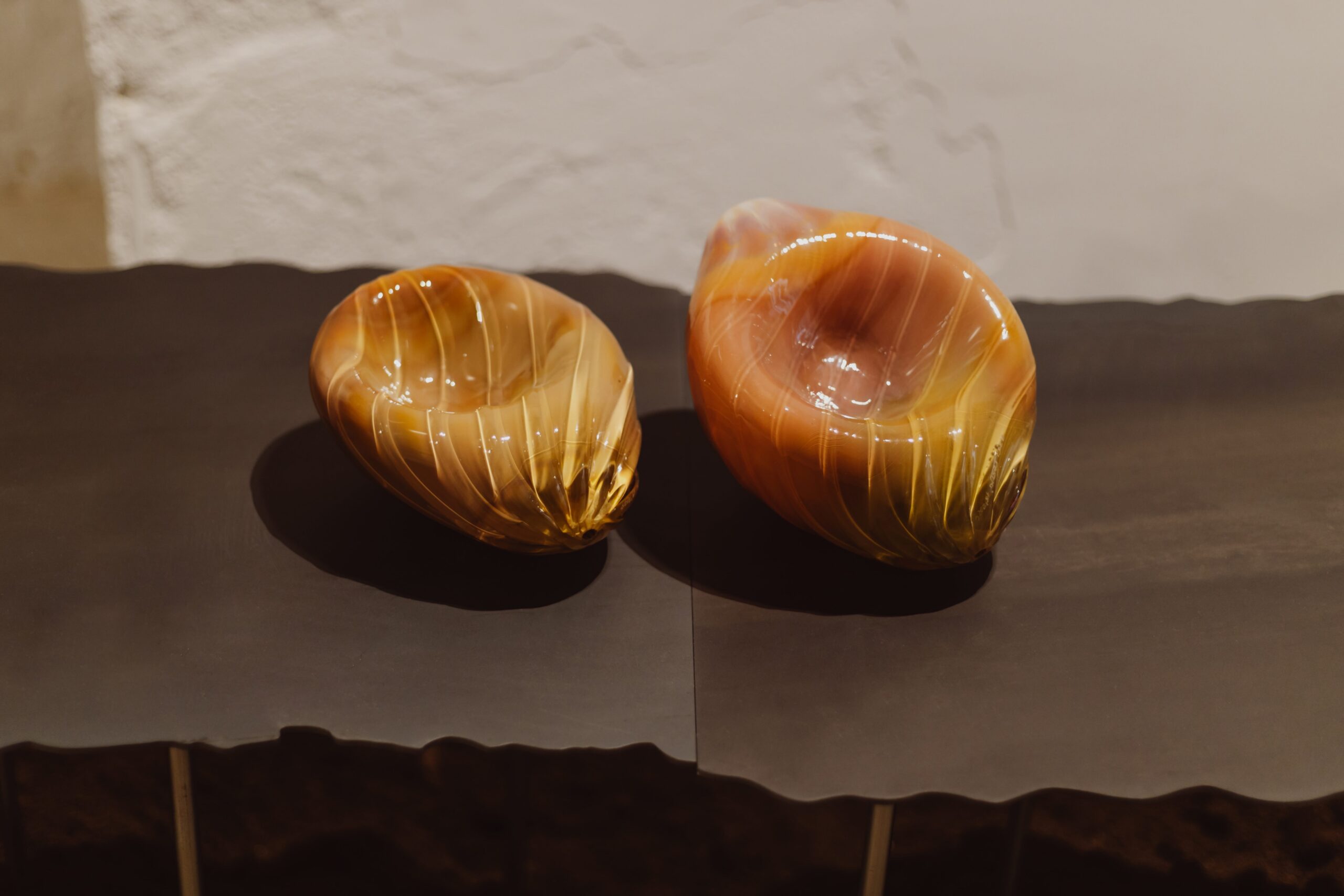
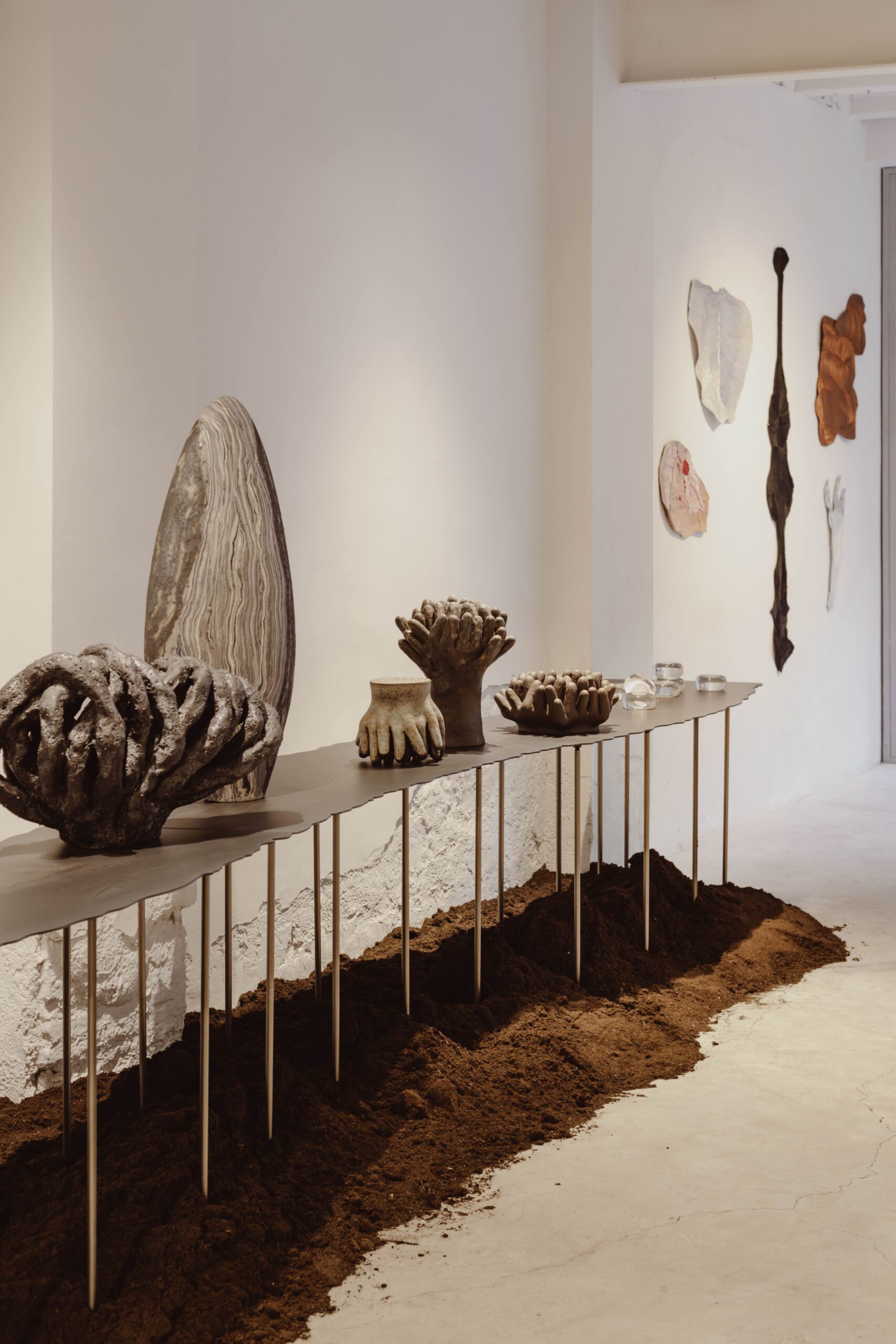
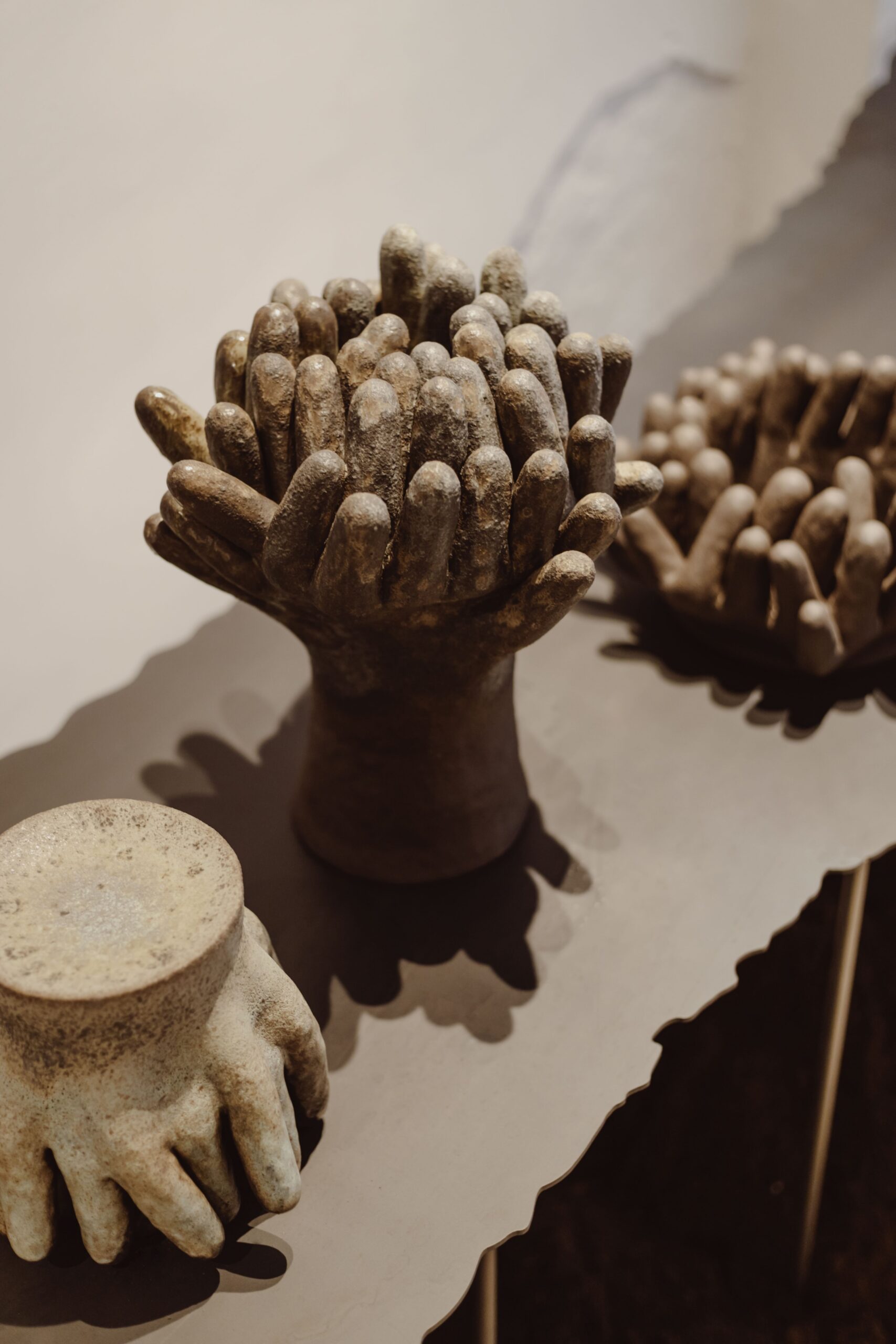
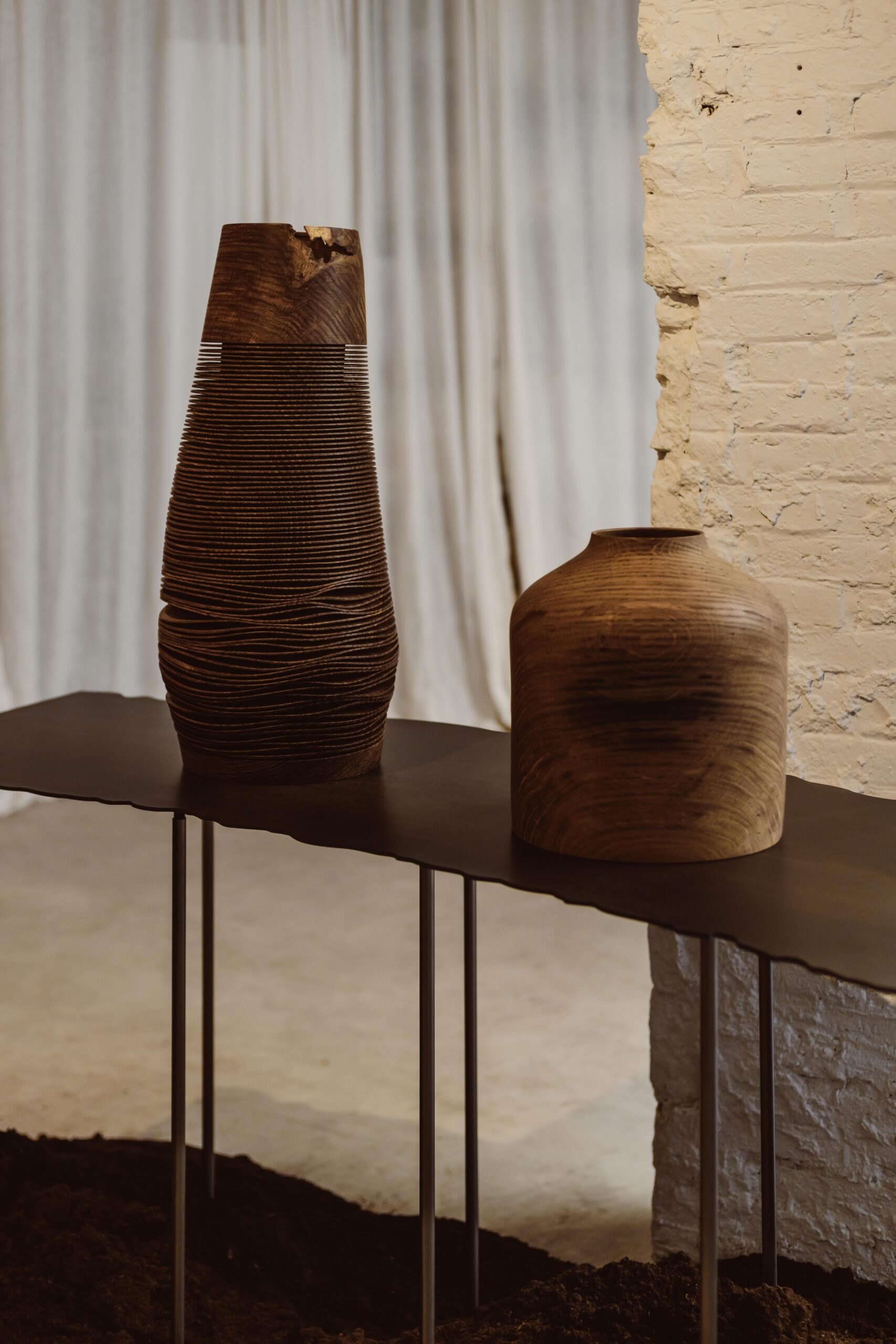
I was particularly drawn to Olga Milczyńska’s vessels, displayed just next to Marchlewicz’s “reptile skins”. In my notes, I labelled them as “fingers”. Titled KUNSTKAMERA — a cabinet of curiosities — the series evokes a sense of strangeness and intrigue. Part vase, part sculpture, the vessels are meant to be turned upside down, reoriented and viewed from different angles, with each position suggesting new associations. In her creative approach, Milczyńska also embraces letting go of full control and allowing imperfections and accidents to be part of the final result. She does so as a form of protest against the blandness and repetitiveness of ceramic objects that now occupy the market — whether industrially produced or handmade.
In the usual gallery and museum settings, we are restricted to using only part of our senses: mostly sight, with hearing being a close second. Yet craft is an inherently embodied practice. Being able to touch the result allows for a more intimate connection for the viewer.
Between Function and Form
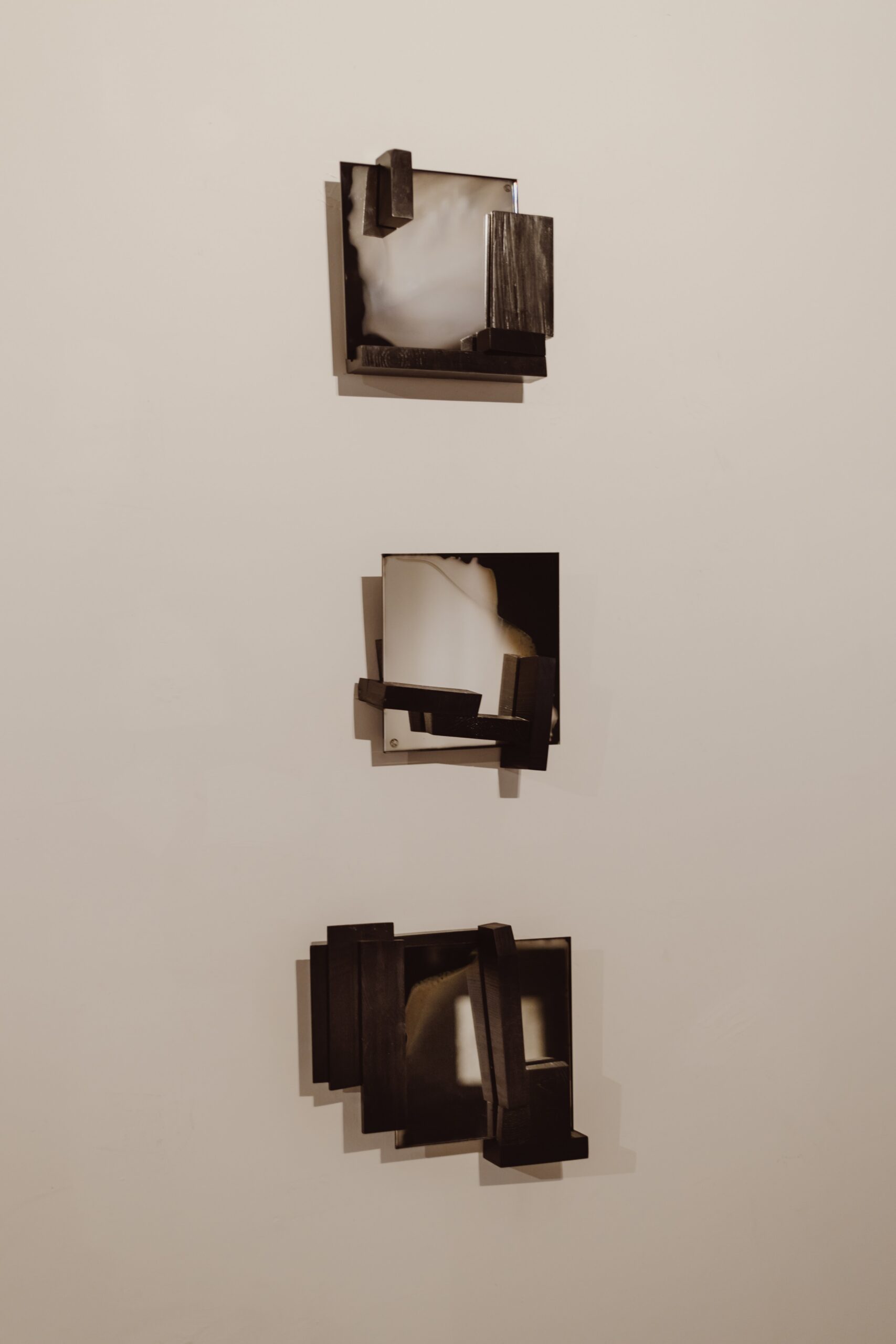
For me, as an art historian, one of the exhibition’s most compelling aspects is how it challenges the hierarchy between fine art and craft. A group of works that caught my attention in this context consists of small mirrors framed with pieces of wood arranged in different ways. Titled simply Wooden objects with mirrors (2023), the works by P55 Mirrors — a duo formed by Beata Ludwin and Łukasz Wołek — immediately brought to my mind the works of Polish artists such as Henryk Stażewski and Jerzy Budziński and their experiments with the language of geometry and the mechanisms of perception. These small objects can be seen as a continuation of this artistic tradition, with the mirrors adding another dimension to the exploration by directly involving the viewer, whose reflection becomes part of the work itself.
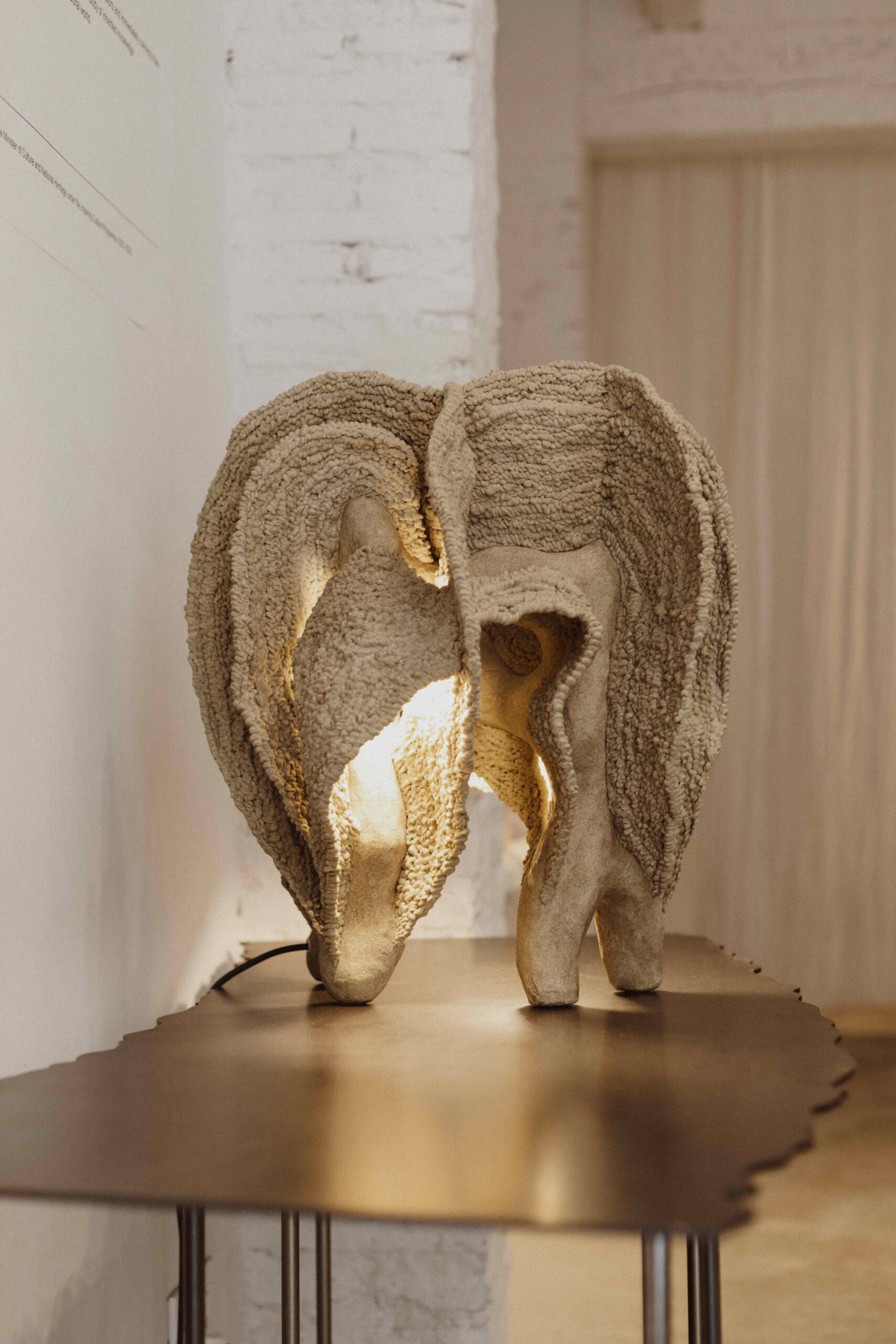
While these mirrors or the vessels by Olga Milczyńska occupy an intermediate space between functional design and purely sculptural forms, some works in the exhibition blur this distinction even further. Agnieszka Mazur’s forms are utterly perplexing at first. From a distance, they look as though they may be knitted from wool. Upon closer inspection, however, we discover that they are actually made of sand. Their organic forms resemble marine organisms such as corals, and they become strangely alive as our gaze glides over them. Although they function as lamps, this practical purpose feels secondary; the light they emit mainly heightens their sense of liveliness.
For me, as an art historian, one of the exhibition’s most compelling aspects is how it challenges the hierarchy between fine art and craft.
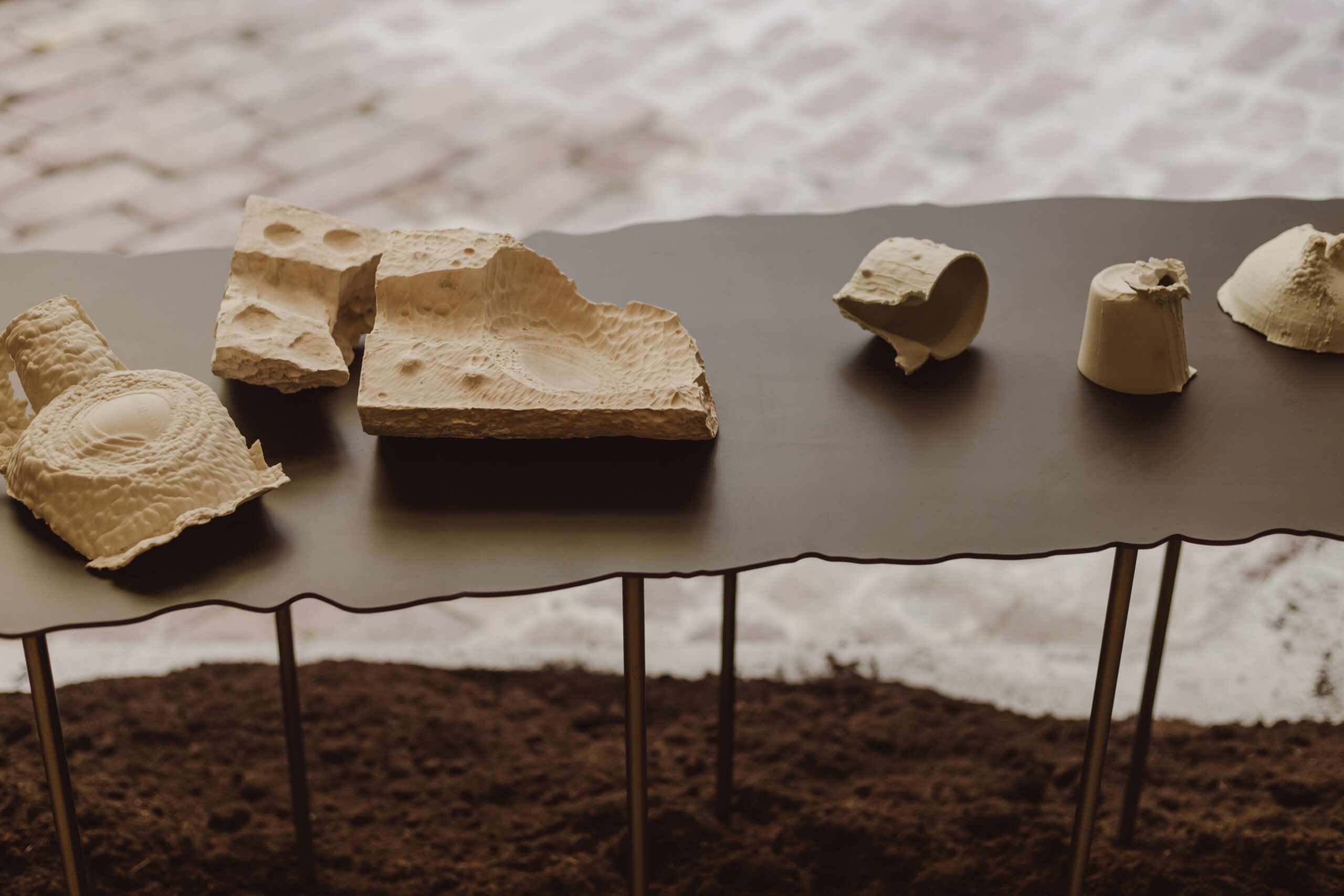
In the second room of the exhibition, broken-looking pieces lay scattered on the display table. Some of them look organic; similarly to Mazur’s lamps, they resemble marine organisms. Others look as if they broke off a larger piece — a vase or a box — while others again retain the shape of a functional object. What connects them is their pale, plaster-like colour. The pieces come from three different series of works by Monika Patuszyńska. In Orphans and In Dust We Trust, the artist uses discarded moulds found in abandoned porcelain factories, while in Junk Casting she experiments with casting from her surroundings, for example volcanic sand of an Indonesian beach. The resulting works evoke the Dada ready-made, transforming discarded materials and remnants into objects that resist easy categorisation.
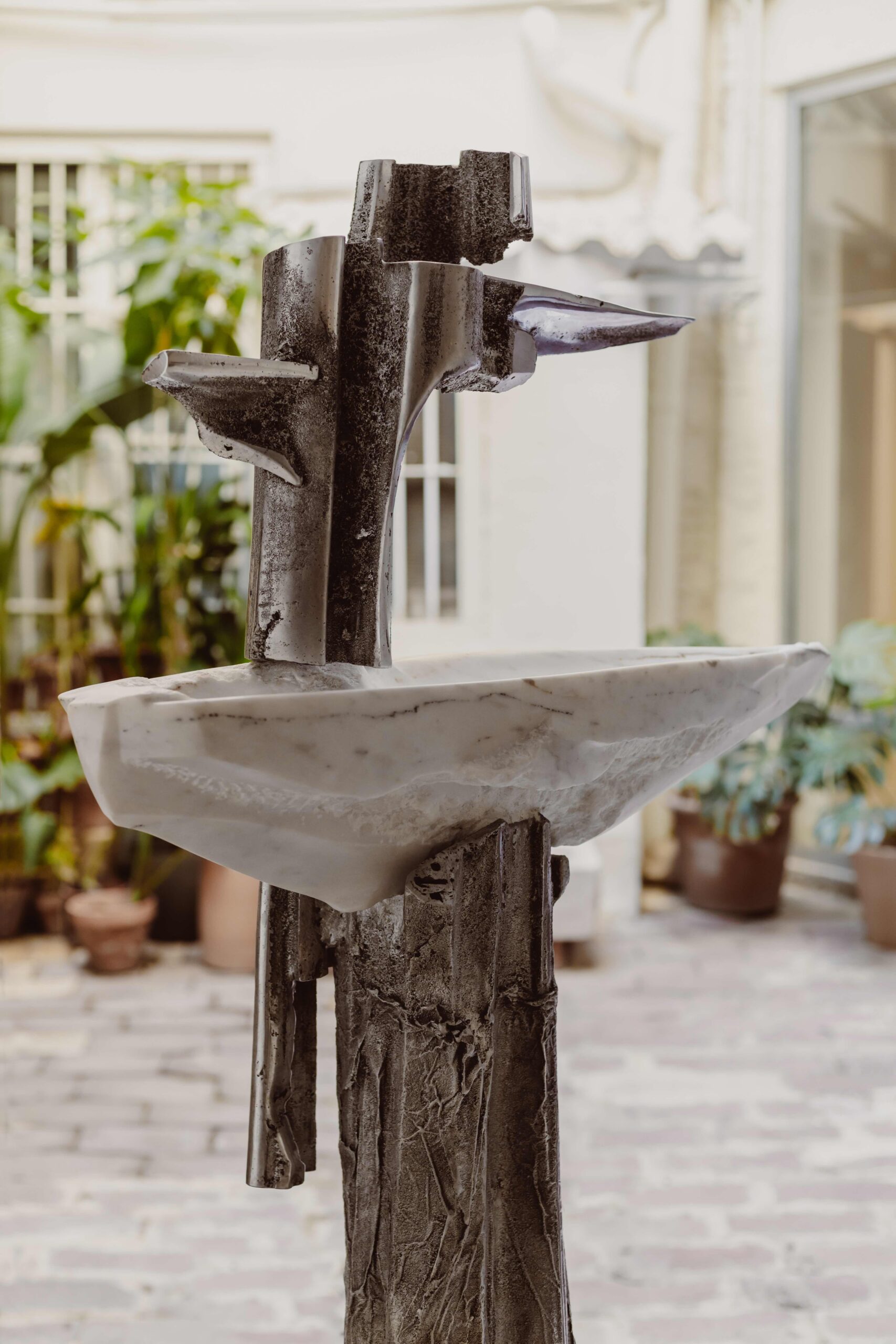
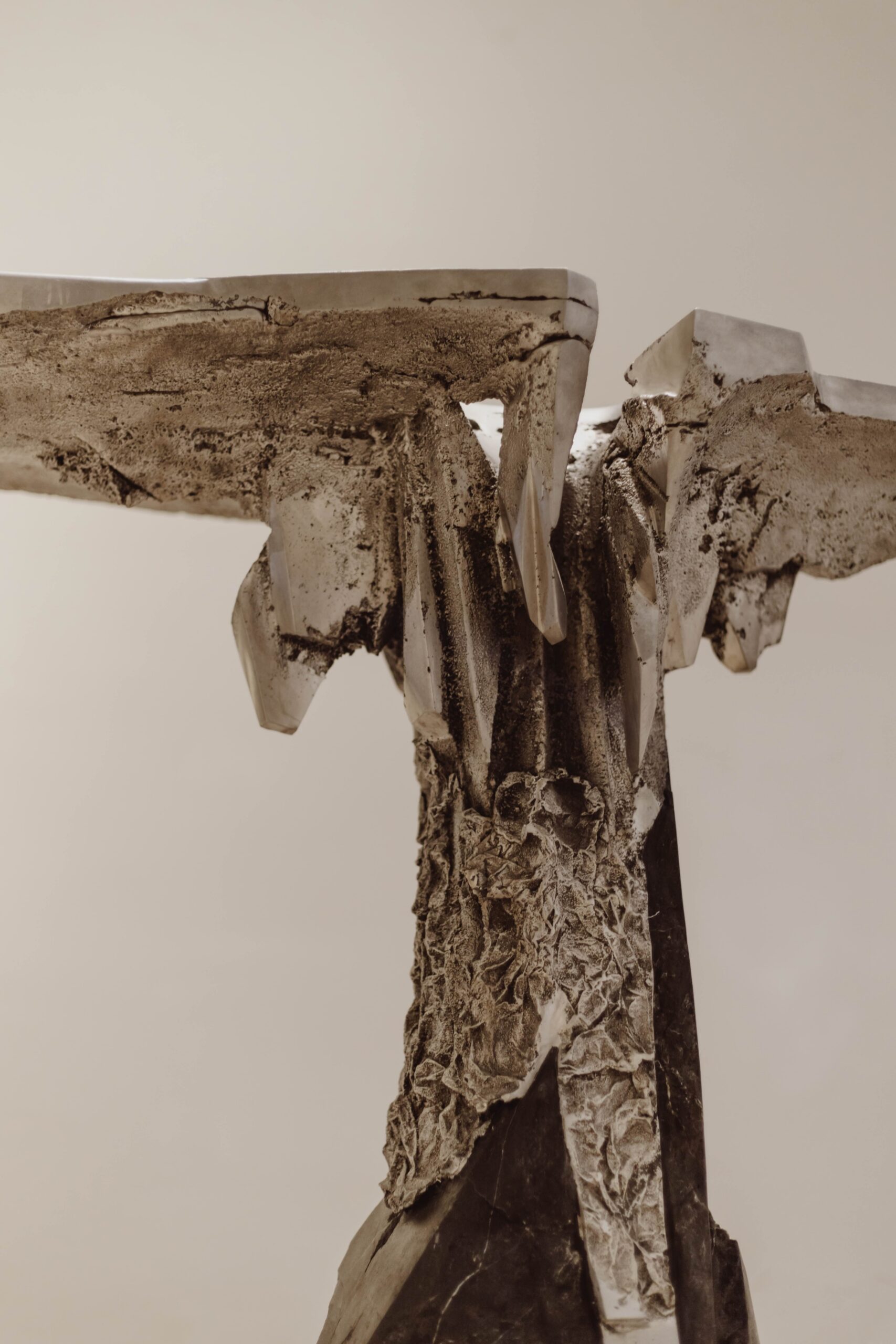
But maybe the most strikingly sculptural forms are those of Fjor (2025) and Kelda (2026) by Formsophy, a creative studio founded by Alicja Prussakowska and Jakub Kijowski. The exhibition catalogue describes them as “functional sculptures”. Made from cast recycled aluminium and marble, the works result from a process rooted in trust in the material and an embrace of chance — qualities reflected in their raw, irregular surfaces. They seem shaped not by human hands but by nature itself, as though moulded by the elements. The functional aspect is more evident in Kelda, a piece located in a small inner courtyard. Its marble basin collects rainwater, providing a source of water for birds and other small creatures. The work thus serves not only human use but also extends to the non-human world.
Rethinking How We Make
The works presented throughout Crafting Reality demonstrate clearly that craft and design can carry the same intellectual weight as painting and sculpture. They are captivating not only in form but also in the way they engage with questions of tradition, function and our impact on the natural world — not merely as subjects to explore, but as the conditions that shape the very process of making.
At the heart of the curatorial approach is the idea that, in a world defined by immediacy, overconsumption, uncertainty, digitalisation and weakening social bonds, craft practices offer an alternative way of relating to our surroundings. The displayed works don’t provide ready-made solutions to these challenges, but a set of values to work from: attentiveness, care, resourcefulness and respect. Rather than prescribing a particular vision of the future, the exhibition suggests that how we make things matters as much — if not more — as what we make.
At the heart of the curatorial approach is the idea that, in a world defined by immediacy, overconsumption, uncertainty, digitalisation and weakening social bonds, craft practices offer an alternative way of relating to our surroundings.