



Luxembourg wasn’t just another festival stop — it was a chance to dive back into experimental art and bold, future-facing takes on the climate crisis. At the heart of it all was the Luxembourg City Film Festival (LuxFilmFest), which marked its 16th edition with record attendance of over 38,000 participants this year. What began as a national film event has evolved into a serious cultural force.

Backed by the Ministry of Culture and the City of Luxembourg, LuxFilmFest now stands as the country’s leading cinematic platform and serves as co-founder and current chair of the Europa Film Festivals network. International in outlook, it brings together award-winning auteurs, emerging filmmakers, industry professionals and curious young audiences through premieres, industry dialogue and cross-European collaboration.
Natural Intelligence
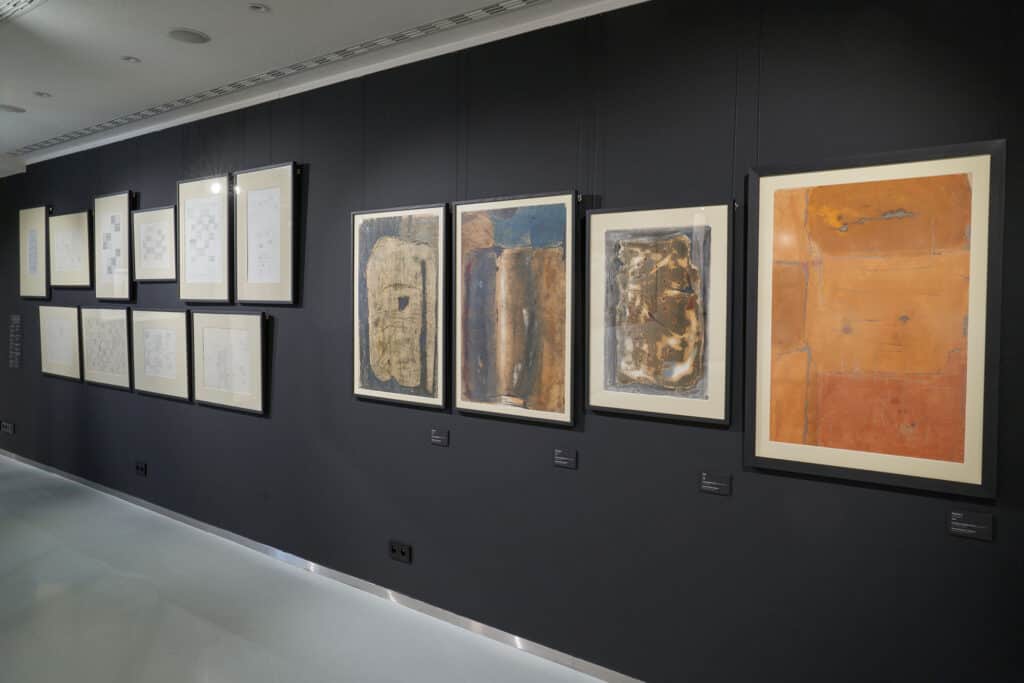
This year, the festival expands its programme with a new exhibition, Here Comes the Sun: Art, Energy and Natural Intelligence, curated by Elektron (Françoise Poos and Vincent Crapon). We met at Cercle Cité to discuss what if intelligence is neither artificial nor exclusively human? What if it is not confined to silicon processors or even to the brain? The posthuman turn in recent thought has already unsettled the idea that consciousness resides neatly inside the skull or that the human being ends at the skin. Instead, it proposes a more distributed condition of awareness — one entangled with tools, environments, infrastructures, and planetary systems.
The exhibition extends this shift by recognising forms of intelligence that predate computation: the sun’s steady radiance, evolutionary systems refined over geological time, microorganisms whose architectures capture and modulate light with a sophistication that rivals our most advanced engineering. In this expanded field, intelligence is no longer understood as domination or optimisation, but as relation — as the capacity to align, adapt, and co-exist within complex systems.

Such thinking also requires moving beyond the rigid logic of the digital paradigm. Binary structures — on/off, zero/one, natural/artificial — flatten the continuity between ecological and technological processes. A more elastic conceptual model is needed, one capable of acknowledging permeability, feedback, and interdependence. Technology, in this sense, is not an autonomous force but an expression of human desire — and desire itself is never neutral. It shapes infrastructures, values, and imaginaries.
Sunlight as Protocol
Solar Infrastructures and the Politics of Light
Solar Protocol by Solar Protocol embodies this recalibration. Instead of enforcing uninterrupted efficiency, it allows sunlight to govern the distribution of data. The network’s logic follows environmental conditions rather than abstract optimisation. Fragility becomes an infrastructural principle; care becomes an operational necessity. What emerges is not a utopian alternative internet but a modest reorientation: technology learning to situate itself within planetary rhythms.
Solar Protocol unfolds as both a functioning infrastructure and a speculative proposition. Conceived as an experimental web platform, it is distributed across a network of small, solar-powered servers installed in different regions of the world and maintained by volunteers. Rather than relying on conventional optimisation models, the system automatically redirects web traffic to whichever server is receiving the most sunlight at a given moment. In this way, the geographical distribution of solar energy — not efficiency metrics or profit-driven algorithms — determines how the network operates. The project advances what its creators describe as a form of “natural intelligence,” allowing environmental conditions to steer digital infrastructure and restoring energy awareness to the core of technological design.

Each node consists of a compact computer, a battery, safety components and a solar panel. Together, five solar-powered servers positioned across different time zones ensure that the website remains accessible around the clock. When a user visits the platform, the request passes through a DNS system that identifies, in real time, which server has the most available power. In the exhibition, this process is rendered visible as a multi-layered polar data visualisation mapping temporal and energetic flows. Installed in Small Room B, the circular interface updates live, indicating whether the site is currently being delivered from Chile, Australia, the United States or elsewhere. A single non-solar server is used only temporarily by the creators to monitor the system’s status.
For Vincent Crapon, the project’s significance lies precisely in its hybridity. “This project operates at the intersection of art, engineering, and design,” he explains. “From the outset, we have been interested in presenting ideas that may initially seem speculative or even unrealistic yet could ultimately inform the development of alternative infrastructures. The aim is not to scale up or to build a second internet powered by the sun, but to reach a point where we recognise the necessity of more flexible, adaptive solutions.” The gesture is modest rather than grandiose: not a total overhaul of the web, but a reorientation of its logic.
Launched as a self-funded initiative by Tega Brain, Alex Nathanson, and Benedetta Piantella, Solar Protocol also functions as an educational and curatorial platform. Through solarprotocol.net, the collective hosts resources on solar computing and showcases selected ASCII artworks created in spring 2025 by students from several New York public schools during the workshop “Solar Web in Schools,” organised by Rhizome. ASCII — a basic text-encoding system in which each character requires just seven bits of data — makes these works exceptionally lightweight in terms of energy consumption. In the exhibition, a selection is displayed physically, while the full archive can be accessed via QR code.

The drawings themselves oscillate between innocence and insight. In one, a student writes: “The Angel uses the Internet for games and maps. The Internet is also good if you need help. Fav Color (Hex Code): #FF3733.” In another, Ryan reflects that the internet is “a global service to help transform humanity,” listing gaming and connection among its benefits, before adding a cautionary note: “There is stuff that should not be on there.” These reflections, simple yet perceptive, remind us that infrastructure is never neutral; it shapes and is shaped by collective expectation.
At a moment when much of the world’s digital infrastructure remains dependent on electricity generated from fossil fuels — coal, gas and oil — Solar Protocol poses a deceptively radical question: what would happen if the internet were structured around the rhythms of the sun rather than the demand for constant, uninterrupted power? By embracing fluctuation, limitation and care, the project reframes networked technology not as a system of extraction and dominance, but as one capable of synchronising with ecological cycles. Complementing the installation is the two-channel video work Can the Sun Do the Thinking? (2023), which documents the installation of servers in disparate locations around the globe. The question lingers: if sunlight can route data, might it also reshape how we conceive intelligence itself?
Evolutionary Solar Design
Radiolarians, Data Flows, and Evolutionary Design
James Bridle, trained originally as an AI engineer, has become one of the most incisive voices examining the entanglement of technology, ecology and power. Now recognised as a writer, artist and technologist, their practice spans research, publishing and exhibition-making, and has been presented internationally in both institutional spaces and digital contexts. Bridle’s essays have appeared in Wired, The Atlantic, The New Statesman, The Guardian and the Financial Times, while books such as New Dark Age (2018) and Ways of Being (2022) interrogate the political infrastructures of computation and humanity’s evolving relationship with non-human intelligence.
In Small Room A, these concerns crystallise in Solar Panels (Radiolaria Series, 2022), a work composed of three fully functional 100-watt photovoltaic panels etched with the intricate forms of radiolarians — microscopic, single-celled marine organisms renowned for their delicate mineral skeletons. Popularised in the nineteenth century through the meticulous illustrations of German naturalist Ernst Haeckel, among the first to use the term “ecology,” radiolarians inhabit oceans worldwide. Over millions of years, their silica (silicon dioxide) skeletons — made from the same material as glass — have accumulated to form vast sediments on the ocean floor.

The connection between these ancient organisms and contemporary solar technology is more than visual. As curator Vincent Crapon notes, “a significant recent discovery is that microscopic engravings on solar panels can enhance their ability to capture a broader spectrum of light wavelengths.” What appears at first as a poetic gesture reveals a technical dimension: texture and pattern can meaningfully alter light absorption.
For Françoise Poos, the work underscores a deeper continuity between natural and engineered systems. “What’s remarkable,” she observes, “is that these microscopic organisms, invisible to the naked eye, are extraordinary architects. They construct intricately structured forms that enable them to survive and efficiently capture sunlight — something we are still striving to replicate with our solar panels.”
By inscribing radiolarians onto photovoltaic surfaces, Bridle stages a dialogue between evolutionary intelligence and present-day energy infrastructures. The act is neither nostalgic nor decorative. It proposes that millions of years of adaptive refinement may still offer lessons for contemporary engineering. The etched geometries suggest that innovation need not emerge from rupture, but from attentive study — that renewable energy technologies might advance not through abstraction alone, but through renewed observation of the organisms that have long mastered the art of capturing light.
Engineering the Sun
Simulating the Planet
Alice Bucknell’s Staring at the Sun unfolds like a dispatch from the near future — seductive, unsettling and disarmingly plausible. Created during a residency at EPFL, the Swiss Federal Institute of Technology in Lausanne, the work emerges from months spent alongside climate scientists, engineers and geoengineering specialists. The result is a four-chapter, dual-screen science-fiction documentary that probes one of the most controversial technological frontiers of our time: solar geoengineering — the deliberate manipulation of sunlight to cool the planet.

Presented across two opposing screens, the film immerses viewers in a world where climate intervention has moved from theoretical modelling to speculative deployment. Since the first computer-based climate simulations of the 1950s, computing power has grown exponentially, enabling increasingly precise forecasts of planetary behaviour. Today, research centres and private start-ups are developing “digital twins” of the Earth — dynamic simulations that promise to predict atmospheric futures. Bucknell’s work enters this charged terrain, where data, capital and ambition converge.
The film is narrated through a chorus of fictionalised yet research-based voices: a NASA scientist stewarding GEDI, the LiDAR system aboard the International Space Station mapping forest carbon in four dimensions; executives from geoengineering start-ups such as the provocatively named “Selling Sunsets”; amateur documentarians; and even a Wyoming-based supercomputer, Derecho. Each voice speaks from a different position within what might be called a planetary management complex — a system in which modelling increasingly substitutes for lived experience.
Here, the logic of intervention is laid bare. Reflective aerosols released into the stratosphere are framed as “sunscreen for the planet,” inspired by volcanic eruptions. Carbon credits are exposed as lucrative instruments within a global greenwashing economy. The rhetoric oscillates between technocratic optimism and blunt pragmatism: we have passed the 1.5°C threshold; the ideal time to act is already behind us; now, geoengineering may be the only means of buying time. The tone is at once utopian and dystopian — a quality curator Françoise Poos describes as central to Bucknell’s practice. “They manage to be poetic and very to the point at the same time,” Poos notes. “You don’t really know where you are anymore.”

What the film ultimately reveals is the fragile epistemology underpinning such grand technological gestures. Climate systems are nonlinear and only partially understood. A planetary intervention risks triggering “termination shock,” an abrupt acceleration of warming if emissions cease too quickly. Old-growth forests, scanned by satellites and LiDAR arrays, store gigatons of carbon that no direct air capture technology could rival — yet logging them releases up to 65 per cent of that carbon back into the atmosphere. The data is precise; the consequences remain uncertain.
Bucknell’s inquiry resonates with broader philosophical debates about technology and human ambition. In The Postdigital Membrane, Robert Pepperell and Michael Punt argue that new conceptual models are needed to escape the reductionism of binary thinking. Climate modelling, with its layers of simulation and fractal atmospheres, exposes the limits of such binarism. The Earth refuses to behave like a closed system; it is too complex, too entangled. Meanwhile, The Posthuman Condition reminds us that the boundary between organism and machine is increasingly porous. In Bucknell’s work, the planet itself becomes a hybrid entity — part ecosystem, part computational model.
For co-curator Vincent Crapon, this shift is long overdue. “Coming back to the notion of intelligence that for centuries was understood as something shared among humans, the more we learn, we realise that intelligence is not exclusively ours and that adaptation is also a form of intelligence.” In this expanded framework, geoengineering is no longer merely a technical problem but a confrontation with planetary forms of intelligence that operate on scales beyond human intention.

At one point, the film drifts into a meditation on forests. Ursula K. Le Guin’s vision of a planet-sized woodland with distributed intelligence hovers in the background. The forest speaks through scent signals and electrical pulses; its language emerges in dreams. Against this imagery, the digital twin of the Earth resembles a video game rendering — endlessly zoomable, fractal, cloud within cloud. Yet some experiences remain resistant to modelling: the smell of decay in old-growth woods, the particulate drift of spores and feather dust, the tactile density of a living ecosystem.
Bucknell’s achievement lies in holding these contradictions in tension. Solar geoengineering is framed not simply as villain or saviour, but as a symptom — of a civilisation convinced it can engineer its way out of crisis. The supercomputer calculates, corporations strategise, satellites scan, but certainty remains elusive. There is no total view, no master dashboard from which the planet can be steered without risk.
In this sense, Staring at the Sun is less a film about technology than about epistemology. It asks what happens when models begin to shape reality, when climate futures are rendered before they are lived. As Pepperell has suggested, the posthuman condition emerges when we recognise ourselves as embedded in an extended technological world. Bucknell pushes that recognition to its limit: if the Earth itself becomes a computational object, what remains outside the simulation?
Earth’s survival, the film suggests, may depend less on mastering the atmosphere than on learning to read the signs of a world that resists complete interpretation. There is no seeing everything at once. No final certainty. Only the uneasy knowledge that we are already inside the system we seek to control.

From Systems to Relations
The same rethinking of boundaries surfaces throughout the exhibition — in the dialogue between radiolarians and solar panels, where ancient mineral skeletons, evolutionary solutions to the problem of light, meet contemporary energy systems. Here, the line between organism and machine grows porous. Innovation no longer signals mastery over nature but gestures toward integration within it. Across these works runs a shared conviction: imagination is not escapism, but a method of reconfiguring reality. Collective imagination, especially, opens the possibility of infrastructures grounded in cooperation rather than extraction.
If we already inhabit an extended technological world — one entangled with forests, clouds, servers and satellites — then the task is not to withdraw from it, nor to dominate it more efficiently, but to reshape our relationship to it. The intelligence we seek in artificial systems may already be active in sunlight, in microbial geometries, in ecosystems that adapt without central command, and in communities that choose collaboration over competition.
The question, then, is not whether machines will become intelligent. It is whether we are prepared to recognise intelligence as relational, ecological and already present — and to design accordingly.
For Françoise Poos, this is precisely where the exhibition leaves us. “All the works that we have selected are an invitation for visitors to slow down, to pause, to take the time to look more closely — to spend more time asking questions in a world that is mostly moving very fast. Maybe the question we should all ask is: what if environments, organisms, other systems take over — and we let them do the steering?”.
Artists: James Bridle, Alice Bucknell, Solar Protocol (Tega Brain, Alex Nathanson, Benedetta Piantella)
Curators: Elektron (Françoise Poos and Vincent Crapon)
Location: Cercle Cité, Luxembourg. February 6 – April 5, 2026