




For over twenty years, Ewa and Krzysztof Folta have been building an art collection that is now at the heart of their foundation. In 2026, they will share it with the public through a new private cultural institution modelled on hybrid solutions that combine museum practice with the specific nature of an art salon — creating a vibrant space for exhibitions and for dialogue across professions, generations, and artistic communities.

Despite the international nature of their collection, which includes names such as Alex Katz, Tracey Emin, Günther Uecker, Monica Bonvicini and Louise Bourgeois, they also devote a lot of attention to local artists, being particularly connected to Wrocław. They consistently support the process of constructing the identity of a city that is open and motivating, especially for newcomers, contributing to strengthening its brand as a place conducive to those who want and are able to be entrepreneurial. Interested in bringing forgotten figures back into the spotlight, the collectors also pay particular attention to the work of women.
Marta Wróblewska spoke with Ewa and Krzysztof Folta about their passion for collecting, fulfilling their artistic dreams and institutional plans for the near future.
Marta Wróblewska: Every endeavour or inspiration usually has a story behind it. Is this also the case with your passion for collecting?
Ewa Folta: I don’t know if it’s a particularly interesting story, but my adventure with art began in the early 2000s. At that time, I decided to pursue postgraduate studies in ceramics at the Academy of Fine Arts in Wrocław.
My encounter with the artists working there drew my attention to the Wrocław School, to which many of them belonged. The purchase of our first works from this circle, including those by Józef Hałas, coincided with our move to a new home. At that time, however, we were not yet thinking about a systematic collection. We bought art simply to enjoy it.
Krzysztof Folta: I was not guided by the Wrocław School because I did not study at the Academy of Fine Arts. I mainly bought works that I liked, such as those by Edward Dwurnik, Grzegorz Stachańczyk or Stanisław Ignacy Witkiewicz (Witkacy). Similar to my wife, it seems to me that many of these artists, including those associated with the Wrocław School as well as from other parts of Poland, are still undervalued—especially on the international stage.
“The purchase of our first works from this circle, including those by Józef Hałas, coincided with our move to a new home. At that time, however, we were not yet thinking about a systematic collection. We bought art simply to enjoy it.”
— Ewa Folta
M.W.: So you have the ambitious task of changing that.
E.F.: Yes, that is precisely the challenge we want to take on.
M.W.: The idea of settling into a new place of residence through art is very fascinating.
K.F.: Due to its size, the new house offered plenty of space for art. We decided to fill it, beginning with what was closest to us — the local art scene.

M.W.: It is also significant that in Wrocław, a city with a complex modern history and a still-evolving fluid cultural identity, the art school is already being talked about as a coherent and internally integrated phenomenon.
K.F.: Our son completed his PhD in urban sociology in Wrocław. I think that the territories annexed after World War II are still in the process of consolidating their identity. Many Wrocław residents came here from different parts of Poland, each carrying distinct historical burdens and different memories.
M.W.: Non-local.
K.F.: Exactly, non-local. Today, the task of the descendants of those migrants or displaced people is to strengthen their identification with this place as their own, and to recognise the potential of locality. Hence, why the Wrocław School forms such an important part of our collection.
E.F.: Wrocław has long been a centre for artistic ferment. In the 1960s, Jerzy Ludwiński’s “Galeria Pod Moną Lisą” (Gallery Under Mona Lisa) operated here. It brought together local artists and promoted them very effectively, helping to create a strong core for Wrocław’s artistic community.
K.F.: And let’s not forget that Wrocław and Lower Silesia have always been renowned for their glass and ceramics. We are discovering this too. The factory in Bolesławiec continues to operate today, but unfortunately, many others – most notably the one in Wałbrzych – did not survive.
M.W.: In a sense, this is also a task for those who are aware of the disappearance of certain important traditions. After all, the role of a collector is also to preserve certain phenomena from oblivion. And speaking of collecting — what kind of collectors are you? Romantic ones who fall in love with works of art and cannot resist owning them? Pragmatic ones who treat collecting as an investment? Or perhaps compulsive and insatiable ones, who, once they begin, cannot stop, and the more they have, the more they want?
E.F.: I think I am both romantic and compulsive. With some works that move me deeply, I fall in love to such an extent that I feel I must own them. Of course, there are financial limitations. There are also a handful of works that I decided against buying, and I still regret it. However, I can map out a space very quickly – when I enter a gallery or auction house, it only takes a moment, a first impression, to make a choice. Then I think about it, ask about the price and interest in the work in question, and I make a decision. At the moment, we buy a lot of works through both galleries and auction houses – Polish and international – with the latter being our main source.
K.F.: I think I also belong to the romantic type. We are certainly not pragmatic – when collecting, we do not view art through the lens of investment.
MW: I must admit that, knowing your business background, I expected a completely different answer!
K.F.: I have been involved in investments for forty years. The companies I have managed or owned were mostly listed ones, so there was always pressure from shareholders for results and profits. The money we have earned in that time is enough for us and for the collection, and there will still be some left over. When it comes to financial resources, I try to ensure that they do not lose value, but I prioritise security above all else. With this attitude, the purchase of works of art is not seen in the context of a return on investment.

M.W.: So, your artworks do not enter the market?
E.F.: No, we do not sell them. However, when individual works no longer fit into the concept of our collection, we decide to part with them. My husband’s pragmatism comes to the fore when negotiating the purchase of works of high financial value, about which he is not entirely convinced. In such cases, my advisers and I resort to purely market-based arguments.
M.W.: Speaking of the collection, it now consists of about five hundred artworks. What techniques dominate?
E.F.: We mainly collect paintings. There are also ceramic works, sculptures and, increasingly, installations and spatial objects, which are clearly beginning to change the shape of the existing collection. We still have relatively few photographs.
M.W.: Although you are primarily interested in contemporary art and the international art scene, there are also classics on the horizon, such as the École de Paris, which has gained popularity in Poland thanks to the collecting and exhibition activities of Wojciech Fibak, among others.
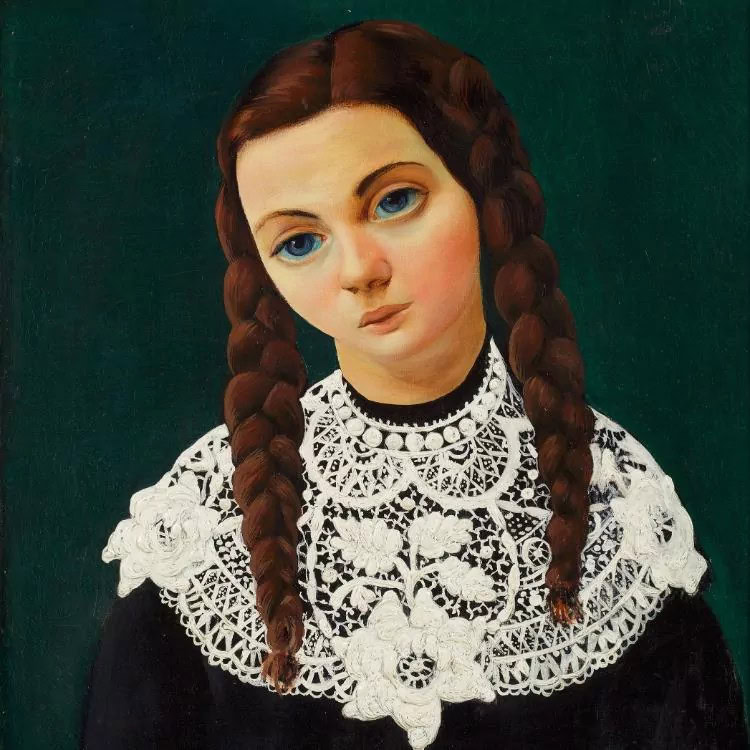
K.F.: Yes, he was a pioneer in this field. Marek Roefler also managed to assemble an impressive collection of this school in his private museum, Villa la Fleur in Konstancin-Jeziorna. The artists of the École de Paris were a group of emigrants who found themselves in sometimes very difficult life situations, outsiders confronted with the problem of alienation, stigmatisation and the need to adapt to a new reality. It is remarkable that their paintings, despite their classicism and figurativeness, have not lost their freshness. Their sincerity, in the context of the often dramatic biographies of these artists, is, in my opinion, their greatest asset and perhaps the reason why they still move us today. Another problem is that many of these artists, such as Mela Muter, Mojżesz Kisling and Eugeniusz Zak, are still not directly associated with Poland.

M.W.: There is also a visibly strong theme of female art and femininity in art in the FOLTA Collection.
E.F.: Femininity in art is strongly associated with feminism. For me, these are not synonymous, and I believe that femininity in art is primarily about the presence of women as artists, which, as we know, is not at all obvious, especially when reading the more historical biographies of many of them.
K.F.: It is enough to recall the example of the Academy in Krakow and Matejko’s own approach to women studying there.
E.F.: That is why I see my role as promoting female artists, especially from Wrocław, many of whom remained in the shadow of their husbands. I would like to contribute to the rediscovery — through exhibitions and publications — of artists such as Hanna Krzetuska (wife of Eugeniusz Geppert), Krzesława Maliszewska (wife of Alfons Mazurkiewicz), Anna Szpakowska-Kujawska, Wanda Gołkowska and Halina Wrzeszczyńska. However, this rediscovery does not necessarily need to rely on the still very popular ‘herstory’ perspective, because for me, femininity is also associated with predatory behaviour, synonymous with a different kind of sensitivity and a certain attitude of rebellion against patriarchal paradigms. Changes in this field are taking place very slowly, but they are already visible if we analyse the situation of artists from the younger generation.
M.W.: And femininity according to Krzysztof Folta?
K.F.: I see it in a completely different way. In the company I managed, we had twelve managing directors, among whom there were as many women as men. At work, I never considered gender when promoting or selecting employees. And it’s the same with the collection. Though, in the end, we probably have more female artists than male artists in it.

M.W.: You mentioned that you mainly purchase works through auctions or galleries. Do you ever establish direct contact with artists? Do you build relationships with the authors of the works that enter your collection?
E.F.: We meet many artists in various circumstances, both official and private. I have had the opportunity to meet Agata Bogacka, Agata Kus, Martyna Czech, and Izabela Gustowska. We’re planning to visit Olaf Brzeski and Paulina Ołowska, and we are in contact with Tomasz Domański and Zbigniew Libera. Many galleries also encourage direct contact with artists — something we actively seek ourselves.
M.W.: Let’s move on to the museum that is being created on your initiative in Wrocław and is scheduled to open in 2026. In the context of new museology, which has been developing particularly dynamically since the late 1980s, there is a lot of talk about the social role of museums, especially in terms of collections and programming. However, I would like to start by touching on legal and economic issues. What is the situation in Poland when it comes to private museums? Does Polish legislation offer helpful organisational and financial tools for running private cultural institutions?
K.F.: In economic terms, we rely primarily on ourselves and our private resources. In legal terms, we have not found any particularly favourable solutions either.
E.F.: But we weren’t looking for it either. When it comes to finances, certain favourable tax solutions on the part of the state would certainly be an encouraging gesture. Of course, we will try to make our foundation a public benefit organisation, which would allow us to transfer 1.5% of tax per year to its activities. However, given the needs of many other similar organisations, I am not sure if we will find significant financial support in this area. As for our programme and activities, the only assistance we really care about is related to borrowing works from public institutions. This is much easier when working with private collectors, but the circulation of art should be much broader and more dynamic. Simplifying procedures in this regard, and above all, the waiting period for decisions, would greatly improve public-private cooperation.
K.F.: On the economic side, we have annual budgets for the maintenance of the museum, and we will try to stay within them. We have 500 square metres of space to develop, so the scale of our museum project is not that big.
“We want to connect different communities and initiate the exchange of experiences and views on many levels. That is why we treat exhibitions only as a pretext for interesting and inspiring meetings.”
— Krzysztof Folta
M.W.: Do you rely on any specific organisational model?
E.F.: We draw heavily on various models, including those in Berlin and New York, where places like ours have been operating successfully for decades. We have established a foundation to look after the collection. The collection remains our private property, but the foundation provides the resources necessary to run the institution. We will certainly apply for grants from both the European Union and state institutions for the archiving and digitisation of the collection, as well as for special programmes dedicated to young artists.
K.F.: We are relatively close to Berlin, where we draw interesting models for the functioning of similar institutions. These are not galleries that are open 6 or 7 days a week, from morning to evening. Rather, it is a model based on more intimate activities, open 2-3 days a week, with a limited number of visitors, and the need to register your visit on the website or make an appointment with our team in advance.
E.F.: The visit will consist of a guided tour for the group rather than independent viewing.
K.F.: The interiors were designed with a focus on presenting art and meeting museum requirements. However, these are not austere and silent rooms, as in museums – we wanted to create a more intimate, homely space.
E.F.: You could say that we treat this museum as our home.
K.F.: And one that we will invite various friends to, as well as business people and artists. We want to connect different communities and initiate the exchange of experiences and views on many levels. That is why we treat exhibitions only as a pretext for interesting and inspiring meetings.

M.W.: So, what you envision is closer to an art salon than a museum, a private place that is also open to interaction between representatives of many different professional circles, from patrons and art dealers to writers, journalists, intellectuals and, of course, the artists themselves.
K.F.: It’s interesting how much art brings people together. After interviews with us appeared in various outlets, we discovered that many of our friends — people we would have never suspected of being interested in art — are collectors themselves. I would like to create a space for exchange and discussion among these people, which might even lead to a certain systematisation of collecting practices in this community.
E.F.: The concept of an art salon is indeed important to us, but we also do not forget the functions traditionally performed by museums: acquiring works, cataloguing them and making them accessible to the public. That is why our space also has the characteristics of a museum — and this dimension is just as important to us as openness to meetings and dialogue.
M.W.: That would certainly be an important step towards the development of conscious philanthropy in Poland.
E.F.: Philanthropy is a central focus of ours. One of the programme’s pillars will be the organisation of foreign residencies for artists and curators. I am convinced that this is the only way to observe the interesting mechanisms of the art world and then transfer them to Poland effectively. We are currently developing an application programme dedicated to this idea, which will be developed in cooperation with a specially appointed expert body. In addition, I am very keen to develop research work around our collection. I plan to create a kind of small research institute, a library, a place conducive to studying, reading and concentration. Work is also currently underway on our first inaugural exhibition.
M.W.: Can you tell us anything about it yet?
E.F.: Not yet. I don’t even want to reveal the name of the curator for now.

M.W.: In that case, please tell us a little about the venue itself.
E.F.: Originally, it was a pre-war industrial facility, and then a commercial space located on the ground floor of a multi-family building, 10 minutes from the market square. Currently, we are carrying out intensive renovations with an experienced architectural firm specialising in the design of museum spaces. However, we are not expanding it, so we hope that it will be ready to open in 2026 as planned. For now, we plan to stage two exhibitions a year. We have three rooms at our disposal: a large exhibition hall and two smaller rooms. If there is significant interest, we do not rule out expanding this activity in the future. We may also create a special place dedicated to young artists.
M.W.: I would also encourage you not to forget about mid-career artists. Support programmes are often aimed at young artists, while auctions invest in very mature artists who are at the end of their careers. However, there is a significant gap that is overlooked, namely, artists in their 40s, 50s, and 60s.
K.F.: I am familiar with this situation from the business world, which abounds in programmes for small and medium-sized enterprises. I was always considered a “large” company, though never on the scale of Toyota or GE. I was too small to be big in the eyes of the state, and I was too big to be a small or medium-sized enterprise. Once, at a meeting of decision-makers, I asked directly, “What about large companies?” And I was told that there were too few of us for special programmes and that we would manage on our own. I think it’s a similar story to the age groups you mentioned, those in the middle – they are no longer young, but not yet old enough for programmes specifically dedicated to them.
E.F.: We are open to artists of all generations and do not impose any restrictions. We believe that every stage of an artist’s career has its own value — the freshness of youth, the strength and maturity of mid-career, the depth of long experience. We want our collection — and soon our museum — to be a place where artists of different generations meet, challenge, and inspire one another, ensuring that no voice is lost in the gaps of the system.
“We want our collection — and soon our museum — to be a place where artists of different generations meet, challenge, and inspire one another, ensuring that no voice is lost in the gaps of the system. ”
— Ewa Folta

Supported by Folta Foundation.