

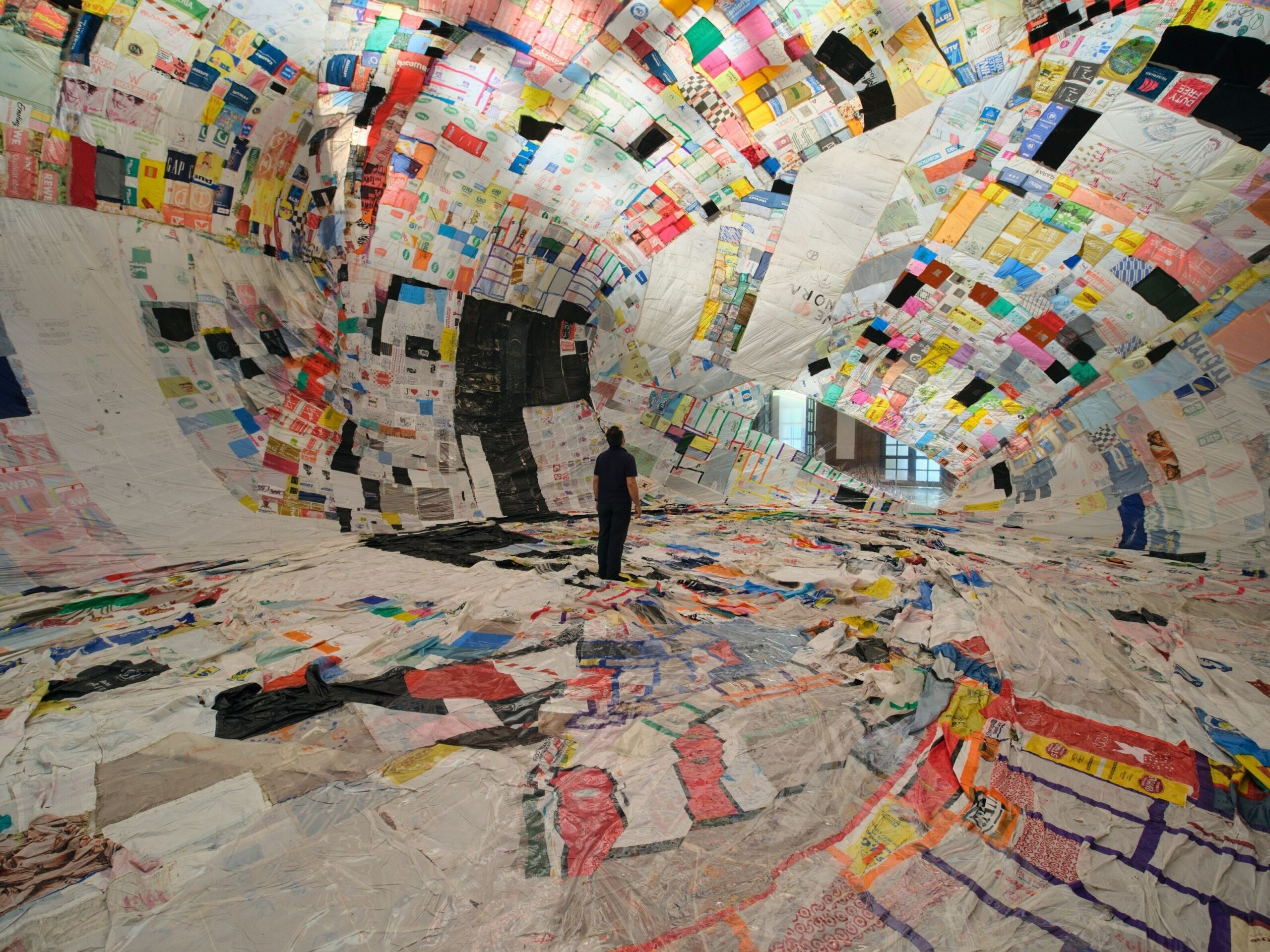
Luminous, billowing forms made from reclaimed plastic rise into the air through solar radiation alone. They are a part of Aerocene, an ongoing project initiated in 2007 by the Argentinian-born, Berlin-based artist Tomás Saraceno. The project challenges conventional ideas about mobility and our relationship with the atmosphere and environment, proposing an alternative to fossil-fuel-dependent technologies. Working across sculpture, installation and collaborative research, Saraceno reimagines our sources of knowledge from an ecologically aware and decolonial perspective.
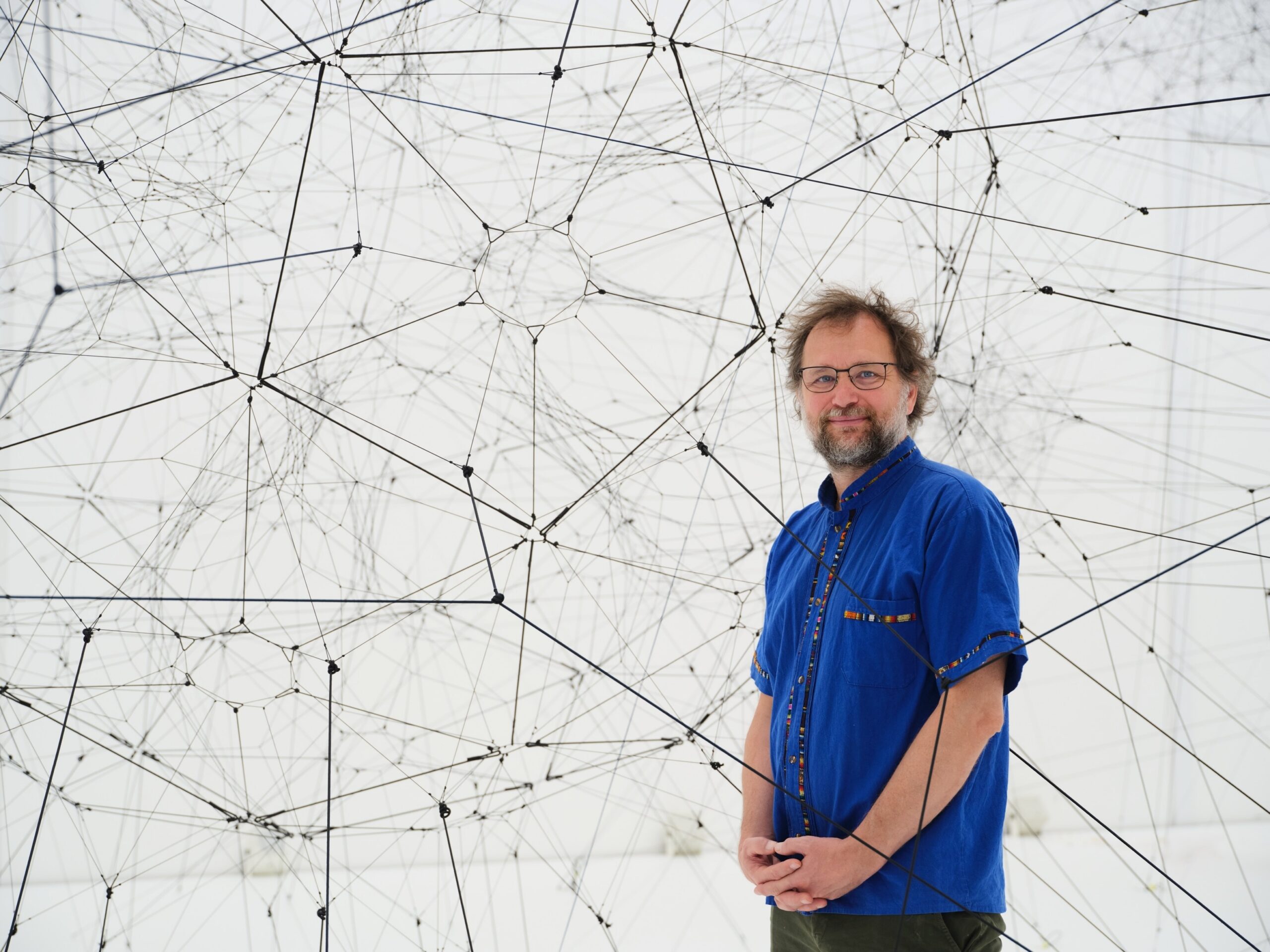
Collaboration lies at the heart of his practice. Working closely with indigenous communities of the Red Atacama in Argentina, Saraceno develops projects that demonstrate how deeply our lives are implicated in the world around us. His network of collaborations extends to specialists across a variety of fields: from spider diviners in Somié, Cameroon, to scientists at MIT and Imperial College London. This multifaceted approach allows him to dissolve the boundaries between arts and sciences, anthropology and physics, and echoes his own patchwork career path. Trained as an architect and raised in a family with a background in science, Saraceno approaches the natural world as both a keen observer and a researcher. His particular interest in arachnids, creatures whose ancestors inhabited the earth some 380 million years ago, has informed Arachnophilia — a project that explores the possibilities of cross-species conviviality and has yielded groundbreaking insights in the fields of biotremology, bioacoustics and biomateriomics.
The artist draws parallels between the invertebrates’ web-spinning abilities and broader networks of interdependence between species. In his eyes, an astute examination of the micro brings insight to the macro. In spring 2027, Saraceno will deepen his ongoing collaboration with the Red Atacama community through the opening of The Sanctuary of Water — a structure built for the eleven indigenous communities in the network to commemorate the long-standing defence of their land against lithium mega‑mining.
In our conversation, Saraceno speaks about the communities at the heart of his projects, the importance of unlearning for human growth, and the possibilities of dissolving boundaries between virtual and tangible webs.
Maggie Kuzan: Your current exhibition, Ancestral Futures, taking place at the Haus der Kunst in Munich until 2 February 2027, showcases your Arachnophilia and Aerocene projects, which straddle the disciplines of art, natural science, architecture, and Traditional Ecological Knowledge (TEK). It is also inspired by the thinking of Indigenous Brazilian philosopher Ailton Krenak, who argues that the future is not something we need to invent — it is already here, woven into the landscape like a river. What lessons would you like participants of your exhibition to engage with?
Tomás Saraceno: Perhaps the first lesson is the one already in your question, and in the exhibition itself. We can only rephrase it once again: to unlearn a long habit of separation, the idea that the future is something to be designed, rather than something already breathing in rivers, salt, atmospheres and webs. Ailton Krenak is right that the future is already here. The question is, who is already living it, and at whose expense? What I hope visitors carry from their time in the exhibition Ancestral Futures is a sense of their own implication: that the same hands touching a phone, a car battery, now also an AI assistant, are touching a salt flat in northern Argentina, a spider’s web, a column of rising air. This isn’t to induce guilt, but to make the web(s) of life in which we are all entangled tangible, and to ask how we might inhabit these entanglements as kin rather than as consumers.
What I hope visitors carry from their time in the exhibition Ancestral Futures is a sense of their own implication: that the same hands touching a phone, a car battery, now also an AI assistant, are touching a salt flat in northern Argentina, a spider’s web, a column of rising air.
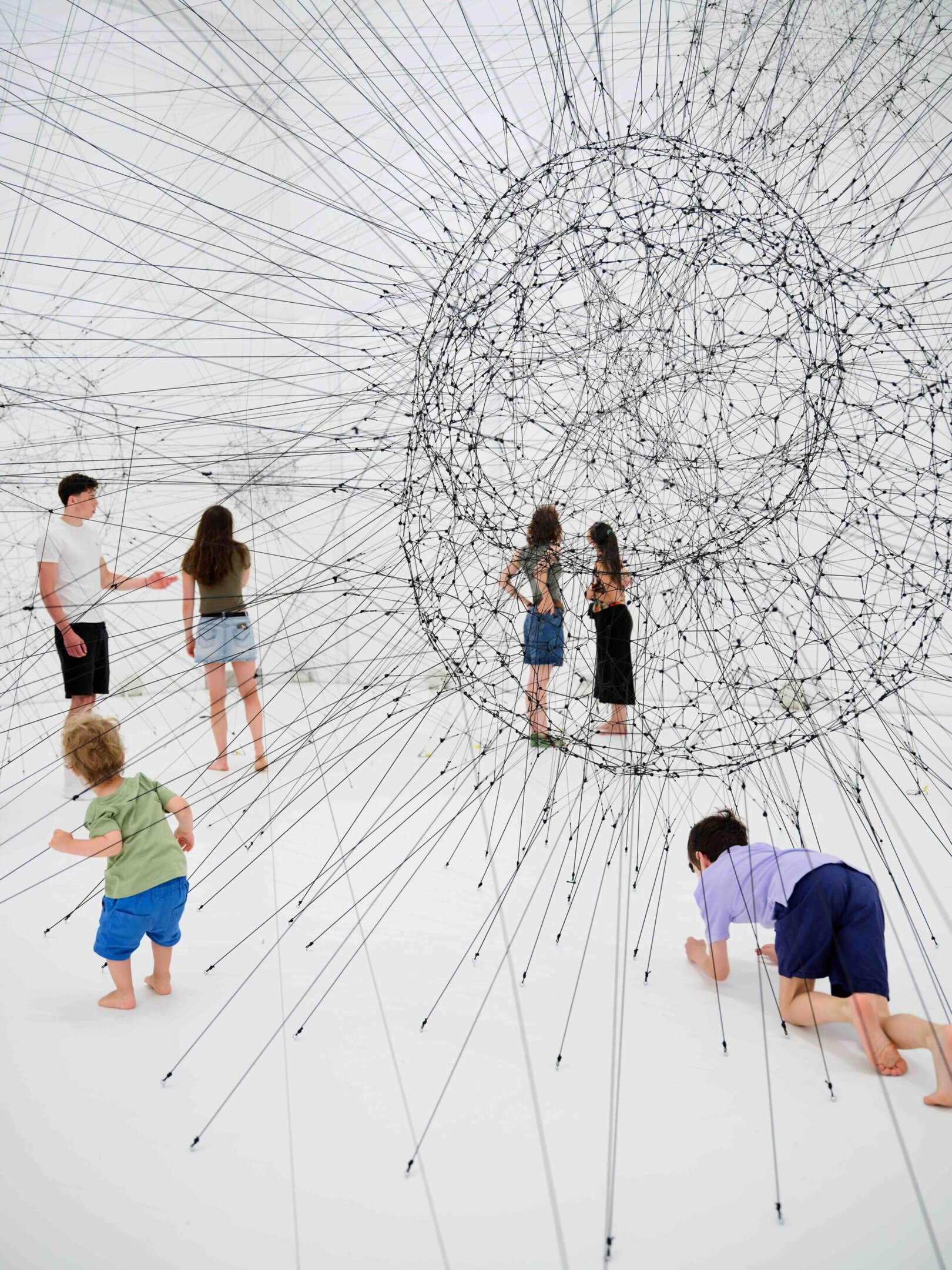
MK: In the show, we witness your deep fascination with and research into spiders, or Arachnophilia, through works such as Webs of At-tent(s)ion (2026) and the installations Algo-r(h)i(y)thms (2026) and Sounding the Air (2022–2026). These works reveal a profound appreciation of the spider’s ingenious ability to extend itself and construct complex entanglements long before humans built comparable structures. As our world continues to change dramatically due to human-caused climate change, how do you think Arachnophilia will evolve and adapt?
TS: Arachnophilia begins with unlearning fear. At Haus der Kunst, works like From arachnophobia to Arachnophilia offer a lens on how fear of the spider can be taken up through the ways fear in Euro-Western society is produced, circulated and instrumentalised. The spider is cast as invasive or abject. In the same grammar of exclusion, this fear is later applied to migrants, colonised peoples, those named as enemies. Fear is felt, but also manufactured and monetised. As the artwork describes, the “cure” is not distance; it’s proximity. Listening to the vibrations of spiderwebs, cohabiting with other intelligences, letting rigid categories become porous. The arachnologist Dr Peter Jäger at the Senckenberg Research Institute in Frankfurt offers sessions in which people afraid of spiders can meet them up close, and many leave cured. Arachnophilia proposes attunement instead of extermination, hospitality instead of deterrence, asking whether learning with spiders might help us recognise the webs of fear that continue to organise our present, including in the context of the climate crisis.
Long before the World Wide Web, spiders were thinking outside their bodies; scientists speak of extended cognition, a mind spun into silk, each thread tuning what the spider can perceive. We, too, are spinning our thinking outward into AI, and some hope it will let us talk to animals. Yet, as researchers recently told the Guardian, that hope may do the animals a disservice; nothing stops us from listening now. So I would rather ask: what would we build if we built like a spider? A spider casts a bridging thread on the wind; to cross the Golden Gate we spun some 80,000 miles of steel wire, mined, smelted and shipped. A spider builds from its own body, at the temperature of the air, only what it needs, and then eats its web to weave again.
MK: Your Aerocene projects are given equal prominence in this exhibition, including documentation of your ongoing project Museo Aero Solar (2007–present), in which communities across six continents have constructed monumental balloon-like aerial structures woven from single-use plastics to explore non-fossil-fuel forms of flight and levitation. To realise this visionary project, you had to monitor global atmospheric circulation patterns to determine when and where these structures could fly. What limitations has science placed on your artistic vision? And, equally, what unexpected freedoms has it given you?
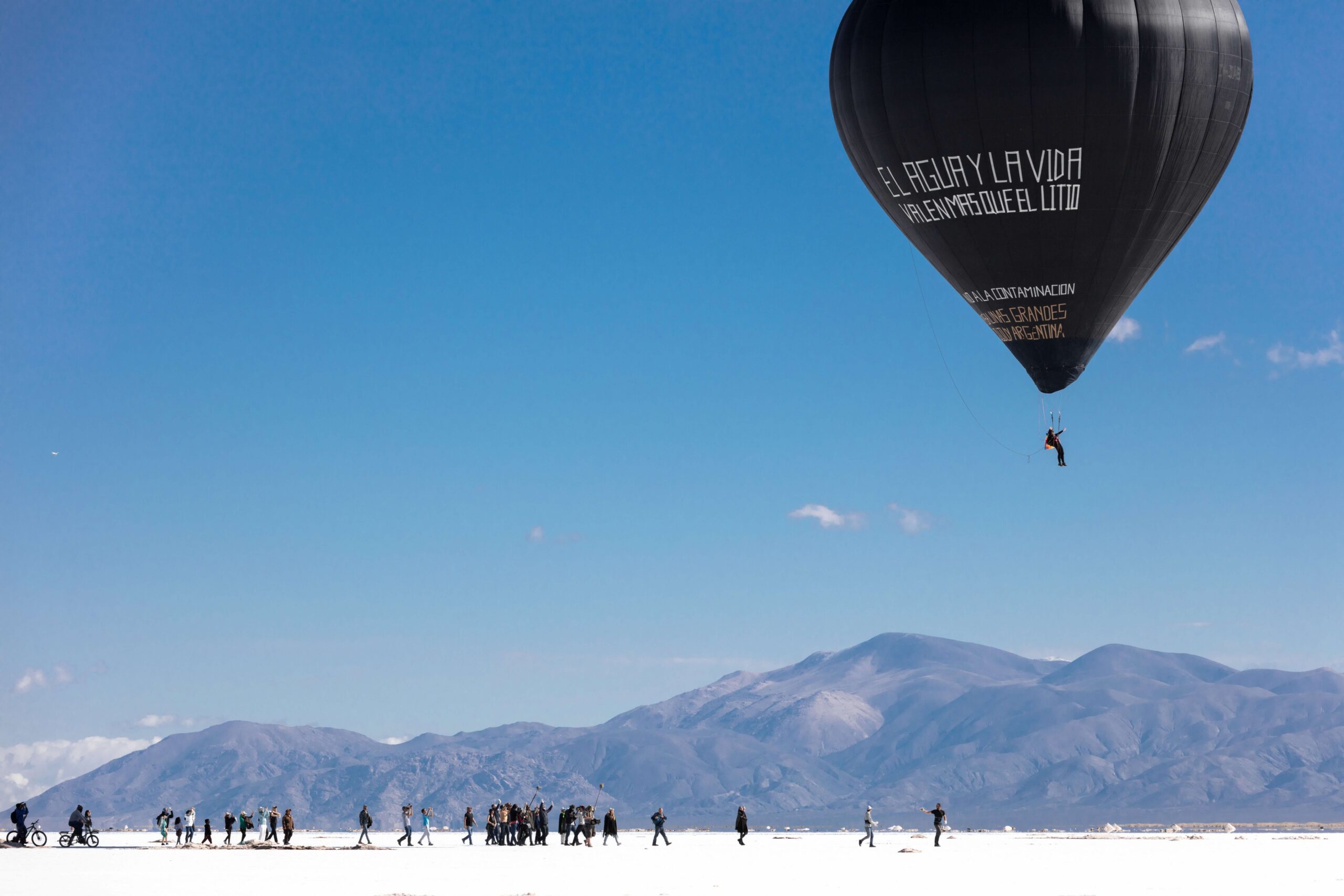
Imagination has no limits; let’s not divide the disciplines. Divided, very little can be accomplished; put them together, and you see what is possible if we dream together. Of course, science contributes its terms and conditions very precisely. If you want to fly without fossil fuels, helium, batteries or solar panels, you cannot simply decide to depart. One is bound to the Sun, the wind, the temperature of the air. Aerocene flights happen when the atmosphere permits, not when we command. At first this feels like a limitation, and it is a disciplining of sorts, but Aerocene Pacha revealed to me and many others something quite extraordinary when pilot Leticia Noemi Márquez rose over the salt flats using only the heat of the sun and the air, setting 32 world records for the most sustainable flight in human history. What fossil‑fuelled aviation calls “freedom” — to leave at any time — is in fact a deep dependency, bought with extraction and combustion. What science framed as constraint became a truer freedom, a way of moving in relationship with the atmosphere rather than in command of it. Science can tell us what is possible; it cannot decide what is desirable, liveable or just. That question remains open, and it is where art begins.
Science can tell us what is possible; it cannot decide what is desirable, liveable or just. That question remains open, and it is where art begins.
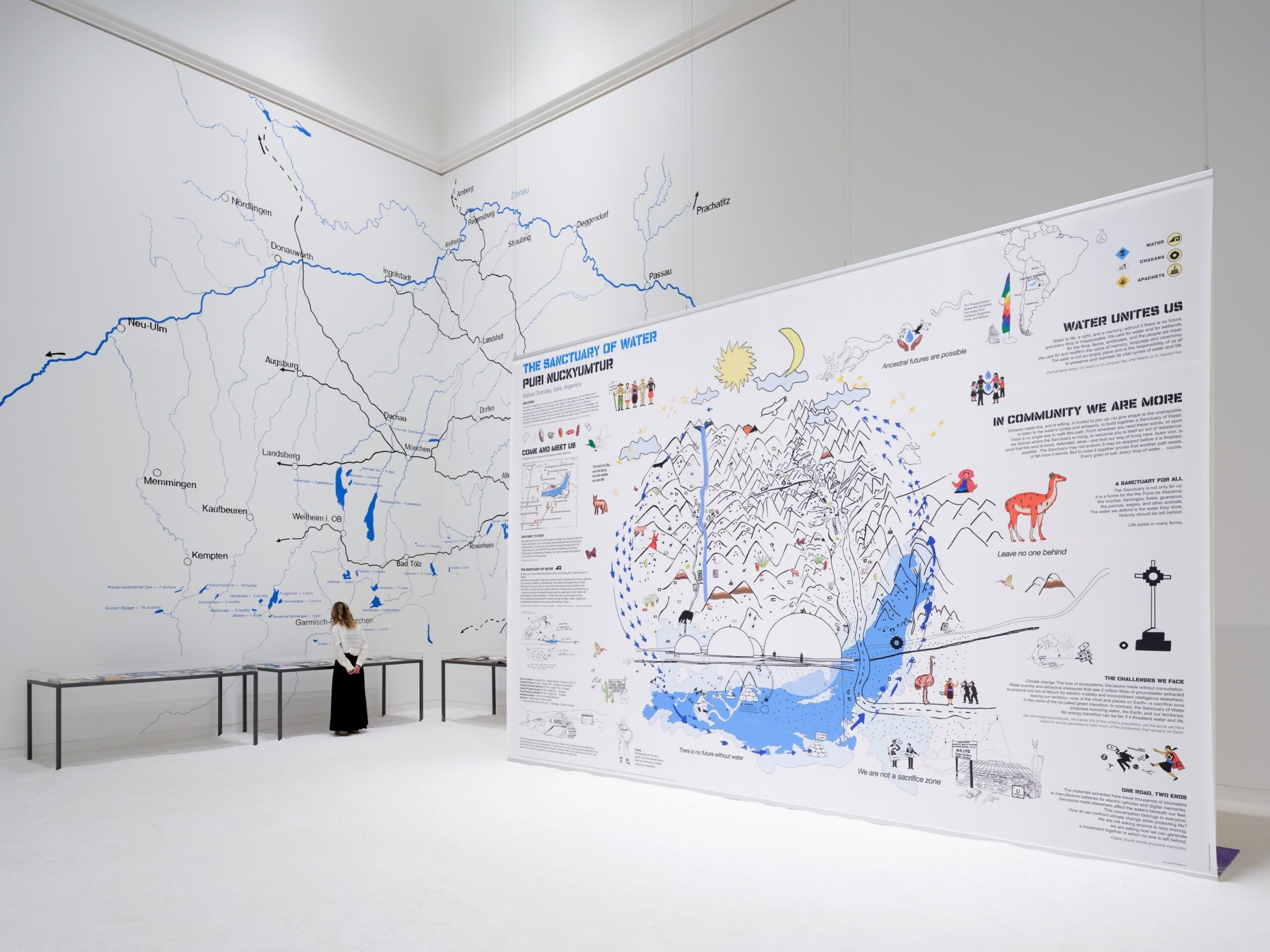
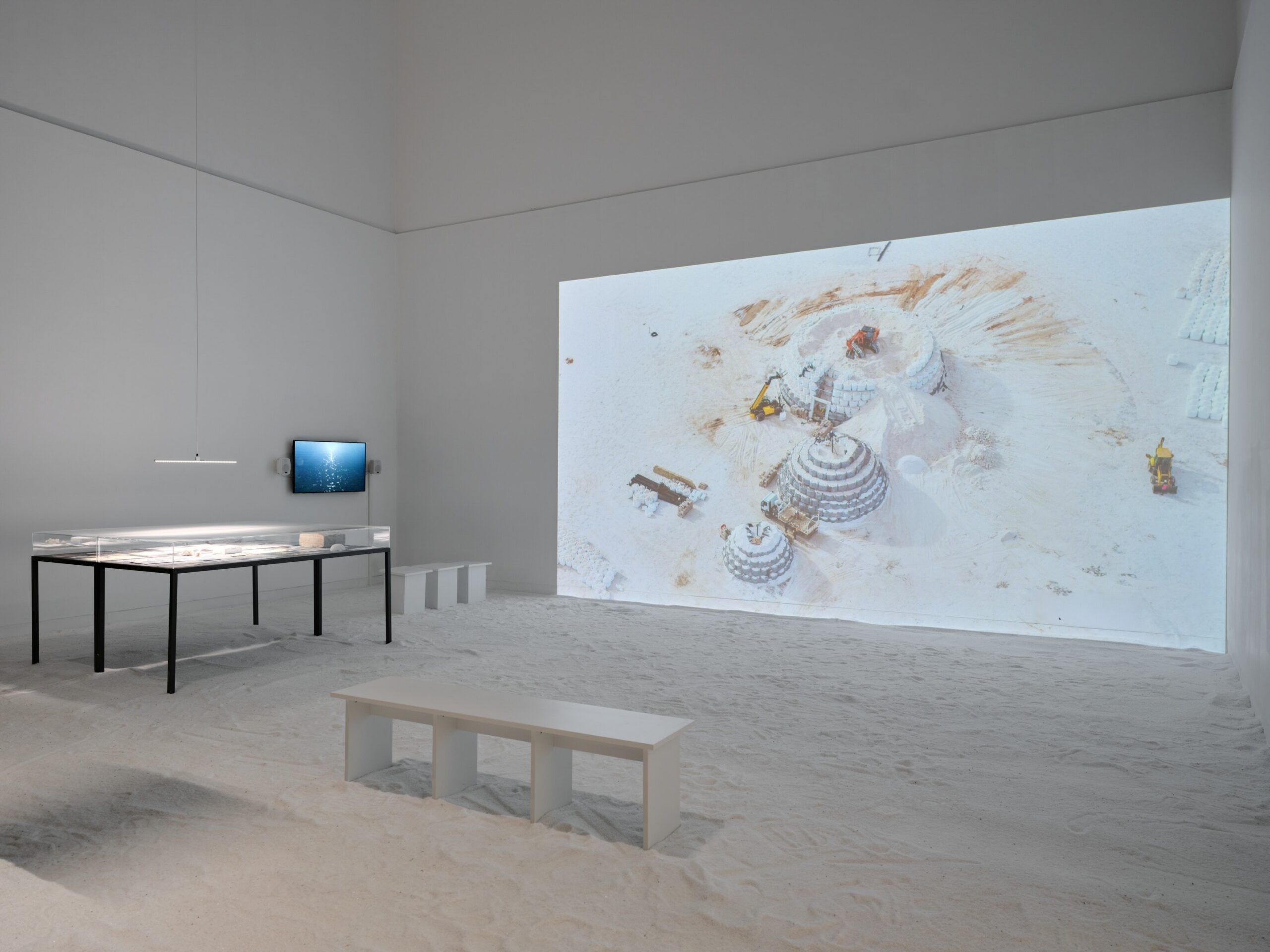
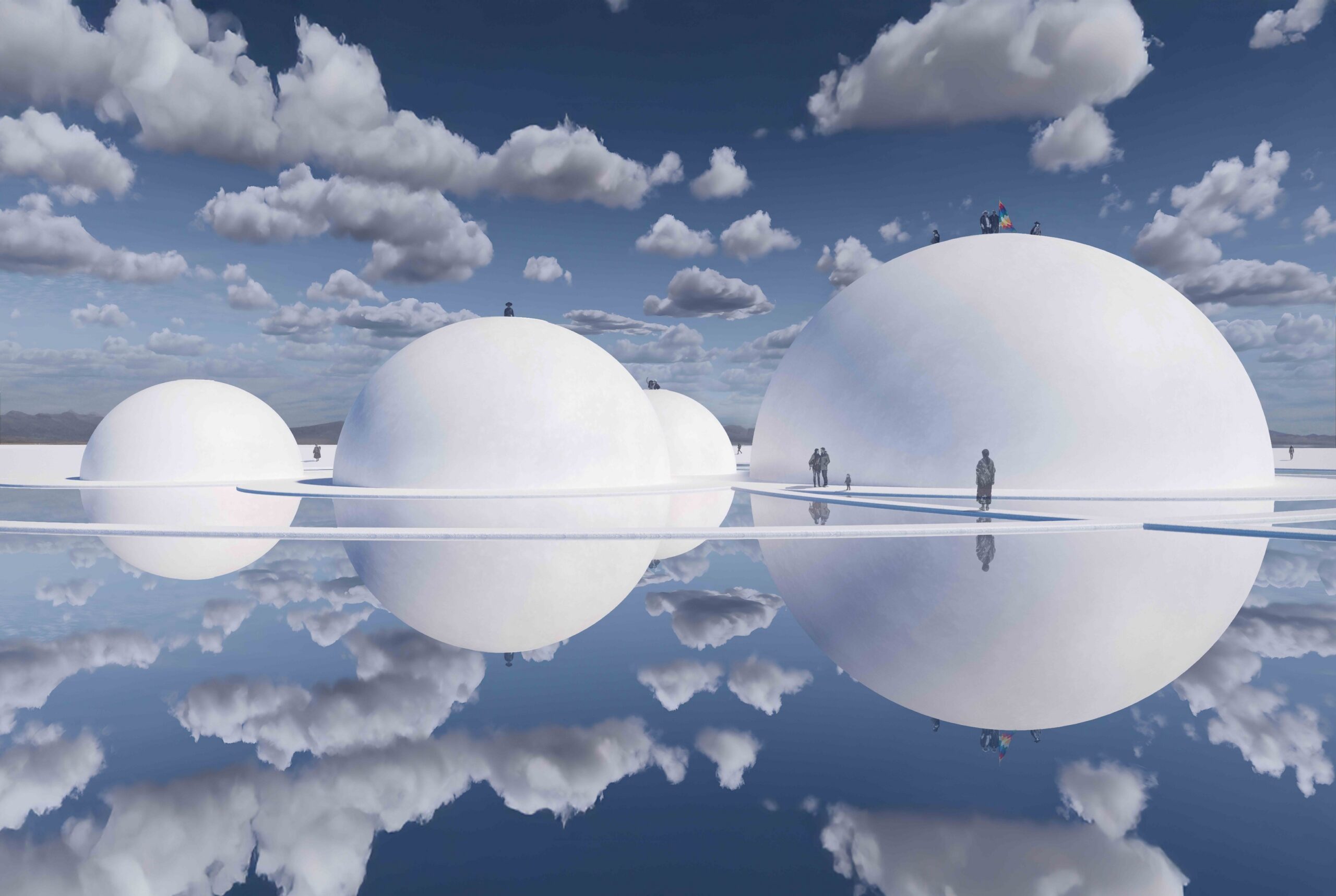
MK: At the heart of the exhibition lies The Sanctuary of Water (2026), a project developed in close collaboration with the Red Atacama community in Argentina, drawing attention to the ecogenocide of this sacred Indigenous land, which has been exploited for lithium extraction. Shockingly, between 500,000 and over 2 million litres of water are evaporated in order to produce just one tonne of lithium. To highlight this ecological catastrophe and work alongside local communities, you created a collaborative black balloon structure that harnesses wind power and absorbs solar energy to rise into the sky bearing messages such as, “Water and life are worth more than lithium,” as seen in the film Fly with Aerocene Pacha (2017–23). While that was an event-based artwork, could you tell us more about the permanent land-art project, The Sanctuary of Water (2026), which will open in spring 2027 on the territory of the Red Atacama community?
TS: First, a small but essential correction of authorship. El Santuario del Agua, Puri Nuckyumtur, or The Sanctuary of Water, was not brought by me to Atacama. It was asked for. The eleven indigenous communities of the Red Atacama network, on the salt flats of Salinas Grandes, have defended this territory against lithium mega‑mining for many years and asked that something permanent stand there. What I could offer was a proposal for its form; the sanctuary is theirs to author, and ours (the Aerocene Foundation, Studio Tomás Saraceno, the engineers at Bollinger+Grohmann) to help hold it up. Built from salt and water using traditional Andean methods, it takes the very substance the mining industry would pump, drain and sell and turns it into an architecture that insists this is not a sacrifice zone but a living commons, where between 500,000 and two million litres of water are evaporated for every tonne of lithium.
For that reason, I gently resist the term land art. This is not an artist’s mark imposed on a landscape but something closer to an assembly: a shared institution of the future grounded in Kachi Yupi, the communities’ own protocol of consultation and consent, first written by Indigenous peoples in Argentina. The work will open slowly, across multiple visits, on their terms rather than an exhibition calendar, and once completed it will belong to the Red Atacama communities as a place to celebrate and defend water, to generate income from ecotourism, and to remind visitors that “water and life are worth more than lithium” — a message by the communities that the Aerocene Pacha flight once carried in the skies above the Salinas.
MK: You have worked closely with the Indigenous people of the Atacama Salt Flats in Argentina and with spider diviners from Somié, Cameroon, demonstrating the power of community-building across cultures, borders and different knowledge systems. While these projects celebrate the success of long-term cross-cultural collaboration, what have been some of the greatest challenges of working on projects of this scale and duration?
TS: Time. The trust required to grow these projects through dialogue is not a resource you can extract on an exhibition’s schedule. It is built slowly, over years, by returning, being wrong, being corrected, returning again. In a project that opposes extraction, the biggest risk is to reproduce extraction in another form.
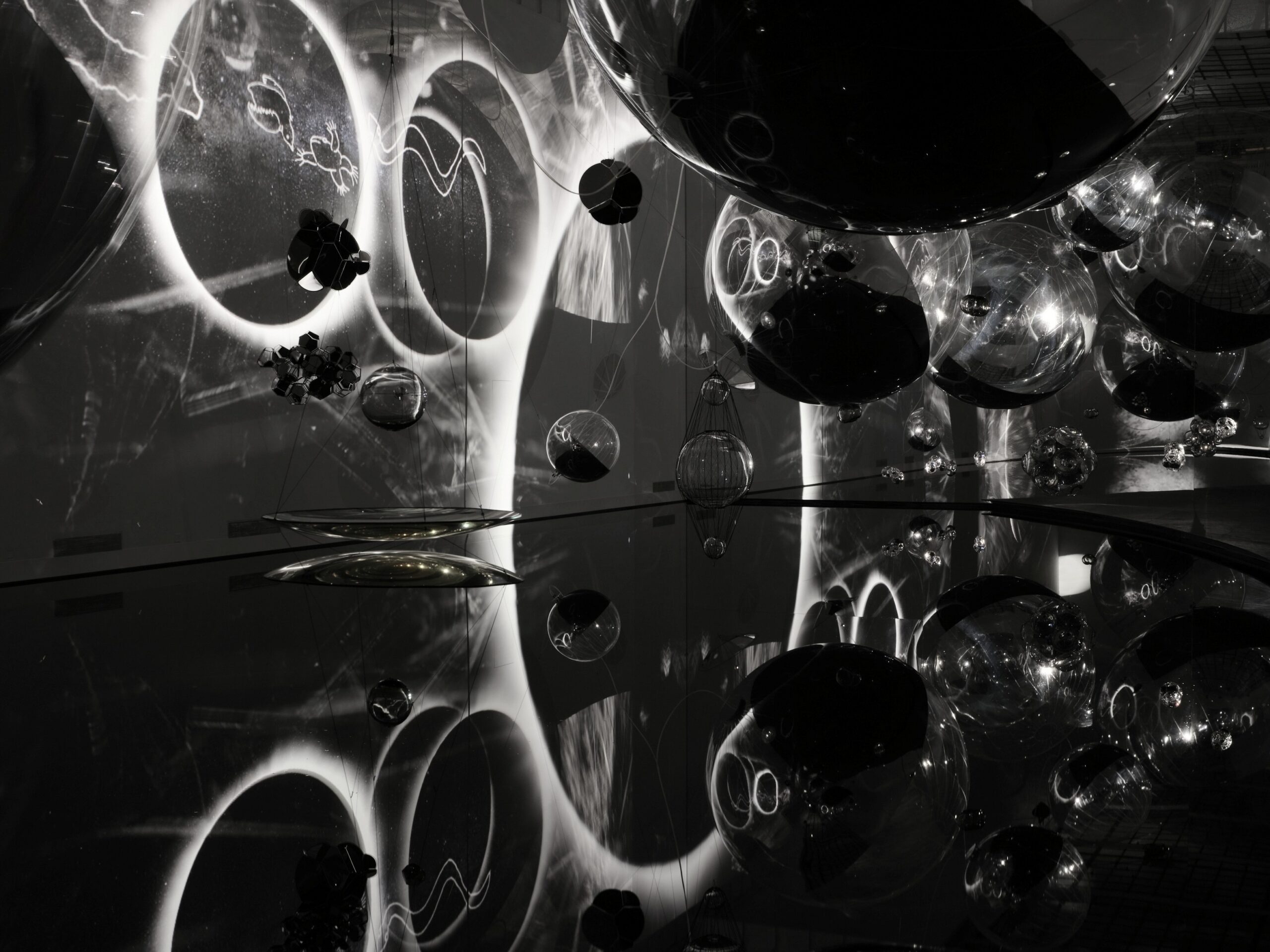
MK: From Sounding the Air (2022–2026) — part of the multidisciplinary project Play-Ground: Spider/web vibration, divination… for the terrestrial and cosmic web(s) of life — in which you recorded the minute vibrations of spider webs that recall the plucking of guitar or violin strings, highlighting the musicality of nature, to Webs of At-tent(s)ion (2026), a dazzling installation which tracks the sensory footprint of spider webs, your work continually explores interconnected systems: from the terrestrial to the cosmic. As ever-expanding digital forms of communication add yet another layer to this global network of webs, what role does the digital play in your practice?
TS: I am wary of the word “digital” when it suggests something weightless. The metaphor of the cloud has helped us forget that data has a body: server farms that drink water to stay cool, powered by the same batteries, lithium and rare earths extracted from places like Salinas Grandes. Every question we type into an AI assistant has a small water footprint in some drought‑stressed valley or a salt flat.
The metaphor of the cloud has helped us forget that data has a body: server farms that drink water to stay cool, powered by the same batteries, lithium and rare earths extracted from places like Salinas Grandes.
The digital web is not a separate, immaterial layer over terrestrial and cosmic webs; it is made of them, and often at their expense. That is the uncomfortable part the work tries to hold: I use these tools, the exhibition relies on sensors and networks, and the question is not whether to be connected but what kind of web we weave, and who pays for it. With Aerocene and initiatives like Fairclouds we have experimented with infrastructures that do not externalise their costs onto the least powerful. We come back to the spider again, weaving its web from its own body, reusing the silk — I find that a more honest model for the “digital” than the disembodied cloud.
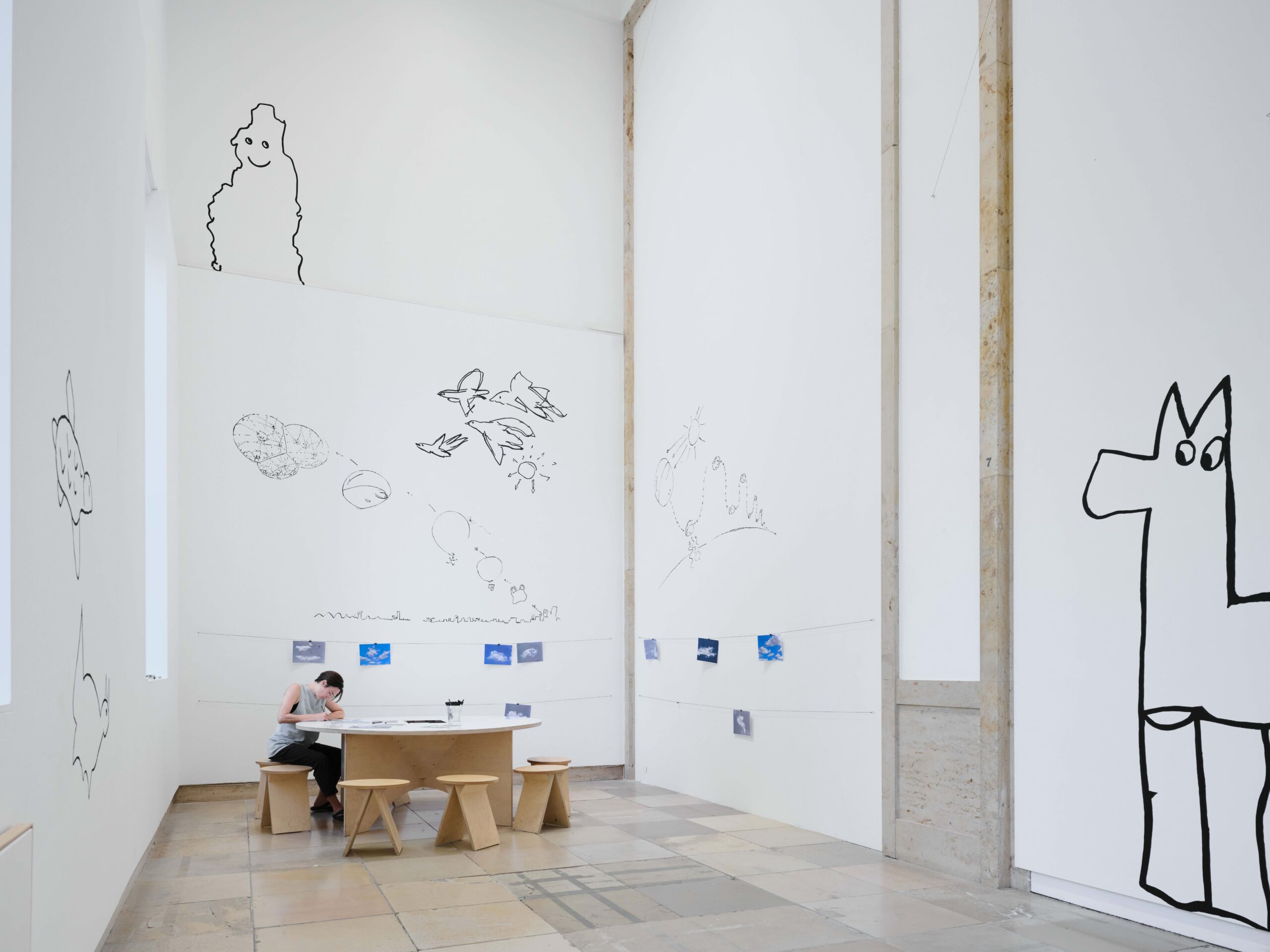
MK: You have called yourself “a permanent student”. What ‘course’ are you currently learning and who are your current teachers?
TS: My teachers right now are, above all, the communities of Red Atacama. I am a student of salt as a material. I am still learning from spiders how to listen to vibration rather than image, how to extend a body into a world without conquering it, and from the atmosphere, which refuses to be commanded and turns every Aerocene test flight into a lesson in humility. If there is a single course, it might be called unlearning. That is to say, the setting down of assumptions that the artist is a solitary author, that the human is at the centre, that the future is ours to invent. Towards, then, a relearning, slowly and with others, how to belong to a web we did not make.
If there is a single course, it might be called unlearning. That is to say, the setting down of assumptions that the artist is a solitary author, that the human is at the centre, that the future is ours to invent. Towards, then, a relearning, slowly and with others, how to belong to a web we did not make.