







Zofia Kulik stands as one of the most compelling figures of post-war Polish art. A visual artist, she formed the KwieKulik duo with Przemysław Kwiek, which was active on the Polish and international art scenes from 1971 to 1987 and became particularly well known for their performances, films, and photographic works. After 1987, Kulik turned to her solo practice, creating photomontages distinguished by symmetry and multiplication achieved through kaleidoscopic procedures. Today, she continues to explore feminist themes through her monumental photographic compositions.

On the occasion of the publication of her new monograph by Thames & Hudson – the first such volume devoted to a contemporary Polish woman artist – and her recently opened exhibition, Written in Her Own Hand, in Berlin, we spoke about her artistic journey and what these new milestones mean to her.
Aleksandra Mainka-Pawlowska: What emotions accompany the release of this monograph – the first Thames & Hudson book devoted to a contemporary Polish female artist?
Zofia Kulik: Emotions? More of a calm sense of satisfaction. Of course, I’m thrilled. Working with Andrew and Laszlo from the publishing house had a very straightforward, work-focused rhythm, which I appreciate. Through our dialogue and discussions, I was able to look at my works from different periods with a fresh perspective, and that is very valuable to me.

AMP: The book includes texts by ten distinguished art historians and curators – did any of them particularly surprise you or allow you to see your own work from a different angle?
ZF: The answer to that question would have to be very long if I were to name, one by one, everything I found enriching for my practice. But each author identified themes and issues that I may have been vaguely aware of, but would never have been able to describe convincingly, let alone place within a broader historical and cultural context. I can only repeat myself: every text, every analysis, every perspective is invaluable.
“I can only repeat myself: every text, every analysis, every perspective is invaluable.”
— Zofia Kulik
AMP: The book is also divided into seven chapters, but it clearly highlights three main periods in your practice: your individual diploma work, your collaboration within the KwieKulik duo, and your later, independent practice. How do you perceive these periods of your career? Do you see them as distinct phases, or rather as a continuous artistic evolution?
ZF: That’s a tough question. Looking back now, those three periods are clearly visible, and each could be filled with numerous works. But when I was moving from one period to the next, there were no sharp boundaries between them. It never happened with a clean break. I was torn, sometimes for years. I could see that I didn’t want to continue something, but I had no idea what to do next.
Today, I look at it more calmly, trying to coolly observe both the differences and the similarities. There are certainly differences in terms of materials and aesthetics (form). But what remains consistent is the technical discipline and, of course, the experience gained in one period and carried into the next. One day, I need to write about this process of gradually gaining experiences.

AMP: Today, your archive contains thousands of images. It is divided thematically, for example, the Archive of Gestures or the photographs taken from television, carefully organised, analogue, built over decades. Do you treat the very process of classifying and ordering as a form of art?
ZF: The process of ordering is difficult to regard as art. One doesn’t make art for oneself in the sense of doing something without confronting it with the outside world. It doesn’t have to be a public audience, but it could just as well be, for example, a professional group of archivists. For me, archiving is only one stage, necessary to use the accumulated material efficiently later on. Though I admit I do enjoy this stage of archiving, I often find it difficult to tear myself away from it.
“One doesn’t make art for oneself in the sense of doing something without confronting it with the outside world.”
— Zofia Kulik
AMP: Also, the Zofia Kulik monograph includes works from the KwieKulik period that you yourself processed and arranged into finished compositions. Do you see this process as a form of reinterpretation, or rather as a way of organising the historical value of this material?
ZF: From the very beginning, even during the close collaboration with Kwiek, I tried to organise the materials we were accumulating, and to give them some kind of material, clearly defined form. Very often, this was against Przemek’s wishes. He criticised me frequently, saying I was wasting my time. When we separated, I more or less repressed the entire KwieKulik period for nearly twenty years. After 2007, I returned to these materials and gradually began to bring order to them.
This eventually resulted in a major monographic exhibition at BWA Wrocław and in the publication of the book KwieKulik, often described as the bible of that pioneering era of the 1960s-80s. Pioneering not only for us, but for Polish art more broadly. Przemek never objected to the fact that I was “creating” new works out of archival material. In fact, he was very pleased because it meant he had peace of mind and could focus on his own individual practice.

AMP: It’s worth mentioning that your collaboration within the KwieKulik duo grew out of Oskar Hansen’s idea of the “Open Form”, which promoted dialogue and the incompleteness of the artwork. Your later individual practice, however, seems to move toward maximum control and formal discipline. Was this shift a conscious departure from Hansen’s concept, or rather a transformation of it into a more personal language?
ZF: Yes, it was a conscious departure from Hansen’s “openness.” It’s worthwhile to study Hansen’s doctrine to get to know its language. His analytical precision is remarkable, and anyone who hasn’t engaged with it is, in my view, a bit blind. But he was, after all, an architect. He perceived spatial relations and the people within them almost as if they were part of an architectural mock-up. Unfortunately, life does not unfold on a model.
AMP: So does this monograph close a certain chapter of your work, or does it open a new one?
ZF: I hope it opens a new chapter. The monograph “relieves” me of the need to explain my own practice and allows me to plan whatever comes next with greater confidence…

AMP: Speaking of which – the exhibition in Berlin is titled Written in Her Own Hand. It can be read as a story of your path toward independence, showing your transformation – from an artist working within a co-dependent duo to an independent woman developing her own language. Was this process of emancipation difficult?
ZF: I admit it was difficult. You break away from something you already know well. You say, “I won’t keep working like this, or living like this,” and then you begin, shyly, slowly, to build something new. You look for new themes, new materials, and a new workshop. You look for new “reasons” to work. It’s a shift on many levels. And there is no guarantee that you will re-emerge, this time as an individual artist.
AMP: But then, in the self-portrait in which you present yourself as a queen, you symbolically take control of your own image. Was that a moment of breakthrough for you?
ZF: A few years earlier, at the very beginning of my individual practice, I portrayed myself at the centre, surrounded by several rings with a naked man holding a sharp tool in his hand. Between these two images, I travelled a path that can indeed be described as emancipation.

AMP: Your works have been shown at prestigious events such as the Venice Biennale and documenta in Kassel, as well as in numerous exhibitions around the world. Does any of them particularly stand out to you when looking back?
ZF: A pivotal moment was the invitation to take part in a large group exhibition titled Wanderlider at the Stedelijk Museum in Amsterdam. It was 1991, and you could say I was only just beginning my individual practice as my first solo exhibition in Poland had taken place two years earlier. It was an important moment; it gave me confidence. And then I would name Documenta in Kassel – many things changed after that, and I became internationally “noticed”.
AMP: And then your works are held in collections of institutions such as MoMA in New York, the Centre Pompidou in Paris, and Tate in London. From the perspective of a Polish artist, it seems you’ve achieved everything one could dream of. What do you still dream about?
ZF: Perhaps I shouldn’t say this, but when I was starting out, I lived on the outskirts of Warsaw: a distant bus stop and no telephone, and for younger readers, I should add – no telephone of any kind. There was only silence, calm, and a darkroom. It was an ideal setting for creating art, and in many ways, I still long for that simplicity, that small, personal utopia.
“There was only silence, calm, and a darkroom. It was an ideal setting for creating art, and in many ways, I still long for that simplicity, that small, personal utopia.”
— Zofia Kulik
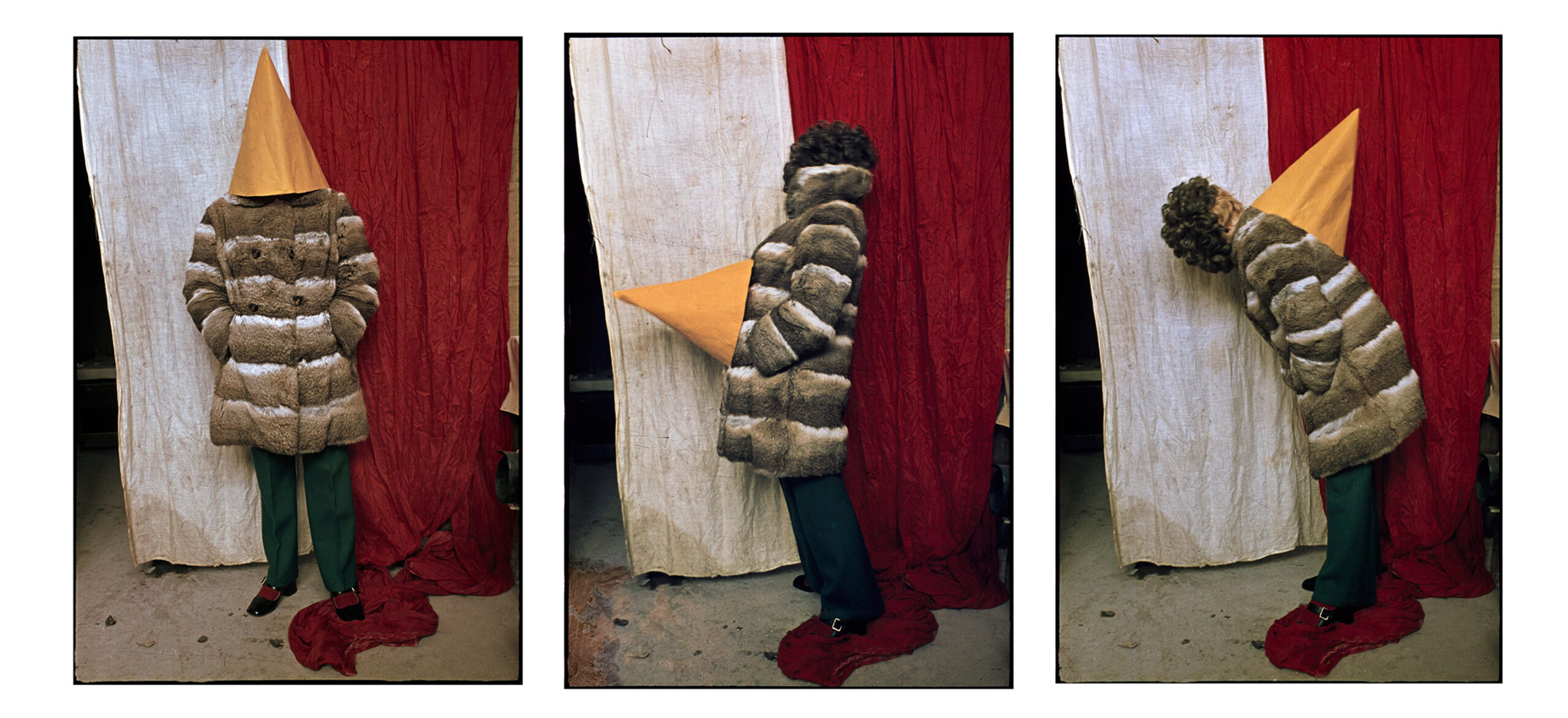
Zofia Kulik | Written in Her Own Hand
November 1, 2025 – January 31, 2026
Persons Projects, Berlin


