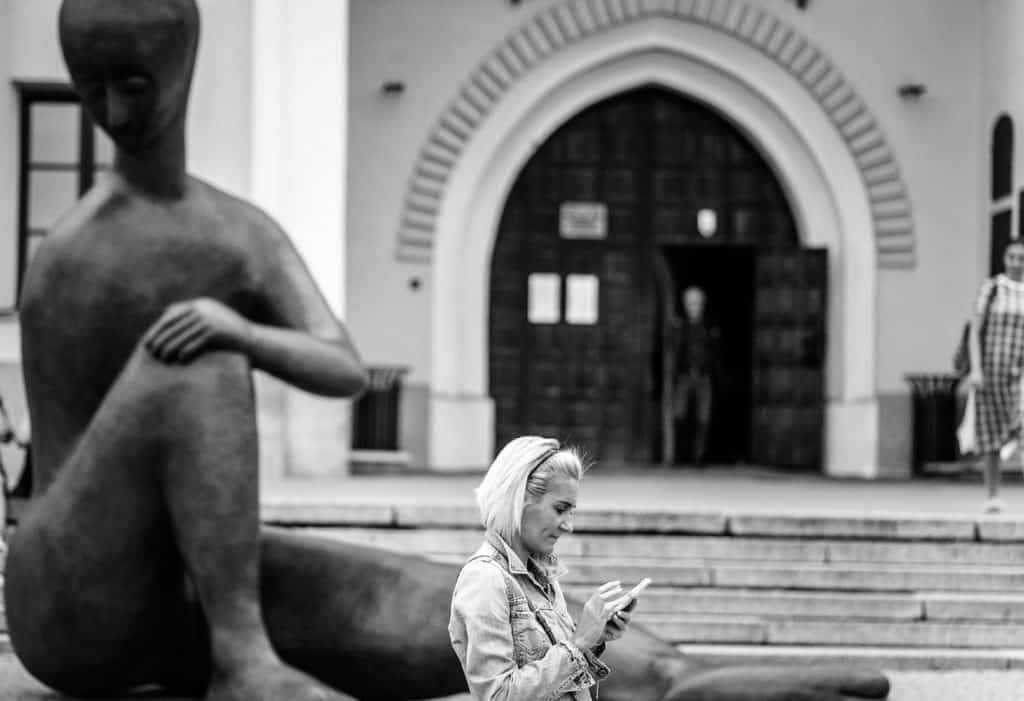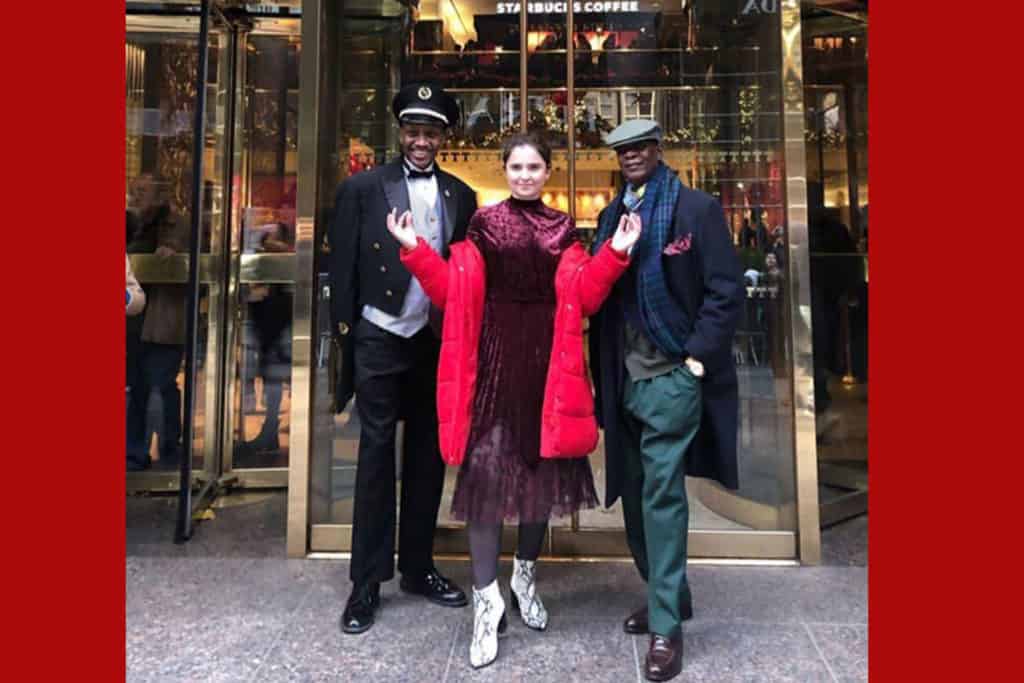

Unsettling juxtapositions, absurdity, humour, melancholy, the power of photography to document reality and visualise imagination — these are just some of the qualities that have defined Fotofestiwal over the past 25 years. Every year in June, the festival transforms Łódź into one of the most important centres of photography in Central Europe. This year’s edition, held between 18 and 28 June, extended far beyond the Festival Centre, occupying historic palaces, tenement houses and municipal galleries. The programme also included musical events organised in collaboration with the Reykjavik Festival, a photography book exhibition, and the Night of Photography.
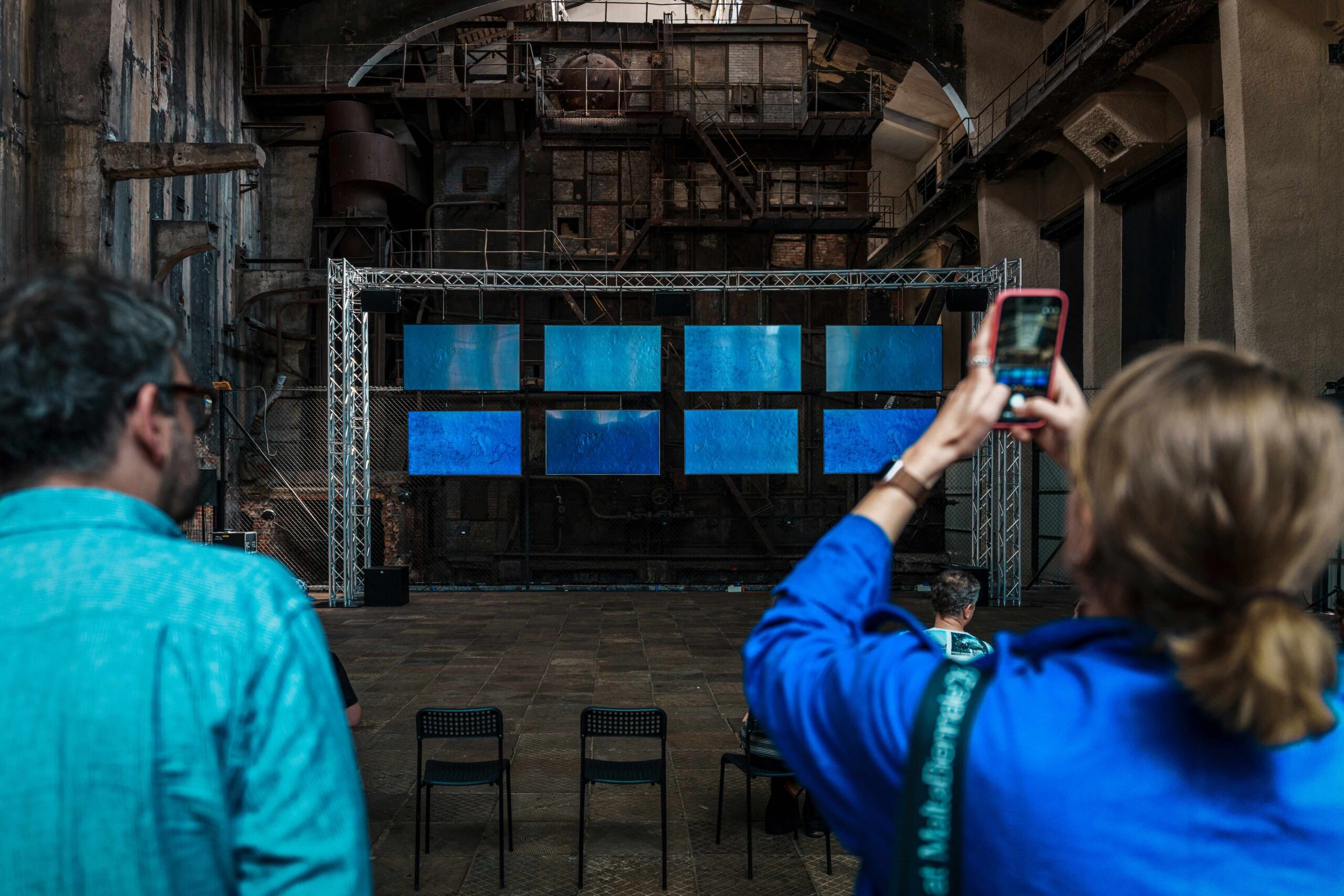
Fotofestiwal exists and continues to grow thanks to the collaboration and energy of a creative collective. It has come a long way from a local event to an international one, but its understanding of photography has remained unchanged. For the creators of the festival, photography is a space of dialogue, critical thinking, and the building of new forms of community; it allows us to face the challenges of the present day. This year’s edition focused on topics such as the relationship between humans and the world of animals, the crisis of democracy, the climate crisis and the impact of AI on image-making.

The wide variety of exhibited projects provided an opportunity to explore the works of artists with distinctive voices seeking their place in the art world (Open Program), as well as to come face to face with those already recognised by the art community. The following selection highlights projects that stand out for their unexpected approaches, which provoke curiosity and invite viewers to engage in a broader discussion about the issues they address.
Richard Barnes — Animal Logic.
Admiring What We Seek to Control
In his project Animal Logic, American artist Richard Barnes invites viewers into museums of natural history that present carefully arranged scenes of wild nature. Such institutions often use dioramas to illustrate a “realistic” image of the environment. Contemporary museology is gradually moving away from dioramas for various reasons, including ethical concerns and changing educational approaches. However, they remain present in many museums, which is precisely what Richard Barnes has focused on.

The artist offers a new perspective. His curiosity led him to adopt a less obvious approach and look at dioramas during their construction or restoration. Barnes depicts the process by which humans establish their perception of the wild natural world. In doing so, he reveals the paradox of such activities: animals are removed from their natural habitats and then placed in artificial environments designed to mimic nature. Furthermore, it can be argued that the animals presented in museums are “twice dead,” referring both to taxidermy and to their display as exhibits.
Barnes builds a visual essay that comments on the behaviour of humans toward the animal world — on the one hand, it is characterised by immense admiration for wild nature, and on the other, by an intense desire to conquer it. The artist makes us reflect on the way we view and understand the animal world, which, as it turns out, is a precisely framed construct — one that is attractive for sale and consumption.
Feng Li — Pig.
What Can Humans Learn from Animals?
Feng Li approaches the subject of this year’s Fotofestiwal with humour — his photographs can be described as a surreal portrayal of everyday life. Known primarily for his street and fashion photography, he also turns his attention to the animals that share his home. In 2017, his wife rescued a piglet abandoned at an airport. Named Pig Feng JR, the pig, even as it grew bigger and bigger, became part of their family and eventually a subject of the artist’s photographic project.

Feng Li captures images of the pig’s life with his family, portraying it in a playful yet affectionate manner. Through these photographs, the viewer is invited to reconsider conventional ways of understanding human-animal relationships. Animals in the artist’s life are treated as full-fledged members of the family — there is no hierarchical dominance of humans over the animal world here. In Feng Li’s world of visual absurdity, the boundaries between species become fluid: animals are depicted with human traits, while humans reveal animal instincts.

Mari Mäntynen – Stranger.
Photography as Encounter
Among the projects selected for the Fotofestiwal’s Open Program, Strangers by Finnish artist Mari Mäntynen attracted particular attention. This social experiment — a performance documented through photography — encourages reflection on the social norms that govern interpersonal relationships in public spaces.
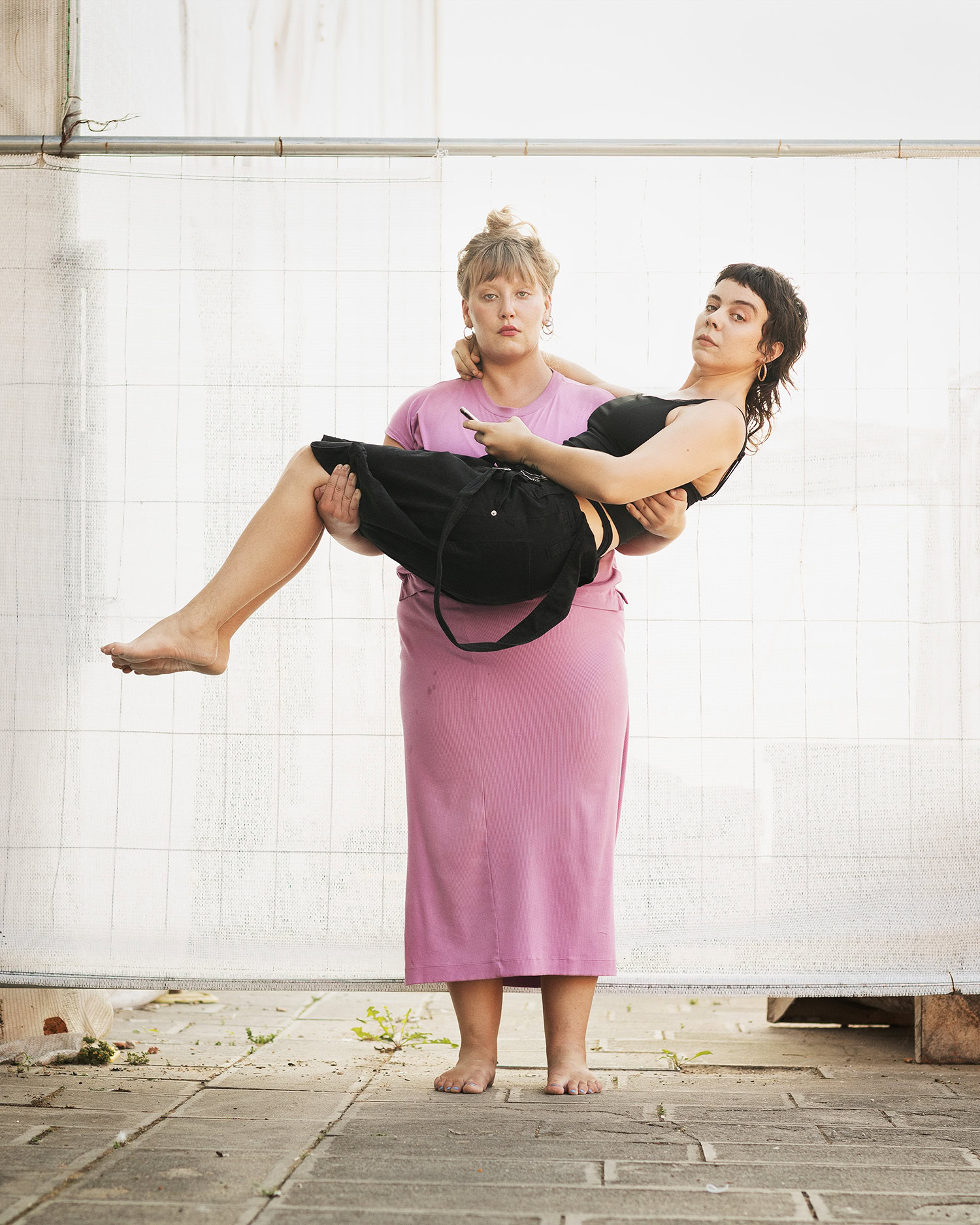
The artist photographed herself with strangers she encountered; the shots were taken without any predetermined rules. The person being photographed decided on the pose and behaviour to be captured in the image. Mäntynen’s project serves both as a commentary on social norms — temporarily suspended for the duration of the photograph — and on portrait photography itself. The established rules of portrait photography disappear, and the relationship between the participants is established through the act of photographing, rather than preceding it.
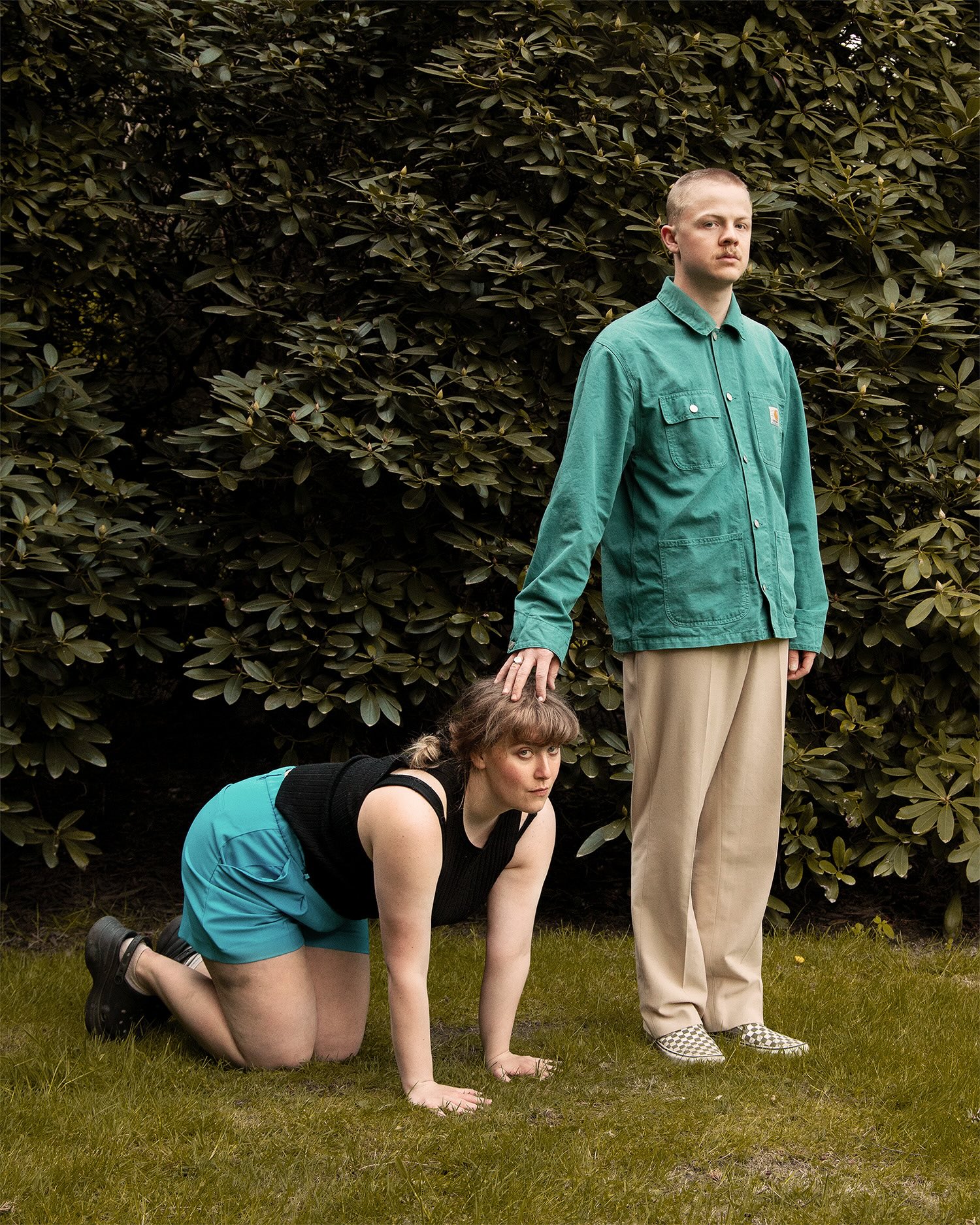
According to the artist, photography has the power to shape reality. The encounter with another person constitutes the primary creative material for this project. Mäntynen argues that we are each other’s environment and that even the briefest encounter can have a formative influence on us. This idea is reflected in the form of the photographs. At first glance, they resemble family photos, pictures of friends or vacation shots. Yet upon further inspection, they give an impression of carefully planned portraits — for example, in terms of the colours. This formal contrast further emphasises the artist’s central idea.
Karolina Gembara — Mind of Winter.
Archaeology of Everyday Life
How can one talk about post-war resettlement, trauma and a sense of transience? The answer is found in Karolina Gembara’s research and photography project, accompanied by the exhibition curated by Grażyna Siedlecka. The title, Mind of Winter, refers to the state of a person living far from home — one that prevents them from settling in and feeling safe. This was the experience of millions of people displaced after 1945, and it is still present in our everyday lives. The long-term impact of forced migration resonates and resurfaces through inherited trauma, a sense of distrust toward one’s place of residence, and a life spent perpetually living out of a suitcase.

Gembara moves beyond simple documentary practice. Working with archives and surviving objects, she reconstructs fragments of the past to give form to experiences many of us know only indirectly. The project can be interpreted in multiple ways: as a reflection on post-war displacement that extends into the present, on the inheritance of trauma, or on the sense of transience that characterises the contemporary housing situation. It can also be read as a commentary on the role of photography itself. Here, the medium becomes a space of encounter, rather than evidence, exposing the gaps and lacunae that shape memory.

Philip Montgomery — American Cycles.
A Mirror of America?
Philip Montgomery documents the lives of people in the United States of America, portraying a society in a state of constant crisis and drawing attention to the major problems that affect it. Brought up in the spirit of Eugene Richards’ documentary photography, fascinated by Weegee’s style, as well as archival crime-scene photographs from Los Angeles, he works in black-and-white, employing a visual language that heightens the tension present in his images, while also adding an element of aestheticisation.

Montgomery situates his work at the boundary between documentary and art. Although the scenes he photographs are not staged, he considers artificial lighting of great importance and always pays close attention to it. As he himself admits, documentary photography is never neutral or devoid of emotion. The resulting photographs often resemble stills from American cinema, combining documentary observation with a heightened sense of drama. The exhibition at Fotofestiwal presents works addressing topics such as the opioid epidemic, protests following police killings, the Black Lives Matter movement, climate disasters, and the displacement and deportation of immigrants.

Alongside scenes of crisis, Montgomery creates portraits of people who shape the American mythology and shape the reality of the average American, who encounters the situations mentioned above daily. Philip Montgomery’s authorial voice is strongly felt throughout the series. Indeed, he seems determined to ensure that the viewer feels its weight. The visual language of his images is intended to amplify their impact, evoke empathy and raise questions about what these events reveal about society.

Natalia Kolbiarz – Mutant Flowers.
From Documentation to Image Construction
The festival would not have been complete without works exploring the relationship between photography and AI. This topic was thoroughly explored through the works of Polish artists examining the medium of photography in the context of AI’s emergence, as showcased in the exhibition Image Hallucinations. Polish photography after AI, held at Hilary Majewski’s Tenement House.
One of the artists taking part in the discussion was Natalia Kolbiarz. In her series Mutant Flowers, she references a real-life event — a nuclear power plant disaster in Fukushima — that allegedly caused plants in the surrounding area to mutate and become deformed. Photographs of deformed daisies began appearing online, supposedly proving the contamination and its negative impact on nature. However, these reports were never validated by scientists. In her series, Kolbiarz astutely references this situation to comment on the relationship between photography and AI.

The Mutant Flowers series depicts flowers of unnatural form generated with the use of AI. Artificial Intelligence is known to distort images, but here they become examples of hallucination — visual representations that resemble photographs but do not document an existing object. In this way, Kolbiarz proposes a reflection on the hybrid nature of the contemporary image and how images can shape our perception of reality regardless of their factual basis. For her, AI is only a tool for exploring the nature of the image, its truth, and its potential for manipulation. Interestingly, the theme of “mutants” aligns with her broader body of work, which examines the world of plants and human efforts to control and transform nature.
Kolbiarz’s work demonstrates that hallucinations can be creative. Even in the past, photography was not always regarded as a reliable medium, and this perception only deepened with the introduction of AI. With the development of this technology, authorship may no longer be tied to the technical execution of an image but rather to the idea, decision-making process, and critical evaluation of the results. AI becomes a new tool for visualising the imagination. When used thoughtfully, it can broaden the scope of creative activity.