Primarily working with sculptural installations, Daniel Rycharski challenges the intersection of convergence and conflict between faith, rural communities, and LGBTQ+ identity. As such, his bold approach to all these themes – with no equivalent in today’s Polish art – is the driving force of Rycharski’s practice, positioning him as a well-established figure in both the Polish and international art scene.

It was during his studies at the Kraków Academy of Fine Arts that Daniel Rycharski (b. 1986) became enchanted by the visual culture and identity of contemporary rural areas. Since then, his practice has often involved collaboration with such communities and activist circles, illustrating a more complex image of the countryside as he began seeking out forms of expression for alternative social experiences and visions.
Born and living in the village of Kurówko, he uses his own experiences of fighting against rural prejudice, making it a touchstone for the artist in his approach to art and communication with audiences. His personal experiences and family background provide the starting point from which the artist explores broader themes that resonate with a society grappling with the resurgence—or persistence—of religion as a tool for political mobilisation and division.
For example, Rycharski’s elaborate installation Scarecrows (2018-2019) comprises 22 wooden structures modelled on various forms of the Christian cross with clothing draped in the likeness of a human figure on each of them. It was installed in Kurówko after months of preparation with the involvement of his family. Using violent materials like barbed wire and blades alongside clothing donated by LGBT+ people, the work reimagines the rural scarecrow as both protector and victim. Partly inspired by the homophobic murder of Matthew Shepard, it highlights discrimination, the role of religion in sustaining it, and the impact of hate crimes. Blending peasant traditions, queer activism, and faith, Scarecrows serves as both an archive of violence and a call to practice belief on one’s own terms, linking Rycharski’s rural roots with the queer community.

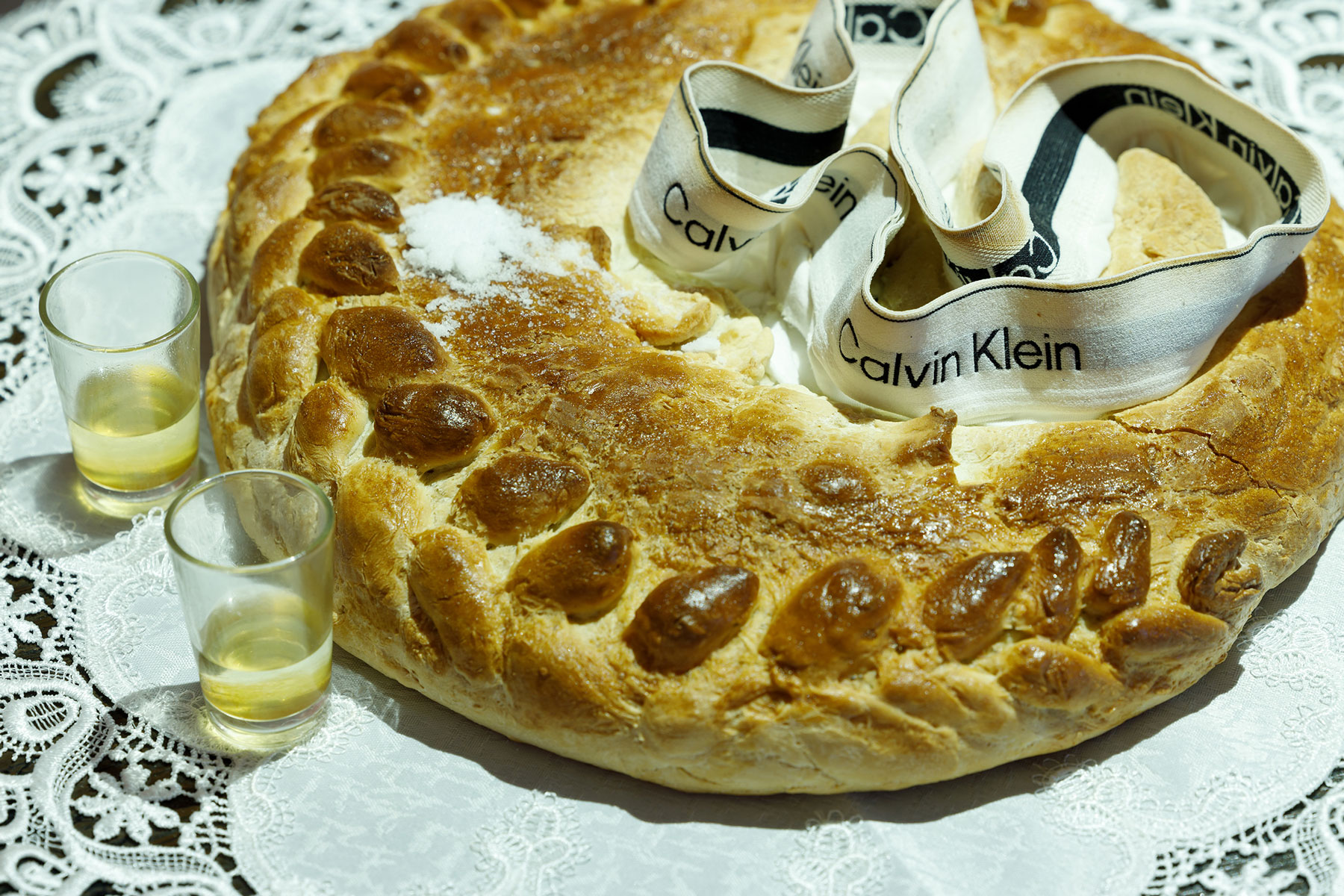
While Undressing the Sleep. Rycharski. Hasior (2025) exhibition in TRAFO in Szczecin blurs the line between stage design and performance, using gestures and objects to dismantle the myth of the idyllic Polish village. Set in the countryside, it exposes the tensions and contradictions beneath folkloric and religious imagery, giving space to excluded voices – LGBTQ+ people, outsiders, Jews, refugees, peasants, and forgotten heroes – who return to propose alternative visions of history and the present. The work connects two artists shaped by biography and revolution – Władysław Hasior, a chronicler of social transformation and the modernising countryside, and Rycharski, confronting rural prejudice and dead traditions. Hasior dreamt change alongside society, while Rycharski exhumes traumas to ignite his own revolution, stripping away sanctities and shaking us from a trance-like vision of the past.


Drawing on his heritage and decades-long research into the Polish countryside, in this episode of Kitchen Conversations, Daniel Rycharski offers an honest glimpse into rural Poland today – challenging stereotypes and opening space for dialogue.

LINKS:




Kitchen Conversations is a platform for conversations with artists, curators, and researchers about their visual and socially engaged work, all connected to the vibrant and diverse region known as “Eastern Europe”, with all its complexities, histories, cultures, traumas, and their inevitable contemporary consequences. The podcast is hosted by a Polish artist and writer, Patrycja Rozwora.