



For art curator Puyi Deng, an exhibition is more than a presentation of individual artistic practices, it is a relational space in which artworks, artists and audiences enter into dialogue. Her curatorial approach places particular emphasis on the ways art reflects, reorganises and challenges our understanding of reality, transforming the exhibition into a site of interpretation rather than a passive display.
As executive curator of group exhibition ArtEvol 2026: A View From Everywhere at London’s Saatchi Gallery in October 2026, Deng brings this philosophy into focus, demonstrating how considered juxtapositions can generate unexpected connections across diverse artistic languages.
Deng’s curatorial perspective is informed by her academic training in Arts Administration and Cultural Policy at Goldsmiths, University of London, alongside her participation in art-historical research projects. This combination of theoretical enquiry and practical experience has shaped an approach attentive to the cultural contexts in which art is produced and received. Her earlier work at Beijing’s Today Art Museum, where she contributed to exhibitions including Environment, Mon Amour and The Surreal Dream World of Erik Johansson, honed her skills across the exhibition-making process, from artist and artwork research to planning, installation and public engagement. These formative projects helped develop Deng’s understanding of exhibition narrative, spatial relationships and the possibilities of dialogue between different media.
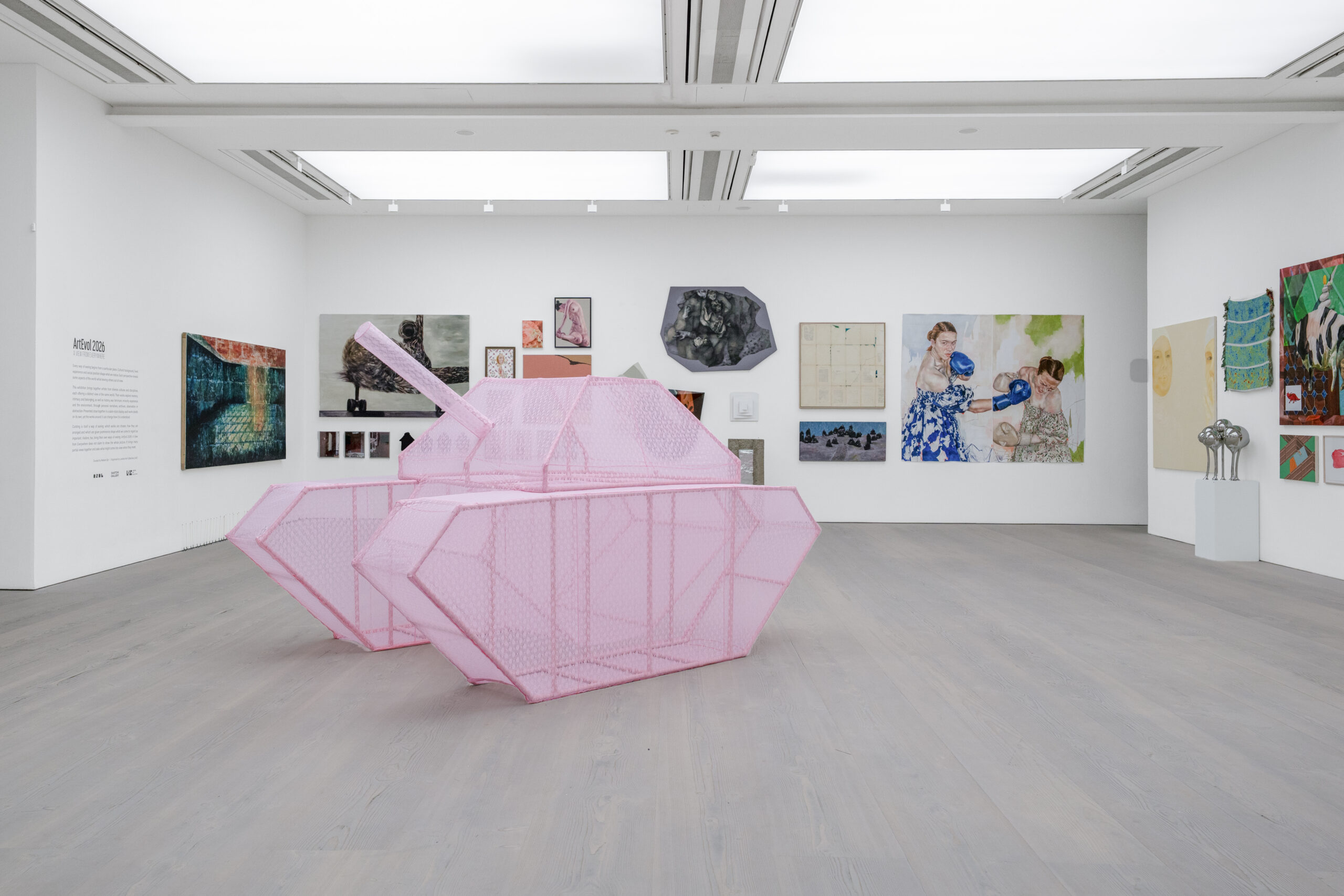
At Saatchi Gallery, Deng applies this experience to ArtEvol 2026: A View From Everywhere, an exhibition with an expansive and refreshing curatorial approach encouraging multiple perspectives on contemporary art. Instead of organising works in the traditional and often outdated curatorial style according to medium, genre or artistic movement, she establishes connections through visual tension, conceptual resonance and the associations that emerge when disparate practices occupy the same space.
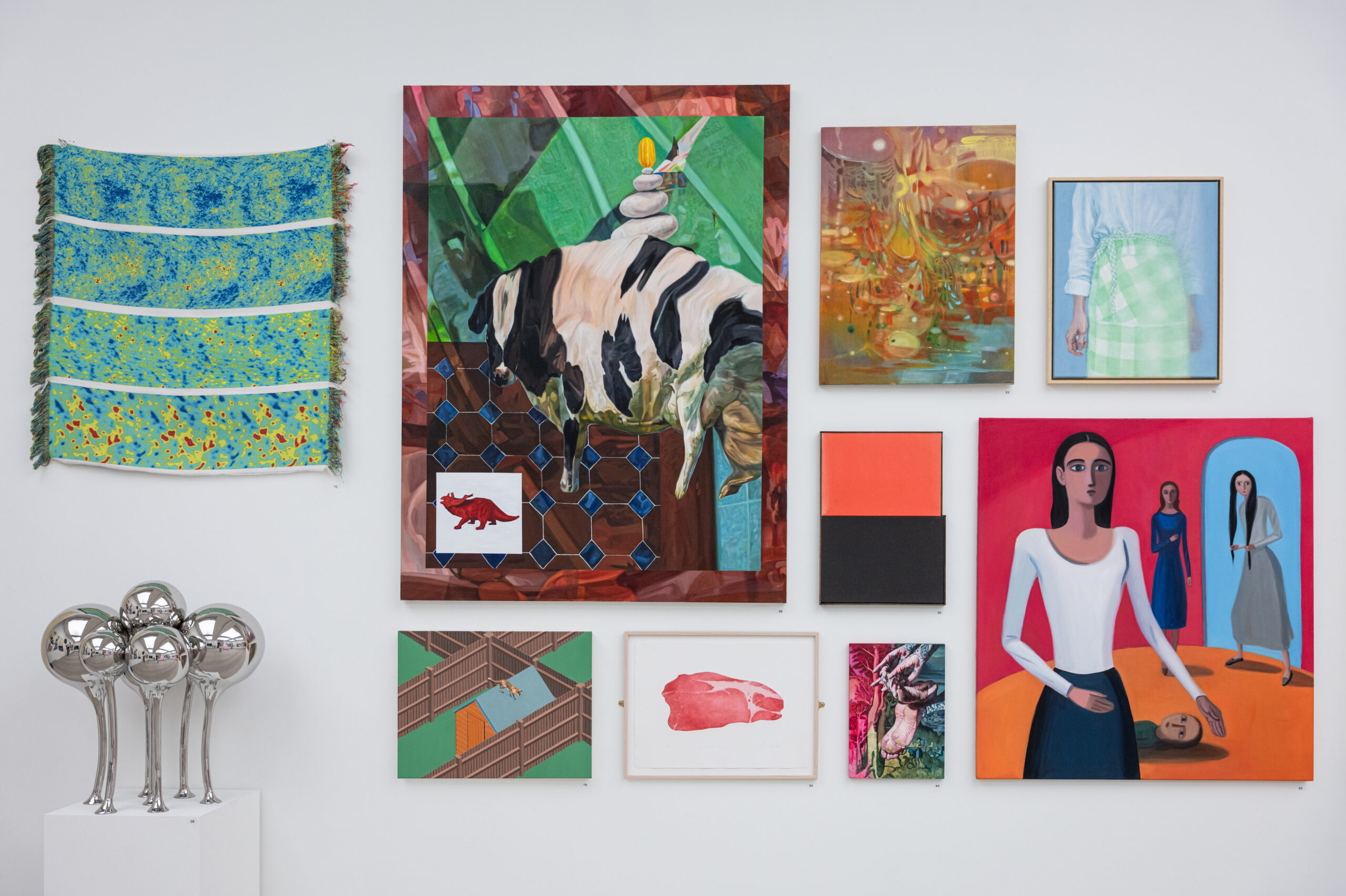
For example, a figurative painting depicting women boxing encounters a minimalist monochrome canvas, a sculptural plinth and wall-based works of varying dimensions. The resulting arrangement is intriguing in its resistance to a singular interpretative framework, inviting viewers to consider how apparently unrelated works might illuminate one another.
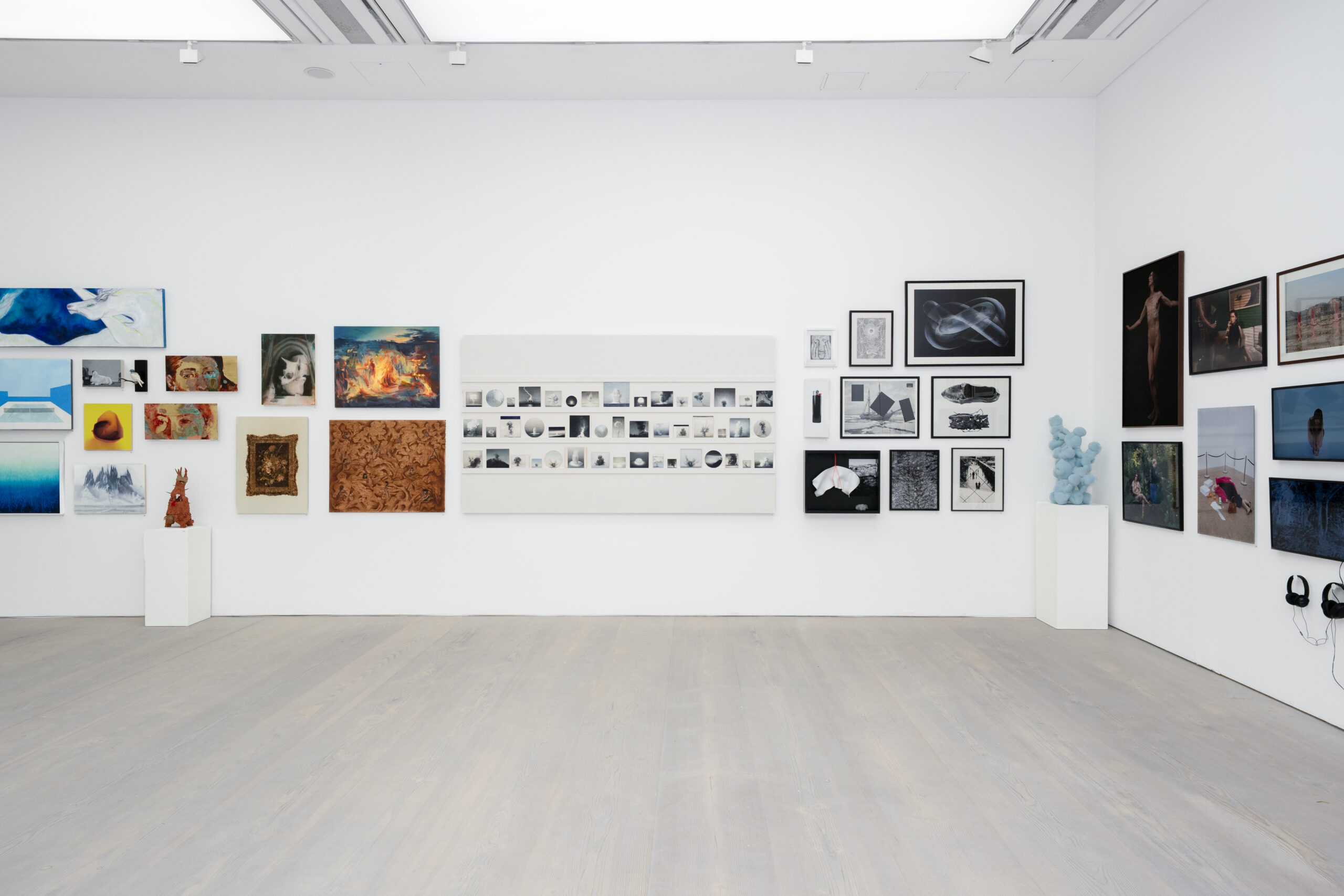
Deng’s approach also reconsiders and reinvents for a new art-gallery going generation, the tradition of the salon-style hang, historically associated with the 17th Century French Royal Academy. In ArtEvol 2026, the dense presentation of works across different scales and genres becomes a contemporary curatorial proposition rather than a nostalgic reference. A traditional nude figurative painting by Helen Stotesworthy shares a wall with Marion Mandeng’s wall-based House sculptures, Sam Lock’s subtly minimalist mixed-media work on panel ‘Beneath (The Vigil)’ and Sofia Laskari’s large-scale painting of women pugilists titled ‘Double Nature’. These visual and physical juxtapositions create a productive friction between representation and abstraction, intimacy and physicality, and the individual artwork and its surrounding environment.
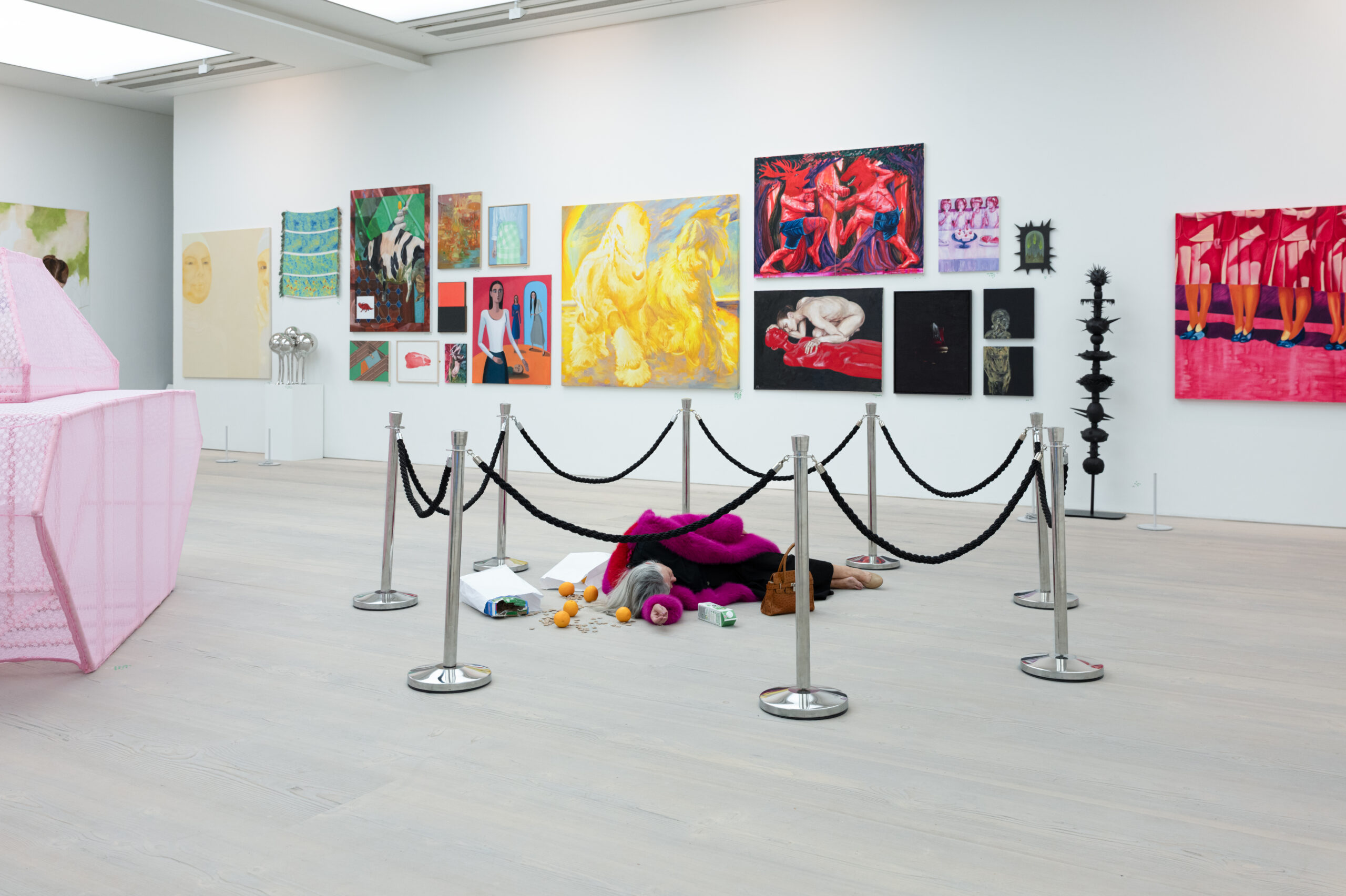
Crucially, Deng’s methodology suggests that meaning is not entirely contained within an artwork but is continually reshaped by its relationship to other works, the exhibition space and the viewer. Her intellectual understanding of the art of curating moves beyond straightforward categorisation, allowing interpretation to remain open-ended, and breaking outdated barriers between artistic movements, artforms and genres. The success of such an approach depends on the curator’s ability to establish connections without prescribing a definitive reading.
Through ArtEvol 2026, Deng demonstrates an interest in exhibition-making as both research practice and critical inquiry. Her curatorial language creates space for ambiguity, discovery and reconsideration, positioning the exhibition as a dynamic framework through which contemporary art can be experienced from multiple viewpoints.
Written by Lee Sharrock