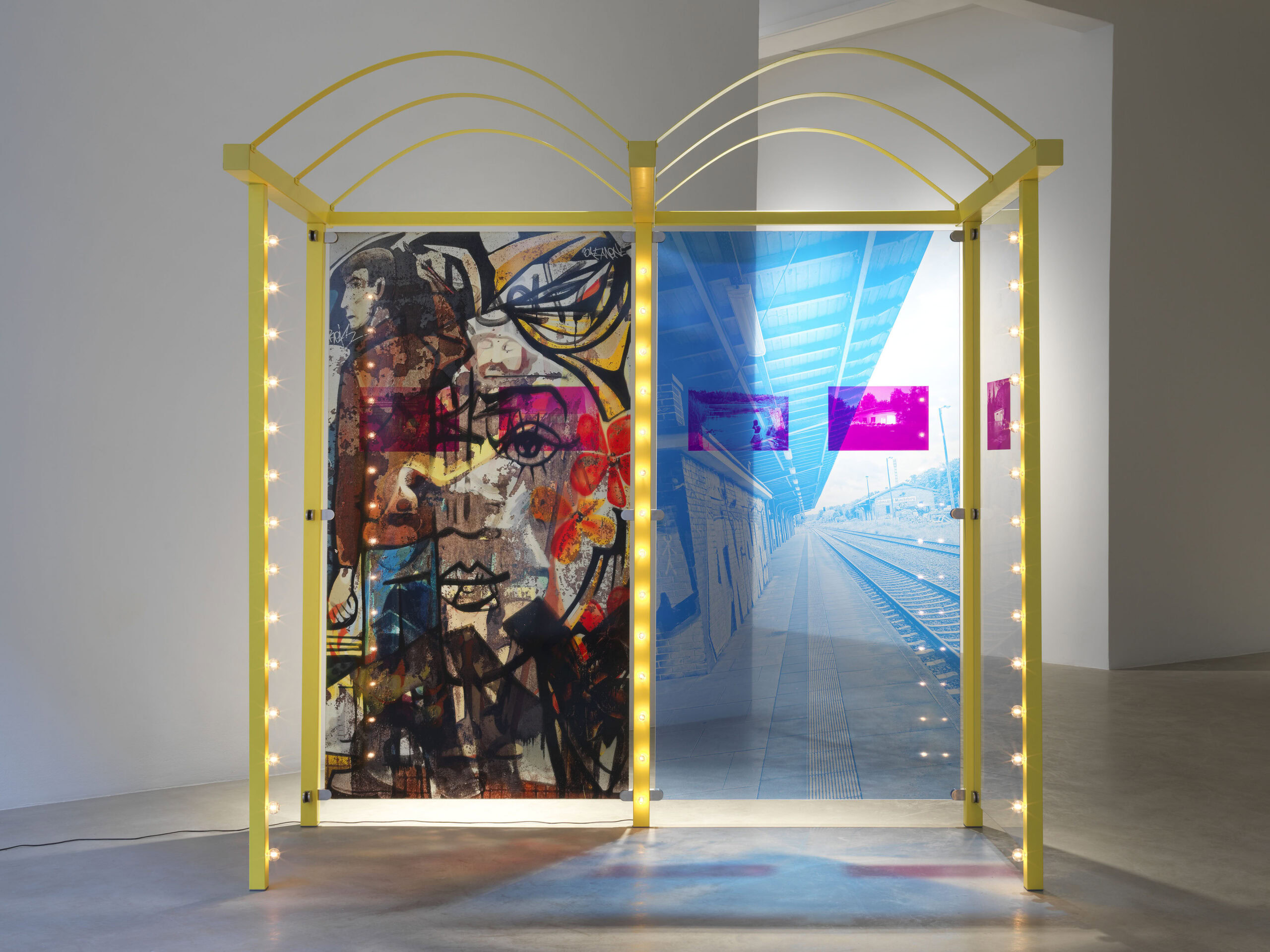




History goes in circles, and art is a powerful tool that helps us process this undeniable truth. This selection of artists scrutinises the process of change and transformation, the passage of time and the tendency of the modern world to revert back to its old ways. Inspired by their own lives, the people they encountered, the socio-political conditions they experienced, and universal struggles and joys, they create art that links history and contemporary times, recontextualises age-old phenomena, and strengthens the sense of community in a time of crisis.
These exhibitions don’t shy away from asking urgent questions and poking at well-established norms and stories. They allow the artists to express their frustration with the modern world and encourage audiences to join them in their search for answers. At the same time, they convey a sense of hope, build bridges and help make connections between people, spaces and seemingly distant phenomena; they’re a journey for the senses and a stimulus for the mind.
Ana Lupas & S P A T A R U. On Ritual Time at S. M. A. K.
10.09.2026–21.02.2027
Ghent, Belgium
On Ritual Time is at once a nod to Ana Lupas’ artistic legacy, 70 years in the making, and an attempt at seeing it in a different light – through the dialogue it enters into with the work of S P A T A R U. Lupas’ work draws heavily on ancestral knowledge, ritual and spiritual practices, and is inextricably tied to the socio-political, historical and cultural contexts of her native Romania. It bridges traditional artistic methods and the visual language of the modern world, translating meanings that might otherwise have been forgotten into codes we can easily decipher.

Its timeframe allows the exhibition to accommodate changing socio-political conditions and further recontextualise Lupas’ work, which already touches upon questions of time, memory and transformation. By putting it into conversation with S P A T A R U’s work, which spans sculpture, painting and drawing, and whose author was Lupas’ personal and artistic acquaintance, the show adds yet another layer to the two artists’ oeuvres. This dialogue not only reveals themes that have long fascinated them both, such as mortality, inheritance, and the passage of time, but also embodies a ritual gesture in itself.

Liturgie des jours at Galerie La Patinoire Royale Bach
10.09–19.12.2026
Brussels, Belgium
Liturgie des jours brings together the works of two Ukrainian artists, Sasha Kurmaz and Danylo Halkin, who have been documenting the war that has ravaged their country. Their artistic practices simultaneously contrast and complement each other – while Kurmaz offers a contemporary perspective through his exploration of found photography, handwritten notes and collage, Halkin adds a historical layer to the show by engaging with the tradition of stained glass in his region.

Kurmaz first started making collages when Russia invaded Ukraine, with the intention of stopping when the war ends. In his search for a form of expression that captures the lived experience of war, he has created a continuous series that documents the physical, social and psychological impacts of the war. Apart from cataloguing the havoc around him, Kurmaz goes deeper, scrutinising the mechanism that drives violence and the endurance it takes to bear it. Halkin, in turn, creates haunting images of the all-encompassing destruction. Looking for stained-glass windows everywhere around him, he turns architectural traces into autonomous artworks that carry the weight of the war, commemorate the lives and heritage lost and convey a sense of the sacred.


Alicja and Bożena Wahl: Tensions at CCA Berlin
10.09–14.11.2026
Berlin, Germany
Tensions is the first comprehensive posthumous retrospective of Polish twin sisters Alicja and Bożena Wahl, whose artistic legacy encapsulates drawing, painting and stage design. Their works centre around the female body as a site of vulnerability and desire, pain and pleasure, revealing the tensions that underlie our functioning in the world. Just like the sisters’ intertwined practice, the exhibition operates through a clash between a wish for independence and an undeniable connection.

The show also offers a glimpse into archival materials that help reconstruct the Wahl sisters’ artistic networks across and beyond the Iron Curtain, emphasising their international and intrinsically subversive character. They situate their work within the wider context of post-war Polish art, making it easier to decipher the cultural codes embedded in the Wahls’ complex visual language.


Erna Rosenstein: On the Other Side of Silence at Lower Belvedere
03.07.2026–10.01.2027
Vienna, Austria
The show is the first major Austrian retrospective of the artistic legacy of Erna Rosenstein, a significant figure in Polish post-war avant-garde. Bringing together around 80 paintings, drawings, assemblages and poems, it maps the development of Rosenstein’s distinctive artistic language shaped by memory, displacement, the Shoah and political upheaval. It also represents the drive of an artist who, despite facing difficult socio-political conditions, continued to create challenging, critical and novel art.


Spanning six decades of her practice, the exhibition reveals the intersections of individual experiences and collective history, as well as the long-standing effects of past events on the present. Particularly interested in the experience of violence, trauma and loss, Rosenstein created an expansive and expressive visual language that allowed her to process her own grief. Apart from that, it pushed her to consider memory and personal narratives, sparking the emergence of new ways of remembering and processing.

Marie Tomanová. Clouds and Plums at FOG Gallery
24.09–21.11.2026
Bratislava, Slovakia
Clouds and Plums is Marie Tomanová’s first solo exhibition in Slovakia, introducing viewers to the Czech artist’s well-established international legacy, as well as a new body of work. The exhibition moves away from the themes prevalent in Tomanová’s practice, such as displacement, distance and time, to focus on the medium itself – the photograph. The artist’s fascination with the process of taking a photograph centres around the act itself; the experience of working and connecting with people. The resultant artefact seems to be a mere imitation of the moment itself.

Thematically, the show assumes the idea of a beginning, understood in several ways, as its point of departure: Tomanová’s early works capture her childhood home in the Czech Republic, the young people of New York or the moment she first took a 35 mm photograph. The artist’s explorations of the limits and possibilities of photography find their continuation in the project she is currently working on, Song of Exile. The series merges portraiture and natural landscapes, resulting in a compelling work in progress that reveals the intersections between the social and the natural, the self and its surroundings.


Queer Futures at Centrala
02.10–12.12.2026
Birmingham, United Kingdom
Queer Futures brings together the works of seven artists from countries in Central and Eastern Europe – Poland, Lithuania, Belarus, Romania, Ukraine, Kazakhstan and Hungary – whose artistic practices span documentary, staged photography, moving image, sculpture, installation and self-published print. All the exhibited artists have moved to the United Kingdom to escape hostile places where queer lives are not valued or even threatened. Having established new lives for themselves abroad, they now come together to share their stories and build a strong, safe community.

The show juxtaposes stories of migration and loss, escape and being on the run, with proof of new beginnings, full of hope, love and joy. By sharing materials from their personal archives and past projects, the artists have created a space for exchanging the difficult experiences of queer and trans people, but also – and perhaps more importantly – a space of celebration, mutual support and newfound belonging. They challenge established understandings of community and care, creating an alternative safe space that allows audiences to find a reflection of their own lives in art.

Marta Bogdańska: Animae at Les Photaumnales
19.09–29.11.2026
Beauvais, France
Presented as part of the 23rd edition of Les Photaumnales, Marta Bogdańska’s Animae asks whether history can be written from a non-human perspective. The exhibition forms part of La Photographie et après?, a festival programme exploring the materiality, memory and future of photography through archives, hybrid formats and artificial intelligence.

Bringing together medieval archives, digital collages and objects drawn from popular culture, including lenticular 3D prints, the immersive installation examines the anthropocentric foundations of visual culture. The project constructs a counter-history of animal representation, exploring how images have been used to classify, dominate and obscure the non-human world. Moving from medieval marginalia to contemporary entertainment imagery, Bogdańska draws attention to overlooked forms of animal agency and resistance.

Monika Sosnowska. Weight of Matter at South London Gallery
10.09–22.11.2026
London, United Kingdom
Weight of Matter is a solo exhibition of Monika Sosnowska’s monumental works moulded from industrial materials associated with modernist architecture, such as steel and concrete. While focused on architecture, urbanism and transformation more broadly, Sosnowska’s work is highly specific in its reflection on life in communist-era Poland. The artist explores the dependencies between people and the space they inhabit, as well as the structures that surround them. She presents architecture as something that gives order(s), dictating how we behave and perceive the world around us. Importantly, instead of accepting this state of things, Sosnowska introduces chaos and uncertainty into the seemingly impeccable, logical reality, poking at its roots.
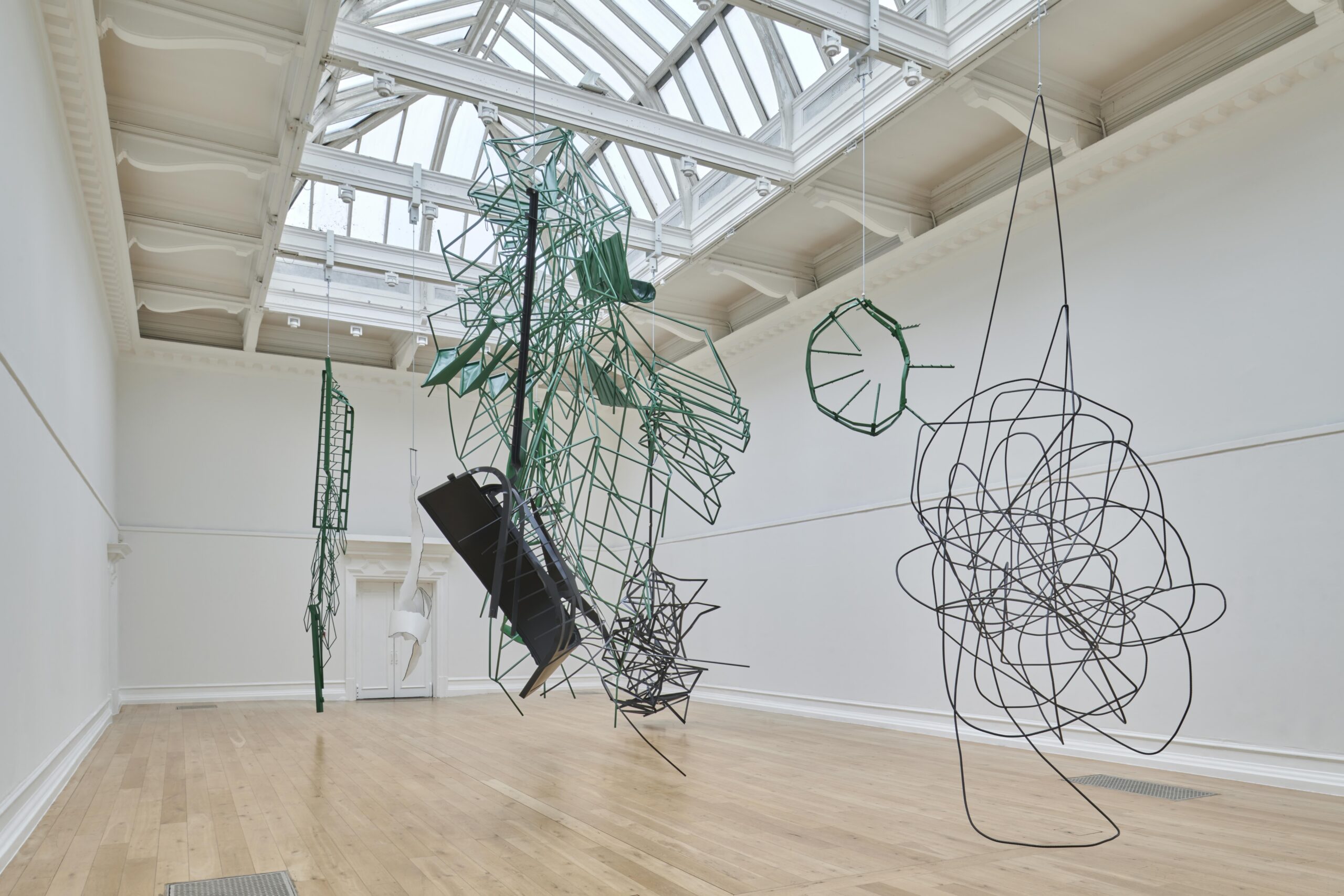

The artist has created bespoke pieces that respond to the space they occupy and its history. Sosnowska’s twisted wires and concrete shapes mirror elements of the gallery’s infrastructure, such as staircases or courtyards. Individual works morph into one another, creating structures with no identifiable beginning or end and reflecting the entanglements of many different histories. To complete the story it tells, the exhibition shows the delicate yet intricate paper models that Sosnowska uses to develop her work, providing an invaluable insight into the artist’s craftsmanship.

Tolia Astakhishvili. Figure of the Child at mumok
20.06–01.11.2026
Vienna, Austria
Figure of the Child is the first solo museum exhibition of Tolia Astakhishvili’s work. It offers a glimpse into the Georgian artist’s complex, tactile legacy, which spans installation, sculpture, drawing, painting, sound and moving image. The exhibition, similarly to many of Astakhishvili’s works, departs from the concept of the “figure of the child,” which encapsulates a twofold meaning. The titular child is at once unprecedentedly creative and entirely dependent on others. Astakhishvili draws on the unrestricted creativity and instinctual intelligence that is gradually overpowered as we move into adulthood to construct a world of wonder. Simultaneously, the artist touches upon the perpetual state of invisibility and helplessness that children often experience.
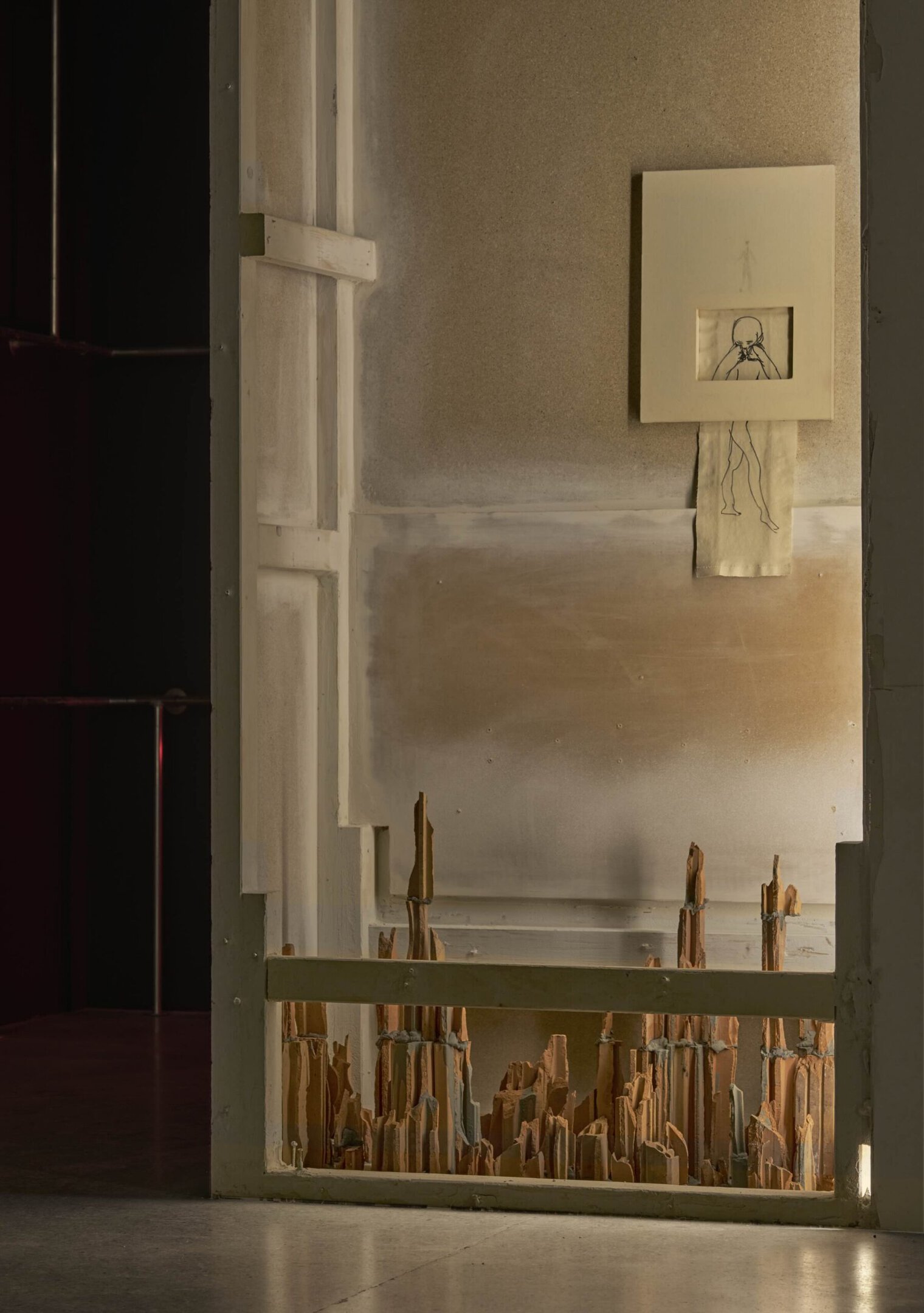
By building on universal feelings and bringing audiences back to their own childhoods, Astakhishvili plays with empathy, imagination and time. The viewers’ experience is modelled on that of a child first encountering the world and its overwhelming multitude of stimuli. The artist challenges the convention of museum presentation and engagement, inviting audiences into a new kind of multidimensional exploration.

Michał Budny: Randzone at PEAC Museum
27.09.2026–14.02.2027
Freiburg, Germany
Randzone is a solo exhibition devoted to the work of Polish artist Michał Budny. Bringing together works from the past 20 years, it traces his commitment to giving material form to relationships, experiences and emotions. Although his sculptures recall the visual languages of Minimalism and Constructivism, their reduced forms and materials carry subtle emotional and personal associations. He predominantly uses industrial materials, such as metal, wood, textiles, cardboard, plastic film, adhesive tape, or rubber. Budny is interested in marks of war and tear, the materials’ embeddedness in everyday life and their sensory impact.

His work borders on the abstract and the real, bridging minimal form and personal experiences. Budny aims to open a world of possibilities without prescribing specific meanings. As a result, he grants each viewer the ability to experience the exhibition on their own terms and prompts them to carry this independent meaning-making into other areas of their lives.


Projections Onto the East at n. b. k.
10.09–08.11.2026
Berlin, Germany
Projections Onto the East is a multipart exhibition, discourse and publication developed by an international group of artists, scholars and writers. The show is accompanied by a vast programme that sheds light on different approaches to the central issue – the ideological and symbolic dichotomy established between the East and the West. The project turns a critical eye on this phenomenon at a time when the concept of the East has begun to function as a cultural, aesthetic and political projection surface.

The contributors examine the historical roots of this division, tracing it back to post-war memory politics, the rise of antisemitism and postsocialist transformations. They carry it into the present to discern its contemporary manifestations. By bridging history and the present, they reveal how lines of difference drawn at some point in the past continue to shape our lives and define us vis-a-vis the rest of the world.