To know your city intimately is an act of care and reason. Each autumn, Gdańsk’s residents gather for two long evenings of walking. But exploring the country’s largest city by area is no small feat. The Urban Culture Institute (IKM) facilitates this challenge with NARRACJE, a conceptual art festival that has zoomed in on a different neighbourhood each year since 2009. Through artworks, performances and exhibitions by Polish and international artists, it invites visitors to rediscover architectural gems hiding in plain sight.
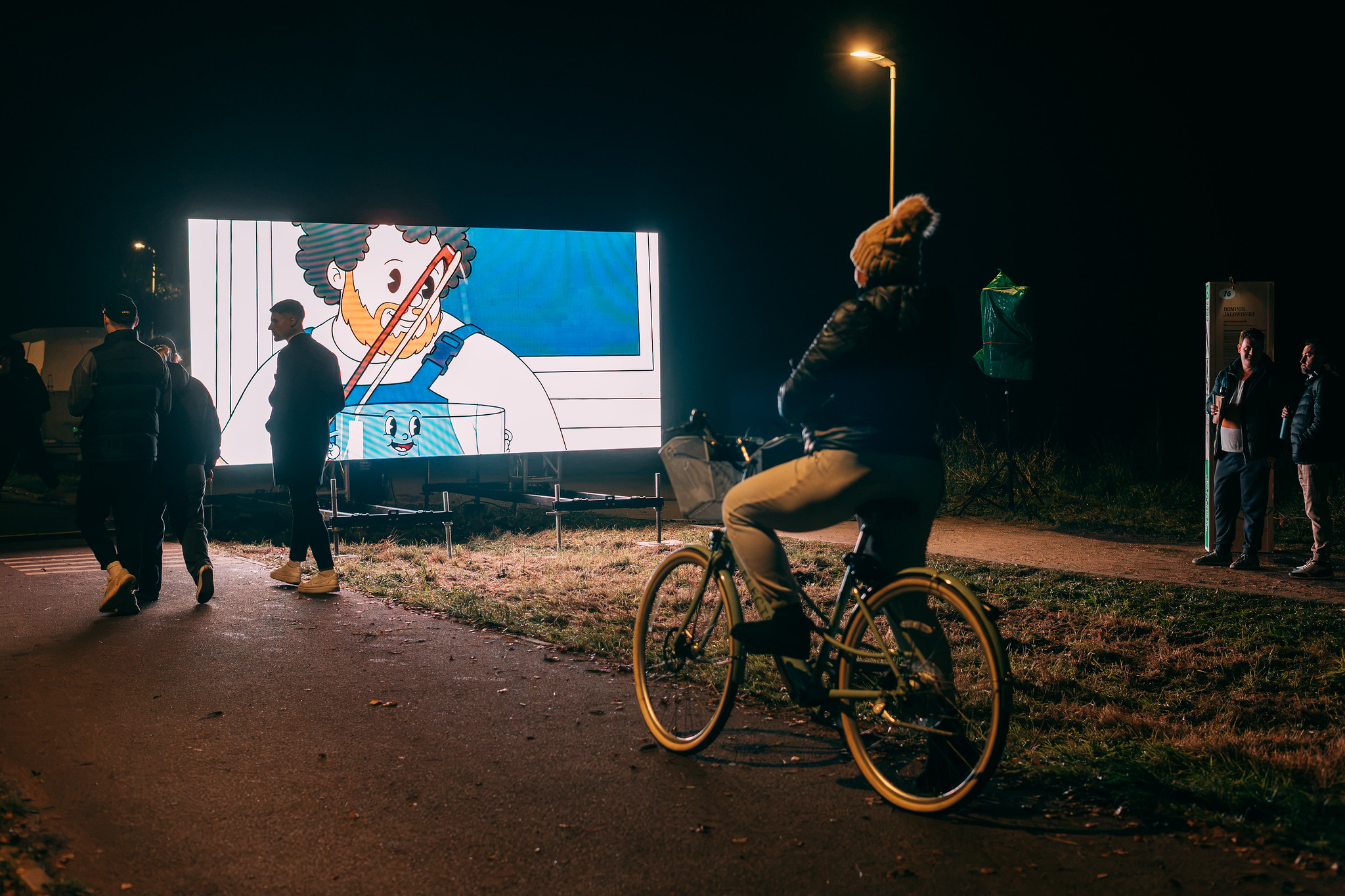
On 23–24 October, the 17th edition unfolded through Żabianka-Wejhera-Jelitkowo-Tysiąclecia (ŻWJT) housing estates, guiding groups along an eight-kilometre route from the train station to the sea. It was curated by Sylwia Szymaniak and Sarmen Beglarian, who have worked together as Biuro Wystaw collective since 2009. Their projects include initiatives focused on architecture in Warsaw, as well as exhibitions in Belgrade, Budapest, Vienna and Venice.

As Szymaniak explains, “The concept for this year’s NARRACJE was to draw on good practices in public space design from the 1970s. The festival’s projects revisit the traditional roles of art in residential neighbourhoods: fostering an emotional connection to place, inspiring and educating through art, while also engaging residents in the process of co-creation. By contributing to the design, reinterpretation and revitalisation of these spaces, artists will once again become co-creators of the urban landscape and of the everyday life that unfolds between the apartment blocks.”
Eclectic Union
The fact that these four housing estates comprise a single administrative district baffled many residents of Gdańsk, including the ones who host this year’s NARRACJE. And for good reason. Whilst Wejhera and Tysiąclecia are relatively inconspicuous residential areas — though appreciated for their serene, green backdrops — Jelitkowo and Żabianka don’t seem to be related by blood, or even by marriage.
Jelitkowo evolved from a fishermen’s village into a seaside resort and eventually became a default destination for Poles vacationing by the Baltic Sea, arriving in search of an adequate beach and slightly overpriced fish. What also draws them in is the area’s historic architecture: low, decorative and pricey — Jelitkowo holds the most expensive real estate in the city. Żabianka, in contrast, houses its residents in large-panel system buildings, the mighty remnants of the 1970s communist construction boom. Unlike its seafront cousin, it takes a more discerning passer-by to appreciate its charms.
Whilst Wejhera and Tysiąclecia are relatively inconspicuous residential areas — though appreciated for their serene, green backdrops — Jelitkowo and Żabianka don’t seem to be related by blood, or even by marriage.

Uncovering its many and poignant hidden gems seems to be the focus of this year’s NARRACJE. The festival’s main question is: What is going on between the apartment blocks? Apparently, quite a lot. Beyond the sculptures, installations and photographs encountered along the walking tour, what stands out is the overarching urban idea of how a shared living space should be laid out. At a time when urban development too often treats the void between the buildings as an opportunity for further construction, Żabianka offers a different proposition: a thriving public space, inviting and well-defined, encouraging people to feel rather than succumb to the lowest common denominator of aesthetics.

Artists, involved in the design process alongside architects, urban planners and residents, helped put future inhabitants’ needs at the centre. Notably, those associated with the Ceramics for Architecture workshop in Kadyny in the 1970s — Edward Roguszczak, Swetlana Zerling and Jacek Krenz — made sure that between the blocks there was space for wonder. This year’s NARRACJE echoes the group’s conviction that art can breach the monotony of public spaces, bring local communities together and inspire aesthetic sensitivity.
At a time when urban development too often treats the void between the buildings as an opportunity for further construction, Żabianka offers a different proposition: a thriving public space, inviting and well-defined, encouraging people to feel rather than succumb to the lowest common denominator of aesthetics.
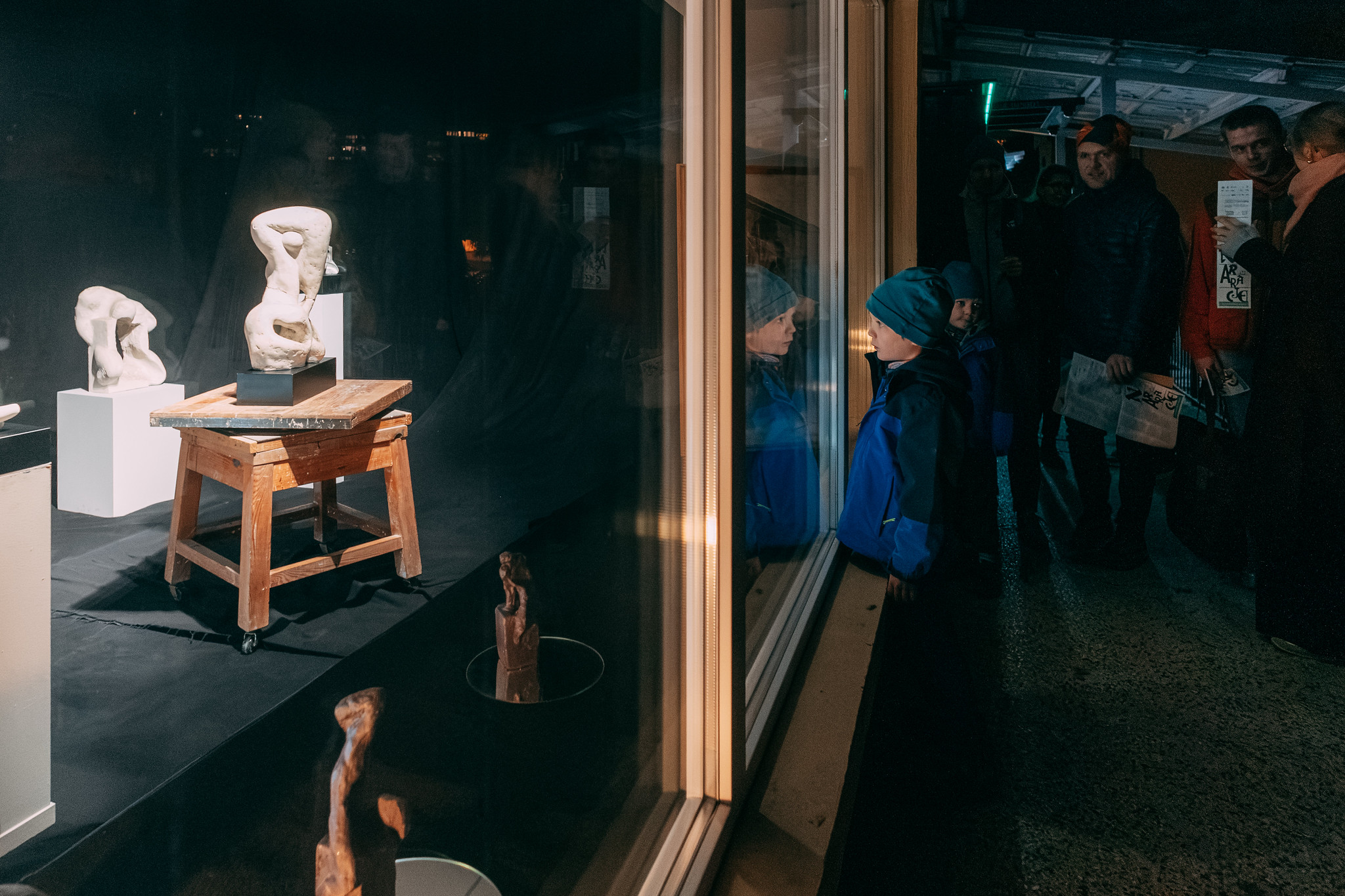
When caught up in daily errands, it’s not easy to stop, but Swetlana Zerling’s Cases series (1976) and her Them and Us reliefs (1976) make one pause. Scattered along the walkways, these stoneware pieces lend the anonymous surroundings an air of tenderness. Their shared subject is the human form, in solitude and in company. Emerging from the artist’s psychological need and intuition, the rounded forms, often caught mid-embrace, are easy to relate to. Their lasting impact on the neighbourhood’s character can be appreciated in an exhibition held during the festival, as well as in a film directed by NARRACJE’s curators.
Phantom Places
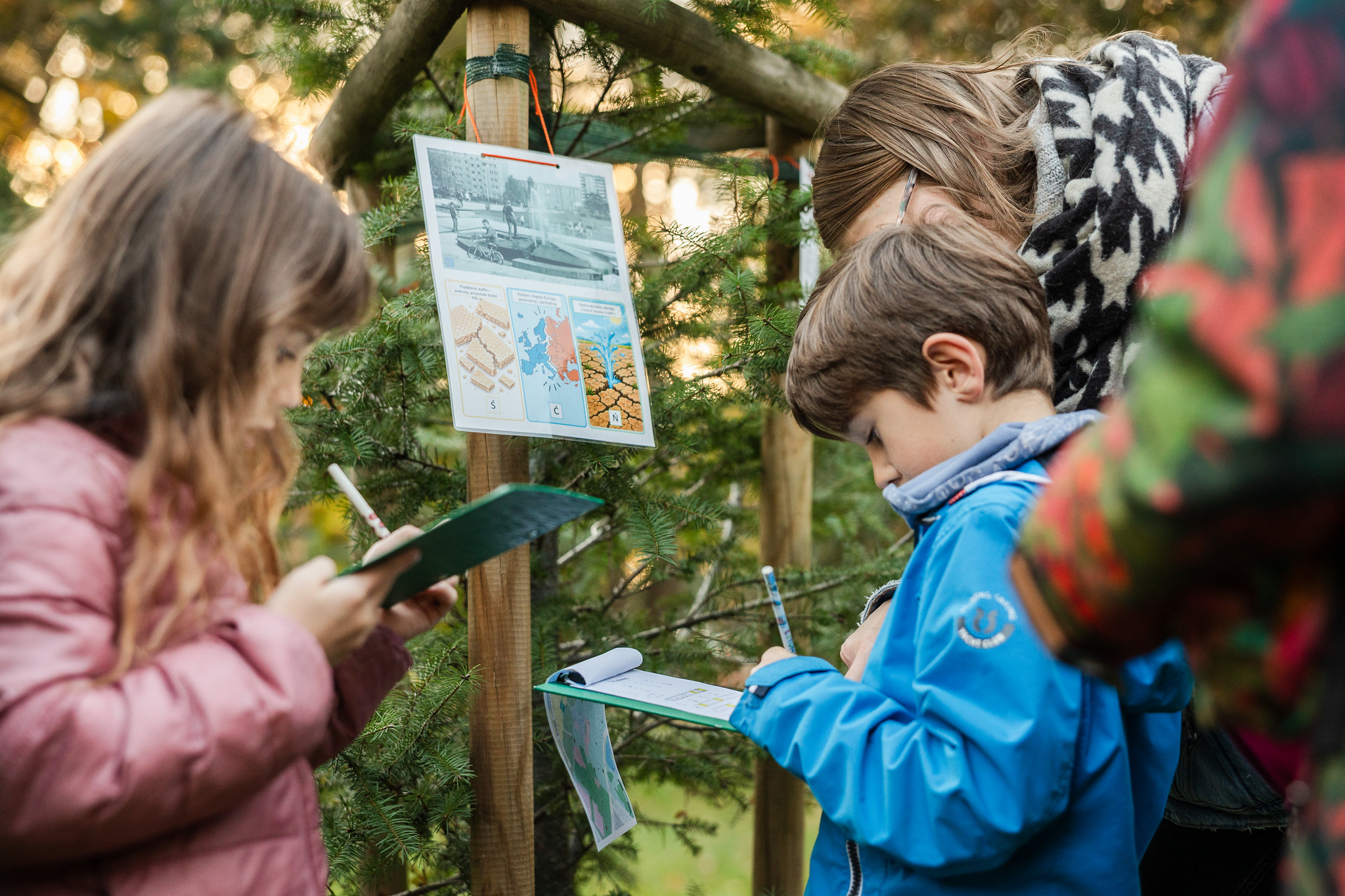
Żabianka, by design, is unique for its inspired utility — large green spaces give the blocks room to breathe, while fountains and squares offer places to talk. Dorota Walentynowicz explored this agora-like function in Where Water Used To Be (2025/2026), a video installation in conversation with a fountain designed by Edward Roguszczak in 1978. A stoneware structure resembles cracked soil not only in form, but also in function (or lack thereof) — the fountain has been dry for twenty years. Parallel videos contrast immersive images from a stoneware mine with footage of people involved in the making process, dismayed that a space so vital to neighbourhood life is slipping away.
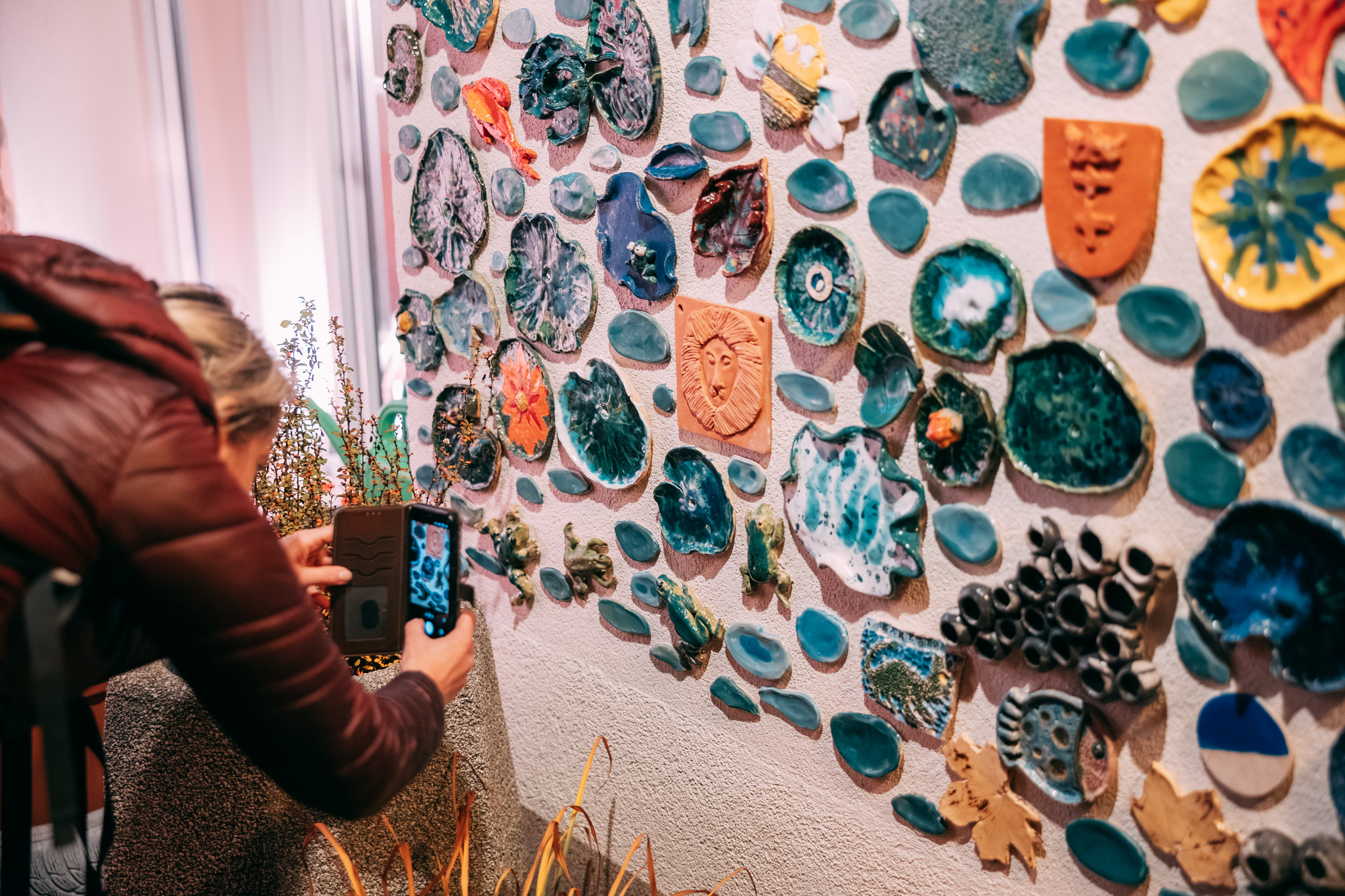
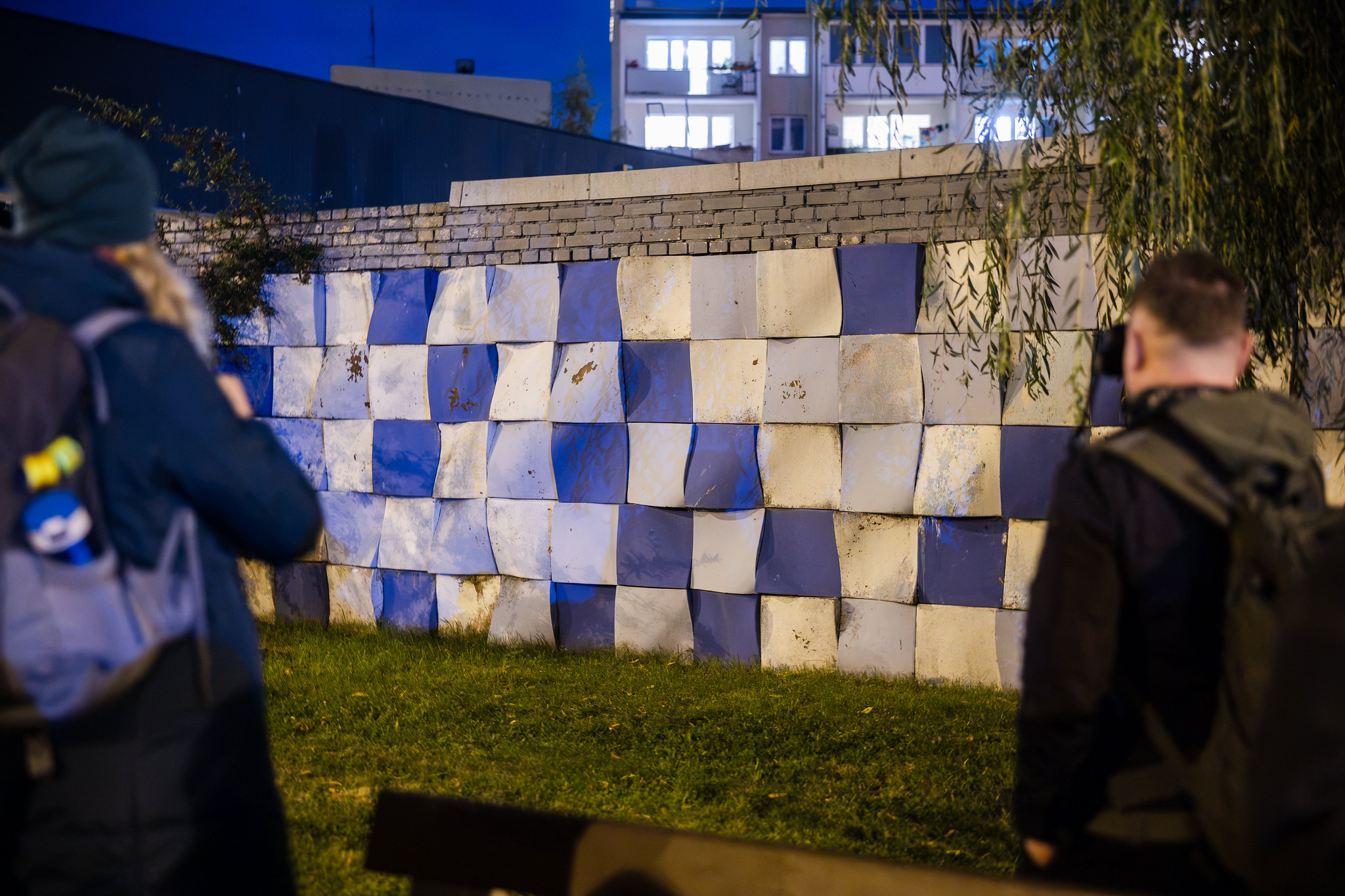
In his doctoral thesis, Jacek Krenz, an architect involved in the district’s development, wrote: “Enriching the spatial structure with clearly defined elements, establishing legible directions, designing diverse recreational spaces and introducing a distinctive colour scheme — all this gave many housing estates a distinct character and individual features that made them easier to identify and encouraged more advanced forms of perception.” [own translation] Krenz’s ceramic relief Sea (1976), placed along the central promenade, showcases the value of channelling a district’s character into an artistic output. The waves carved into the stoneware evoke the Baltic’s proximity to the sea of blocks — subtle but poignant.
Among the neighbourhood’s most tangible phantom places are the playgrounds Krenz helped create as part of its original design. Their themes ranged from an Indian Village and a Robinsonade to a Brook. Although the wooden structures have perished completely, their ghosts linger in the residents’ thoughts. During NARRACJE, Krenz brings them back through an installation of photographic feretrons on canvas. Palimpsest (2026) traces the lives that spanned on footpaths, both designed and desired.
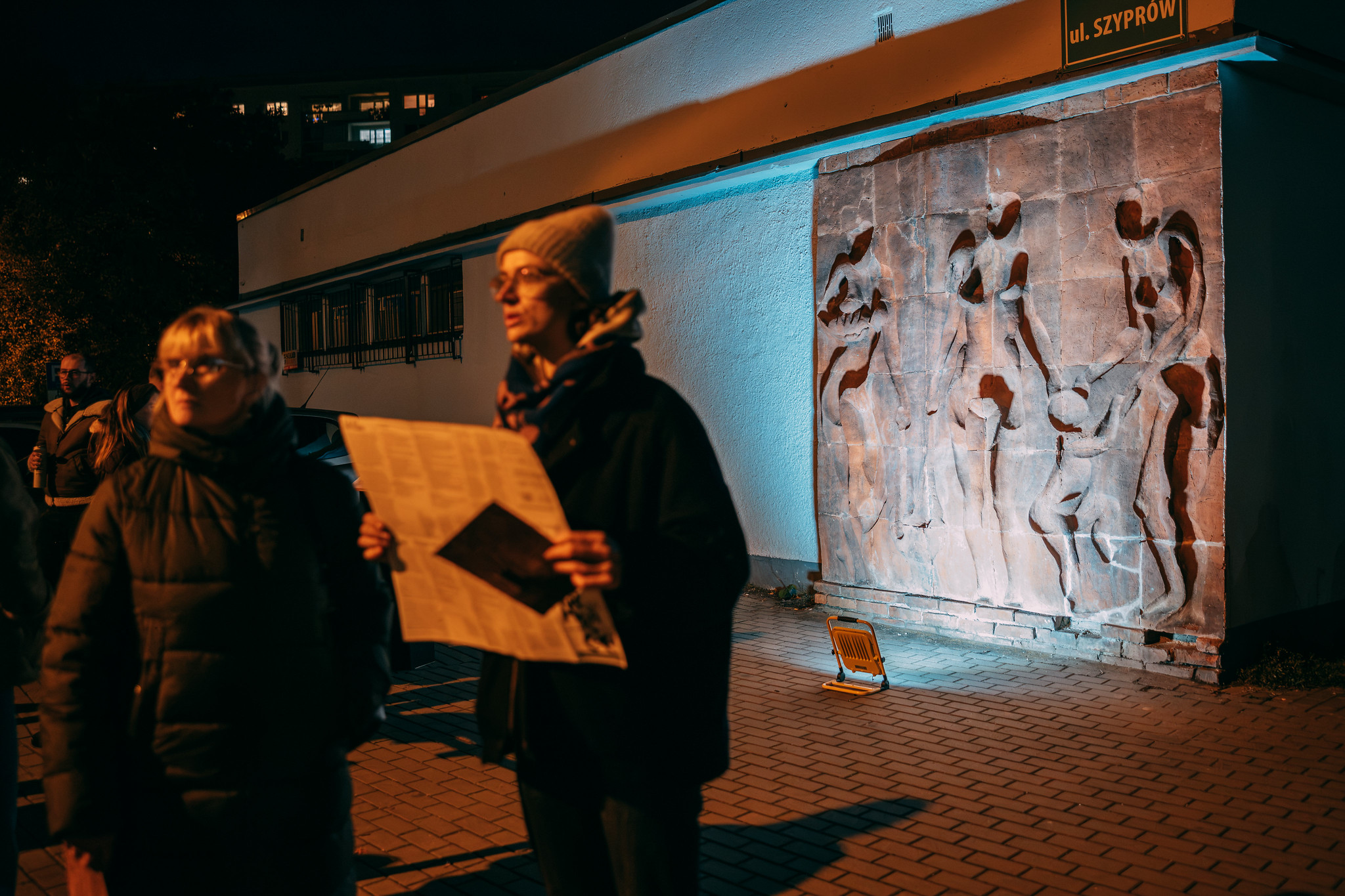
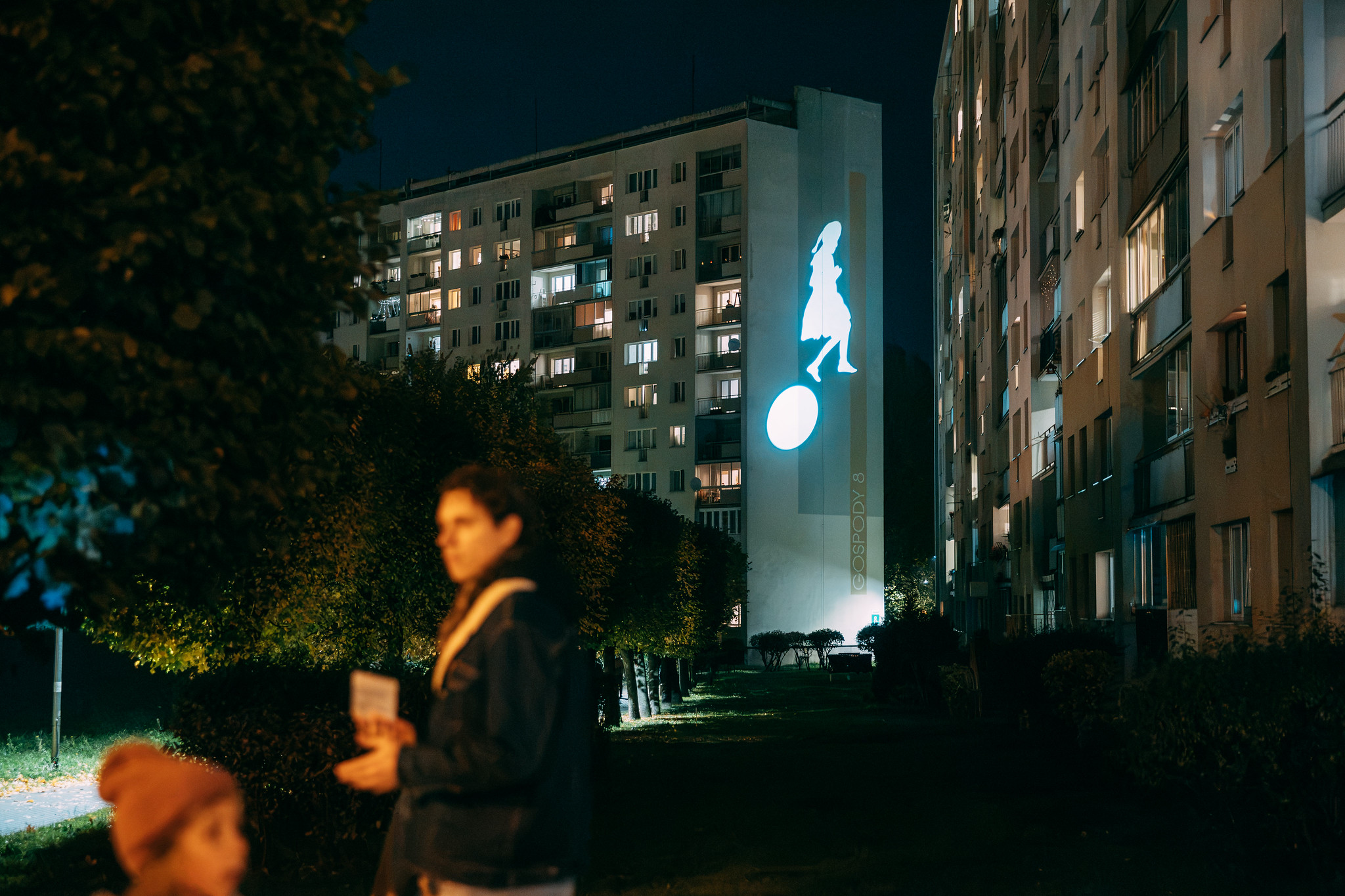
Another ode to urban childhood is Maya Gordon’s installation Leap (2026). Displayed on a building’s massive wall, a small girl bravely jumps off a sphere. The projected memory of that courage takes an added force against the high-rise canvas. The work complicates the idea of childhood as carefree, suggesting instead that public spaces play vital roles as sites of experimentation and growth, of fear and bravery.
What softens the concrete?
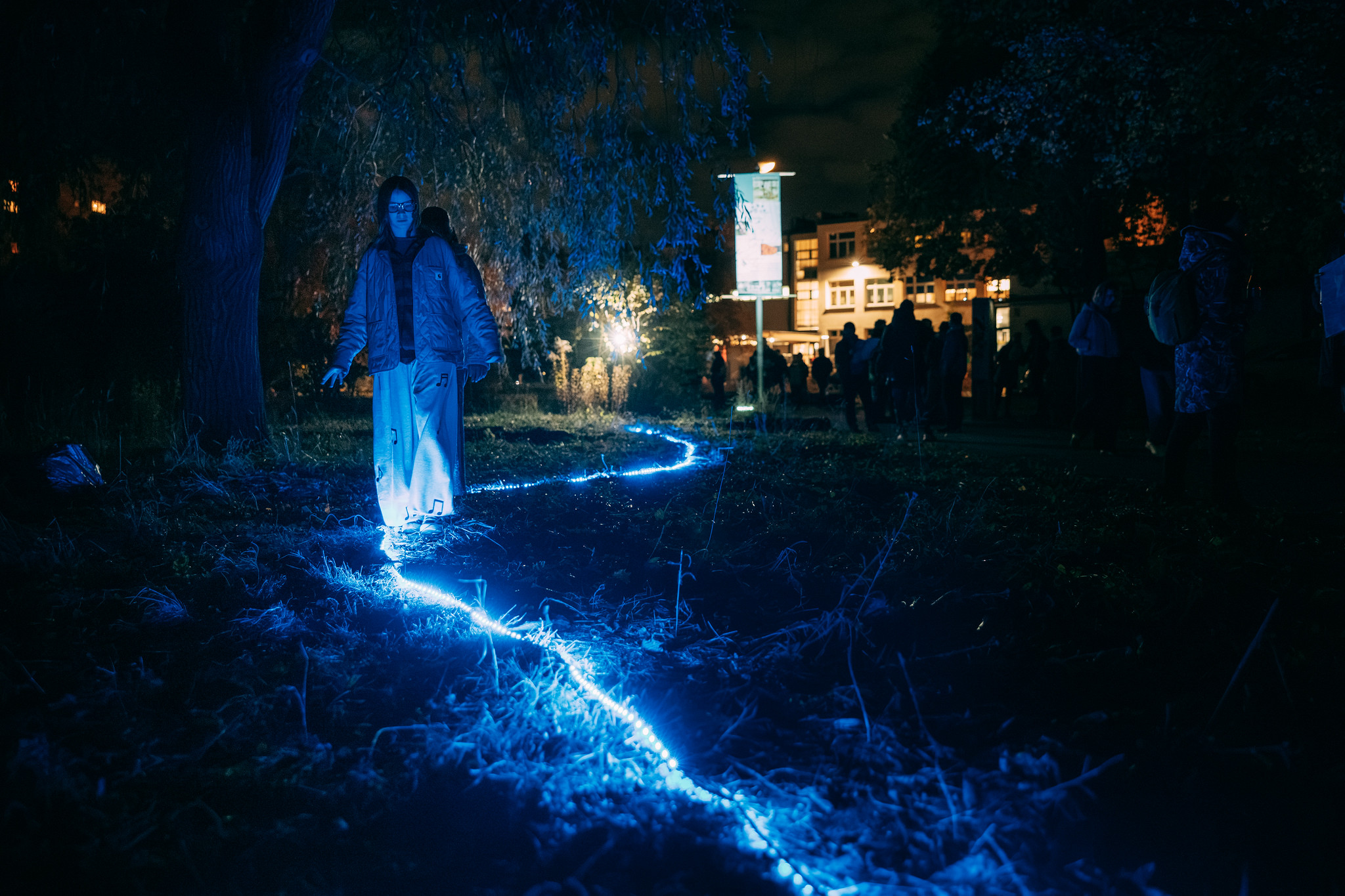
ŻWJT does not live by blocks alone. Set in a depression left by a former pond in Przymorze Park, Natan Kryszk’s sound installation Frog and Gull (2026) invites the inhabitants of creeks and skies to co-write the neighbourhood’s story. Closeness and freedom, tranquillity and chaos, onwards and upwards: these unlikely protagonists, so different in their ways of life, tell a story of transience. Less than a century ago, wildlife thrived here. Kryszk’s opera evokes a past we might romanticise but need not forget.
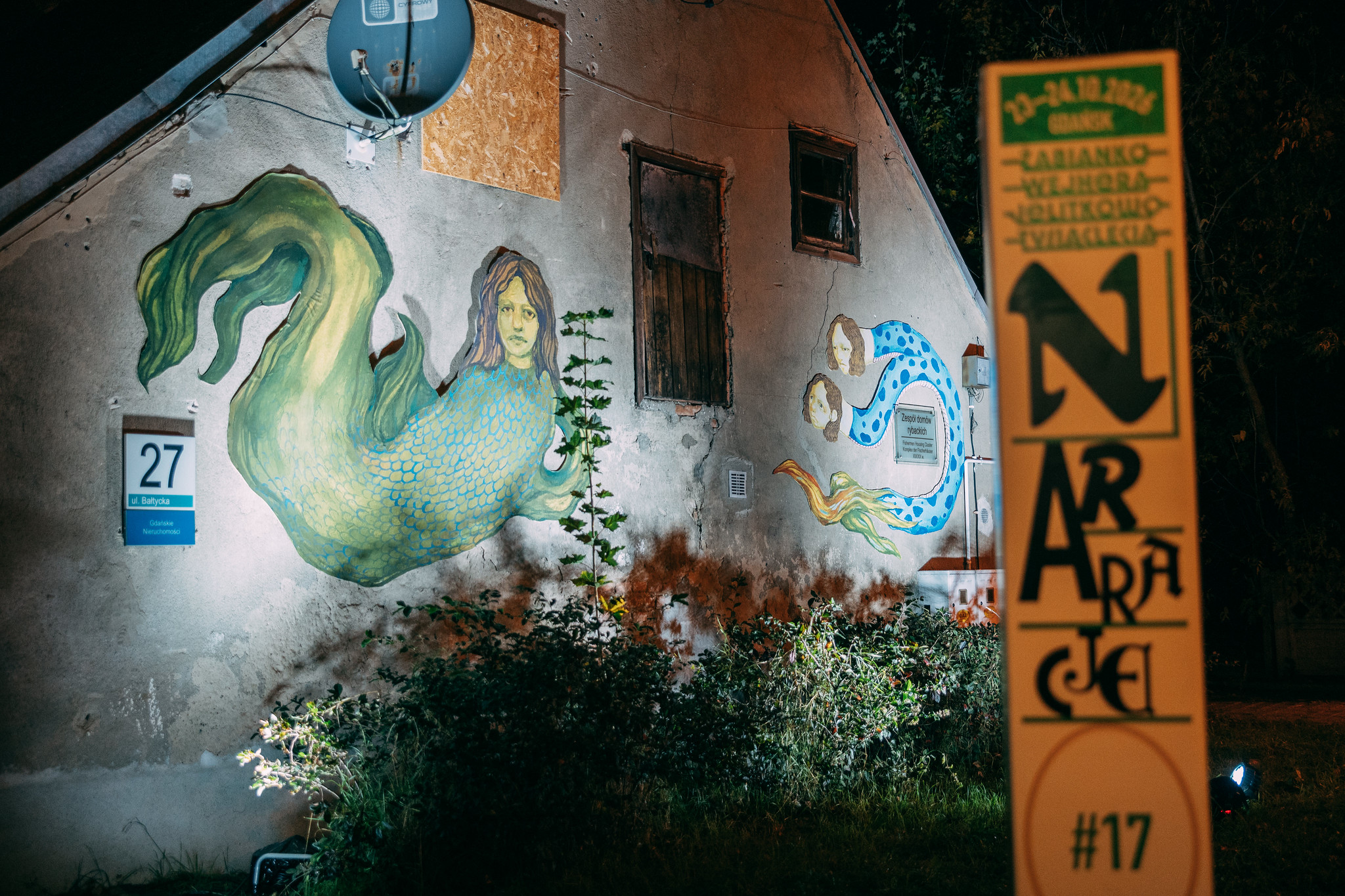
Further down the route, where sea breeze already embraces the walkers, stand fishermen’s huts. Anna Laskowska’s Arrivals (2026) adorns the traditional Kashubian cottages with mythical sea creatures printed on fabric. Female heads with mournful expressions emerge from fishy, reptilian bodies. The material catches the wind, bringing the creatures into gentle motion. Imagined to inhabit the Baltic waters, these monsters draw on regional folk legends, their outlandish forms at once imposing and whimsical.
What makes a neighbourhood worth living in is what happens between the buildings.
Walking the festival’s route, focused on glimpses of art and joy lurking from the blocks’ nooks, one fears to imagine the prefabricated architectures’ landscape without them. A city must grow and change, but ŻWJT’s enduring character, preserved in its public spaces and the memories of its inhabitants, suggests that development need not come at the expense of local histories and aesthetic ambition. What makes a neighbourhood worth living in is what happens between the buildings.
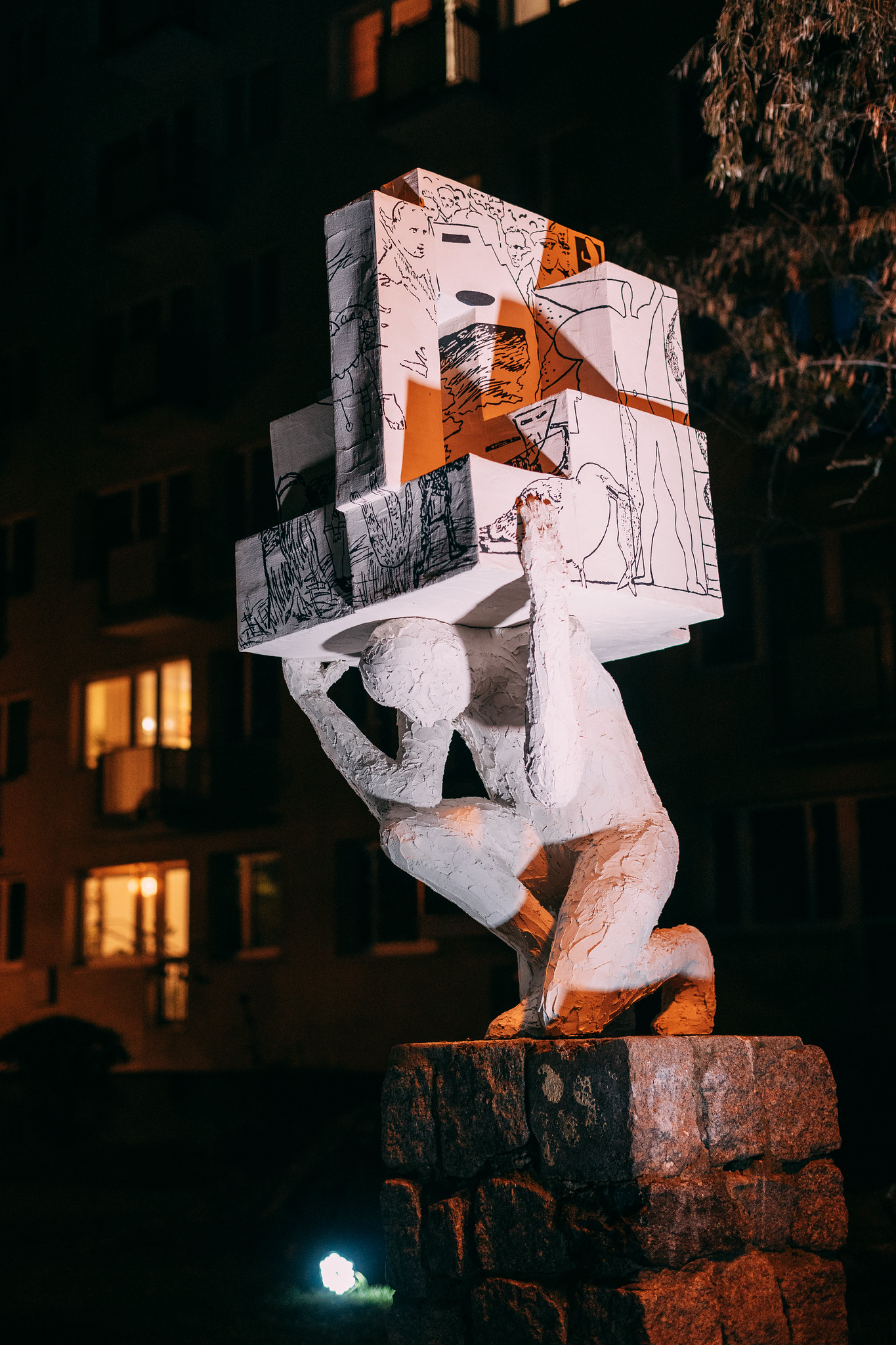
The event’s contributing artists were: Tomek Bersz, Mikołaj Biberstein-Starowieyski, Tymek Bryndal, Mikołaj Chylak, Maya Gordon, Dominik Jałowiński, Pani Jurek (Magda Jurek, Michał Borecki), Magda Komar, Jacek Krenz, Natan Kryszk, Anna Laskowska, Monika Orpik, Ada Adu Rączka, Anastasia Rydlevskaya, Dorota Walentynowicz, Edward Roguszczak and Swietlana Zerling.