

Excess, access and scarcity come together in a provocative reflection on the overwhelming conditions of modern existence in A Culture of Excess [Nadmiarowa rzeczywistość], an exhibition organised at Galeria XX1 by the Mazovia Institute of Culture [Mazowiecki Instytut Kultury] in collaboration with the Faculty of Media Art of the Academy of Fine Arts in Warsaw.
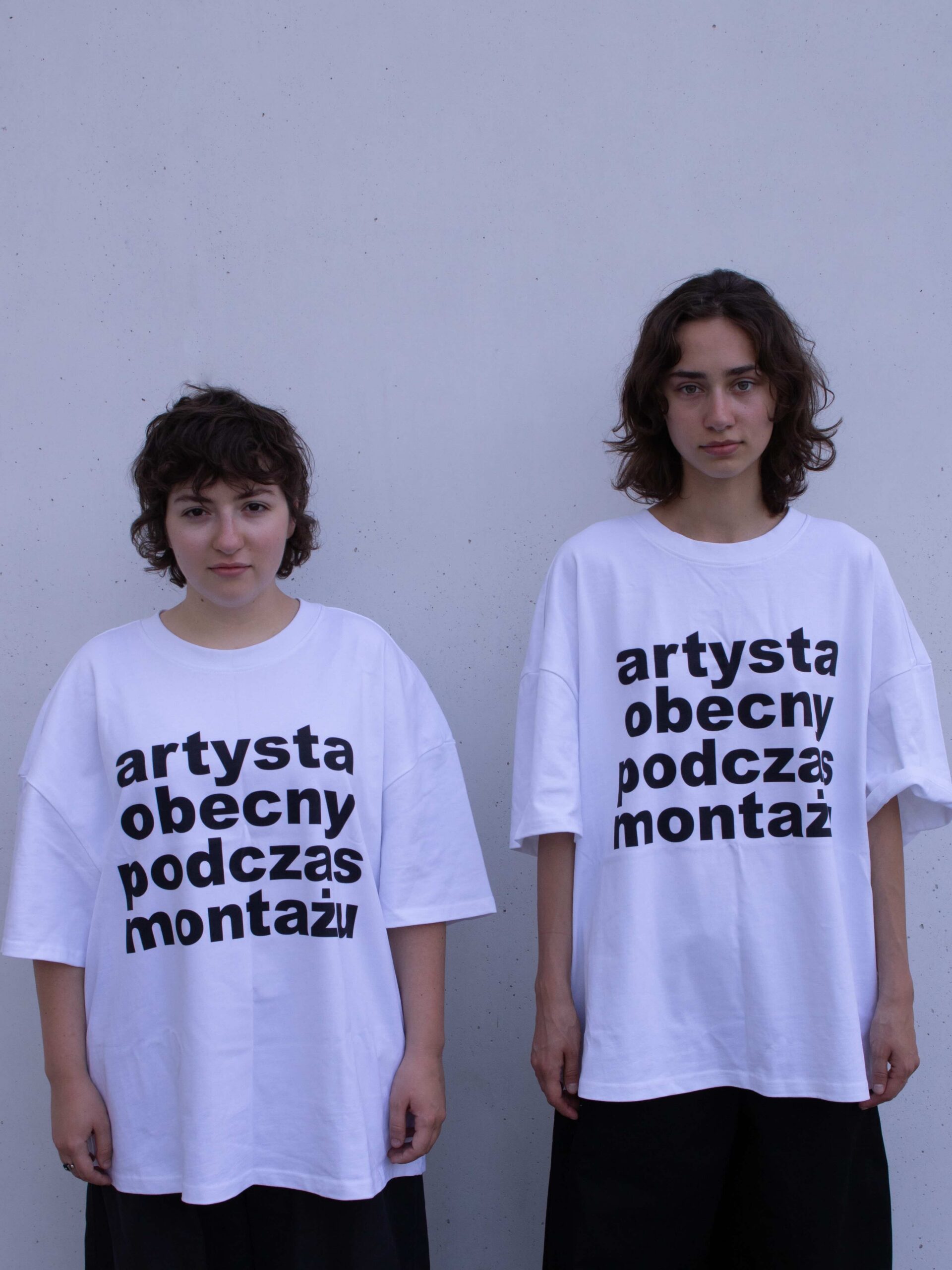
On view until 3 October 2026, the exhibition is divided into three distinct yet interconnected parts, encompassing the work of 10 artists and spanning various art forms, including 3D prints, installations, virtual reality (VR), animation and performance. The first part, running from 21 August until 10 September, explores the tensions between the individual and the collective, nature and society. The second part, a performance staged by Alicja Rytowska and Aleksandra Wierucka, centres around the unseen dimensions of art- and exhibition-making. The third and final part, set to open on 17 September and run until 3 October, shifts the focus towards patriarchal norms, queer identities, immortality and more-than-human existence.
The show assumes the idea of excess – and all its different manifestations – as its starting point. It captures the essence of the infrastructures that govern the world, exposing their unwavering impacts on people’s perception of themselves and everything that surrounds them. The excess at the heart of the show, once seen as the modern world’s greatest asset, emerges as the cause of its demise instead.
Chimeric Identities, Collective Selves
The exhibition’s central axis is the individual and their incessant performance of identity. The world we live in necessitates a constant adaptation in the search for acceptance and belonging. The urge to fit in often takes precedence over any other needs and desires. Ironically, as a result, the individual can no longer truly be individual and authentic in a world that moves from one trend to another at an astonishing pace.
The world we live in necessitates a constant adaptation in the search for acceptance and belonging. The urge to fit in often takes precedence over any other needs and desires.
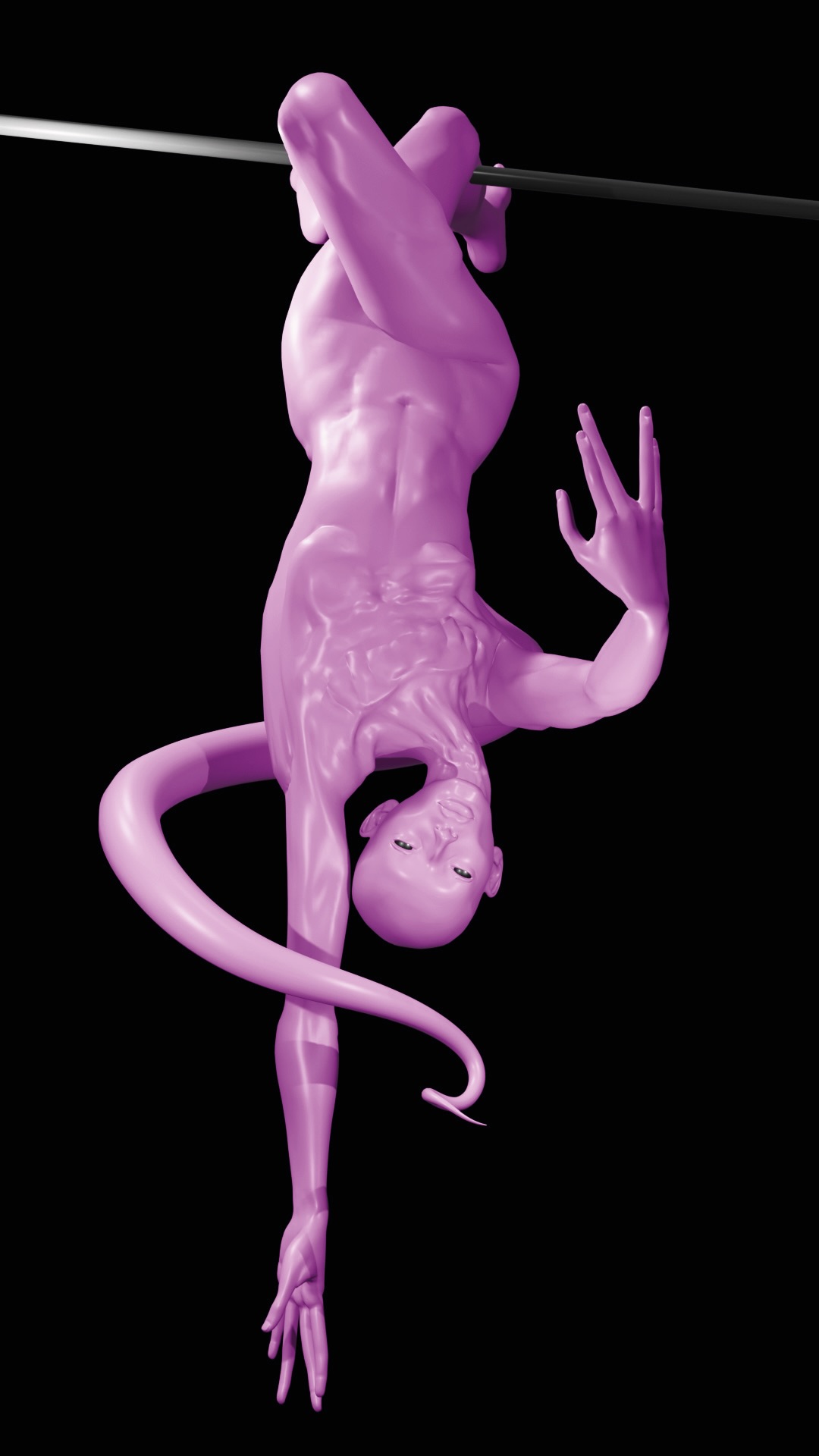
Weronika Płatek explores this very tension in Undefined_002, an installation that lures viewers in with its hot-pink body suspended in the air. The figure bears several symbols that have, in one way or another, defined the last decade: a Starbucks cup, a collectable Pokémon card, long and intricate press-on nails. Through this amalgamation of trends that have come and gone, the artist captures the fluidity of identity, its performative nature and the multitude of external forces that give it shape. At the same time, she pointedly critiques overconsumption, exposing the clash between what we consider unrestrained freedom and the true reach of the capitalist system. Płatek points to one consequence of this difficult balancing act – changing like a chameleon, the sculpted figure exhausts both its body and mind.
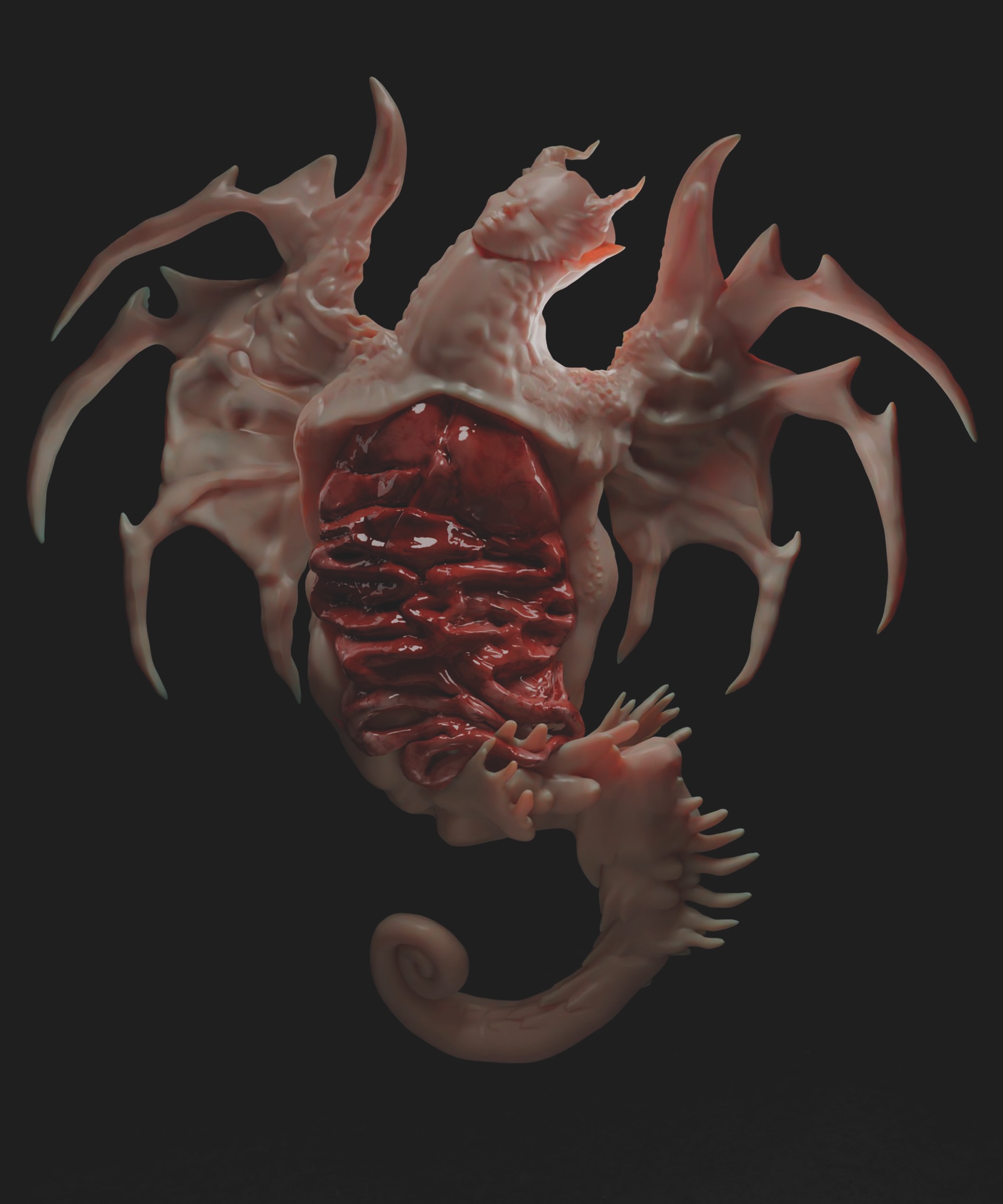
In parallel to Płatek’s chameleon, another curious creature that appears in the show is Alesia Maisei’s Chimera – a mysterious dragon-like figure with a delicate, serene face that stands in stark contrast to the viscera that tries to escape its stomach. With the help of the peculiar being, Maisei questions the fine line between human and more-than-human existence, prodding at the body’s ability to regenerate. Just as the mythical chimera refers to a beast composed of fragments of several animal species, the sculpture circles back to the fusion of all the different identities – past, present and future – contained within one individual.
The exhibition thus seamlessly moves between the individual and the collective. This dual focus is perhaps best captured through Nina Tabor’s piece, The Human Dollification Project [Projekt Lalkazacji Ludzkości]. Through massive disjointed doll fragments spread around the gallery space, the artist comments on the loss of identity that results from becoming part of a greater whole. Getting lost – or, when seen from another perspective, finding one’s place – in the collective at once brings peace and threatens with the absolute annihilation of personal agency and authenticity.

History in Progress?
Apart from capturing the everyday realities of overconsumption, identity-making and life within social structures, the titular excess similarly refers to other forces that have dominated the world in recent decades, such as technology and artificial intelligence. The technological oversaturation of our daily lives is juxtaposed with the natural environment and the relative simplicity of life in the past, when it wasn’t yet continuously disrupted by the constant overflow of stimuli and information.
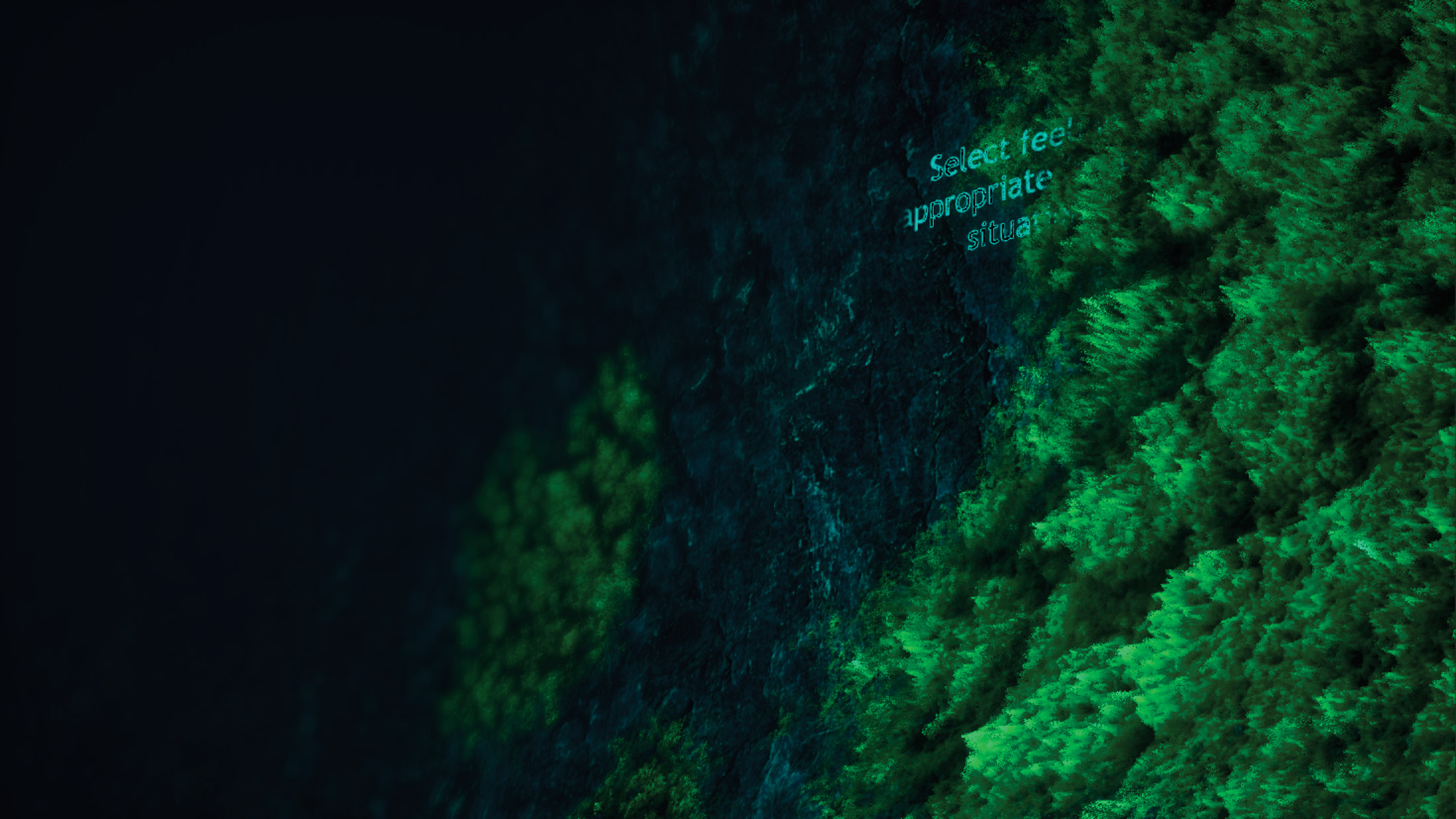
In I’m Not a Robot [Nie jestem robotem], Magdalena Borzęcka explores this harsh contrast through a VR world that (re)centres the individual, their emotions, decisions and needs. By presenting the viewers with agency to move through the installation at their own pace and perform only the actions they wish to perform, she returns to the individual in a world that has increasingly become mass-centred. The world she created is lush, earthy and perhaps a bit mystical – the viewers move through a virtual maze built from twigs, branches and rock formations. They’re surrounded by moss and greenery that bears secrets in the form of questions one has to discover over the course of the immersive experience. These hidden prompts hint at the unbounded yet sometimes forgotten decision-making power every person possesses. Symbolically, the maze might thus constitute a long-lost path to its reclamation.
The technological oversaturation of our daily lives is juxtaposed with the natural environment and the relative simplicity of life in the past, when it wasn’t yet continuously disrupted by the constant overflow of stimuli and information.
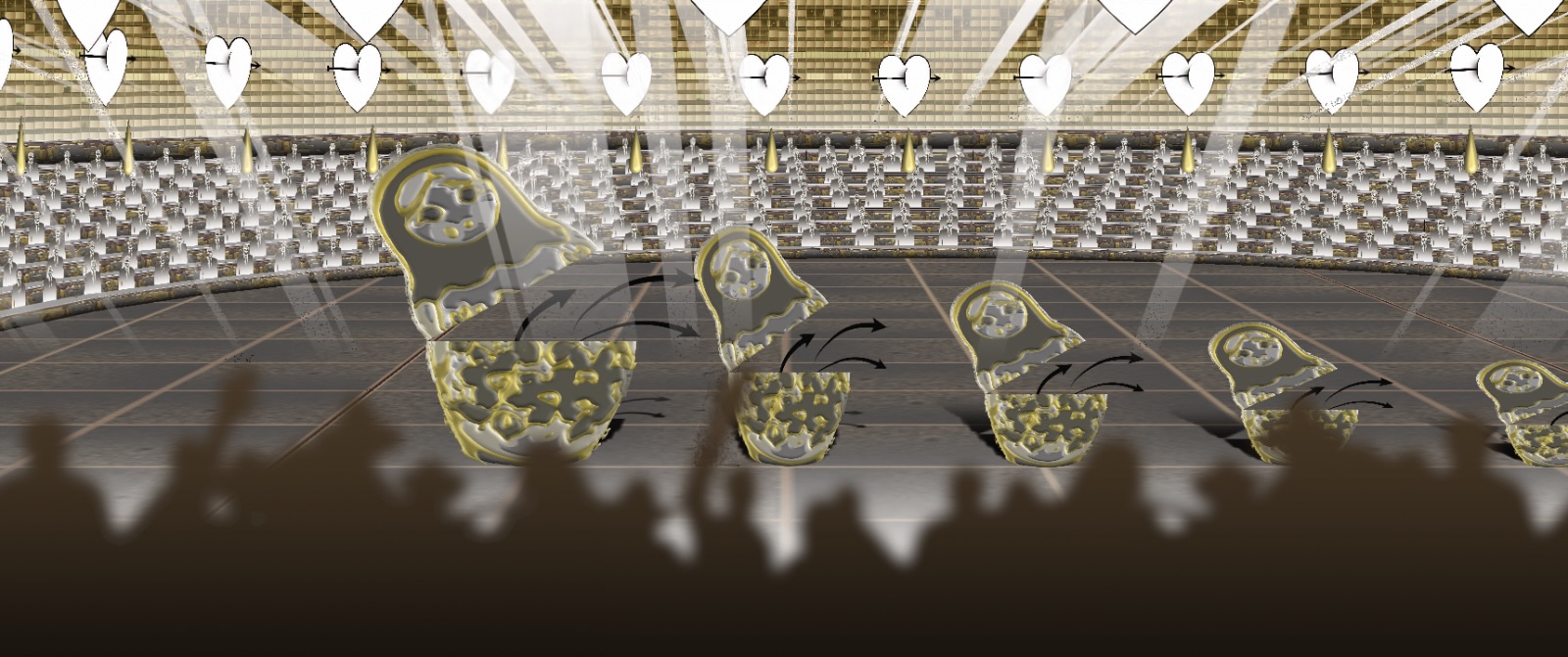
Borys Oleński adds another dimension to these considerations through his multilayered digital reflection on history, presented in The Angel of History Holds His Head [Anioł historii łapie się za głowę]. The animation’s maximalist composition mirrors the language of the internet, once again speaking to the oftentimes confusing excess of information it contains. Oleński instrumentalises this imagery to comment on history’s tendency to repeat itself, and the excess of violence, conflict and inequality that it has entailed time and time again. Inspired by the basic premises of Karl Marx’s historical materialism, which supposes that class struggle is the main driver of socio-economic change, the artist also reveals a fundamental paradox of today’s world – the excess that so many are overwhelmed by, others have absolutely no access to. History is a never-ending vicious loop, an inescapable process that can perhaps be predicted but never stopped.
Resistance Through Reimagination
The show takes these socio-economic considerations even further in its third part, set to open on 17 September. Marcin Zonenberg returns to them in Core Stability: Repetitive Aligning, a kinetic installation that treats stereotypical gender roles as its starting point. The piece is meant to evoke a sense of restriction and suffocation, both of which are felt in the face of gendered expectations. Inspired by an orthopaedic corset, the installation subverts the image of traditional masculinity, centring men’s emotions and pointing to the fragility of human life, often disregarded in an age that thrives on exploitation, optimal performance and maximum profitability.

Similarly to Zonenberg, Józef Joachimiak puts a question mark over gender roles in Xcalibur, a video game that reimagines the adventures of the mythical King Arthur. Merlin is reinterpreted as the queer guide Marlyn; the sword no longer signifies the fulfilment of Arthur’s destiny but rather a moment of hesitation, and the armour does not provide protection in battle, but a hiding place instead. Joachimiak emphasises the courage it takes to find oneself, pushing aside traditional notions of bravery and strength associated with masculinity.
Reflecting several main themes of the exhibition, the piece enters into dialogue with Płatek’s and Tabor’s works. It not only multiplies the message they convey, but also hints at, or perhaps even provides, alternative ways of discovering one’s true self in the increasingly homogenous collective. It counters society’s prescriptive forces, demonstrating that striving for authenticity goes a long way.
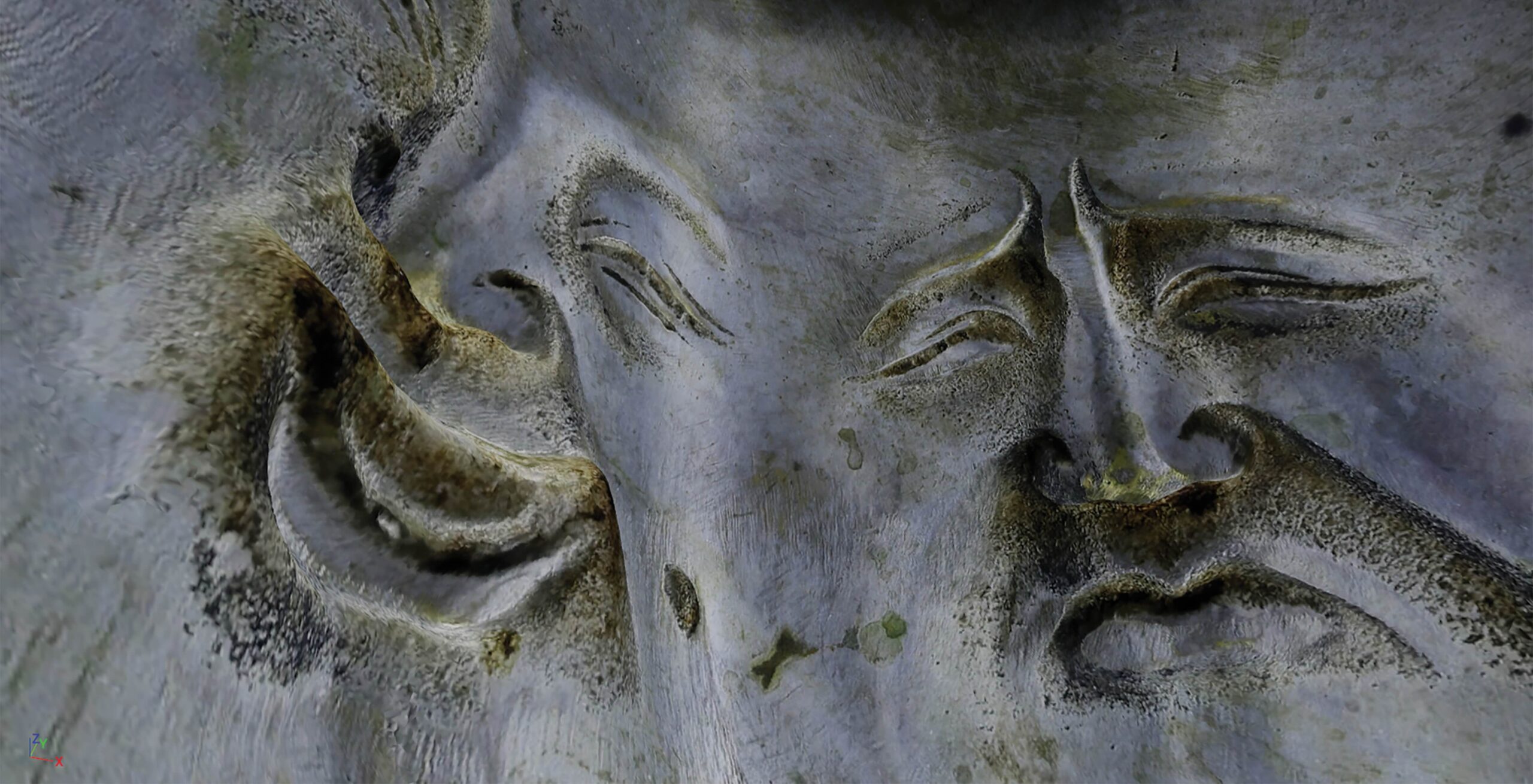
All the axes of the show find their culmination in Patrycja Wysokińska’s The Ritual of Immortality [Rytuał nieśmiertelności], inspired by the story of Baal – the ancient Semitic god of rain and storm, associated with a myth in which he died and was reborn every year. Prompted by this depiction of immortality, Wysokińska created a virtual world that relies on the joint experiences of death and rebirth; a world in which they’re two phases of the same process. The VR piece undermines existence as we know it in the first place, questions the meaning of identity-building and evokes the sense of excess through its invention of a life that never ends.
The excess that overflows from and is simultaneously countered by the exhibition takes on many different forms: it manifests itself both as an overpowering presence and a paralysing lack, as a line that ruthlessly divides and a force that drives the mass-centrism of the present day. Grappling with the far-reaching effects of this excess in their own daily lives, the artists on show prove that it can – and, in fact, should – be countered.
They approach the exhibition’s main theme through the prism of their own experiences, which gives the show its edge. The unique angle each artist brings to the table – be it their relationship with media, beauty standards and gendered expectations, personal histories or deep-seated beliefs – results in a collection of perspectives that at once complement and converse with one another.
The excess that overflows from and is simultaneously countered by the exhibition takes on many different forms: it manifests itself both as an overpowering presence and a paralysing lack, as a line that ruthlessly divides and a force that drives the mass-centrism of the present day.
What is perhaps the most fascinating is that these artists utilise excess to counter it. All the pieces taken together evoke an atmosphere of excess, but separately they, too, instrumentalise it in various ways – through excessive form, aesthetics, experiences or storytelling – to the effect of astonishing the viewer and prompting critical reflection within them.
Interestingly, the excess not only manifests itself in the exhibited pieces but has also left its mark on the process of making this show. Not all the artworks could fit in the gallery space, prompting the exhibition to be divided into three parts. The notion of excess has thus inspired and shaped the exhibition from start to finish; it inhabits the gallery space and haunts artists and audiences alike. It truly is inescapable, which makes the pieces on display all the more powerful and relevant.
Supported by Mazowiecki Instytut Kultury