



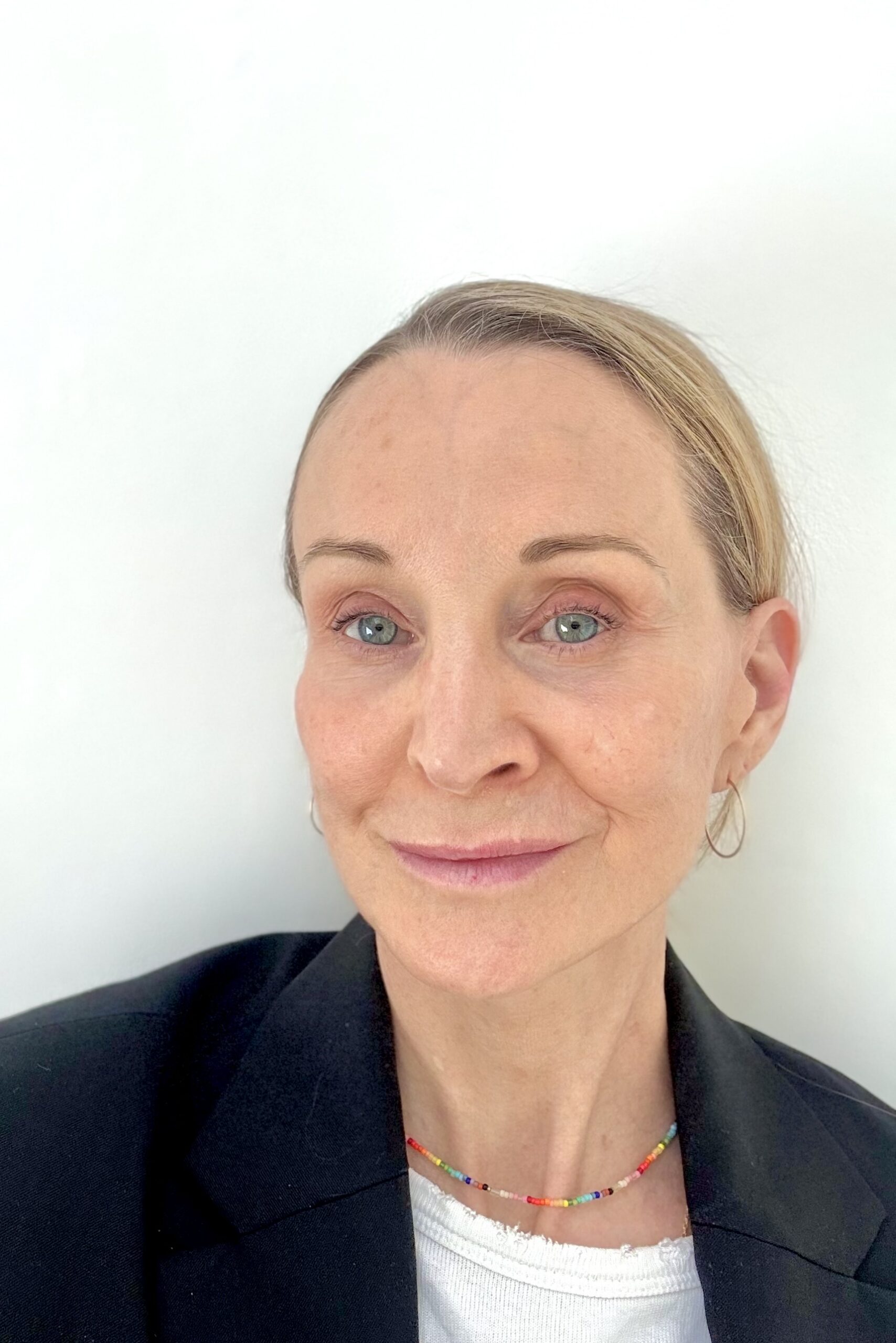
Karen Page is a London-based contemporary artist whose practice begins with the visual material that surrounds us: advertisements, magazine imagery, popular culture, representations of women and the language used to describe them. She collects, edits and reconfigures these materials to examine how cultural ideas are repeated until they become familiar, and how familiarity can make them difficult to question. Her work is driven by curiosity about where our perceptions and expectations come from — and about what happens when the codes behind them are made visible.
Page takes things that were designed to persuade, entertain or pass unnoticed and places them under closer scrutiny. A single advertisement can be consumed in seconds; hundreds of similar images, brought together and viewed as a body of evidence, begin to reveal a pattern. Her practice sits within that moment of recognition, where something once considered ordinary starts to look constructed.
Page takes things that were designed to persuade, entertain or pass unnoticed and places them under closer scrutiny.
This approach has become increasingly focused on the relationship between representation and the body. Her recent projects consider how repeated cultural messages can move from the outside world into private experience, shaping the ways people understand themselves. It is a concern that runs through Wallpaper Of Our Culture (2025) and Crushed By The Weight Of Expectations (2026), two works that approach the same problem from opposite directions: one looks at the surrounding visual culture; the other asks what that culture can place upon us.
The Wallpaper We Stop Seeing
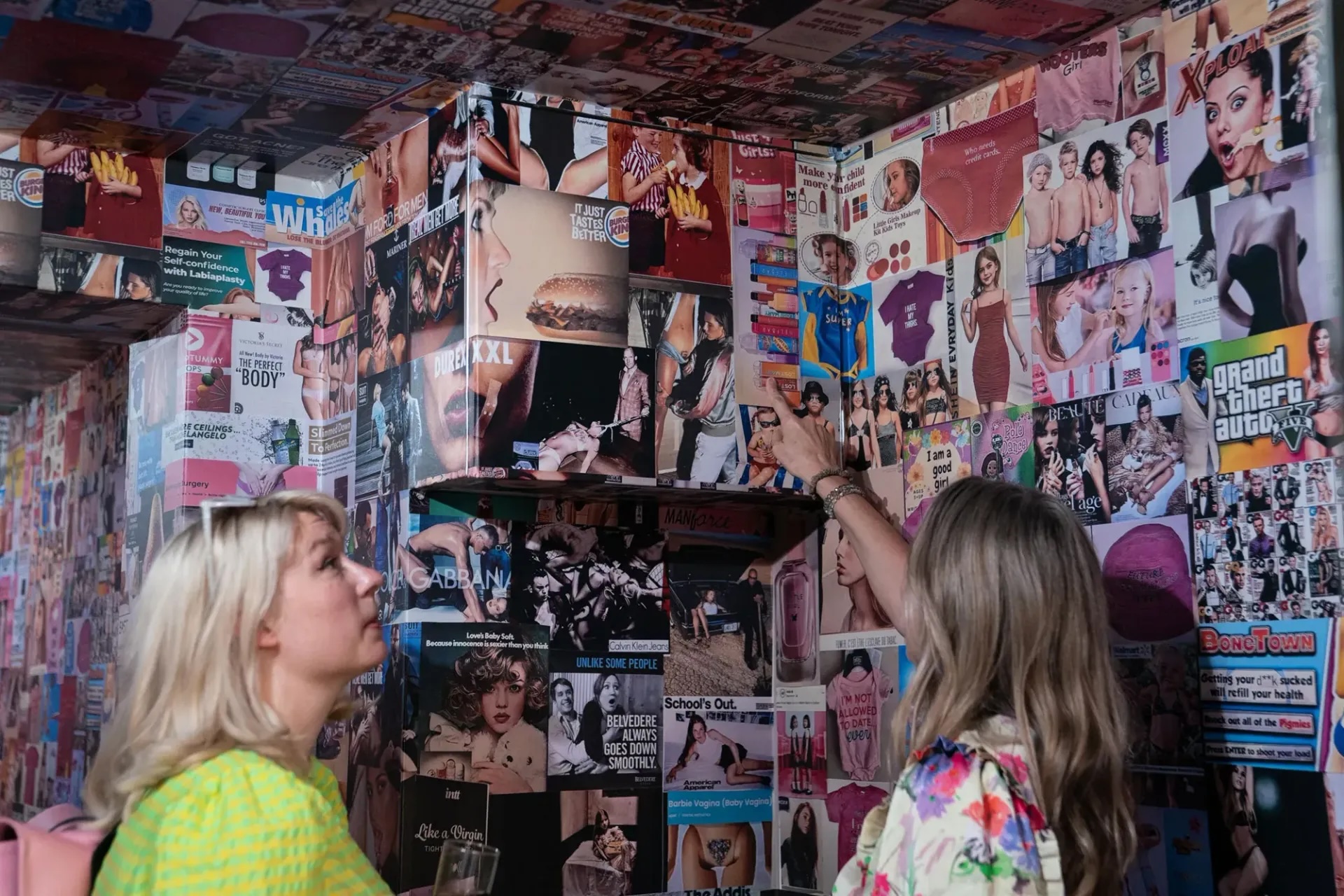
In Wallpaper Of Our Culture, presented at 309 Bethnal Green Road in London in 2025, Page turned two years of collecting uncensored published imagery into an immersive installation. The material spans seven decades, bringing together representations that have circulated through popular culture and exposing the persistence of particular ideas about gender, identity and the female body.
The title is deceptively ordinary. Wallpaper is designed to occupy a room without necessarily commanding attention. It becomes part of the background, something seen without being consciously looked at. Page applies this condition to popular imagery. Advertisements and media representations surround us in much the same way: encountered repeatedly, absorbed quickly and rarely considered as a collective visual language. By gathering these images together, Page interrupts that process.
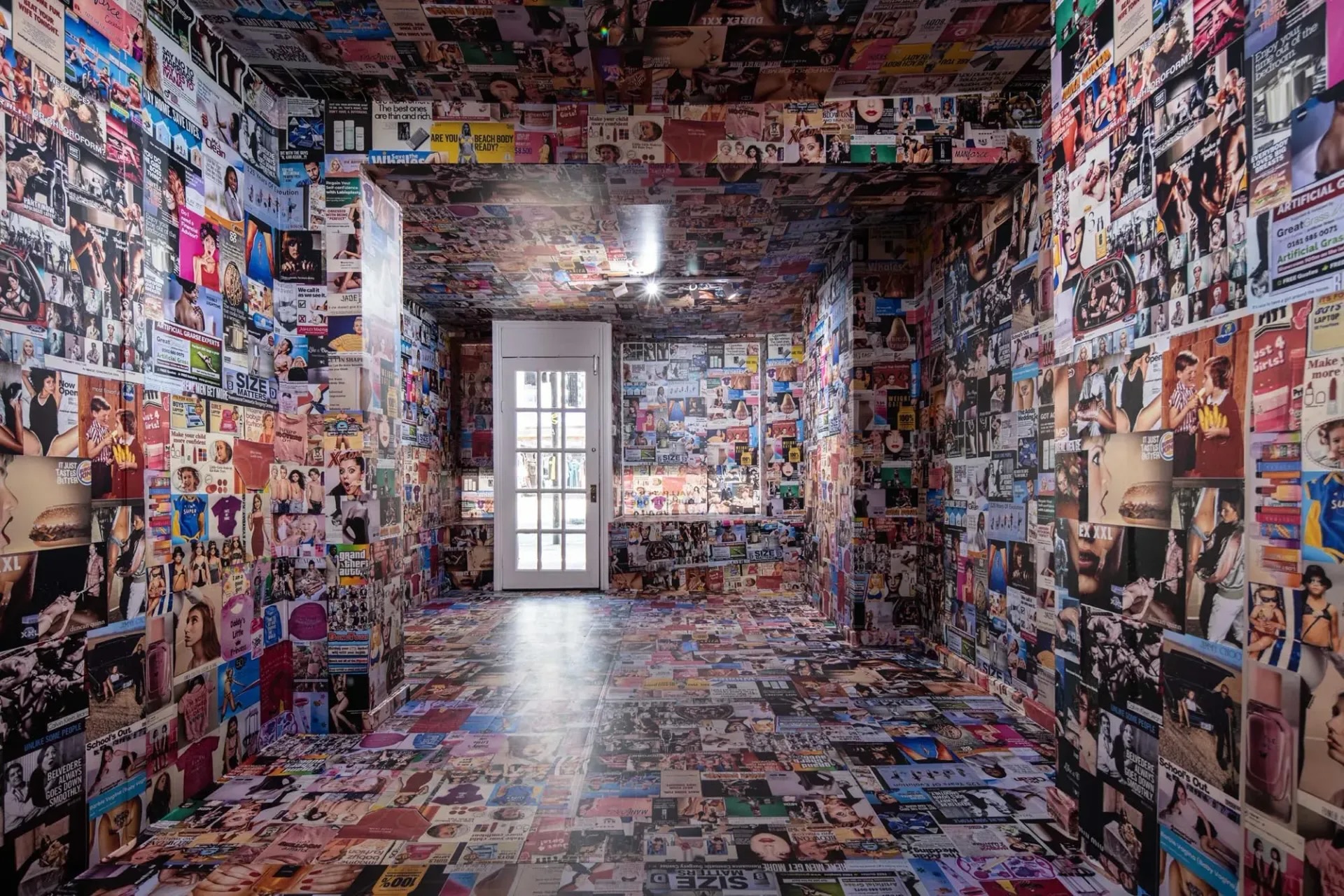
This accumulation enables her to expose repetition — and repetition exposes construction. What initially seems like a collection of isolated images begins to resemble a system that teaches people how to look at themselves and each other. It is more than an archive of historical imagery — the artist is interested in what it tells us about the present.
Seven decades create enough distance to make certain attitudes recognisable as dated. Yet that distance also creates an uncomfortable realisation: many of the visual codes have not disappeared. They have changed format, adapted to new technologies and found new platforms, but the underlying expectations remain intact. The exhibition asks us to consider the difference between change and disappearance. A visual language becoming less obvious is no less influential.
When the Image Becomes the Voice
Page is interested in what happens when the visual language becomes internalised. The repeated image of the perfected body, the successful woman, the desirable woman, the endlessly youthful woman does not remain confined to advertising or media. Instead, it becomes a standard against which actual bodies and lives are measured. The external image begins to acquire an internal voice.
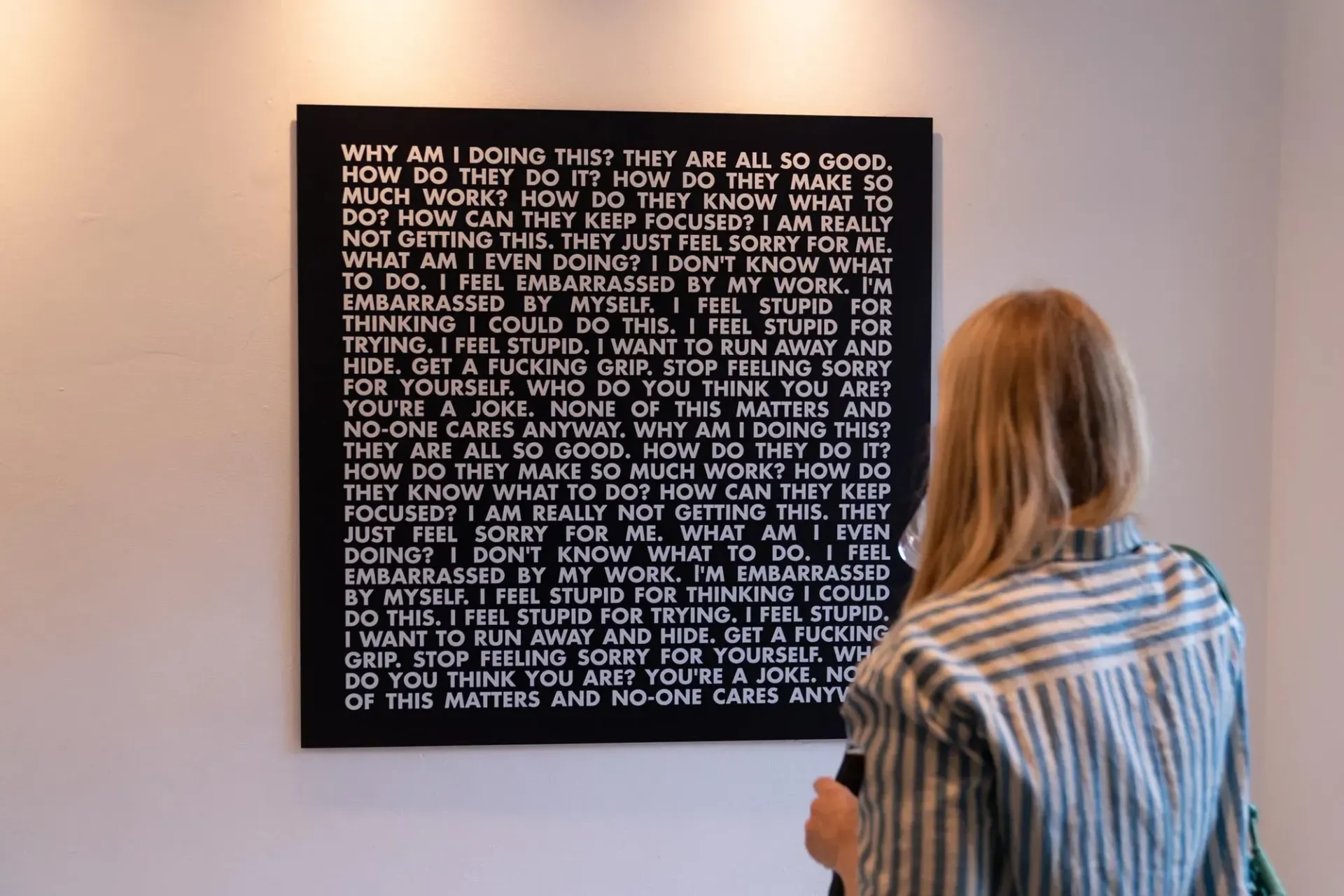
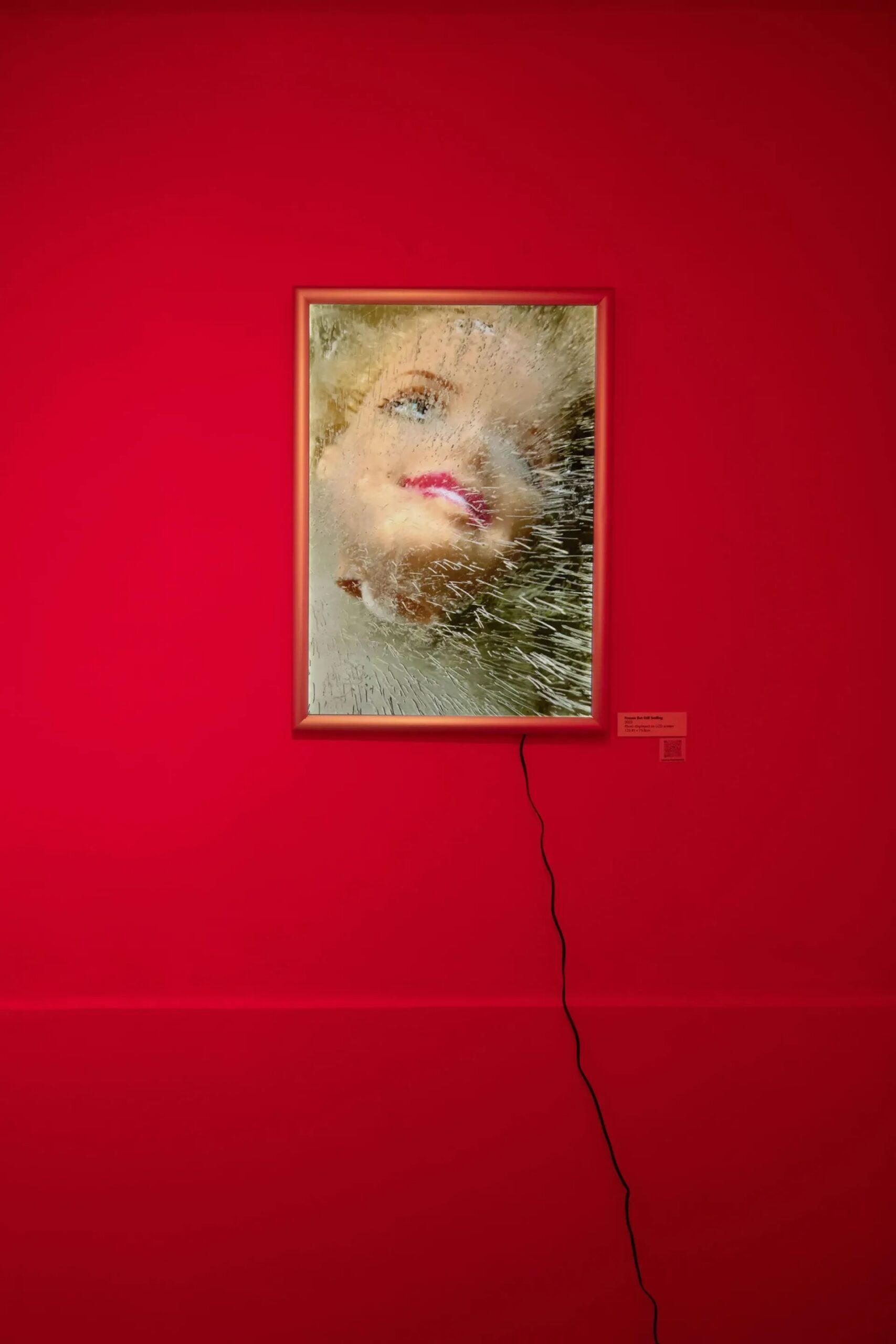
This movement from image to thought is important within Page’s wider practice. Works including The Cruel Voice Inside My Head (2024), Frozen But Still Smiling (2023) and the What I Can’t Say series (2024) consider the space between outward appearance and internal experience. A smile can conceal discomfort. Silence can contain what cannot be expressed. A voice that feels private can carry language learned elsewhere.
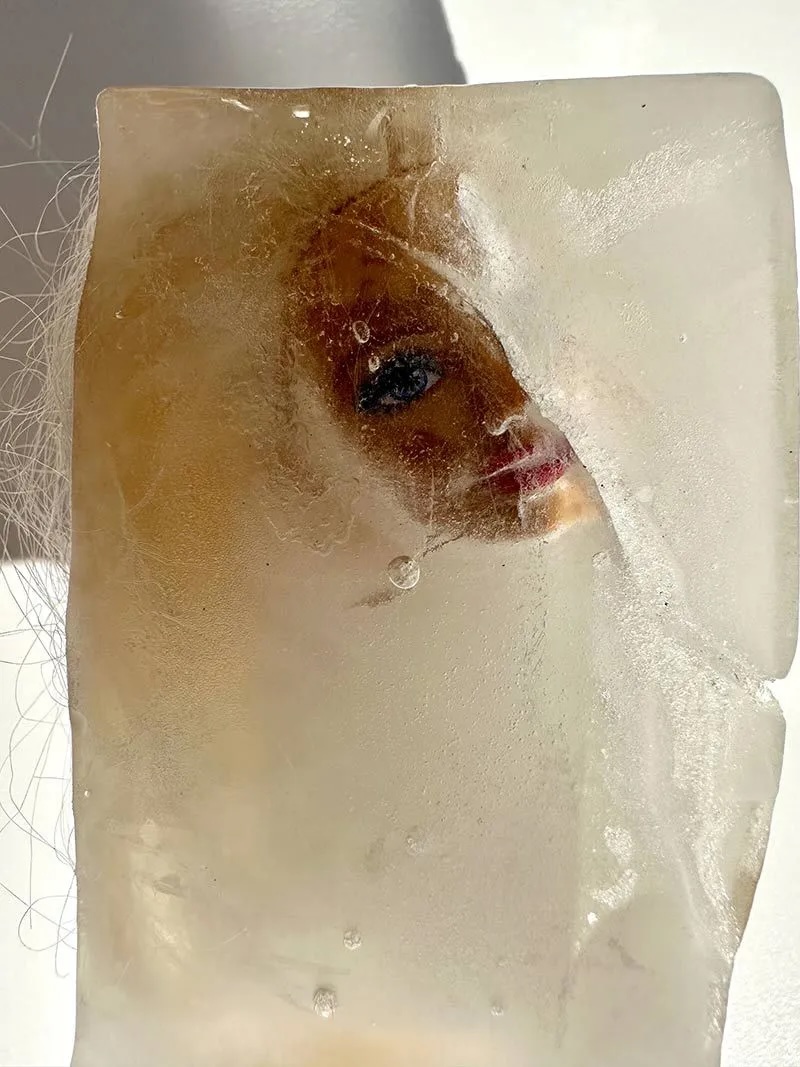
Page’s work therefore pays attention to the residue of representation: what remains after the advertisement has ended, after the magazine has been closed, after the screen has been switched off. The image disappears. The instruction remains.
This becomes particularly relevant when considering digital technology and AI. Page’s work questions whether new systems of image production can genuinely move beyond the cultural material from which they are trained. If an algorithm learns from an archive containing decades of gendered representation, the resulting images do not emerge from a cultural vacuum. Technology reproduces the visual assumptions already embedded within its source material. A new image, then, carries an old idea.
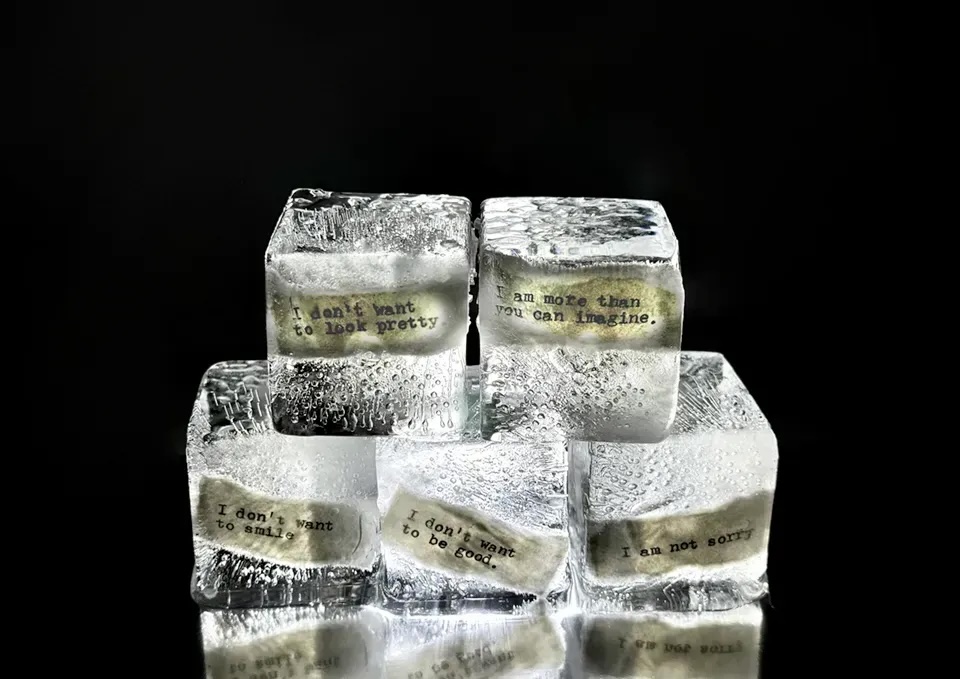
For Page, this makes the archive an active rather than historical concern. The imagery collected in Wallpaper Of Our Culture does not belong safely in the past. It continues to inform the visual environment in which contemporary identities are produced.
Page’s work therefore pays attention to the residue of representation: what remains after the advertisement has ended, after the magazine has been closed, after the screen has been switched off. The image disappears. The instruction remains
Expectation Made Physical
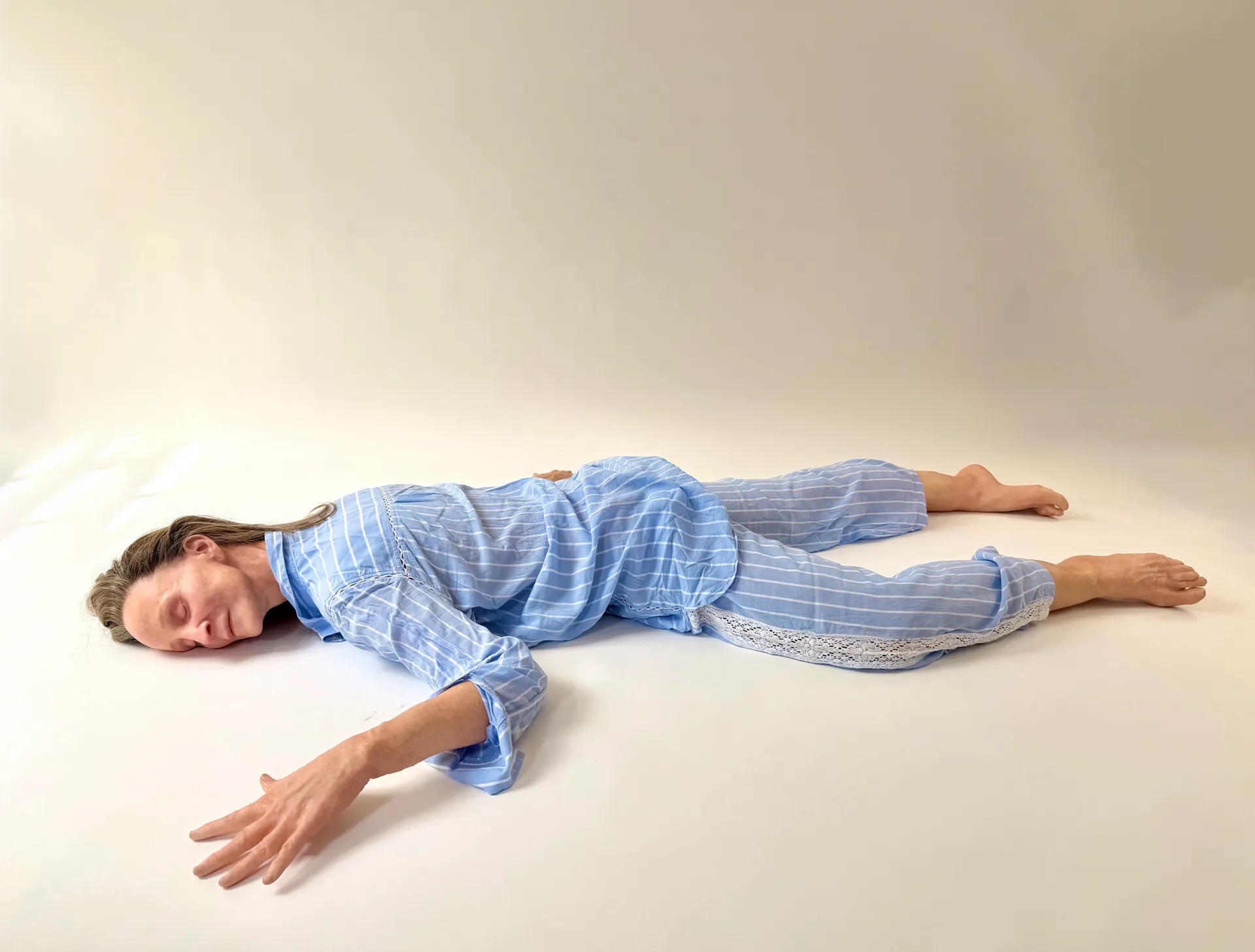
If Wallpaper Of Our Culture surrounds the viewer with the images through which cultural expectations are formed, Crushed By The Weight Of Expectations gives those expectations a physical body.
Presented as part of the Royal College of Art Graduate Show in 2026, the work takes the form of a hyper-realistic figure produced from the artist’s body cast. The sculpture addresses the pressures placed upon women and the accumulation of social, cultural and gendered expectations. Its impact comes partly from the simplicity of its premise: something intangible has been given weight.
Expectations usually have no measurable form. They arrive through comments, images, behaviours, assumptions and social conventions. They can be presented as advice, aspiration or common sense. Page removes that ambiguity by making the pressure physical. A woman stands beneath a burden that is not simply hers.

The body cast records the physical contours of an individual body while transforming that body into a wider representation. Thus, the sculpture occupies an uncertain space between portrait and symbol. It is recognisably human, but the pressure it carries belongs to a much larger social structure. The title is equally direct. Crushed By The Weight Of Expectations does not suggest that expectations are merely inconvenient. It describes their cumulative effect.
There is an important distinction here between being expected to succeed and being expected to embody a particular version of success. Women are often required to negotiate contradictory demands: to be ambitious but not intimidating, attractive but not consumed by appearance, caring but independent, confident but accommodating, successful but available. The contradictions themselves become part of the burden, and Page’s sculpture gives them a material presence.
From Wallpaper to Weight
Seen together, Wallpaper Of Our Culture and Crushed By The Weight Of Expectations form a conversation between environment and embodiment.
This relationship is what gives the two projects their force. Wallpaper Of Our Culture demonstrates that expectations are not produced in isolation. They are circulated through a visual culture that repeatedly establishes what is desirable. Crushed By The Weight Of Expectations then shifts from the collective to the individual, asking what happens when these messages begin to shape self-perception. The wallpaper becomes the weight.
The connection also reveals something important about Page’s methodology. She does not need to invent an entirely new visual language to make her argument. She works with existing material and changes its conditions: collects what has already been produced, rearranges it, enlarges it, gives it scale, places it beside other images or translates an intangible idea into sculpture. The critical act lies in the reconfiguration.
What Do We Carry That Was Never Ours?
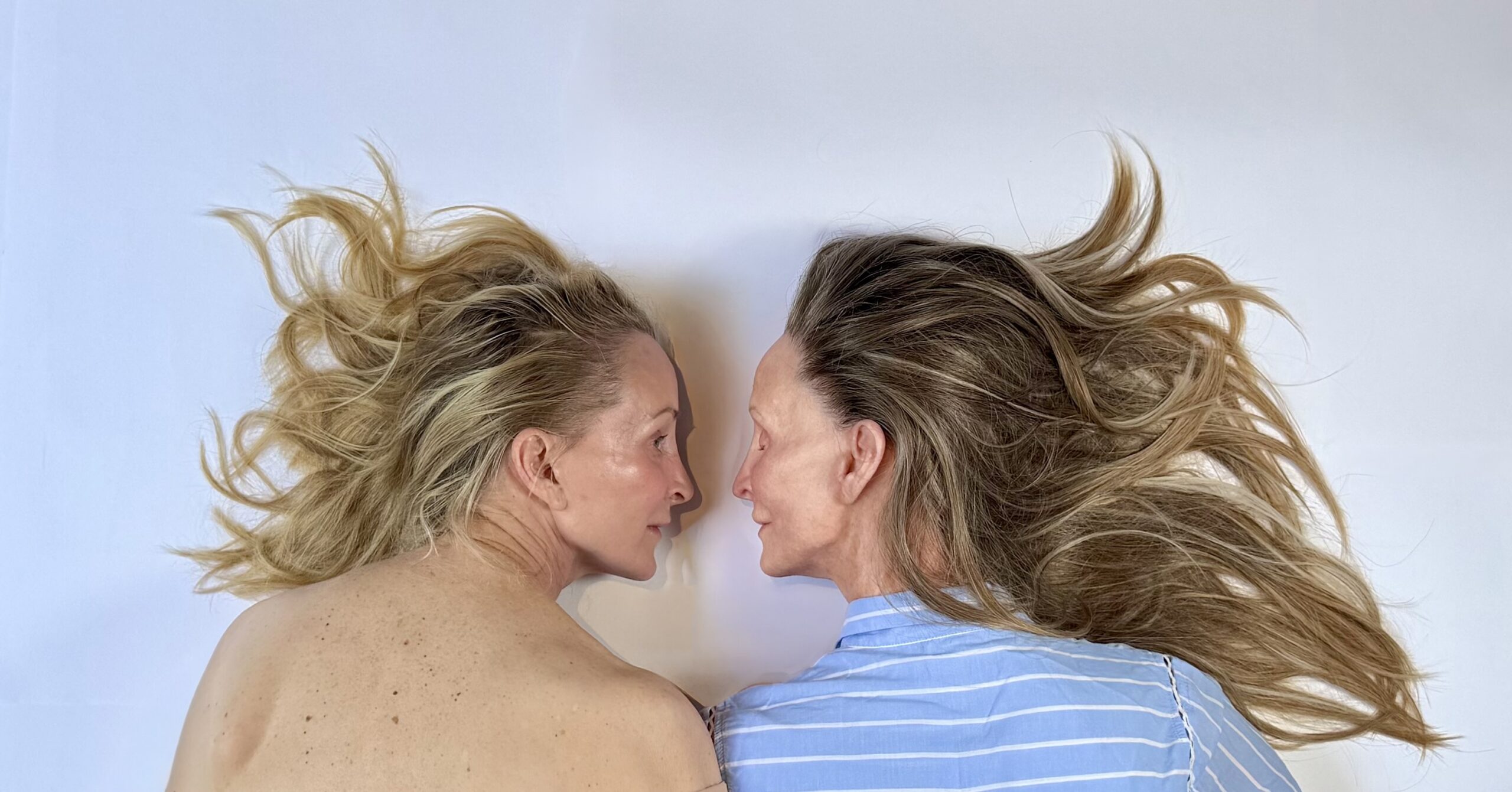
Page’s work ultimately asks the viewer to reconsider the supposedly personal. A preference may have a history. An insecurity may have a source. An ideal body may have been constructed long before we encountered it. Even the voice we use to judge ourselves can contain echoes of images, language and expectations that entered our lives without permission. This does not make individual experience less real. It makes its origins more complicated.
That complication is where Page’s work is strongest. She does not simply identify harmful images and ask us to reject them. She asks us to examine the conditions through which they acquire meaning in the first place. Her works ask the viewer to slow down. Look again at the image. Look again at the body. Look again at the expectation.
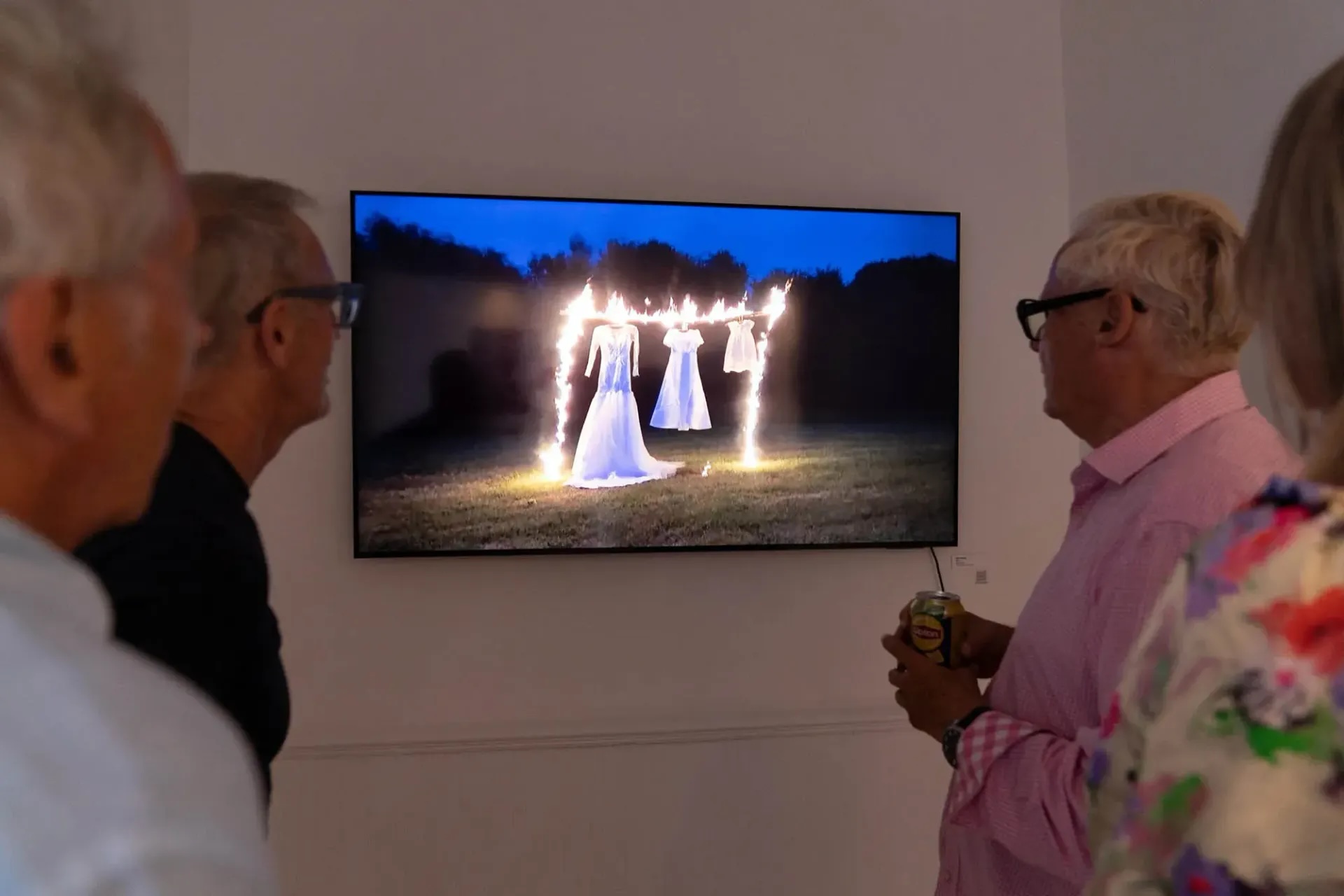
By bringing cultural imagery out of the background and giving social pressure a physical form, she makes visible the structures that are easiest to overlook when they are part of everyday life. The work does not offer an easy release from those structures. It offers something more useful: the opportunity to recognise them.
She does not simply identify harmful images and ask us to reject them. She asks us to examine the conditions through which they acquire meaning in the first place.
BIO:
Karen Page was born in the UK and raised in suburban London in the 1970s. She is a 2026 graduate of the Royal College of Art in London, with Crushed By The Weight Of Expectations as her graduate project. She also created an album cover and promotional image for UK-based band ‘Deadletter’.