






[polska wersja językowa poniżej]
A serious-looking man, about fifty years old, gazes from a colour photograph. Standing on a small wooden platform surrounded by lush greenery, dressed in a brown tweed jacket and navy blue trousers, holding a red flat cap in his hand. In other photographs, he’s seen smelling roses and posing with a wooden walking stick. The landscape is dominated by flourishing flora and water features; there are also paths to follow in search of more botanical forms. A classic Edwardian garden. “I doubt there is a plant that wouldn’t thrive there”, the man later states. The photographer is Howard Sooley, an artist and a long-time friend of his. While this friendly-looking man is one of the British queer punk scene icons of the 1970s and 80s. Also, this is not his garden, although he was known for having one. This duality of Derek Jarman’s image has accompanied him throughout almost his entire artistic career.

Raised in a middle-class family of an RAF pilot and a teacher, the artist gained a classical education in literature, history and art history at King’s College London, to then, with his father’s permission, study art at the Slade School. Jarman was a multidisciplinary artist – after graduating, he took up work as a set designer, collaborating with Ken Russell, for example. His wider recognition, however, came with his uncompromising films shot with a Super 8 camera in the 1970s and 80s. For him, as an outcast gay man, a core element of his entire artistic career was challenging the classical reading of history by queering the biographies of well-known cultural figures in films such as Caravaggio (1986), Jubilee (1978) and The Tempest (1979). However, he always considered himself primarily as a painter fascinated by colour. By others – as an unconventional, punk artist who challenged the norms.
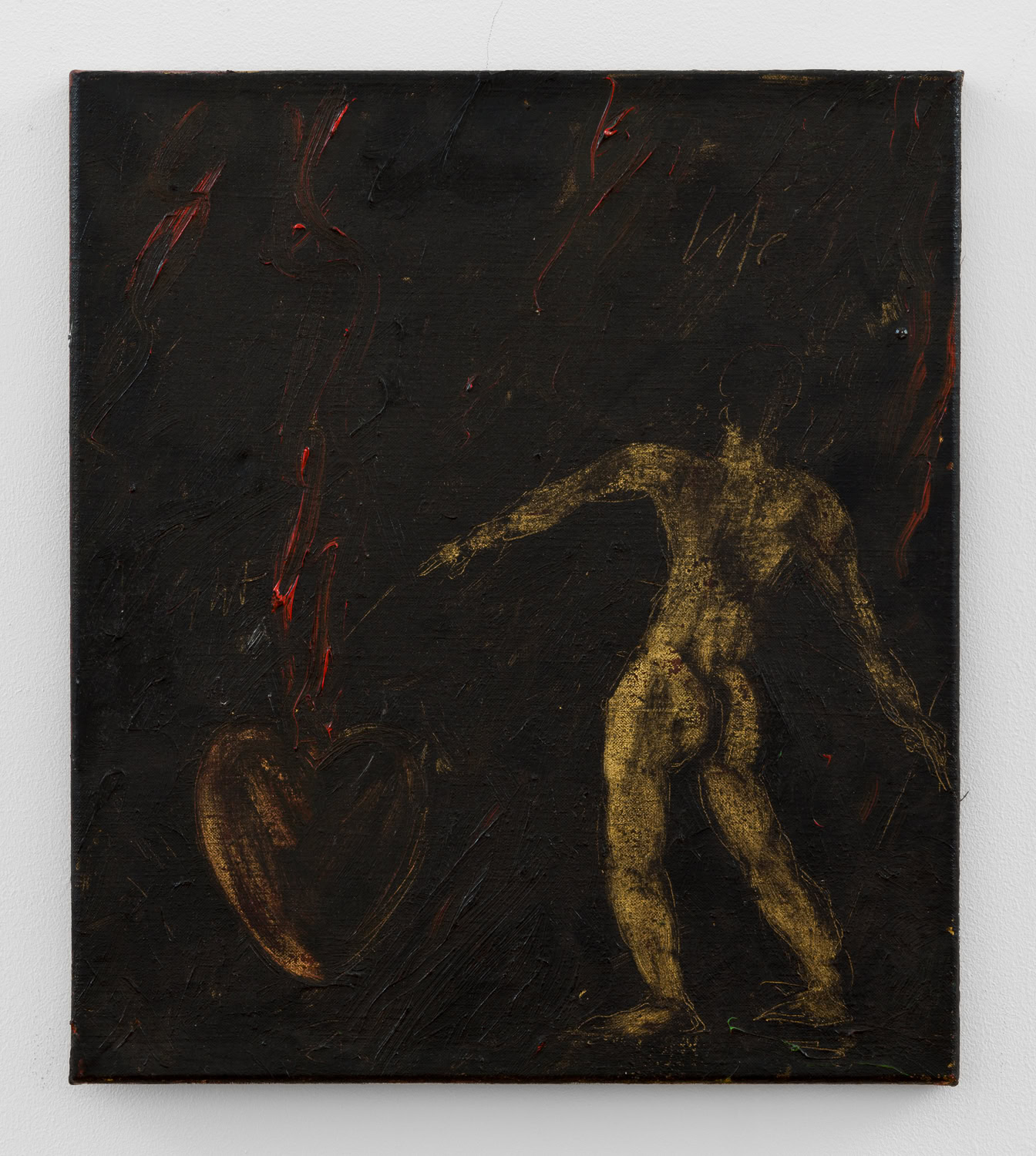

From 1984 until 1991, Jarman created a series of gloomy-like artworks as part of The Black Paintings series, presented in parts till September 20, 2025, in chronological order, at the Amanda Wilkinson Gallery in London. The artist has placed objects such as sticks (Dead Soul Whisper, 1987), toy cars (Home Counties, 1987) or archival photographs and fragments of clothing (Untitled, 1989) on black canvases covered in thick paint. There are also inscriptions on some of them, such as quotations from Shakespeare or the famous Old English poem The Wanderer. These images enter into a direct correlation with Jarman’s cinematic and literary oeuvre, and indicate the richness of his intermedia legacy through references to literature, history, or metaphysics.

A shift in Jarman’s professional and private life came in 1986 with the HIV diagnosis and the purchase of Prospect Cottage right after – a house with a garden located in the fishing village of Dungeness on the east coast of England. It was, however, a very different landscape from Monet’s garden in Giverny as described at the beginning, where the artist was photographed by Sooley towards the end of his life. A deserted stone beach and a nuclear power station, and between them a garden literally devoid of boundaries – for it had no fence at all. Its border was the horizon. Purchased with money inherited from his father, the small property became Jarman’s second home. For the next few years, Jarman lived between two homes – tending his garden and relaxing in Dungeness and returning to London, mainly for business.
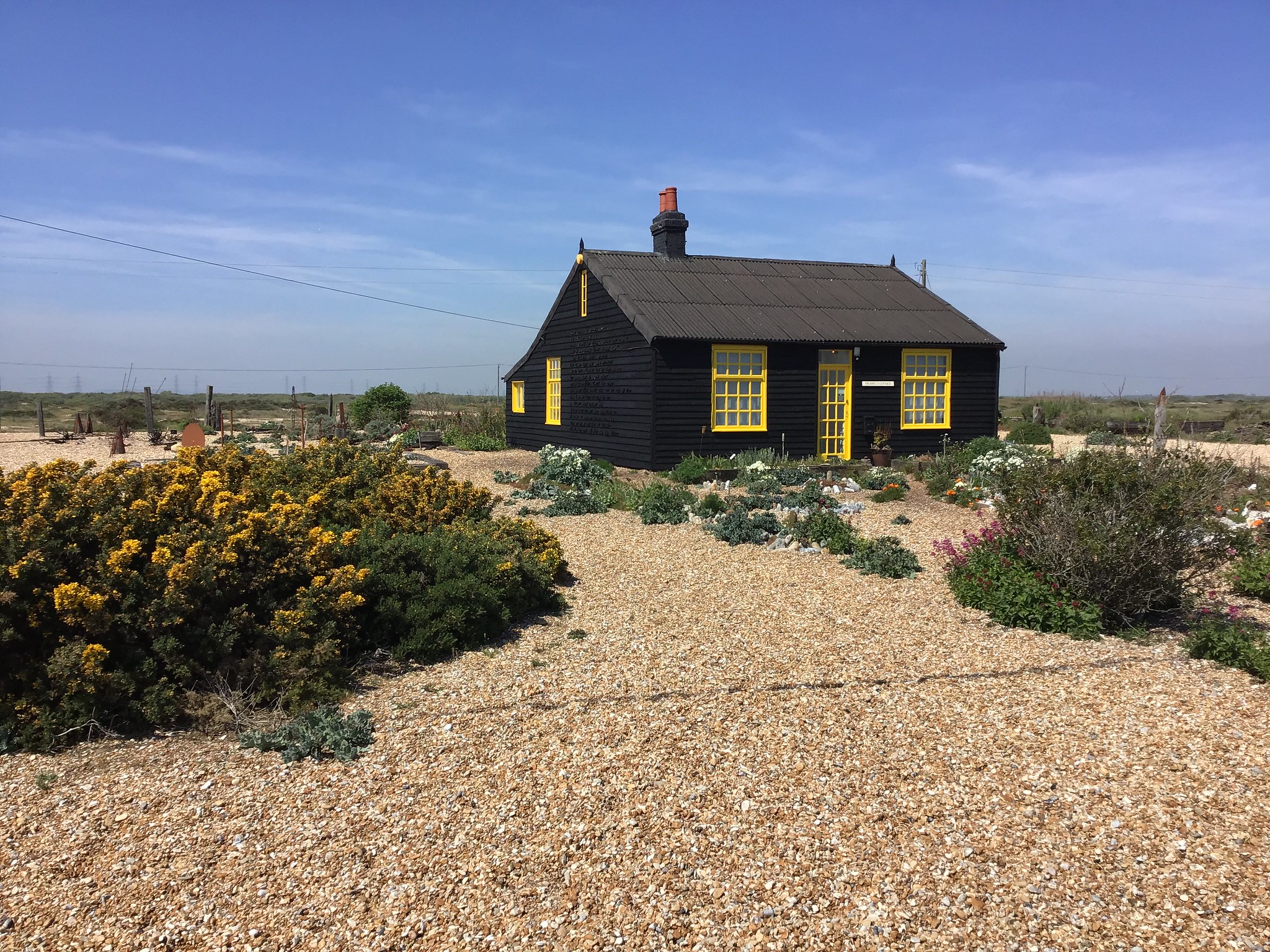
Prospect Cottage appears as Jarman’s greatest and most important work, as an inspiration for his late work, but above all as an eight-year artistic practice in its own right. Jarman’s garden combined the natural and the industrial. Visually, Prospect Cottage was closer to a post-apocalyptic landscape than to Eden. The artist’s meticulous care of individual plants is overseen by a huge nuclear power station. Jarman’s garden is not neat, symmetrical, meticulous, or elegant. The aforementioned photographs by Howard Sooley and the filmmaker’s accompanying notes are also an extremely valuable record of Jarman’s gardening practice. Accompanying the artist over the years, the photographer not only captured Jarman’s extraordinary care and passion for plants, but also the diversity and uniqueness of the garden itself, where metal wires or stones brutally dominating the surroundings, were found alongside beautiful plants.

Jarman’s horticultural practice seems almost an act of handing over the departing vitality of life to the very plants. Plants whose growth in a given setting was not so obvious and required barely any attention as actual effort. On the other hand, the garden has a therapeutic function and the connection with nature that kept the artist suffering from AIDS going until his last moments. Nature and human life are thus aligned with balancing forces – the hierarchy is shattered.
The move to Prospect Cottage results in perhaps the most hermetic film in Jarman’s oeuvre – the just over an hour-long, Super 8 camera-shot, The Garden (1990). Again referencing queer stories, this time it follows the lives of a homosexual couple identified with the figure of the biblical Jesus. Along their way, they face humiliation and violence from other characters, only to suffer a brutal death at the very end. The film’s epilogue is a scene in which Jarman himself reads a letter to friends who have died of AIDS. The artist’s garden alone, where most of the filming was done, also becomes a religious reference here.

The Garden boldly demonstrates which aspect of Derek Jarman’s modern nature – a concept with the name of which he titles his journal. Jarman’s non-heteronormativity, which marked his earlier film work, is given a new context by his medical diagnosis. Thus, the garden, in addition to being a space for the diligent cultivation of plants, also provides a refuge for queer people in the context of social exclusion caused by the HIV epidemic.
Modern nature thus appears as a combination of life and death, celebration and humour, meditation and reflection. It is an operation of contrasts – so evident in both his artistic work and the garden he cultivated at Dungeness. The harmony commonly associated with nature is here disrupted by the prospect of impending death and the turbulent political situation of the time. Prospect Cottage is therefore not a classical garden, but a hermetic, diverse place marked by crisis and temporality.
Written by Aleksandra Pytel

Ogród bez horyzontu.
Współczesna natura Dereka Jarman’s.
Z kolorowej fotografii patrzy poważny mężczyzna w wieku około pięćdziesięciu lat. Stoi na niewielkiej drewnianej platformie otoczonej bujną zielenią, ubrany jest w brązową tweedową marynarkę i granatowe spodnie, a w dłoni trzyma czerwoną czapkę z daszkiem. Na innych zdjęciach widać go wąchającego róże i pozującego z drewnianą laską. Krajobraz dominuje bujna roślinność i oczka wodne, są tam też ścieżki, którymi można podążać w poszukiwaniu kolejnych okazów roślin. Klasyczny ogród edwardiański. „Wątpię, żeby istniała tam roślina, która by się nie przyjęła” – stwierdza później mężczyzna. Fotografem jest Howard Sooley, artysta i wieloletni przyjaciel ten sympatycznie wyglądającego modela – jednej z ikon brytyjskiej sceny queer punkowej lat siedemdziesiątych i osiemdziesiątych. Nie jest to jednak jego ogród, chociaż znany był z posiadania takiego. Ta dwoistość wizerunku Dereka Jarmana towarzyszyła mu przez praktycznie całą jego karierę.
Wychowany w rodzinie z klasy średniej – ojciec był pilotem RAF-u, a matka nauczycielką, artysta zdobył klasyczne wykształcenie w zakresie literatury, historii i historii sztuki w King’s College London. Następnie, za zgodą ojca, studiował sztukę w Slade School. Jarman był artystą multidyscyplinarnym – po ukończeniu studiów podjął pracę jako scenograf, współpracując między innymi z Kenem Russellem. Szersze uznanie przyniosły mu jednak bezkompromisowe filmy nakręcone kamerą Super 8. Dla niego, jako “wyrzutka” homoseksualnego, podstawowym elementem całej jego kariery artystycznej było podważanie klasycznego rozumienia historii poprzez queerowe przedstawianie biografii znanych postaci kultury w filmach takich jak “Caravaggio” (1986), “Jubileusz” (1978) i “Burza” (1979). Jednak zawsze uważał się przede wszystkim za malarza zafascynowanego kolorem. Inni postrzegali go jako niekonwencjonalnego artystę punkowego, podważającego normy.
W latach 1984-1991 Jarman stworzył serię mrocznych dzieł sztuki w ramach cyklu The Black Paintings, które w 2025 roku będą prezentowane w porządku chronologicznym w londyńskiej galerii Amanda Wilkinson. Artysta umieścił na pokrytych grubą warstwą farby czarnych płótnach przedmioty, takie jak patyki (Dead Soul Whisper, 1987), samochodziki (Home Counties, 1987) lub archiwalne fotografie i fragmenty ubrań (Bez tytułu, 1989). Na niektórych z nich znajdują się również inskrypcje, takie jak cytaty z Szekspira lub słynnego staroangielskiego poematu “The Wanderer”. Obrazy te wchodzą w bezpośrednią relację z filmową i literacką twórczością Jarmana i wskazują na bogactwo jego intermedialnego dorobku poprzez odniesienia do literatury, historii lub metafizyki.
“Opuszczona kamienista plaża i elektrownia jądrowa, a pomiędzy nimi ogród dosłownie pozbawiony granic – nie miał bowiem ogrodzenia. Jego granicą był horyzont.”
W 1986 roku nastąpiła zmiana w życiu zawodowym i prywatnym Jarmana. Zdiagnozowano u niego zakażenie wirusem HIV, a zaraz potem kupił dom Prospect Cottage z ogrodem, położony w wiosce rybackiej Dungeness na wschodnim wybrzeżu Anglii. Był to jednak zupełnie inny krajobraz niż ogród Moneta w Giverny, opisanego na początku, gdzie pod koniec życia artystę sfotografował Sooley. Opuszczona kamienista plaża i elektrownia jądrowa, a pomiędzy nimi ogród dosłownie pozbawiony granic – nie miał bowiem ogrodzenia. Jego granicą był horyzont. Zakupiona za pieniądze odziedziczone po ojcu niewielka posiadłość stała się drugim domem Jarmana. Przez następne kilka lat Jarman dzielił życie między dwa domy – pielęgnował ogród i odpoczywał w Dungeness, a do Londynu wracał głównie w celach biznesowych.
Prospect Cottage jawi się jako największe i najważniejsze dzieło Jarmana, jako inspiracja dla jego późniejszej twórczości, ale przede wszystkim jako trwająca osiem lat praktyka artystyczna. Ogród Jarmana łączył w sobie elementy natury i industrializmu. Pod względem wizualnym Prospect Cottage bardziej przypominał postapokaliptyczny krajobraz niż raj. Staranną opiekę artysty nad poszczególnymi roślinami nadzorowała ogromna elektrownia jądrowa. Ogród Jarmana nie jest schludny, symetryczny, precyzyjny ani elegancki. Wspomniane powyżej fotografie Howarda Sooleya i towarzyszące im notatki filmowca stanowią również niezwykle cenne świadectwo praktyki ogrodniczej Jarmana. Przebywając z artystą przez lata, fotograf uchwycił nie tylko niezwykłą troskę i pasję Jarmana do roślin, ale także różnorodność i wyjątkowość samego ogrodu, w którym obok pięknych kwiatów znajdowały się metalowe druty lub kamienie surowo dominujące nad otoczeniem.
W ogrodnictwie Jarman wydaje się niemal przekazywać odchodzącą siłę życia samym roślinom. Roślinom, których wzrost w danych warunkach nie był tak oczywisty i nie wymagał prawie żadnej uwagi ani wysiłku. Z drugiej strony ogród pełni funkcję terapeutyczną, a kontakt z naturą pozwolił artyście cierpiącemu na AIDS funkcjonować aż do ostatnich chwil życia. Natura i życie ludzkie są zatem zrównoważone siłami – hierarchia zostaje przełamana.
“W ogrodnictwie Jarman wydaje się niemal przekazywać odchodzącą siłę życia samym roślinom.”
Przeprowadzka do Prospect Cottage zaowocowała powstaniem prawdopodobnie najbardziej hermetycznego dzieła w dorobku Jarmana – trwającego nieco ponad godzinę filmu “Ogrodu” (1990), nakręconego kamerą Super 8. Ponownie nawiązując do historii queerowych, przedstawia on tym razem życie pary homoseksualnej utożsamianej z postacią biblijnego Jezusa. Bohaterowie spotykają się z upokorzeniami i przemocą ze strony innych postaci, by w końcu ponieść brutalną śmierć. Epilog filmu stanowi scena, w której sam Jarman czyta list do przyjaciół, którzy zmarli na AIDS. Również ogród artysty, w którym nakręcono większość filmu, staje się tutaj odniesieniem religijnym.
“Ogród” odważnie pokazuje, który aspekt “współczesnej natury” Dereka Jarmana – koncepcji, której nazwę nadał swojemu dziennikowi. Nieheteronormatywność Jarmana, która charakteryzowała jego wcześniejsze filmy, zyskuje nowy kontekst poprzez diagnozę medyczną. W ten sposób ogród, oprócz tego, że jest miejscem starannego uprawiania roślin, stanowi również schronienie dla osób queer w kontekście wykluczenia społecznego spowodowanego epidemią HIV.
“Współczesna natura” jawi się zatem jako połączenie życia i śmierci, celebracji i humoru, medytacji i refleksji. Jest to gra kontrastów – tak wyraźna zarówno w jego twórczości artystycznej, jak i w ogrodzie w Dungeness. Harmonia kojarzona zazwyczaj z naturą zostaje tutaj zakłócona przez perspektywę zbliżającej się śmierci i burzliwą sytuację polityczną tamtych czasów. Prospect Cottage nie jest zatem ogrodem klasycznym, ale swoistym, różnorodnym miejscem naznaczonym kryzysem i tymczasowością.
Aleksandra Pytel – absolwentka kulturoznawstwa ze specializacją w kulturze wizualnej i polonistyce Uniwersytetu Warszawskiego. Współpracowała z Działem Dokumentacji Narodowej Galerii Sztuki Zachęta oraz Archiwum Artystów Muzeum Sztuki Nowoczesnej w Warszawie. Jej zainteresowania badawcze obejmują teorię gender, sztukę związaną ze środowiskiem naturalnym oraz zbiorowe praktyki artystyczne.

Przedsięwzięcie finansowane w ramach Krajowgo Planu Odbudowy i Zwiększenia Odporności (KPO) ze środków Unii Europejskiej – NextGenerationEU w ramach inwestycji A2.5.1 “Program wspierania działalności podmiotów sektora kultury i przemysłów kreatywnych na rzecz stymulowania ich rozwoju”.


