Andrzej Staniek is a Poznań-based visual artist who creates across a multitude of media, including animation, sculpture, and text. His works breathe life into futuristic, Lacanian notions of reality, while posing existential questions at their crux. Influenced by philosophers such as Roland Barthes and Donna Haraway, Staniek’s stories thoughtfully explore themes of posthumanism, ego, technology, and the future of humanity.

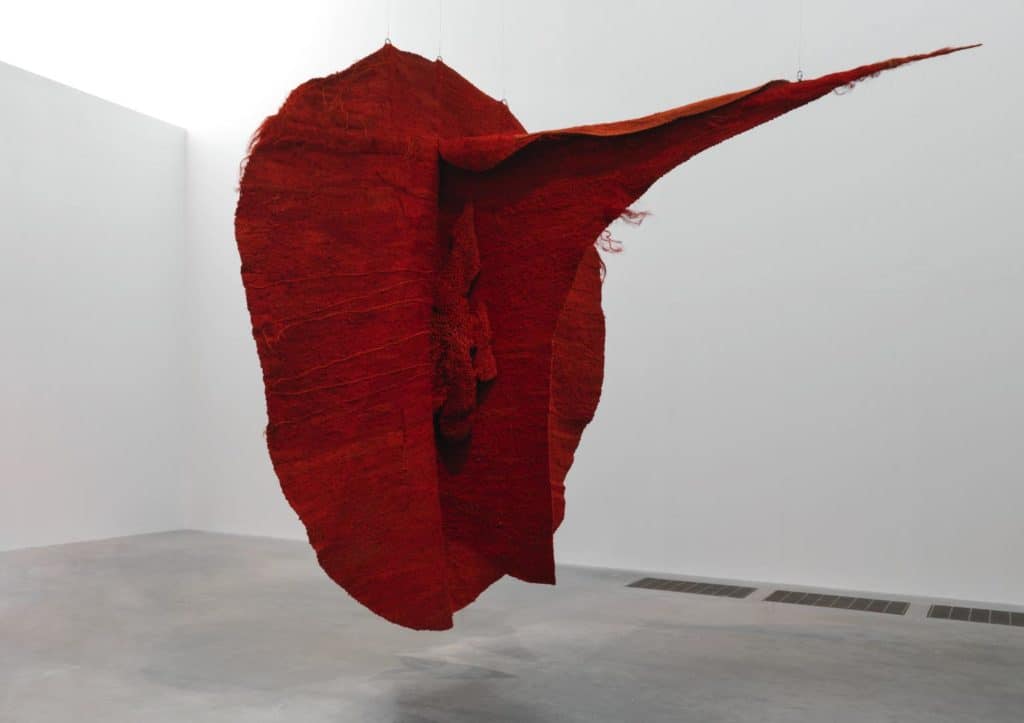
His project, Cocktail Creatures, was recently awarded the Contemporary Lynx Award at the 45th Maria Dokowicz Competition for the Best UAP Graduation Project, titled “Cooperation.” It unfolds across three parts: a 3D animation, a series of sculptures, and an essay in the Postmedium magazine. The sculptures, ethereal and slimy, reflect on hypothetical bio-technological evolution, while the film follows a boy contemplating reality, evolution, and what constitutes an alien in a cerebral exploration of a liminal space. The accompanying essay turns to humanity’s destructive relationship with the planet and questions the Rare Earth hypothesis. Together, these pieces share a meditative, introspective quality while confronting deeply unsettling ideas.
Following the receipt of the award, we spoke with Staniek about the ideas behind Cocktail Creatures, his fascination with evolution and the unknown, and the uneasy idea that what we consider “alien” may already exist within us.

Sophia Kalinowska-Werter: Themes of sci-fi and cosmic horror are prevalent through many of your projects. Did any specific pieces of media or literature influence or inspire your interest in this topic?
Andrzej Staniek: My fascination began during childhood, along with early access to the internet. I bought my first computer with the money I got for my first communion. I quickly came to understand the immense possibilities of the internet and that it was a goldmine of content. I love to explore things that have absolutely no end. Even today, I see flashes of what I had been watching then. In retrospect, I don’t even know if these are real memories or just pictures that my imagination created over the years.
Anatomical atlases and biology inspire me more than sci-fi – they leave me with a sense of disbelief and a flood of questions. Key moments for me were visiting the Natural History Museums in Riga and Berlin. There, I saw unique collections devoted to mutations and evolutionary oddities. Looking at these thousands of structural variations and “errors” in the biological blueprint, I felt genuinely in awe of the world’s complexity. I am fascinated by the way nature multiplies forms and tests the limits of the organism – from the tiniest changes to endless deformities.

SKW: Existential questions and a fear of the unknown run rampant through your work. If you had to choose between two heavy-hitters of the unknown, would it be deep space or the bottom of the ocean?
AS: It seems to me as though the fear of the unknown comes mainly from how, as a culture, we are terribly afraid of change. We are obsessed with control and prefer to reshape the world to our own image rather than allow it to reshape us. On the other hand, within us lies a powerful urge to explore and a curiosity about all that is unfamiliar.
For me, these two places are deeply intertwined. In my essay, I write that I don’t believe in the Rare Earth hypothesis. The laws of physics and biochemistry operate the same way everywhere. If there is water on another planet, then evolutionary pressures will lead to similar solutions: aquatic organisms will develop streamlined forms. And where perpetual darkness exists, bioluminescence will emerge, just as it does in the Earth’s depths. So, by choosing the cosmos, I am in fact choosing an infinite number of variations on the same process. Rather than descend to the bottom of a single ocean on Earth, I would prefer to see how evolution experiments in thousands of other oceans scattered across the universe.
Some time ago, I designed a VR experience for myself where I sit on an empty planet, completely alone. I enjoy spending time this way, in deep thought and relaxation.

SKW: Do you remember when this way of thinking about late-stage capitalism first began for you? I’m curious whether that started when you were younger, or if there was a particular moment later in life that triggered it.
AS: I think that those thoughts grew over time, mainly from observing how we, as people, function online and in the world. I used to separate biology from the economic system. Over time, however, I realised that we are not the victims of late capitalism; we are the ones who create it. We are its very fabric. I came to understand that this system is, in essence, our own human biological process; our destructive mutation. We carry this system within us, both literally and figuratively, like microplastics. When it dawned on me that we are, in fact, a species synthesised by capitalism, I stopped viewing the system simply as a political phenomenon and began to see it as a radical evolutionary process.
Our capitalist way of life has led us to create our own “alien” material – plastic. As a result, it even inhabits our bodies now. We have become one with it. It is our biological passport. We always imagine that, if aliens ever do come here, they’ll want to make contact with us. But maybe, if there’s anything here that might interest aliens, it’s precisely this synthetic, non-biodegradable material scattered across the oceans. I believe that capitalism has turned out to be a tool through which we have introduced into the ecosystem a material that will outlast us and, perhaps in millions of years, will form the basis for entirely new forms of life.

SKW: Your awarded work is comprised of various parts: an essay, a series of sculptures, and a 3D animation. Were you always set on this trio of formats, or did this come into your mind after the initial idea formed?
AS: Working on films and building with physical materials are simply my favourite ways to spend time. I’m always working on some video project. I often just piece together fragments, looping individual scenes and imagining they’re part of something bigger, though they usually end up getting lost in the depths of my hard drive. It’s a similar situation with writing and sculptures – I’m always creating something. Interestingly, all three of these things started on my computer. When I’m working, I often switch between programmes by clicking on the side-by-side icons. The result is a dense network, or perhaps, to stick to the project’s name, a cocktail. It’s evident that, in the end, it’s easy to divide an exhibition into a film, object, and text. However, for me, during the creative process, it’s a single, continuous train of thought that I simply filter through various media.
Hungry for more?SKW: Cocktail Creatures uses sound in a very visceral way; some of the noises feel almost grotesque, reminiscent of the body-horror aesthetics of your previous projects. How did you think about the relationship between sound and image while developing the piece? Did those sounds allow you to express something that visuals alone couldn’t?
AS: For me, it’s a natural connection because my whole project revolves around the idea of bodies losing their previous form. In the essay, I consider how technology and our environment can literally force biology to develop new organs. I believe that evolution itself is basically one big body horror. Sound allowed me to delve into that raw, organic aspect of change. Those grotesque noises are the sounds of evolutionary mistakes, of tissues rubbing against one another, and of adaptation to something unnatural. The thing about sound is that it bypasses the intellect and hits the nervous system directly. I wanted the viewer to feel exactly that.

SKW: At the end of the film for Cocktail Creatures, the subject states, “The aliens are inside. The aliens are you,” after musing about how our biology determines our choices, rather than our minds. Do you believe in free will, or is it more accurate to say that we cannot control our wants?
AS: I’m definitely closer to believing that we are not capable of completely controlling our wants. To be honest, the longer I observe the way we function, the more the concept of free will seems like a cultural solace. The whole idea is based on the arrogant human assumption that we are exempt from the laws of nature and above them. We love to imagine that our minds are independent, at the steering wheel, making rational decisions. However, the reality is that we are being steered.
We are simply another organism subject to biological and chemical processes. For example, in my work, I mention the gut-brain axis. The quote from the film “The aliens are inside. The aliens are you,” acts as an admission that our bodies and minds are, in fact, the arena where evolutionary forces operate – forces we do not understand at all.
We think that we make free decisions: what to buy, how to live, and what we desire. In reality, it’s often a chemical reaction in our bodies triggered by environmental stimuli. Our everyday decisions are dictated by cells, neurotransmitters, and our surroundings. In the end, the mind adds an ideology to the mix, so that we feel as if we still have some control over anything. We are walking ecosystems, shaped by millions of years of evolution, and the capitalist system in which we live is perfectly capable of exploiting this fact and taking advantage of us. So, I don’t believe that we are in full control. To me, free will is a neat illusion that simply helps us come to terms with the fact that we are biological machines reacting to our environment.

SKW: Imagine you had the means to exhibit your work anywhere in the world, or off-world, for that matter. If logistics and physics were not obstacles, where would you create an exhibition? How would it look?
AS: If all limits were to disappear, I wouldn’t search for any outside place. I would want my work to become the space. I once had a sort of vision of one of my sculptures: I imagined it as a gigantic form, several metres tall, that literally engulfs me, and I become fully one with its substance. Maybe that’s how I would envision that dream exhibit. I would want the border between the viewer and the art to disappear. The viewer would step inside and immediately become part of an integral experience. They would be absorbed by that environment in exactly the same way we are absorbed every day by biology and the system we discussed.

SKW: Do you have any projects planned for the near future that you’d like people to know about, or are you taking some time to think about what’s next?
AS: A few months ago, I adopted a puppy, and that has completely absorbed all of my attention. Watching him explore his surroundings, seeing how his sensory apparatus – so different from ours – decodes reality, is truly remarkable to me and provides me with a great deal of inspiration. At the moment, I’m one hundred percent focused on him. I design sculptures for him that serve as toys. I analyse his preferences, watch what he likes to chew, and what forms and textures interest him. In these works, I strive to capture the essence of our relationship with other species. I create art that is not intended to please the human eye, but to enter into a dialogue with a dog’s muzzle.
I already know that my next project will still be related to space and evolution. Working on Cocktail Creatures merely opened the door for an abundance of new questions, which I now feel an intense need to explore in much greater depth.