



The relentless pursuit of technological progress is exciting to some and frightening to others. While technology promises to make our lives easier, we increasingly find ourselves subject to growing surveillance, concerned about the erosion of our cognitive abilities, or expected to do more in less time while struggling to keep up with constant change. Yet technology can also become a tool for challenging the very power structures that shape it. Understanding how it works, and whose interests it serves, seems to be the first step. How can art help us with that?
Project TEKHNÉ shows what is possible. Led by six European organisations since 2023, it explores the emancipatory potential of technology in music and sound art. By shifting the focus from developers to users, the project seeks to demystify technology and encourage more autonomous and critical relationships with the tools that we use in our daily lives. It brings together research, experimental artistic practices and education, using sound as a means of investigating how technology is created and put to use.
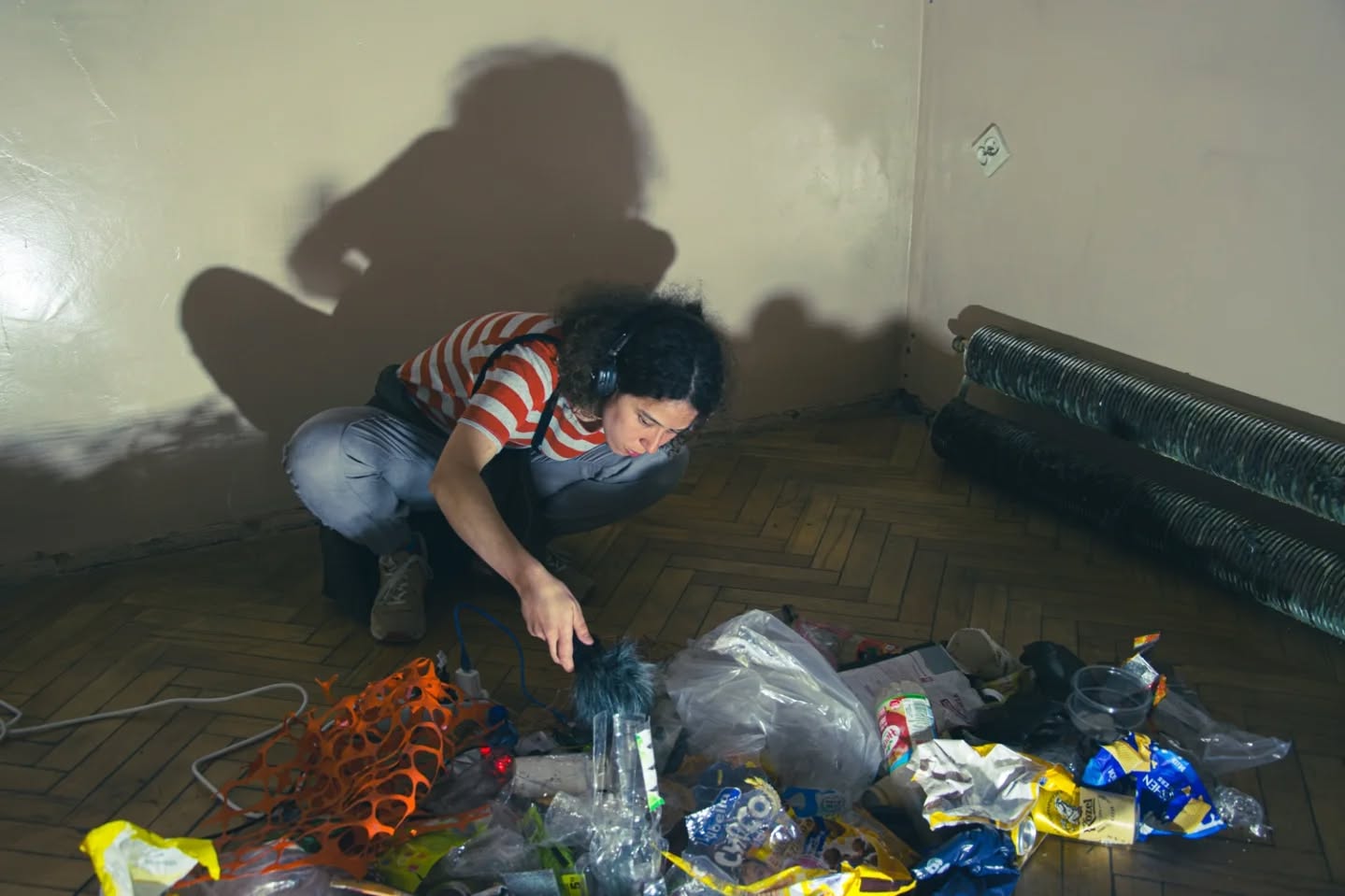
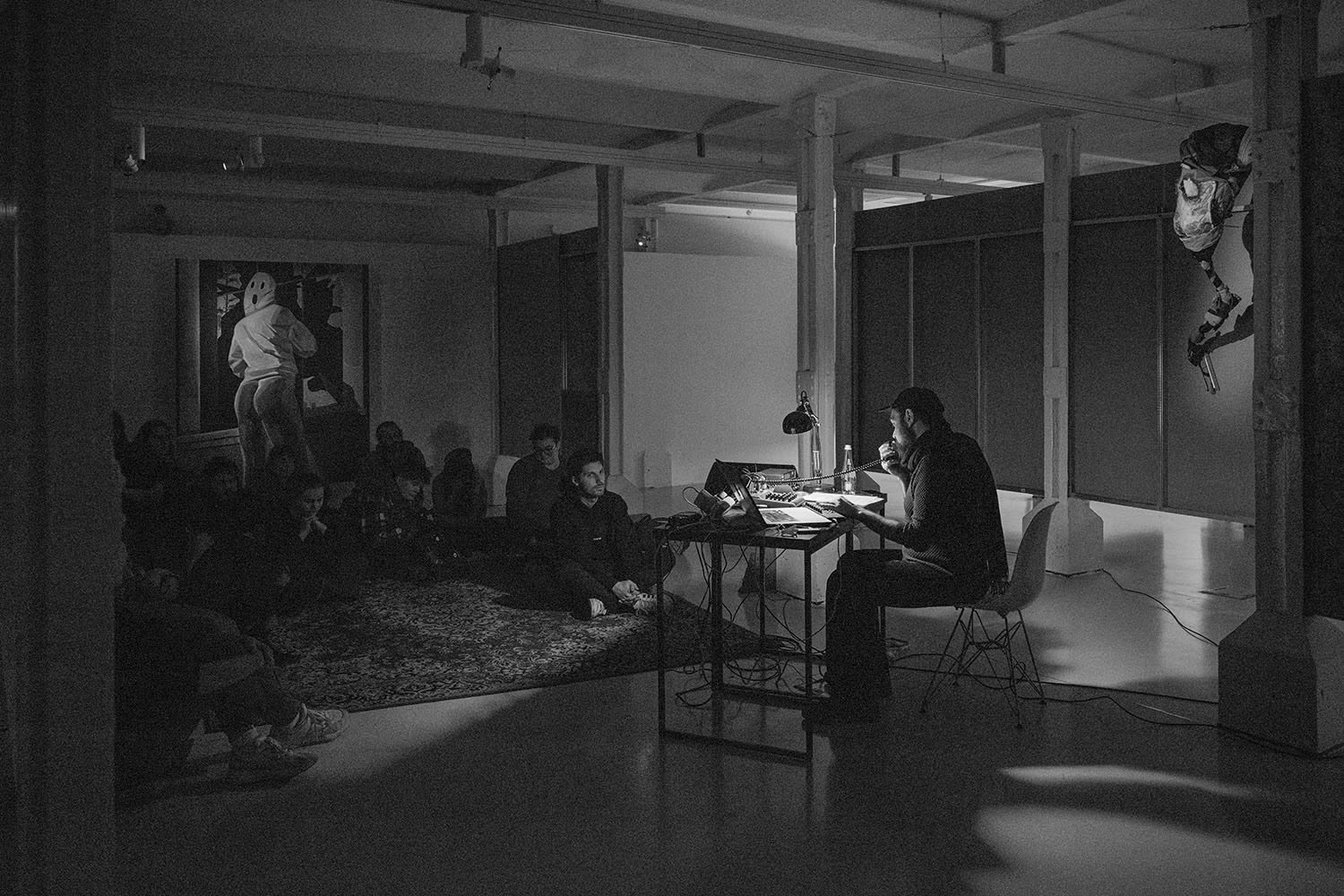
At TRAFO Center for Contemporary Art in Szczecin, one of TEKHNÉ’s partner organisations, these ideas have taken shape through artist residencies and collaborations with students and local communities. On 22 and 23 October 2026, TRAFO will host the project’s closing symposium, offering space to reflect on its outcomes and consider its possible continuations. Ahead of the symposium, we spoke to Andrzej Witczak, curator at TRAFO, and Zorka Wollny, artist and curator collaborating on the project, about adopting a more critical approach to technology, how sound art can help achieve it, and the challenges of presenting experimental practices within an institutional framework.

Paulina Mamot: Project TEKHNÉ has been running since 2023, bringing together six organisations working in different national contexts. What has TRAFO’s particular contribution to the project been?
Andrzej Witczak: I think TRAFO’s contribution stems from the fact that we approached the project from the perspective of a contemporary art institution, rather than an organisation traditionally associated with experimental music or sound art. This position allowed us to explore what happens when sound-based practices enter a gallery context, and, at the same time, when the institution opens itself up to practices that do not necessarily fit within its existing framework.
TRAFO became a place where sound could function simultaneously as contemporary art, a research tool and a social practice.
For TRAFO, TEKHNÉ was also an experiment. Before the project began, we had never run such a complex, multi-year residency programme. The artists stayed in Szczecin, explored the city, met with students and local communities, and developed their projects through these encounters. The collaboration with the Szczecin Academy of Art allowed for an incredible synergy and exchange between the students and the invited guests. We could see the influence they had on one another in their final works.
This way, TRAFO became a place where sound could function simultaneously as contemporary art, a research tool and a social practice.

PM: TRAFO describes itself as a space where visual art can enter into dialogue with music, theatre, literature, social sciences and new technologies. It is also visible in the diversity of the TEKHNÉ projects that approach technology through ecological, political or social questions rather than just technical ones. What can sound reveal about technology that images or interfaces might not, and did the project change the way you, as an institution, understand the relationship between these transdisciplinary fields?
AW: For me, sound is an interesting critical tool. It doesn’t need to explain or present technology to us. It can make us more aware of its presence – from algorithms and AI to online tracking and data collection. We often try to visualise these things through images, but sound can, paradoxically, be a more effective tool.
At TRAFO, we consider art to be a fully-fledged field of research and a tool for understanding that enables us to comprehend the world around us and the processes taking place within it, and, through all this, to answer the questions that trouble us, rather than merely asking them. The project may not have changed the way we understand the relationships between technology, visual art, sound and so on, but it has expanded our expertise in this area. It has opened our eyes to disciplines we had previously overlooked and has given us greater freedom and opportunities to experiment.
At TRAFO, we consider art to be a fully-fledged field of research and a tool for understanding that enables us to comprehend the world around us and the processes taking place within it, and, through all this, to answer the questions that trouble us, rather than merely asking them.

PM: TEKHNÉ has included residencies, exhibitions, workshops, performances and research. Which of these formats turned out to be particularly productive for the invited artists?
Zorka Wollny: From our perspective in Szczecin, TEKHNÉ was conceived as a format that would connect international artists working with sound and sound art with the city’s local artistic community. TRAFO was responsible primarily for organising residencies and artistic presentations, while the collaboration with the Academy of Art in Szczecin created an additional space for knowledge exchange and helped expand the local community interested in sound art.
It was important to me that the artists coming to Szczecin share their knowledge with the Academy’s students. We therefore sought artists for whom running workshops and sharing their own practice could become an integral part of the residency. This approach proved very successful, even though for some artists it was the first time they had been asked to open up their practice in this way. It encouraged both the artists and the students to more clearly define what was distinctive about a particular working method and which aspects of it could be shared with others.
As a result, the residency became more of an ongoing process than simply a step in a project. Rather than coming to Szczecin to work independently and then present a finished piece, artists developed their projects from the outset in relation to the city and its local artistic community. Students also took on the role of hosts: they supported the artists during their stays — for example, they produced podcasts, interviews and video documentation that became part of the TEKHNÉ project.
PM: What was most important for you when choosing artists for residencies?
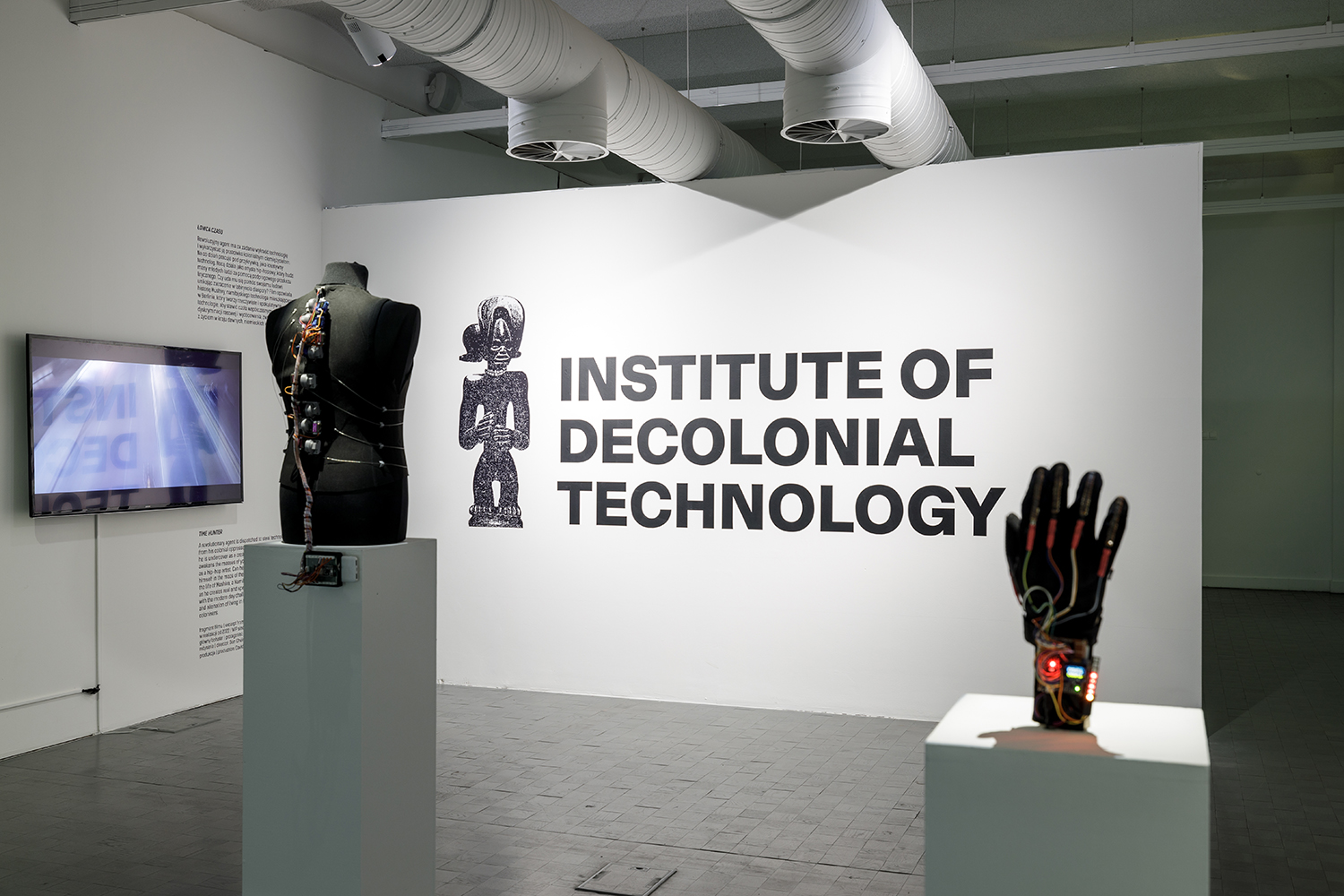
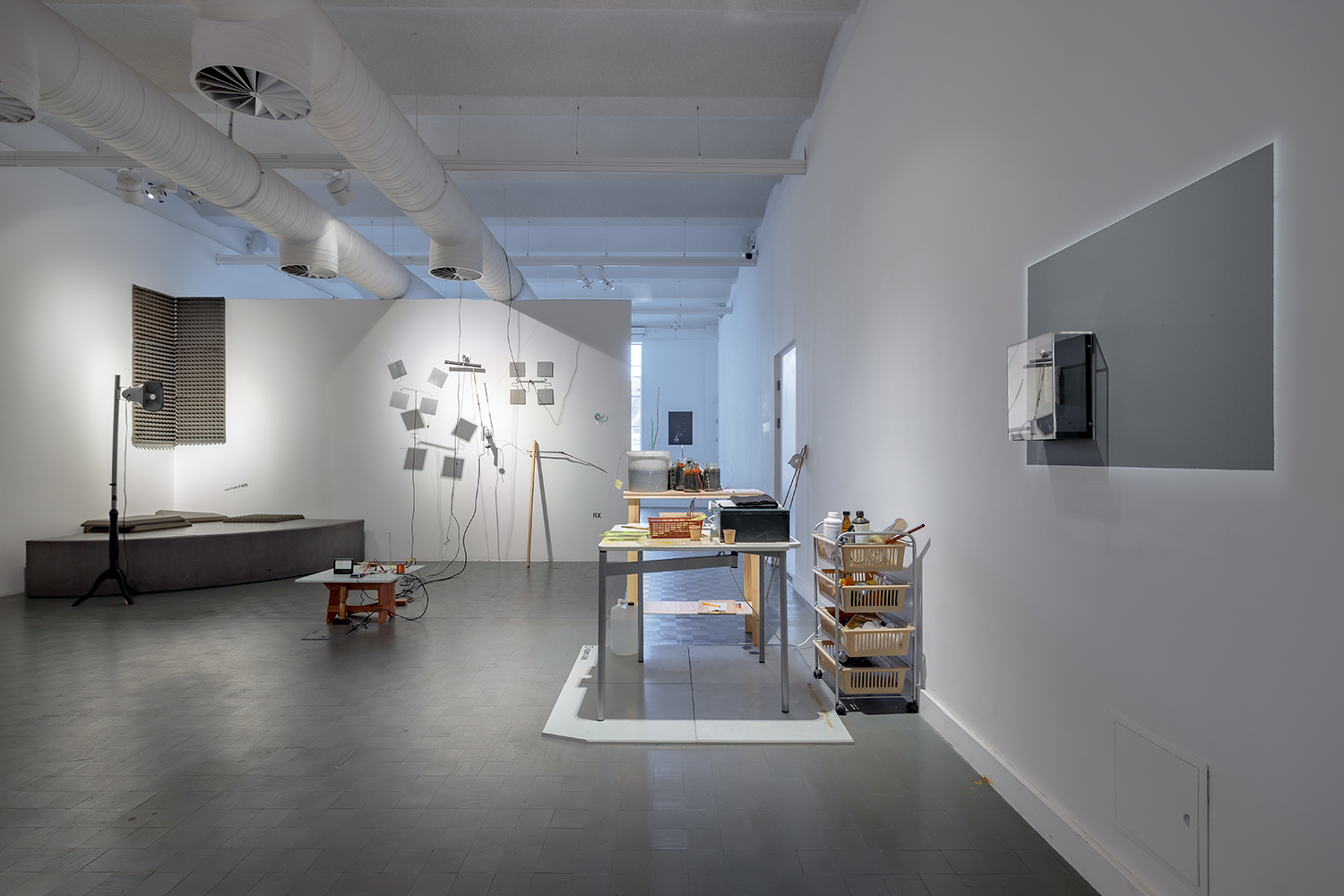
ZW: When selecting the artists, we wanted to demonstrate how broadly sound art can be understood. Jasmine Guffond, for example, explored the sonification of cookies, using sound to make online surveillance processes perceptible. Jenny Gräf Sheppard combined sound art with craft, designing and building ceramic speakers by hand and leading workshops in which participants could make their own. Meanwhile, Mark Mushiva addressed the topic of decolonisation of technology and the possibilities for its use from different cultural perspectives. Another example was Marte van Dessel and constellation ooooo, whose approach was very laboratory-like and DIY-oriented. Students took part in laboratory experiments exploring, among other things, how bacteria from the Oder River could generate electricity and how urban fountains could be used to transmit radio signals.
Ultimately, combining artistic production with an open process — allowing people to observe how a work takes shape and participate in its development — proved to be one of the most valuable aspects of the project for me.
I think this diversity worked well because it allowed us to move beyond thinking about sound art solely in institutional and exhibition contexts. The artists we invited also treated sound as a tool for exploring communities, technology and different political realities. Ultimately, combining artistic production with an open process — allowing people to observe how a work takes shape and participate in its development — proved to be one of the most valuable aspects of the project for me.
PM: Sound is often treated as something that accompanies an artwork or creates an atmosphere. What happens when sound is instead given the central role in a project?
ZW: Sound is a medium that is often overlooked, even though it accompanies us everywhere and at all times — in both private and public spaces. That is precisely why it is interesting that some artists view it as a means of commenting on the reality we live in. After all, we live in a world that is becoming increasingly noisy. We can see it in the context of ecology, but also in the context of private and public spaces, or in the sense of community created by music and participation in sound events. Sound is a particularly interesting medium when considering its political dimension.
Sound is a medium that is often overlooked, even though it accompanies us everywhere and at all times — in both private and public spaces. That is precisely why it is interesting that some artists view it as a means of commenting on the reality we live in.
I wouldn’t say, however, that sound art has, by definition, a special role in this regard. Any medium can be used in different ways: it can serve as a means of personal expression, an abstract exploration or an escape from reality, but it can also open up a broader discussion about the world we live in, political systems or social issues. Experimental film or the visual arts can do the same.
What also interested us in TEKHNÉ was how sound, similarly to other media, can operate at the intersection of different forms and disciplines. Moving between media in this way expands the field of art and broadens our understanding of what an artwork can be.
PM: There is a particular contradiction in experimental sound art: it often tries to escape established categories, while institutions still need to classify, programme and contextualise it. How do you negotiate that contradiction as an institution?
AW: I think the first step is to accept that this contradiction cannot be fully resolved.
An institution needs categories. We have to develop programmes, announce exhibitions, prepare grant applications, communicate with audiences and explain why certain projects are part of our programme. At the same time, experimental sound practices become interesting only when they resist such categorisation.
During TEKHNÉ, I gradually stopped thinking that our task was to find the perfect category for every project or to arrive at a final product. Instead, we tried to create enough space around each work so that its category could remain unstable. To let it emerge, to some extent, on its own. This required a great deal of flexibility on our part, and for me, it meant I had to find a language our audience could relate to. We didn’t want to make a project for a small handful of enthusiasts, but rather to ignite a spark that would spread further.
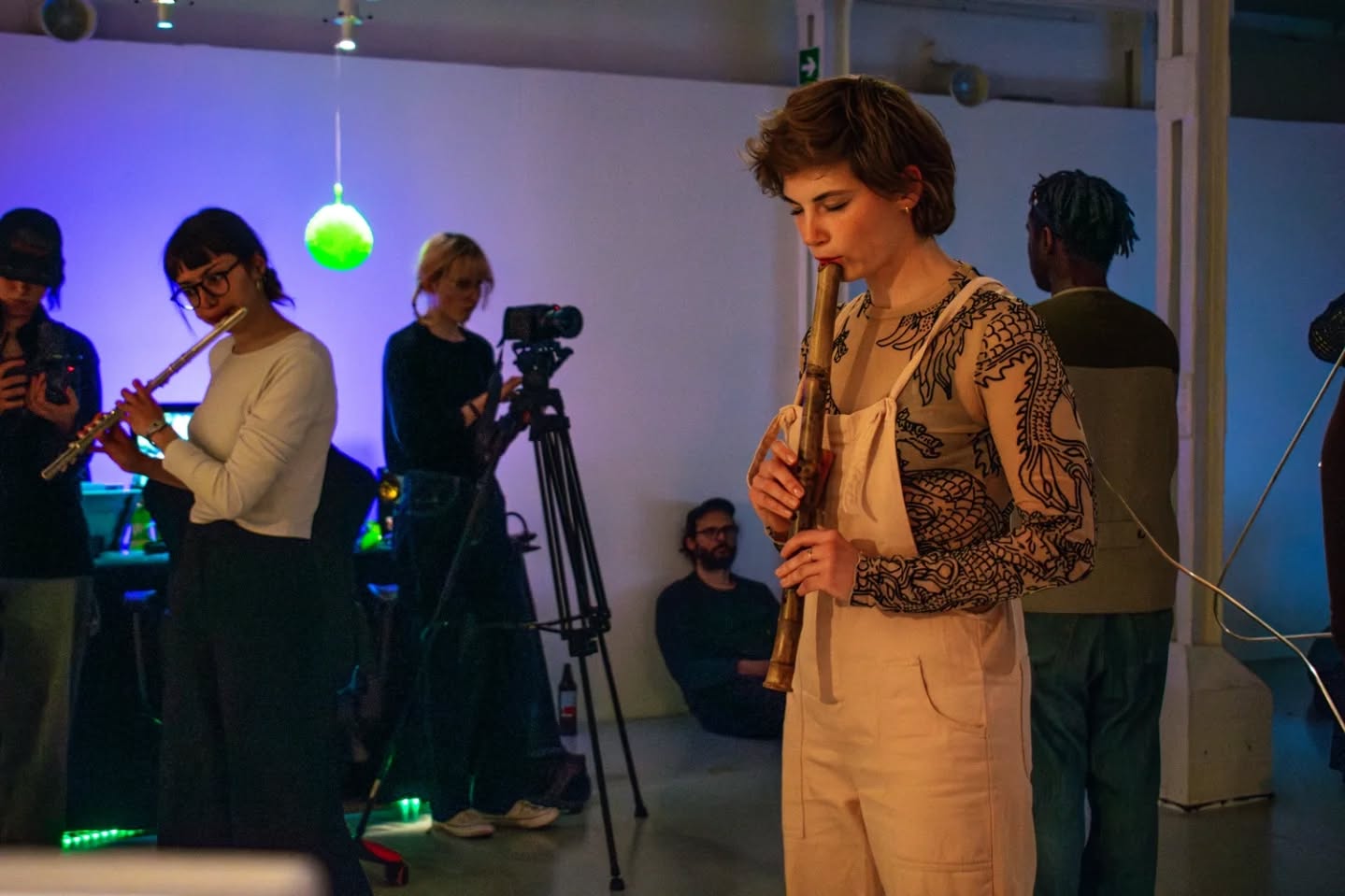
This meant allowing both the presentation format and the project format itself to change according to need. Sometimes an exhibition was the right choice, sometimes a performance. These were often accompanied by workshops, conversations with the artist, a concert, a walk around the city or a presentation of research findings. The residency format proved helpful in this respect. It gave us the opportunity not to know in advance what the final work would be, allowing us to engage in a kind of artistic wandering.
We didn’t want to make a project for a small handful of enthusiasts, but rather to ignite a spark that would spread further.
This matters because in experimental practices, uncertainty is often part of the work itself. If we define the expected outcome too precisely from the outset, we risk killing the process.
At the same time, I do not believe that institutional contextualisation is the enemy of experimental art. It may, in fact, help audiences engage with practices that might initially seem inaccessible. With TEKHNÉ, we observed that people did not always understand the works immediately, but this did not necessarily lead them to reject them. More often, it sparked curiosity. People wanted to find out what the artist was actually doing, why something sounded or behaved in a particular way, and what the next artist-in-residence would present.

PM: Zorka, your symposium presentation asks “Where does sound art belong?” – it seems to challenge the idea that sound art has a natural or obvious institutional setting. Your own practice often moves between installation, music, performance and site-specific work. What did you discover by looking at the same medium across different contexts?
ZW: My presentation will offer a more personal perspective on sound. Through my involvement in TEKHNÉ, I’ve had the opportunity to demonstrate just how broad the field of sound art can be. This time, I also wanted to present the medium from my own perspective as an artist.
I explore sound in many different contexts. On the one hand, I work extensively with people, leading vocal and sound workshops. Creating music together can offer participants a safe space in which to explore their own forms of expression and discover their voices. On the other hand, I might spend a month alone in my studio, experimenting with cables, electronics and sounds to create a kind of sound painting. One example is Bagna (Swamps), a work presented at Ujazdowski Castle Centre for Contemporary Art. It was a kind of “painting that plays”: visitors could approach it, listen to individual sounds, then step back to perceive the whole as a single object.
But I also work in a more site-specific way. This year, I created an installation in an abandoned school building, working with primary school children and invited musicians. The work was then opened to passers-by on weekends, including local villagers, tourists and cyclists. Suddenly, the abandoned, ruined building came to life: the voices of children, violins and bass sounds could be heard from inside. This is a completely different kind of encounter with an audience from that in a gallery. When people visit a gallery, they expect to look at art and devote their attention to it. In public space, however, you can encounter sound by chance, unexpectedly — much as you might encounter street art.
Sound can exist in a gallery, in public space, in the context of a social gathering or through collaboration with an orchestra. What I enjoy most is precisely the opportunity to explore this entire field.
At the same time, I’m not afraid to collaborate with professional musicians. This year, I worked with the Sinfonia Varsovia orchestra on a project that combined a concert with a performance, conceived in relation to the architecture of the orchestra’s new headquarters. The composition took the building’s choreography into account, ensuring that musicians in different parts of the building would not interfere with one another, while allowing the audience to move freely between these spaces. This required combining compositional, choreographic and architectural thinking.
Working with sound, music and space gives me tremendous freedom to move between media and discover new paths. Sound can exist in a gallery, in public space, in the context of a social gathering or through collaboration with an orchestra. What I enjoy most is precisely the opportunity to explore this entire field.

PM: Andrzej, has TEKHNÉ made you more optimistic about technology’s emancipatory potential, or has it made you more aware of the structures that determine who gets to use technology and how? And has it changed the way you think about presenting technology-based art at TRAFO?
AW: Definitely both. One of the aims of TEKHNÉ was to explore the emancipatory potential of technology in music and sound art, with a particular focus on the user. The idea was to demystify technology through a critical approach and enable people to build more autonomous relationships with the tools they use. Today, the knowledge and experience gained through this process — both by us as an institution and by the project’s audiences — are extremely important for our well-being.
After four years, I’m probably less naive about technology’s emancipatory potential. Every technology has its own infrastructure and power relations: who designed it, who owns it, who has access to it, whose data it collects, whose labour makes it function and who is excluded from it. But that doesn’t make me a pessimist.
Technology does not become more democratic simply when we make it easier to use. It becomes more democratic when we enable people to understand it.
The most interesting TEKHNÉ projects did not present technology as something neutral or futuristic. They opened it up, slowed it down, made it strange and tangible, sometimes even broken. Apart from the artists mentioned by Zorka, I also wanted to mention Aleksandra Mitrović, who shifted the focus more towards social uprisings and unrest. Her work combined the practice of collective silence during protests in Serbia with the defence of Alt Buchholz in Szczecin. Overall, in our residents’ projects, technology almost faded into the background, while listening, shared presence, and political agency came to the fore. This changed how I think about presenting technology-based art at TRAFO. I stopped being afraid of it.
I don’t think we need to make technology spectacular. Sometimes it is much more interesting to reveal the infrastructure behind it, its consequences, failures and materiality, or the social relations it produces. This also changes how we think about audiences. Rather than assuming that people need to be technologically proficient to engage with this kind of art, TEKHNÉ showed us that the starting point can simply be listening, curiosity and embodied experience.
Technology does not become more democratic simply when we make it easier to use. It becomes more democratic when we enable people to understand it.

Artists who took part in the project TEKHNÉ at TRAFO:
- Jasmine Guffond
- Mark Mushiva
- Nicoletta Favari
- Christopher Salvito
- Jenny Gräf Sheppard
- Ruben Rübe
- Kinda Hassan
- Marthe Van Dessel
- Pedro Oliveira
- Mauro Diciocia
- Aleksandra Mitrović
- Valeria Khazan
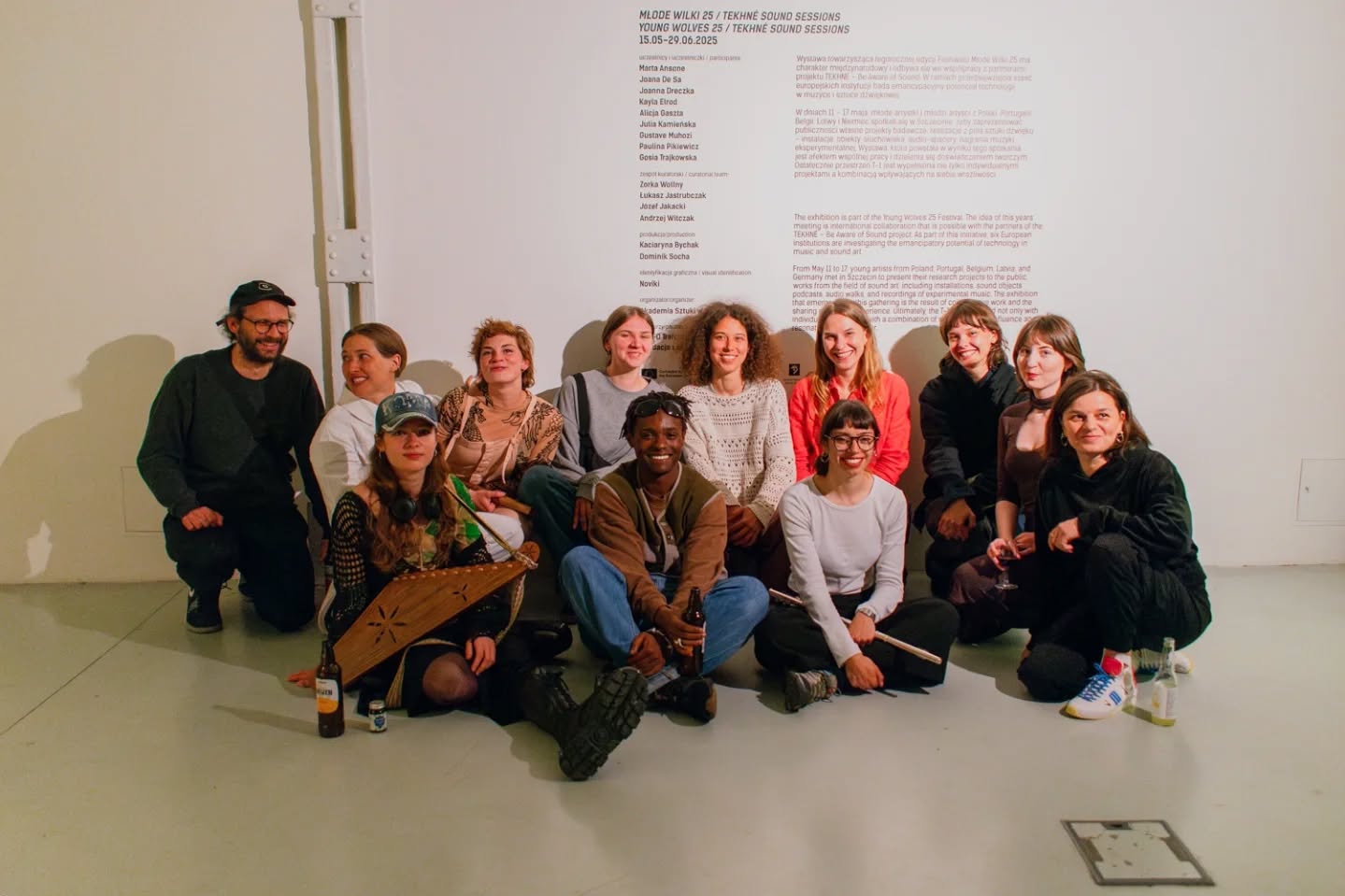
Młode Wilki 2025 / TEKHNÉ Sound Sessions
- Joana de Sá
- Marta Ansone
- Gustave Muhozi
- Kayla Elrod
- Alicja Gaszta
- Joanna Dreczka
- Gosia Trajkowska
- Paulina Pikiewicz
- Julia Kamieńska