




[polska wersja językowa poniżej]
Within the city borders, Maciej Zdanowicz traces moments where geography becomes experience, while the body – a sensitive register of history. As an intermedia artist, theorist, and curator, he works at the intersection of image, sound, text, and material, creating fragile forms that emerge from attentiveness to absence. For two years now, the artist has been visiting Ukraine, returning repeatedly to cities shaped by war and uncertainty. His practice unfolds between contemporary art, research, and socially engaged work, focusing on memory, trauma, and transformation – both individual and collective.
Central and Eastern Europe remains a key reference point in his mind: a region of fractures and ongoing redefinitions. In recent years, Ukraine has become the most urgent space of this inquiry, with art functioning less as representation and more as presence, care, and community-building.

“Does the world still remember us?” is a question that returns in conversations with the people Zdanowicz works with in Ukraine. In his practice, bringing the experience of war beyond the country’s borders becomes a response to that uncertainty – an effort to counter the erosion of attention, the spread of fake news, and the gradual transformation of war into a distant image.
I speak with Zdanowicz just after yet another return from Ukraine, at a moment when the war is entering another phase and returning once again raises questions of guilt, responsibility, and distance. We speak of searching for the definition of Ukrainian-ness, how art institutions are operating under invasion, and how culture becomes a form of shelter – sometimes literally.
Klara Bender: You have just returned from Ukraine. What did this most recent trip mean for you?
Maciej Zdanowicz: The last trip was difficult. The war is entering a new phase. And for me, it was also a threshold moment. Last week, one of the missiles struck just 300 metres from my apartment in Dnipro. The place where I felt relatively safe no longer appears that way. Saying goodbye to the youth who participated in my workshops was also deeply emotional. I call them “my kids” – they are seventeen or eighteen, and they experience both my arrivals and departures intensely.
People living close to the front line often cannot leave, or cannot imagine leaving. They have families there, loved ones fighting, or a strong sense of mission. There are many such people, among them staff from the Dnipro Center for Contemporary Culture and lecturers from the Dnipropetrovsk Professional Art College. At my university, I can offer options such as funding short Erasmus trips, so they can rest or disconnect briefly. They refuse, saying that if anything happened in their absence, the guilt would be unbearable. This shows not only an extraordinary sense of responsibility but also an incredible level of empathy.

K.B.: Are the people you work with mostly the same group with whom you have built relationships over time? And are these experiences and bonds directly connected to the Body in Tension project?
M.Z.: There is a stable core of both people who have been coming since the beginning and new participants. We are now entering a new phase of clinical research within Body in Tension, with war veterans joining the sessions, participating alongside students. I believe that knowledge of what trauma looks like is easier to understand when it is direct, rather than surrounded by silence or guesswork.
Some of my students witnessed the death of their parents. Others carry the trauma of having parents who are fighting, not knowing what is happening to them. Sometimes this is even harder, because it comes with a sense of responsibility and guilt. I, too, feel guilty returning to Poland. Boarding the train in Dnipro, I know that I have somewhere to return to – they do not. And that is terrible.
K.B.: Has this sense of guilt connected to returning changed since the beginning of your work in Ukraine?
M.Z.: It has remained constant. Two years ago, I went on an Erasmus+ exchange to the Lviv National Academy of Arts to support friends I had worked with since 2016. That week brought an awakening. The day after returning to Poland, I had an exhibition opening, but I completely reworked my concept. The first works reflecting on my short stay in Lviv emerged partly from guilt. On the train from Lviv to Przemyśl, I knew an attack was underway, and my friends were in shelters. I did not want to leave them, yet I also wanted to convey this experience beyond news headlines.
These are two entirely different realities: what we read in the news, and what war feels like on the level of emotion and bodily reaction. I was also interested in my own psychophysiological responses. It was my first real confrontation with an ongoing war and my first presentation. Born in consequence, it translated innocent phone-shot videos and photographs into site-specific works shown at BWA Kielce.

K.B.: But what is the relationship between the guilt of not being in Ukraine and the need to transfer these experiences into the Polish context and speak about them here?
M.Z.: From the perspective of my own psyche, which proved strong enough, I thought I should quit my job and just stay there. I felt burnt out, both as a teacher and as an artist. I had the impression that if I were not here, nothing would happen, whereas when I am there, it matters.
This year, I realised something else as well. As the situation in Poland worsened amid the so-called cognitive war – hate, elections, and the instrumentalisation of migration, I began to understand that my work after returning may be just as important, and perhaps more difficult: first in Poland and later in Germany. I no longer felt comfortable in Poland, yet I never expected my Frankfurt residency to provoke such strong emotions and accusations of Ukrainian propaganda. I wanted to leave. But thanks to the curator and board, I stayed, giving lectures to residents and students. I guided every visitor through my exhibition and saw how much this changed reception – people who were initially sceptical, watching the films and hearing the sounds from Dnipro, thanked me, saying they had not realised what war really looks like.
Toward the end of the residency, something beautiful happened, too. In one room, I had arranged my studio; opposite was the exhibition space. A woman in her fifties came in. I was working on diaries, my hands covered in clay, but I stepped away from my work and began explaining. However, it seemed she had no interest in listening. As I returned to work, I thought she had left, but an hour later I checked – she was still watching the films. I quietly went back to my studio. After a moment, she approached me again and said only: “Thank you for opening eyes.”
And she left. I thought then that it might have been the only time someone spent a full hour with the works, as we know how exhibitions are usually viewed, often just in passing. During one of my later returns to Poland, I met a group of Turkish students and spoke about my work. One of them said I was a medium – that I transmit what is happening in Ukraine to others. That was when I realised how important this is. They were motion designers and called me an “emotion designer.”

K.B.: A state of threat or war also redefines the functioning of cultural institutions. Do you think a new model of cultural institutions is emerging?
M.Z.: A great deal has changed, yes. We work to have a real impact on society, even if only for a moment, but in a meaningful way – on what I call the psychophysical condition of the human. It is also about manifesting that, regardless of whether a missile falls or not, Ukraine and its culture function, and function very well. Every exhibition opening becomes proof that art is essential.
At the end of August, I curated the exhibition Abandoned Constructions in the deserted spaces of the Dnipropetrovsk Professional Art College. I invited over twenty artists from six countries, transported and installed the exhibition myself. Eight minutes after the opening began, an attack started. Missiles fell half a kilometre away. A volunteer ran in and said that if anyone wanted to go to a shelter, they had to decide immediately, as the nearest one was three hundred metres away. I felt the weight of everyone’s gaze and the question: What do we do? I didn’t know myself. But I sensed they did not want to leave. At one point, an elderly woman approached me and said, “If we leave now, we won’t come back here. If you are comfortable with it, please, let’s continue.” There were about seventy to eighty people there. No one left. Everyone stayed until the end.
“Every exhibition opening becomes proof that art is essential.”
– Maciej Zdanowicz
K.B.: Has working in Ukraine during the war affected your artistic practice and your thinking about art and cultural institutions, then?
M.Z.: It is difficult for me to use this word because it feels unethical. But every time I present my work in Poland, I repeat that I’ve experienced the meaning of art in Ukraine, close to the front line. For the first time, I felt that I was contributing. My work matters – presence, workshops, direct contact.
I often work with people who communicate through an intuitive, abstract language of the body; I do not require words. Over time, I expanded this work into performative practices and body sounding. A crucial experience was the opening of my exhibition, concluding the residency at the Dnipro Center for Contemporary Culture. I kept asking myself: Who gave me the right to speak on behalf of these people? Is it ethical for someone who is not Ukrainian and is only here intermittently to express their voice through their work? What I create consists partly of my own experiences and partly of stories that began to co-create me.
While greeting guests during an opening, I heard what sounded like a scream. I thought I had crossed a boundary – that what I was showing was untrue to the lived experience of the city’s residents. Then someone explained that the person I’d heard said the exhibition captured exactly what they feel: it’s not for them, but should be shown outside Ukraine. In that, I found confirmation that I can continue and that this work matters.
But there have also been two experiences with art during the war that left me unsettled. The first came after a long nighttime attack, leaving the city without electricity. That evening, a German film screening was organised, with colleagues securing fuel for generators. The room was full. Hours later, people left slowly, not rushing home despite the curfew, wandering through the exhibition rooms to experience a brief sense of normality. The second moment happened last year at Lviv Railway Station. Although rushing, I asked a boy there what the unusual crowd was for. “For Zhanna Kadyrova, there’s a concert starting soon,” he replied. Zhanna is an artist who has built an organ from Russian missile pipes, playing Russian classics to expose cultural colonisation and indict that artistic communities are still performing it worldwide, from New York to Melbourne. The boy was on a school trip, while the instrument was touring Ukraine, playing evening concerts in Lviv. Cultural institutions remain full, functioning as survival capsules – a shelter offering a moment to breathe.

K.B.: There’s a role that art plays today in the experience of war.
M.Z.: In the context of Ukrainian experiences, art is crucial. I often hear questions from friends there: “Does the world still remember us?”, “Are we alone?”, “Does anyone still believe in this war?”, “Has it been reduced to a fake?”. Through my work and the way I tell these stories, art gives a sense of being heard, as well as reassurance and hope that their voice reaches beyond Ukraine.
Another issue is defining Ukrainian-ness. This is a country that has functioned as an independent state only since 1991, largely based on distorted reference points inherited from the tsarist and Soviet past. The Orange Revolution, the Revolution of Dignity, and the recent so-called “cardboard revolution” prove, however, that Ukraine is still searching for its institutional form. The process of shaping national and cultural identity is exceptionally urgent today. Artists such as Nikita Kadan deconstruct art history, reaching back to the roots of constructivism – to what was happening in Kharkiv and Kyiv before the exodus caused by centralisation and the labelling of everything as “Soviet art.” Young artists constantly ask who they are, what the place they inhabit is, and whether Ukrainian art has its own identity.
Another dimension of art that I have begun to perceive is that of a “shelter,” both metaphorical and literal. Many cultural institutions now function as public shelters. A good example is the Yermilov Centre in Kharkiv, which moved into a basement years ago, albeit a monumental one. Today, the gallery plays a vital protective role for the local population. People can momentarily detach from the turmoil above ground. Surrounded by art, they enter another reality. Even works addressing life under full-scale aggression can bring hope and reassurance – something Ukrainians desperately need.
“Today, the gallery plays a vital protective role for the local population. People can momentarily detach from the turmoil above ground. Surrounded by art, they enter another reality.”
– Maciej Zdanowicz
K.B.: Is this how the idea of proposing art-therapy workshops in Dnipro came about?
M.Z.: I went there as an artist and lecturer. In Dnipro, I observed the bodily posture of both students and lecturers. I proposed art-therapy workshops, which we organised very spontaneously. The announcement was posted on social media just four days before. Everyone told me, “Don’t worry if no one shows up.” Nearly thirty people came, mostly aged thirty to forty, which I had not anticipated. I improvised, responding to their needs, and the workshops lasted four hours instead of two. In the morning, I checked my phone and saw a message from someone I did not know – a soldier responsible for logistics in the army. He thanked me, because for the first time, he could tell someone that he was afraid of dying – something he cannot say at home. For the first time, he felt lightness.

K.B.: Space – site-specificity, their histories, transforming meaning and function – appears frequently in your work. How does the concept of space and its redefinition influence your practice?
M.Z.: I was shaped by what we call Central and Eastern Europe – a region whose socio-cultural tectonics remain seismographically active. It is a space of fractures: some deepen, others temporarily seal, but it is a living organism. Looking at Poland, its borders and divisions tied to the country’s erasure, the legacies of Russification and Germanisation, Galicia’s specificity – we still see their traces in landscape, culture, and social relations. In my practice, I’ve grown attached to returning to border spaces – places I choose for presenting my work. My first visit to the Labirynt Festival in Słubice and Frankfurt (Oder) felt almost mystical. The idea of a split city between Poland and Germany seemed abstract.
Then came Lviv, a city where traces of Polishness and the legacies of Austrian, Nazi, and Soviet policies remain, shaping both interpersonal relations and the local art scene. I was told Dnipro is one of the ugliest cities. It’s located on a riverbank of immense metaphorical and identity significance for Ukraine – the Dnipro, whose head is in Russia. Today, the river marks a border, separating unoccupied territories from the front line. Just as we redefine who we are and what our places mean, the city is searching for its own identity. Once an industrial “Manchester of the East,” later a closed Soviet arms city, it blends nineteenth-century architecture with brutalism, raising questions about what a city is and how it shapes us.
The outcome of my residency was an exhibition that surprised even me – one dedicated to Dnipro as a city. I used Lacanian analysis to explore the relationship between the imaginary layer, brutal reality, and the symbolic dimension. The war we are facing did not emerge from nowhere; in a sense, it was predictable. It is a consequence of how post-1945 Europe was structured, of transformation processes and freedom movements initiated, among others, by Solidarity. We did not stabilise the world – it continues to escape fixed frameworks, searching for its own dimension and authenticity. This is what makes the space we live in compelling: its diversity and contradictions. It does not allow us to rely on simple certainties. Even Polish Kielce, where I teach – the site of the 1946 pogrom – shows that despite the passing of decades, some histories remain unresolved, uncomfortable, even dangerous.
What is hidden, however, demands to be revealed. This is why site-specific actions are so important to me, as a form of authorial deconstruction and an attempt to expose what has been repressed.
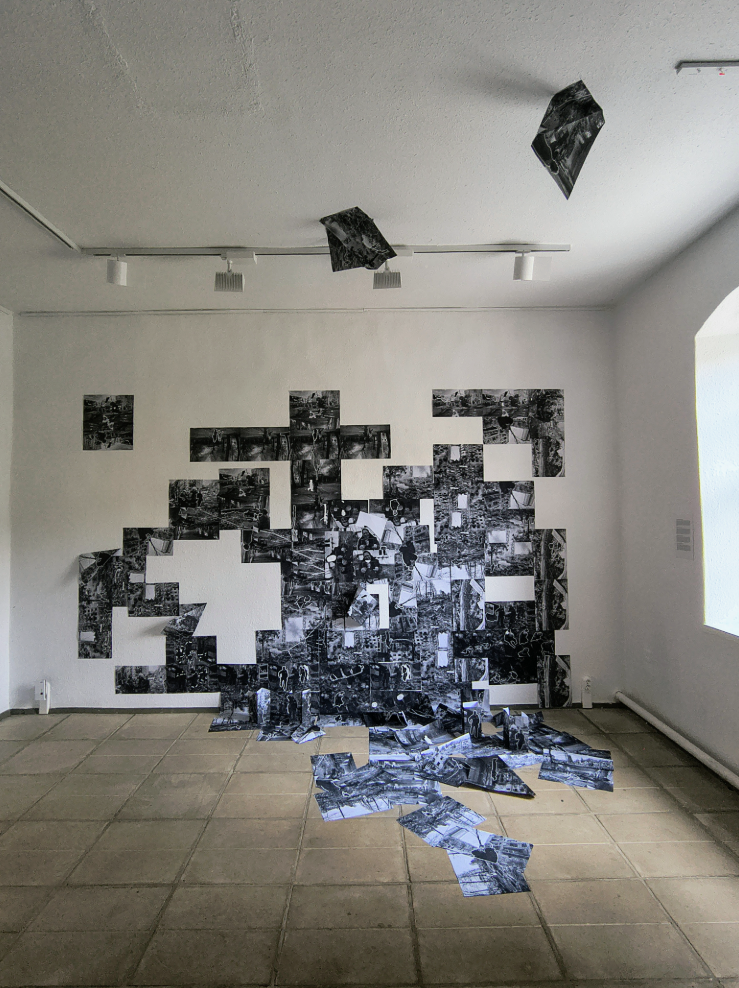
K.B.: Yet, in the description of the exhibition Edges of Memory, you state you are “not interested in documentation”, but rather “interested in matters of a trace.” You also referred to this in relation to Lviv and questions of authenticity. Why is the trace more important to you than documentation in your practice?
M.Z.: Documentation carries a degree of passivity. Through its mode of creation, its apparent objectivity and dryness, it often erases the human aspect. A trace, on the other hand, contains absence – and that fascinates me. A trace is an imprint, a negative of something that once existed. I am deeply influenced by Lacanian analysis and his reading of art as speaking about lack. If we want to understand a message, we should look at what is missing.
I began to search for what has been imprinted, erased, yet remains perceptible. I ask myself: who was here, how, with what thoughts and emotions? Who used, touched, or experienced this space or the objects I work with? This type of trace attracts me because I cannot fully explain what created it or what its intention was. It provokes completion while directing attention to the existence that left it behind. For me, this is deeply humanistic – turning toward something that may no longer exist at all. Through its enigma, the trace carries more authenticity than dry documentation or journalistic reporting.
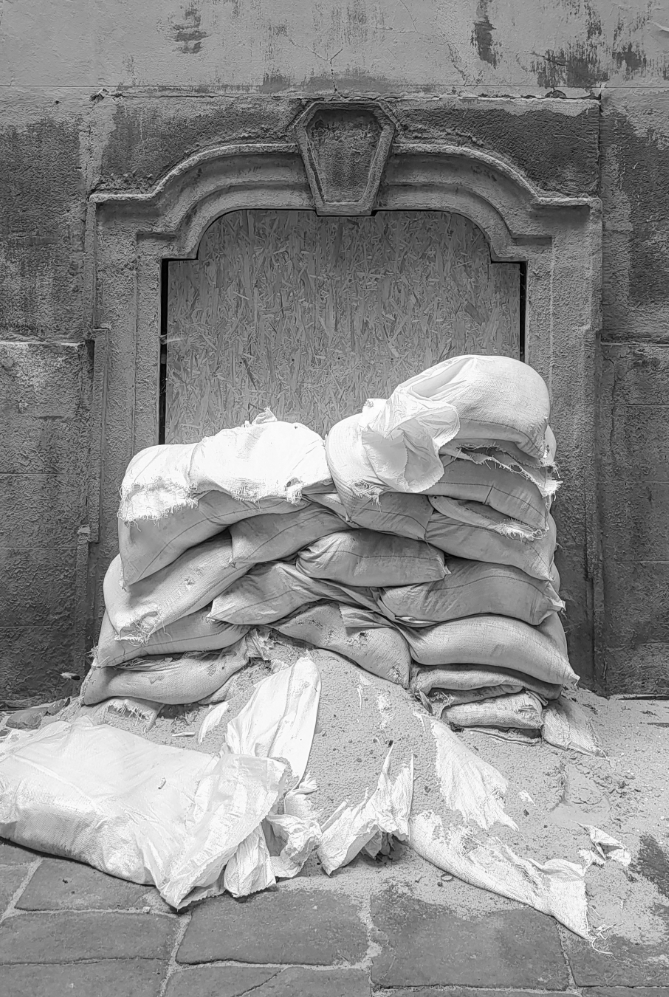
K.B.: What role does memory play in your work, and how does it connect to the idea of the trace?
M.Z.: I begin to transform memory into trace. I want what I register and retain, directly resulting from therapeutic encounters, to remain an authentic expression of an entire generation and local community. I felt a strong need to speak on behalf of those I am privileged to be with – both in art therapy and in chance encounters – people I sit with on trains, talk to during long journeys between Przemyśl and Dnipro. Archives and museums, though I do not wish to devalue them, carry a form of violence.
We live in an age of consumption, where our lives are exploited. Intuitively, I turned to ceramics, to clay, a medium I had hated during my art studies. But I began treating what I hear as a negative imprint – recorded in unfired tablets that naturally crack, crumble, and eventually turn into sand. The performativity of these objects became identical to the nature of memory and trace. Traces that physically no longer exist are remembered far more vividly than something permanently preserved.
“Traces that physically no longer exist are remembered far more vividly than something permanently preserved.”
– Maciej Zdanowicz
K.B.: Turning towards the future time, do you have a vision of art you would like to develop, or of a particular artistic community or direction emerging from your practice?
M.Z.: What I speak of in terms of the social ethos of art is not new. Modernist paradigms and grand utopias failed. Perhaps their totalising methods made the world impossible to unify. This may sound naïve, but after total visions and the era of the artist’s ego, seeking global impact and status, the future of art may lie in what we create in our immediate surroundings. We are redefining not only art, but political and economic orders. The end of capitalism is proclaimed, liberal democracy is in crisis, and globalism is questioned. For someone like me, for whom regional context has always mattered more than national identity, this somehow confirms that what works best is what is locally grounded and has a tangible impact on life, perception, and thought.
I believe art should not be seen as an isolated field, but as something immanent – capable of shaping identity and pointing toward how we might shape our future. Artistic research deeply attracts me. I also believe art should be both social and sociological. Art is a method of building relationships in a meaningful way, but we need to perceive it on a different scale – especially as our reality becomes increasingly technologically advanced. In such a world, proximity and direct experience become crucial.

„Czy świat jeszcze o nas pamięta?”
Rozmowa z Maciejem Zdanowiczem o sztuce jako azylu.
W obrębie miasta Maciej Zdanowicz śledzi momenty, w których geografia staje się doświadczeniem, a ciało – wrażliwym rejestrem historii. Jako artysta intermedialny, teoretyk i kurator, pracuje na styku obrazu, dźwięku, tekstu i materiału, tworząc delikatne formy, które wyłaniają się ze zwrócenia uwagi na nieobecność. Od dwóch lat artysta odwiedza Ukrainę, wielokrotnie powracając do miast naznaczonych wojną i niepewnością. Jego twórczość oscyluje między sztuką współczesną, badaniami naukowymi i pracą społeczną, skupiając się na pamięci, traumie i transformacji – zarówno indywidualnej, jak i zbiorowej.
Europa Środkowa i Wschodnia pozostaje dla niego głównym punktem odniesienia: regionem podziałów i ciągłych przemian. W ostatnich latach Ukraina stała się najważniejszym obszarem tych poszukiwań, gdzie sztuka pełni rolę nie tyle reprezentacji, co obecności, troski i budowania wspólnoty.
„Czy świat jeszcze o nas pamięta?” – to pytanie powraca w rozmowach z osobami, z którymi Zdanowicz współpracuje w Ukrainie. W swojej praktyce artystycznej dzielenie się doświadczeniami wojny poza granicami kraju staje się odpowiedzią na tę niepewność – próbą przeciwdziałania zanikowi zainteresowania, rozprzestrzenianiu się fałszywych informacji i stopniowemu przekształcaniu wojny w odległy obraz.

Rozmawiam z Maciejem Zdanowiczem tuż po jego kolejnym powrocie z Ukrainy, w momencie, gdy wojna wkracza w kolejną fazę, a powrót ponownie rodzi pytania o winę, odpowiedzialność i dystans. Rozmawiamy o poszukiwaniu definicji ukraińskości, o tym, jak instytucje artystyczne funkcjonują w warunkach inwazji i jak kultura staje się formą schronienia – często dosłownie.
Klara Bender: Właśnie wróciłeś z Ukrainy. Co oznaczała dla Ciebie ta niedawna podróż?
Maciej Zdanowicz: Była trudna. Wojna wkracza w nową fazę. Dla mnie był to również moment przełomowy. W zeszłym tygodniu jedna z rakiet uderzyła zaledwie trzysta metrów od mojego mieszkania w Dnieprze. Miejsce, w którym czułem się względnie bezpieczny, nie wydaje się już takie. Pożegnanie z młodzieżą, która uczestniczyła w moich warsztatach, również było bardzo emocjonalne. Nazywam ich „moimi dziećmi” – mają siedemnaście-osiemnaście lat i intensywnie przeżywają zarówno moje przyjazdy, jak i wyjazdy.
Ludzie mieszkający blisko linii frontu często nie mogą wyjechać lub nie wyobrażają sobie wyjazdu. Mają tam rodziny, bliskich walczących na froncie lub silne poczucie misji. Jest wiele takich osób, między innymi pracownicy Centrum Kultury Współczesnej w Dnieprze i wykładowcy z Profesjonalnej Szkoły Sztuki w Dniepropietrowsku. Na mojej uczelni mogę zaoferować im takie opcje, jak finansowanie krótkich wyjazdów w ramach programu Erasmus, aby mogli odpocząć lub na chwilę się odłączyć. Odmawiają, twierdząc, że gdyby coś się wydarzyło podczas ich nieobecności, poczucie winy byłoby nie do zniesienia. Świadczy to nie tylko o niezwykłym poczuciu odpowiedzialności, ale także o niesamowitym poczuciu empatii.
K.B.: Czy ludzie, z którymi obecnie pracujesz, to w większości ci sami, z którymi nawiązałeś relacje na przełomie lat? Czy te doświadczenia i więzi są bezpośrednio związane z projektem Ciało w napięciu?
M.Z.: Jest stała grupa osób, które przychodzą od początku, jak i nowych uczestników. Obecnie wkraczamy w nową fazę badań klinicznych w ramach projektu Ciało w napięciu, w którego sesjach uczestniczą weterani wojenni wraz ze studentami. Uważam, że wiedza na temat tego, jak wygląda trauma, jest łatwiejsza do zrozumienia, gdy jest bezpośrednia, a nie otoczona ciszą lub domysłami.
Niektórzy z moich uczniów byli świadkami śmierci swoich rodziców. Inni noszą w sobie traumę związaną z ich kłótniami, nie wiedząc, co się z nimi dzieje. Czasami jest to jeszcze trudniejsze, ponieważ wiąże się z poczuciem odpowiedzialności i winy. Ja również czuję się winny, wracając do Polski. Wsiadając do pociągu w Dnieprze, wiem, że mam gdzie wrócić – oni nie mają. I to jest straszne.

K.B.: Czy to poczucie winy związane z powrotem zmieniło się od początku twojej pracy w Ukrainie?
M.Z.: Nie zmieniło się. Dwa lata temu pojechałem na wymianę Erasmus+ do Narodowej Akademii Sztuk Pięknych we Lwowie, aby wesprzeć przyjaciół, z którymi pracowałem od 2016 roku. Ten tydzień przyniósł mi pewne przebudzenie. Dzień po powrocie do Polski miałem wernisaż wystawy, ale całkowicie zmieniłem swoją koncepcję. Pierwsze prace odzwierciedlające mój krótki pobyt we Lwowie powstały częściowo z poczucia winy. W pociągu ze Lwowa do Przemyśla wiedziałam, że trwa atak, a moi przyjaciele są w schronach. Nie chciałam ich opuszczać, ale chciałam też przekazać to doświadczenie wykraczające poza nagłówki wiadomości.
Są to dwie zupełnie różne rzeczywistości: to, co czytamy w wiadomościach, oraz to, jak wojna odczuwalna jest na poziomie emocji i reakcji fizycznych. Interesowały mnie również moje własne reakcje psychofizjologiczne. Było to moje pierwsze prawdziwe spotkanie z trwającą wojną i moja pierwsza prezentacja. W rezultacie powstały prace związane z konkretnymi miejscami pokazane w BWA Kielce, będące przekładem filmów i zdjęć wykonanych telefonem komórkowym.
K.B.: Jaki jest związek między poczuciem winy z powodu nieobecności w Ukrainie a potrzebą przeniesienia tych doświadczeń do polskiego kontekstu i mówienia o nich tutaj?
M.Z.: Z perspektywy mojej własnej psychiki, która okazała się wystarczająco wytrzymała, pomyślałem, że powinienem rzucić pracę i po prostu tam zostać. Czułem się wypalony, zarówno jako nauczyciel, jak i artysta. Miałem wrażenie, że jeśli mnie tu nie będzie, nic się nie wydarzy, ale jednak moja obecność ma znaczenie.
W tym roku zdałam sobie sprawę jeszcze z jednej rzeczy. Gdy sytuacja w Polsce pogorszyła się w wyniku tzw. wojny informacyjnej – nienawiści, wyborów i instrumentalizacji migracji – zaczęłam rozumieć, że moja praca po powrocie może być równie ważna, a może nawet trudniejsza: najpierw w Polsce, a później w Niemczech. Nie czułam się już komfortowo w Polsce, ale nie spodziewałam się, że mój pobyt we Frankfurcie wywoła tak silne emocje i oskarżenia o ukraińską propagandę. Chciałam wyjechać. Jednak dzięki kuratorowi i zarządowi zostałem, prowadząc wykłady dla rezydentów i studentów. Oprowadzałam każdego zwiedzającego po mojej wystawie i widziałem, jak bardzo wpłynęło to na odbiór – osoby, które początkowo były sceptyczne, oglądając filmy i słuchając dźwięków z Dniepru, dziękowały mi, mówiąc, że nie zdawały sobie sprawy, jak naprawdę wygląda wojna.
Pod koniec pobytu wydarzyło się też coś wyjątkowego. W jednej z sal urządziłem swoją pracownię, a naprzeciwko znajdowała się przestrzeń wystawowa. Weszła kobieta około pięćdziesiątki. Pracowałem nad pamiętnikami, miałem ręce pokryte gliną, ale oderwałem się od pracy i zacząłem jej wszystko wyjaśniać. Wyglądała jakby nie była zainteresowana. Kiedy wróciłem do pracy, myślałem, że już wyszła, ale po godzinie zerknąłem – nadal oglądała filmy. Cicho wróciłem do swojego studia. Po chwili podeszła do mnie ponownie i powiedziała jedynie: „Dziękuję za otwarcie mi oczu”.
I wyszła. Pomyślałem wtedy, że to chyba jedyny przypadek, kiedy ktoś poświęcił całą godzinę na obejrzenie prac, bo wiemy, jak zazwyczaj zwiedzane są wystawy – często tylko przelotnie. Podczas jednej z moich późniejszych podróży do Polski spotkałem grupę tureckich studentów i opowiedziałem im o swojej pracy. Jeden z nich powiedział, że jestem posłańcem – przekazuję innym to, co dzieje się na Ukrainie. Wtedy zdałem sobie sprawę, jak ważne jest to, co robię. Byli to inżynierowie ruchu, a mnie nazwali „inżynierem emocji”.
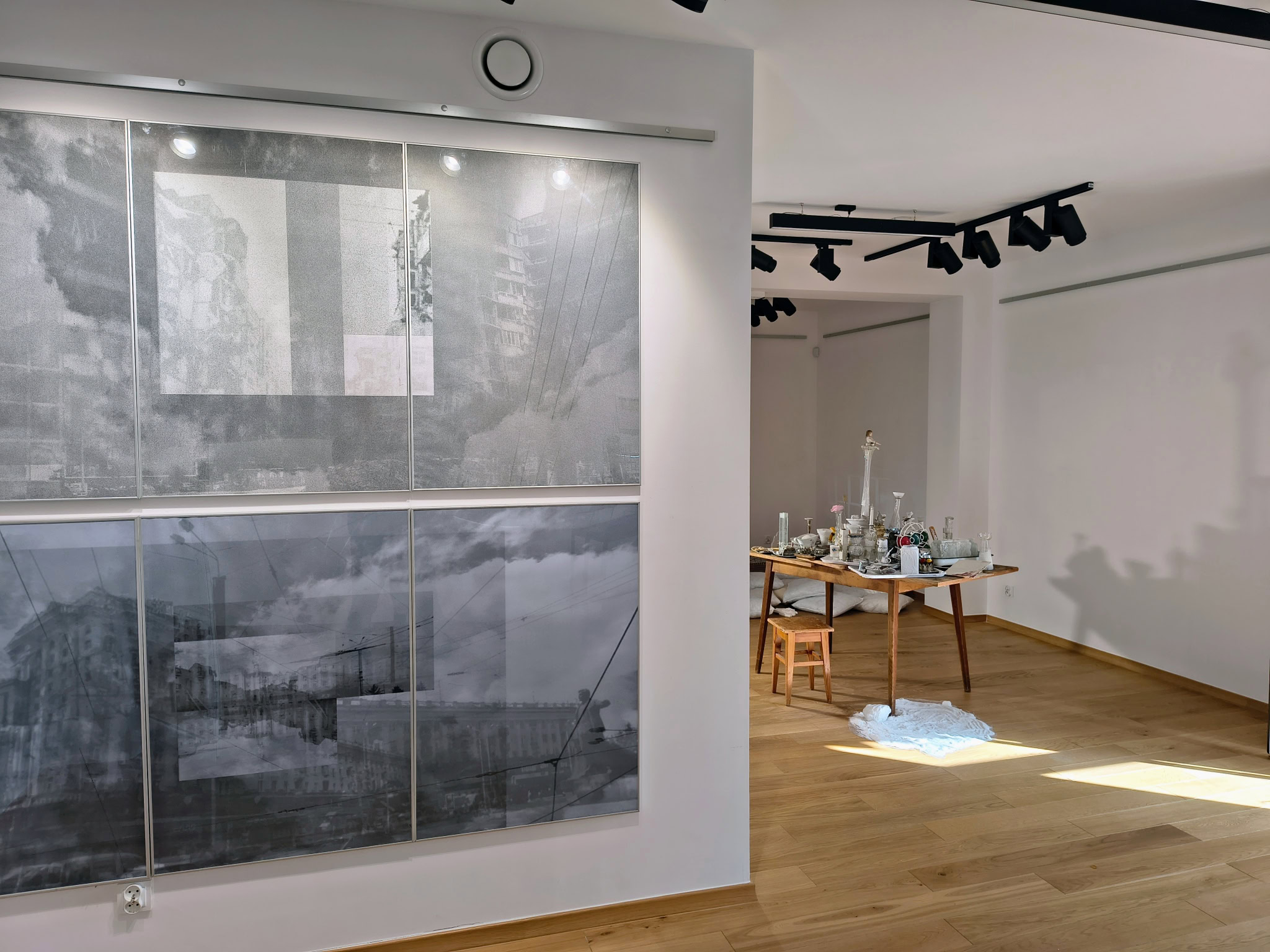
K.B.: Stan zagrożenia lub wojny zmienia również sposób funkcjonowania instytucji kulturalnych. Czy uważasz, że tworzy się ich nowy model?
M.Z.: Wiele się zmieniło, to prawda. Pracujemy nad tym, aby realnie wpływać na społeczeństwo, nawet jeśli tylko chwilowo, ale znacząco – na to, co nazywam psychofizycznym stanem człowieka. Chodzi również o pokazanie, że niezależnie od tego, czy spadnie rakieta, czy nie, Ukraina i jej kultura funkcjonują i to bardzo dobrze. Każde otwarcie wystawy staje się dowodem na to, że sztuka jest niezbędna.
Pod koniec sierpnia zorganizowałem wystawę Porzucone konstrukcje w opuszczonych pomieszczeniach Państwowej Wyższej Szkoły Sztuki w Dniepropietrowsku. Zaprosiłem ponad dwudziestu artystów z sześciu krajów, sam przetransportowałem i zainstalowałem wystawę. Osiem minut po rozpoczęciu otwarcia nastąpił nalot. Pociski spadły pół kilometra od nas. Wbiegł wolontariusz i powiedział, że jeśli ktoś chce udać się do schronu, musi podjąć decyzję natychmiast, ponieważ najbliższy znajduje się trzysta metrów stąd. Czułem na sobie ciężar spojrzeń wszystkich i pytanie: co robimy? Nie wiedziałem. Ale intuicyjnie czułem, że nie chcą wychodzić. W pewnym momencie podeszła do mnie starsza kobieta i powiedziała: „Jeśli teraz wyjdziemy, nie wrócimy tutaj. Jeśli nie masz nic przeciwko, proszę, kontynuujmy”. Było tam około siedemdziesięciu, osiemdziesięciu osób. Nikt nie wyszedł. Wszyscy zostali do końca.
“Każde otwarcie wystawy staje się dowodem na to, że sztuka jest niezbędna.”
K.B.: Czy praca w Ukrainie podczas wojny wpłynęła na twoją praktykę artystyczną i sposób myślenia o sztuce i instytucjach kultury?
M.Z.: Trudno mi używać tego słowa, ponieważ wydaje mi się nieetyczne. Jednak za każdym razem, gdy prezentuję swoje prace w Polsce, powtarzam, że doświadczyłem znaczenia sztuki na Ukrainie, blisko linii frontu. Po raz pierwszy miałem poczucie, że moje działania mają znaczenie. Moja praca ma znaczenie – obecność, warsztaty, bezpośredni kontakt.
Często pracuję z ludźmi, którzy komunikują się za pomocą intuicyjnego, abstrakcyjnego języka ciała; nie potrzebuję słów. Z czasem rozwinęłem tę pracę w kierunku praktyk performatywnych i “brzemienia ciała”. Istotnym doświadczeniem było otwarcie mojej wystawy, kończącej rezydencję w Centrum Kultury Współczesnej w Dnieprze. Ciągle zadawałem sobie pytanie: kto dał mi prawo wypowiadać się w imieniu tych ludzi? Czy to etyczne, aby ktoś, kto nie jest Ukraińcem i przebywał tu tylko sporadycznie, wyrażał ich głos za pośrednictwem swojej pracy? To, co tworzę, składa się częściowo z moich własnych doświadczeń, a częściowo z historii, które zaczęły mnie współtworzyć.
Podczas powitania gości na otwarciu wystawy usłyszałem coś, co brzmiało jak krzyk czy płacz. Pomyślałem, że przekroczyłem granicę, że to, co pokazuję, nie jest zgodne z rzeczywistymi doświadczeniami mieszkańców miasta. Wtedy ktoś wyjaśnił mi, że osoba, którą usłyszałam, powiedziała, że wystawa dokładnie oddaje to, co czuje: nie jest ona dla nich, ale powinna być pokazywana poza Ukrainą. W tym znalazłam potwierdzenie, że mogę kontynuować swoją pracę i że ma ona znaczenie.
Ale były też dwa doświadczenia związane ze sztuką podczas wojny, które wywołały we mnie niepewność. Pierwsze miało miejsce po długim nocnym nalocie, w wyniku którego miasto zostało pozbawione prądu. Tego wieczoru zorganizowano pokaz niemieckiego filmu, a moi koledzy zapewnili paliwo do generatorów. Sala była pełna. Kilka godzin później ludzie powoli opuszczali salę, nie spiesząc się do domów pomimo godziny policyjnej, wędrując po salach wystawowych, aby doświadczyć krótkiej chwili normalności. Drugi moment miał miejsce w zeszłym roku na dworcu kolejowym we Lwowie. Chociaż spieszyłem się, spytałem stojącego tam chłopca, skąd ten nietypowy tłum. „To Zhanna Kadyrowa, zaraz zaczyna się koncert”. Zhanna jest artystką, która skonstruowała organy z rosyjskich rur rakietowych i gra na nich rosyjskie klasyki, aby ujawnić kulturową kolonizację i potępić fakt, że społeczności artystyczne nadal ją praktykują na całym świecie, od Nowego Jorku po Melbourne. Chłopiec był na wycieczce szkolnej, a instrument podróżował po Ukrainie, grając wieczorne koncerty we Lwowie. Instytucje kulturalne pozostają otwarte, funkcjonując jako miejsca schronienia – azyl oferujący chwilę wytchnienia.

K.B.: Sztuka odgrywa istotną rolę w doświadczeniu wojny.
M.Z.: W kontekście doświadczeń Ukrainy sztuka ma kluczowe znaczenie. Często słyszę pytania od moich ukraińskich przyjaciół: „Czy świat jeszcze o nas pamięta?”, „Czy jesteśmy sami?”, „Czy ktoś jeszcze w to wierzy?”, „Czy ta wojna stała się fikcją?”. Dzięki mojej pracy i sposobowi, w jaki opowiadam te historie, sztuka daje poczucie bycia wysłuchanym, a także zapewnia poczucie bezpieczeństwa i nadzieję, że ich głos dociera poza granice Ukrainy.
Kolejną kwestią jest zdefiniowanie ukraińskości. Jest to kraj, który funkcjonuje jako niepodległe państwo dopiero od 1991 roku, w dużej mierze opierając się na zniekształconych punktach odniesienia odziedziczonych po carskiej i sowieckiej przeszłości. Pomarańczowa rewolucja, rewolucja godności i niedawna tzw. „rewolucja kartonowa” dowodzą jednak, że Ukraina wciąż poszukuje swojej formy. Proces kształtowania tożsamości narodowej i kulturowej jest dziś wyjątkowo pilny. Artyści tacy jak Nikita Kadan dekonstruują historię sztuki, sięgając do korzeni konstruktywizmu – do tego, co działo się w Charkowie i Kijowie przed exodusem spowodowanym centralizacją i nazywaniem wszystkiego „sztuką radziecką”. Młodzi artyści nieustannie zadają sobie pytania, kim są, gdzie jest ich miejsce i czy sztuka ukraińska ma swoją tożsamość.
Kolejnym wymiarem sztuki, który zacząłem dostrzegać, jest „schronienie” – zarówno w sensie metaforycznym, jak i dosłownym. Wiele instytucji kulturalnych pełni obecnie funkcję publicznych schronów. Dobrym przykładem jest Centrum Yermilov w Charkowie, które wiele lat temu przeniosło się do piwnicy, co prawda bardzo okazałej. Dzisiaj galeria pełni ważną rolę schronienia dla lokalnej społeczności. Ludzie mogą chwilowo oderwać się od zamętu panującego na powierzchni. Otoczeni sztuką, wkraczają w inną rzeczywistość. Nawet dzieła przedstawiające życie w warunkach pełnej agresji mogą dać nadzieję i poczucie bezpieczeństwa – coś, czego Ukraińcy bardzo potrzebują.
“Dzisiaj galeria pełni ważną rolę schronienia dla lokalnej społeczności. Ludzie mogą chwilowo oderwać się od zamętu panującego na powierzchni. Otoczeni sztuką, wkraczają w inną rzeczywistość.”
K.B.: Czy tak narodził się pomysł zorganizowania warsztatów arteterapii w Dnieprze?
M.Z.: Pojechałem tam jako artysta i wykładowca. W Dnieprze obserwowałem mowę ciała zarówno studentów, jak i wykładowców. Zaproponowałem warsztaty arteterapii, które zorganizowaliśmy bardzo spontanicznie. Ogłoszenie pojawiło się w mediach społecznościowych zaledwie cztery dni wcześniej. Wszyscy mówili mi: „Nie martw się, jeśli nikt nie przyjdzie”. Pojawiło się prawie trzydzieści osób, głównie w wieku od trzydziestu do czterdziestu lat, czego się nie spodziewałem. Improwizowałem, odpowiadając na ich potrzeby, a warsztaty trwały cztery godziny zamiast dwóch. Rano sprawdziłem telefon i zobaczyłem wiadomość od nieznajomego – żołnierza odpowiedzialnego za logistykę w armii. Podziękował mi, ponieważ po raz pierwszy mógł komuś powiedzieć, że boi się śmierci, coś, czego nie mógł powiedzieć w domu. Po raz pierwszy poczuł ulgę.

K.B.: Przestrzeń – specyfika miejsca, jego historia, zmieniające się znaczenie i funkcja – często pojawia się w twojej twórczości. Jak pojęcie przestrzeni i jej redefinicja wpływają na twoją twórczość?
M.Z.: Ukształtowało mnie to, co nazywamy Europą Środkową i Wschodnią – regionem, którego tektonika społeczno-kulturowa pozostaje aktywna sejsmograficznie. Jest to przestrzeń pęknięć: niektóre pogłębiają się, inne tymczasowo się zasklepiają, ale jest to żywy organizm. Patrząc na Polskę, jej granice i podziały związane z wymazaniem kraju, dziedzictwo rusyfikacji i germanizacji, specyfikę Galicji – nadal widzimy ich ślady w krajobrazie, kulturze i relacjach społecznych. W swojej praktyce przyswoiłem sobie powracanie do przestrzeni granicznych – miejsc, które wybieram do prezentacji swoich prac. Moja pierwsza wizyta na Festiwalu Nowej Sztuki lAbiRynT w Słubicach i we Frankfurcie nad Odrą miała niemal mistyczny charakter. Idea miasta podzielonego między Polskę i Niemcy wydawała mi się abstrakcyjna.
Potem przyszła kolej na Lwów, miasto, w którym nadal widoczne są ślady polskości oraz dziedzictwo polityki austriackiej, nazistowskiej i radzieckiej, kształtujące zarówno relacje międzyludzkie, jak i lokalną scenę artystyczną. Powiedziano mi, że Dniepr jest jednym z najbrzydszych miast. Leży nad brzegiem rzeki o ogromnym znaczeniu metaforycznym i tożsamościowym dla Ukrainy – Dniepru, którego źródło znajduje się w Rosji. Dzisiaj rzeka ta stanowi granicę, oddzielającą terytoria nieokupowane od linii frontu. Tak jak my na nowo definiujemy, kim jesteśmy i co oznaczają dla nas nasze miejsca, tak samo miasto poszukuje swojej tożsamości. Niegdyś przemysłowy „Manchester Wschodu”, później zamknięte radzieckie miasto zbrojeniowe, łączy dziewiętnastowieczną architekturę z brutalizmem, rodząc pytania o to, czym jest miasto i jak nas kształtuje.
Wynikiem mojej rezydencji była wystawa, która zaskoczyła nawet mnie – poświęcona miastu Dniepr. Wykorzystałem analizę lacanowską, aby zbadać relacje między warstwą wyobrażoną, brutalną rzeczywistością i wymiarem symbolicznym. Wojna, z którą mamy do czynienia, nie pojawiła się znikąd; w pewnym sensie była do przewidzenia. Jest ona konsekwencją struktury Europy po 1945 roku, procesów transformacji i ruchów wolnościowych zainicjowanych między innymi przez Solidarność. Nie ustabilizowaliśmy świata – nadal wymyka się on ustalonym ramom, poszukując własnego wymiaru i autentyczności. To właśnie sprawia, że przestrzeń, w której żyjemy, jest tak fascynująca: jej różnorodność i sprzeczności. Nie pozwala nam polegać na pewnikach. Nawet polskie Kielce, gdzie wykładam, miejsce pogromu z 1946 roku, pokazują, że pomimo upływu dziesięcioleci niektóre historie pozostają nierozwiązane, niewygodne, a nawet niebezpieczne.
To, co ukryte, domaga się jednak ujawnienia. Dlatego działania związane z konkretnym miejscem są dla mnie tak ważne, jako forma autorskiej dekonstrukcji i próba ujawnienia tego, co zostało stłumione.
K.B.: Jednak w opisie wystawy Krawędzie pamięci stwierdzasz, że „nie interesuje cię dokumentacja”, a raczej „kwestie związane ze śladami”. Odniosłeś się do tego również w kontekście Lwowa i kwestii autentyczności. Dlaczego w twojej praktyce ślady są dla ciebie ważniejsze niż dokumentacja?
M.Z.: Dokumentacja niesie ze sobą pewien stopień bierności. Poprzez swój sposób tworzenia, pozorną obiektywność i suchość, często wymazuje aspekt ludzki. Ślad natomiast zawiera w sobie nieobecność. I to mnie fascynuje. Ślad jest odciskiem, negatywem czegoś, co kiedyś istniało. Jestem pod głębokim wpływem analizy Lacana i jego interpretacji sztuki jako wypowiedzi o nieobecności. Jeśli chcemy zrozumieć przekaz, powinniśmy przyjrzeć się temu, czego brakuje.
Zacząłem szukać tego, co zostało zapamiętane, wymazane, ale nadal pozostaje dostrzegalne. Zadaję sobie pytanie: kto tu był, w jaki sposób, z jakimi myślami i emocjami? Kto korzystał, dotykał lub doświadczał tej przestrzeni lub przedmiotów, z którymi pracuję? Ten rodzaj śladu przyciąga mnie, ponieważ nie potrafię w pełni wyjaśnić, co go stworzyło ani jaki był jego cel. Prowokuje on do dopełnienia, jednocześnie kierując uwagę na istnienie, które go pozostawiło. Dla mnie jest to głęboko humanistyczne – zwracanie się ku czemuś, co może już w ogóle nie istnieć. Dzięki swojej tajemniczości ślad niesie ze sobą więcej autentyczności niż sucha dokumentacja lub reportaż dziennikarski.
K.B.: Jaką rolę w takim razie odgrywa pamięć w twojej twórczości i jak łączy się ona z ideą śladu?
M.Z.: Zaczynam przekształcać pamięć w ślad. Chcę, aby to, co odnotowuję i zachowuję, będące bezpośrednim wynikiem spotkań terapeutycznych, pozostało autentycznym wyrazem całego pokolenia i lokalnej społeczności. Czułem silną potrzebę, aby przemówić w imieniu tych, z którymi mam zaszczyt przebywać – zarówno podczas terapii sztuką, jak i podczas przypadkowych spotkań – ludzi, z którymi siedzę w pociągach, z którymi rozmawiam podczas długich podróży między Przemyślem a Dnieprem. Archiwa i muzea, choć nie chcę ich deprecjonować, niosą ze sobą pewną formę przemocy.
Żyjemy w epoce konsumpcji, w której nasze życie jest wykorzystywane. Intuicyjnie zwróciłem się ku ceramice, glinie, materiałowi, którego nienawidziłem podczas studiów artystycznych. Zacząłem jednak traktować to, co słyszę, jako negatywny ślad – zapisany na niewypalonych tabliczkach, które naturalnie pękają, kruszą się i ostatecznie zamieniają się w piasek. Performatywność tych obiektów stała się tożsama z naturą pamięci i śladu. Ślady, które fizycznie już nie istnieją, są zapamiętywane znacznie lepiej niż coś utrwalonego.
“Ślady, które fizycznie już nie istnieją, są zapamiętywane znacznie lepiej niż coś utrwalonego.”
K.B.: Patrząc w przyszłość, czy masz jakąś wizję sztuki, którą chciałbyś rozwijać, lub konkretną społeczność artystyczną lub kierunek, który wyłoniłby się z Twojej praktyki?
M.Z.: To, o czym mówię w kontekście społecznego etosu sztuki, nie jest niczym nowym. Modernistyczne paradygmaty i wielkie utopie zawiodły. Być może ich totalitarne metody uniemożliwiły zjednoczenie świata. Może to zabrzmieć naiwnie, ale po totalitarnych wizjach i epoce artystycznego ego, dążenia do globalnego wpływu i statusu, przyszłość sztuki może tkwić w tym, co tworzymy w naszym najbliższym otoczeniu. Na nowo definiujemy nie tylko sztukę, ale także porządek polityczny i gospodarczy. Ogłoszono koniec kapitalizmu, liberalna demokracja przechodzi kryzys, a globalizm jest kwestionowany. Dla kogoś takiego jak ja, dla kogo kontekst regionalny zawsze miał większe znaczenie niż tożsamość narodowa, potwierdza to w pewien sposób, że najlepiej sprawdzają się rozwiązania zakorzenione lokalnie i mające namacalny wpływ na życie, postrzeganie i myślenie.
Uważam, że sztuka nie powinna być postrzegana jako dziedzina odizolowana, ale jako coś immanentnego, zdolnego do kształtowania tożsamości i wskazywania, w jaki sposób możemy wpływać na naszą przyszłość. Bardzo pociąga mnie sztuka badawcza. Uważam również, że sztuka powinna być zarówno społeczna, jak i socjologiczna. Sztuka jest metodą budowania relacji w znaczący sposób, ale musimy postrzegać ją w innej skali, zwłaszcza w sytuacji, gdy nasza rzeczywistość staje się coraz bardziej zaawansowana technologicznie. W takim świecie bliskość i bezpośrednie doświadczenie stają się kluczowe.

Przedsięwzięcie finansowane w ramach Krajowgo Planu Odbudowy i Zwiększenia Odporności (KPO) ze środków Unii Europejskiej – NextGenerationEU w ramach inwestycji A2.5.1 “Program wspierania działalności podmiotów sektora kultury i przemysłów kreatywnych na rzecz stymulowania ich rozwoju”.