Is Surrealism a political movement, an international manifesto or an artistic current? What are its origins and core ideas? While often linked to dreams and the fantastic, Surrealism was much more than an artistic or literary phenomenon. It began in France in the early twentieth century as a response to war, social change and political upheaval. Its influence soon extended internationally. From the start, Surrealism was both an aesthetic revolution and a political project, aiming to envision a world free from violence, oppression and authoritarianism.

The exhibition In the Very Bowels of Changes: Surrealism and Antifascism, held until 10 January 2027 at the Museum of Modern Art in Warsaw, offers a distinct perspective on Surrealism. Instead of highlighting avant-garde aesthetics, it explores the movement as political imagination and examines artists’ responses to fascism, war and violence. Although the exhibition covers events up to the 1960s and 1970s, its relevance to current political tensions, conflicts and threats to democracy is clear. Many Surrealist goals remain relevant and, in many ways, unrealised. The exhibition serves not only as a historical account but also as a timely reflection on contemporary challenges.
The Warsaw presentation builds upon Aber hier leben? Nein, danke. Surrealismus + Antifaschismus, first presented at the Lenbachhaus in Munich. It has, however, been substantially expanded to include Polish and Central European perspectives, as well as recent research on the Holocaust. To explore the exhibition’s key themes and curatorial approach, we spoke with its curators, Dorota Jarecka and Magda Lipska.

Julia Gorlewska: Let us start at the beginning. The exhibition came to Warsaw from Lenbachhaus in Munich. The starting point was the 100th anniversary of Surrealism, celebrated in 2024. The goal of the curators was to avoid trivialising the movement and to focus on its political origins. It is also meaningful that the exhibition was first organised in Germany. As its curators, you have enriched its concept, and the very title of the Warsaw edition refers to a text by Stefan Themerson. How does the exhibition at the MSN differ from the one presented in Munich?
Dorota Jarecka: Most importantly, we have introduced three new aspects of surrealism — from Poland, Egypt and Great Britain — and this feature significantly distinguishes our exhibition from the one in Munich, as it allows us to approach surrealism from yet other perspectives. This was possible thanks to the project’s structure, which is an ‘open work’, as Umberto Eco would put it: it is incredibly flexible, and while the content undergoes certain transformations, its fundamental message remains unchanged.
Magda Lipska: Egyptian surrealism was already present at the Munich exhibition, but it was covered very briefly, possibly because a major exhibition of Egyptian surrealism had recently taken place in Germany. The Polish public did not have a chance to see it, so we decided to include it. The addition of British surrealism, on the other hand, is indeed a novelty. However, these are not the only changes. We have expanded the sections featured in Munich and supplemented many of them with a new selection of works. For example, the section on Czech art has effectively doubled in size compared to what was shown in Munich. In addition, we have introduced a Polish context.

JG: Let us focus on the Polish theme first. What is its function in the exhibition?
DJ: It serves a dual purpose. We are in Poland, not in Germany, so we naturally have to consider the local audience, its knowledge and its needs. Munich is located right in the heart of Western Europe, and the local audience there has easier access to exhibitions in Frankfurt, Paris, Brussels, London, Vienna or Berlin, where a re-evaluation of Surrealism has been underway for many years. Poland, and even Warsaw, though now a cosmopolitan city, does not offer its audiences equally easy access to such exhibitions. Our goal was, first, to show that the way we think about Surrealism is changing, and second, to contribute to that change.
ML: I would also mention the institutional perspective. Whenever we host an exhibition from another institution, we strive to contextualise it appropriately. We needed the Polish context to ground the exhibition in the place where it is being displayed. On the other hand, it was incredibly tempting to challenge the common belief that Surrealism did not exist in Poland. The exhibition explores the reception of Surrealism in Poland both in the 1930s and in the post-war period. Therefore, I think there were at least three reasons: research-based, institutional and local.
We wanted to move away from the established belief that everything comes down to imitating Paris. We wanted to show that Surrealism also developed in London, Cairo and Prague, and that its creators did not simply copy Parisian models but entered into their own dialogue with them.
DJ: We wanted to move away from the established belief that everything comes down to imitating Paris. We wanted to show that Surrealism also developed in London, Cairo and Prague, and that its creators did not simply copy Parisian models but entered into their own dialogue with them. The history of Surrealism in Poland, both in the 1930s and the 1940s, is the best example of this. This rootedness has both a local and an international dimension, because that is what Surrealism was all about. In my opinion, this is the most important aspect of this exhibition: we are not adding another chapter but rather telling a more complete story.
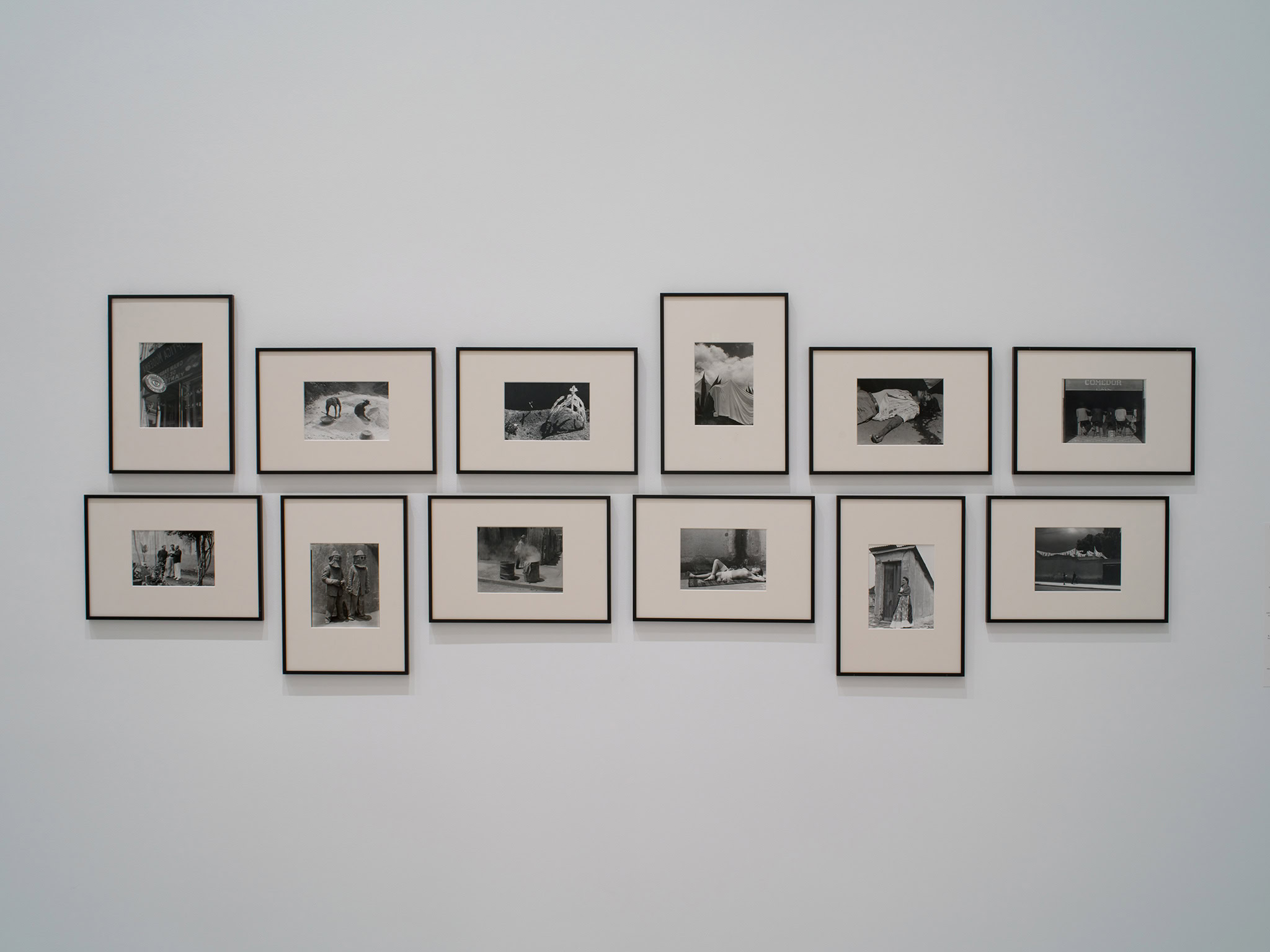
JG: It is precisely thanks to this specific structure, which resembles a map rather than a linear narrative, that the exhibition offers a tremendous amount of historical, social, and cultural knowledge. For example, the section entitled Spectres in Prague showcases Czech surrealism, which has hardly ever been presented in Poland before. What surprised you the most while working on this project?
ML: For me, the biggest surprise was discovering the Cairo art scene. It appears that surrealism in Cairo meant something completely different from what it did in Europe. It was not a codified aesthetic, but primarily a tool for criticism and social change. The artists there were mainly inspired by the political ideas of André Breton, as well as by literature: the poems of Georges Henein and the short stories of Albert Cossery. The Egyptian milieu borrowed from Europe through Lee Miller, who lived there, and Henein, who maintained direct contact with Breton; nevertheless, it developed its own, largely anticolonial and highly critical language for discussing reality. That was a truly significant discovery for me.
DJ: For me, it was British Surrealism that was a huge discovery. Of course, I was familiar with it through books and exhibitions; I knew about figures such as Eileen Agar, Roland Penrose and Henry Moore. It was only when I had the opportunity to borrow a substantial selection of works from Jeffrey Sherwin’s collection at the Hepworth Wakefield Museum that I became aware of the scale of this phenomenon. I saw that in Great Britain, a community had emerged almost parallel to the one in Paris, developing somewhat later but remaining in close contact with it. Just like in Paris, exhibitions did not merely serve to showcase art but also to shape agendas and initiate change.
The best example was the International Surrealist Exhibition at the New Burlington Galleries in London in 1936. Shortly afterwards, this same community became deeply politically involved in relation to the Spanish Civil War. Artists not only created paintings that addressed the threat of war but also organised aid campaigns, thus supporting the Republic. This commitment struck me as very important in the history of anti-fascist resistance, and it immediately became clear that this material should be included in the section The Spanish Civil War. Importantly, this was also approved by the curators from Munich: Stephanie Weber, Adrian Djuki, and Karin Althaus.
I think this will be particularly interesting for Polish audiences, since there have been virtually no exhibitions in our country showcasing the work of British Surrealists such as Emily Bridgwater, John Banting, Sam Haile, Stanley William Hayter and F. E. McWilliam, whose Spanish Head (1938–39) is on display in the section dedicated to the Spanish Civil War.

JG: The great absentee of the exhibition is Salvador Dalí. His conflicts with the Surrealist circle began virtually immediately after he joined the group. Nevertheless, his name remains synonymous with Surrealism for many people today. In the exhibition, Dalí appears only in the context of the film The Golden Age (L’Âge d’Or), co-created with Luis Buñuel, which was banned by censorship. Can we discuss this topic, please? I get the impression that the exhibition also debunks many myths commonly held in the general understanding of art history. What were the most important ones?
ML: I am not certain whether our exhibition debunks the myth of Dalí as an outstanding artist. I think his reputation remains unquestionable. He is still the name most commonly associated with Surrealism and, in a sense, promotes this movement. Nevertheless, our exhibition proposes a very specific perspective on Surrealism, and Dalí does not fit into that framework. His attitude toward fascism remained ambiguous. He was fascinated by figures such as Francisco Franco and Adolf Hitler — charismatic, authoritarian rulers. That is why he was not included in our narrative. It also does not include other important artists who were not politically engaged, such as Meret Oppenheim.
The problems Surrealists struggled with have not been left in the past at all. That is why comparisons between those events and the present day come to mind almost automatically. Obviously, we are not living in the 1930s. Social media has a tremendous impact on the nature of many social phenomena, but the dynamics of these changes appear to be similar.
DJ: Dalí’s story is very ambiguous, and his exclusion from the Surrealist movement was never complete. In 1938, when Nazism was already in full swing, Franco was conquering new territories in Spain and approaching victory in the civil war, Dalí continued to be invited to participate in the activities of the Surrealists. At the International Surrealist Exhibition in Paris, he realised his famous project Rainy Taxi. However, our exhibition does not aim to present the entire history of the Surrealist movement. It deliberately focuses on its political, left-wing faction. As an anti-communist, Dalí did not participate in the discourse that was becoming incredibly important at the time for André Breton, Georges Bataille and many other artists associated with the movement. For them, Surrealism was a political art form that drew on both Freud and Marx.
This is particularly important in Poland, where the political dimension of Surrealism was for years overlooked and considered a historical mistake. Meanwhile, it was not a mistake, but a conscious stance rooted in a specific ethic. This is precisely what allowed the Surrealists to recognise the threats associated with the rise of new dictatorships, to reject colonialism and to stand on the side of freedom and marginalised groups. That is why Surrealism is still relevant today. Its anti-colonial message has not lost its significance, which is also underscored by the contemporary policies of imperial powers that continue to employ a discourse of the white West’s superiority over the rest of the world.

JG: It was also interesting for me not to consider this exhibition solely a historical narrative, but also a lesson for the present day.
ML: I think one does not exclude the other. It is a history that we can draw conclusions from. The problems Surrealists struggled with have not been left in the past at all. That is why comparisons between those events and the present day come to mind almost automatically. Obviously, we are not living in the 1930s. Social media has a tremendous impact on the nature of many social phenomena, but the dynamics of these changes appear to be similar.

JG: Do contemporary artists comment on the surrounding reality in a similar manner? One example of this would be the exhibition The Discomfort of Evening, which took place recently at Zachęta in Warsaw and showcased the younger generation’s interest in Symbolism and Surrealism as ways of addressing the contemporary world. How do you feel about the development of these trends? Can we really call this a return to Surrealism among the younger generation?
DJ: I am unsure about this because I doubt that contemporary artists truly speak the language of Surrealism. Simply painting something that resembles a dream or evokes unease is not enough. Surrealism is the outcome of a specific constellation of experiences, political beliefs, philosophy and psychoanalysis. It is only through their combination that this particular kind of art is born. I owe this interpretation, among other things, to the curators of the exhibition in Munich. They made it very clear that surrealism is not a form.
Our exhibition features works that, at first glance, do not appear to be surrealist at all. Just look at the Egypt section. There, we have figurative art that draws on many modern art movements — from Cubism, through Fauvism, to Surrealism — but it cannot be reduced to the simple label of ‘surrealist’. The same is true of Hans Bellmer, who was accepted into the Surrealist circle even though he remained a very distinct artist. Some artists are difficult to unequivocally label as Surrealists, such as Hervé Telemaque or Ted Joans, but their art had a clearly anti-colonial and anti-fascist character, and they were associated with André Breton.
This is a historical exhibition that showcases what Surrealism was in its time. There is no need to label everything created today as Surrealism, nor to apply this label to every new artist.
I have the impression that simply reproducing the aesthetics of Surrealism tends to lose its appeal rather quickly. Social engagement, on the other hand, continues to be an incredibly active area, and I think there is still a lot to be done here.
ML: Yes, but as you mentioned, not every Surrealist fit into that interpretative framework. Yves Tanguy certainly did not, and yet his place in the history of Surrealism is undeniable. He was also not involved with the communist movement, though he supported anti-colonial initiatives.
I also think that the exhibition The Discomfort of Evening, which you mentioned, demonstrates how young artists are experimenting with different artistic languages and searching for something that resonates with them. Several of them have recently taken up the ideas of Socialist Realism and social engagement, now free from the burden of dictatorship and its political constraints. Their explorations are very interesting. The question, however, is to what extent this experiments are truly innovative and what does it mean today to be surrealist for example.
I have the impression that simply reproducing the aesthetics of Surrealism tends to lose its appeal rather quickly. Social engagement, on the other hand, continues to be an incredibly active area, and I think there is still a lot to be done here. Of course, we had no intention of gatekeeping or claiming that someone is not allowed to do something because they have not read Marx. Our question is more about why we use this term and what it actually encompasses. But if someone chooses to use it differently, they have every right to do so.

JG: Does this mean, then, that the exhibition is more about anti-fascism than about Surrealism? Indeed, the works on display — for example in the room But Live Here? No Thanks — do not immediately bring to mind Surrealism. In that case, did this artistic community not have any established ethical standards, but rather remained open to other forms?
DJ: Exactly. It was open to various forms, experiments and ways of thinking. Bellmer found himself in this group partly because the Surrealists liked his doll (Die Puppe, 1934). His boldness in approaching the body, sexuality and power was appreciated, with no expectation that he would become a Surrealist in the strict sense of the word. What mattered most was being open to diverse — even the most extravagant — perspectives. For some time, even Pablo Picasso remained very close to the Surrealist circle.
After all, André Breton wrote Surrealism and Painting, not The Paintings of the Surrealists. He was interested in what surrealism could do for painting and what painting could contribute to surrealism, not in creating a separate category of ‘surrealist painting’. That is why the first Surrealist journals featured works by artists as diverse as Picasso and André Masson. And precisely for this reason, such unconventional female artists as Claude Cahun, Toyen and Dora Maar were able to express themselves within the framework of Surrealism. The first two challenged not only the stereotype of the ‘great male painter’ but also the binary nature of gender roles. It was subversive. Dora Maar was an innovator in her use of photographic techniques, a field of art that gained prominence in Surrealist magazines, books and exhibitions of the movement.

JG: I get the impression that the room titled But Live Here? No Thanks is at the symbolic centre of the exhibition and concentrates the greatest tension. Was that intentional?
ML: Yes, because that is where we actually arrive at the very heart of the events: Germany. Perhaps that is precisely why the tension is so strong there. It is probably the most diverse section of the entire exhibition. On one hand, we have Bellmer; on the other, John Heartfield’s very explicit, propagandistic language. There are also Lee Miller’s documentary photographs of the liberation of the camps in Dachau and Buchenwald, as well as surrealist works by artists associated with the artistic cabaret Die Badwanne (The Bathtub). Various attitudes and aesthetics come together there, united by a spirit of political engagement.
It is also worth noting that such a way of thinking about Surrealism is not new. The first history of Surrealism, written by Maurice Nadeau in 1944, was a political history. In the years after the war, the reception of Surrealism moved away from its political engagement, but for several years now we have been observing a clear trend — both in academic research and in exhibition practice — toward a return to its roots. One example of such an exhibition was Surrealism Beyond Borders, organised by the Tate and the Metropolitan Museum of Art in New York.
It is worth mentioning that the Munich exhibition was accompanied by an academic conference organised shortly after its opening at New York University. This demonstrates that the project is grounded in research and not in a desire for provocation. It stems from a specific way of thinking about surrealism that has emerged from academic research.
DJ: But this kind of re-evaluation had already begun earlier. The exhibition organised by Dawn Ades in 1978 at the Hayward Gallery in London, Dada and Surrealism Reviewed, presented a different side of the movement. It demonstrated that surrealist magazines, manifestos and publications played a particularly important role in the formation of the Surrealists’ attitudes. Thanks to the work of André Breton, Pierre Mabille, Benjamin Péret, Georges Bataille, and many others, Surrealism developed there as an intellectual and collective project, rather than merely a painterly one. Simply reading these journals and pamphlets is enough to understand how deeply this movement was rooted in politics. One of the milestones in the political re-evaluation of Surrealism was the groundbreaking publication edited by Raymond Spiteri and Donald Lacoss in 2003, titled Surrealism, Politics, and Culture. Those are the events we refer to.
It is worth mentioning that the Munich exhibition was accompanied by an academic conference organised shortly after its opening at New York University. This demonstrates that the project is grounded in research and not in a desire for provocation. It stems from a specific way of thinking about surrealism that has emerged from academic research.
We, too, want to demonstrate this through the exhibition’s accompanying publication, a series of lectures and the participation of international scholars. These include Dawn Ades, Michael Richardson, Krzysztof Fijalkowski, Alice Mahon and Sam Bardaouil — scholars specialising in various currents and geographical contexts of Surrealism. We do not operate in isolation but are part of a broader research trend that is uncovering new areas of this movement.
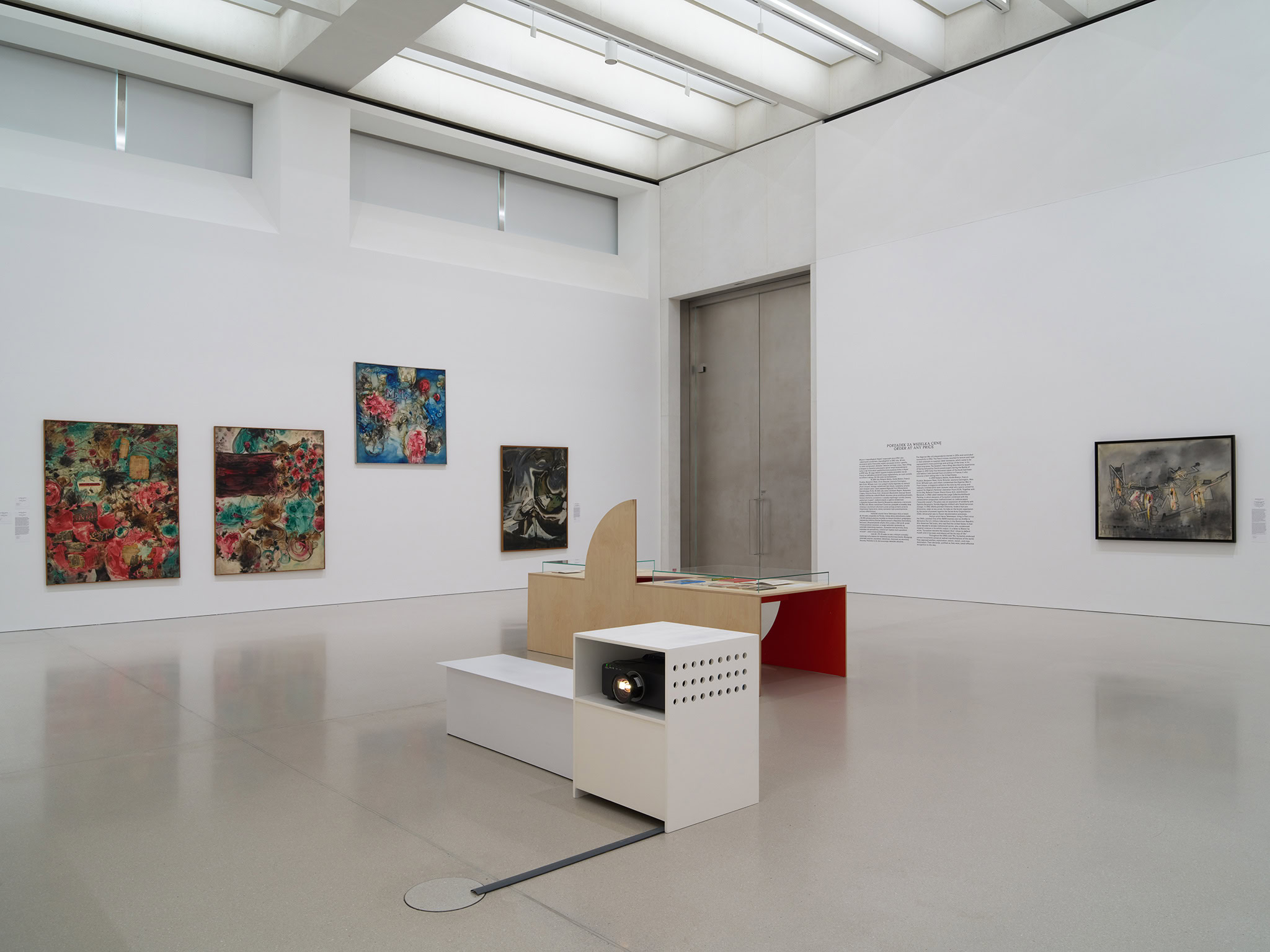
JG: One of the sections of the exhibition is Exiles, dedicated to the legendary Villa Air-Bel in Marseille, where figures such as André Breton and Max Ernst stayed before fleeing to the United States. The section also traces the development of Surrealism in Martinique and Mexico — a relatively little-known aspect of the movement’s history. The exhibition demonstrates that Surrealism is also a story of very specific human choices: flight, emigration or resistance (e.g., the story of Claude Cahun and Marcel Moore). Was this human dimension of Surrealism’s history what mattered most to you when curating this section of the exhibition?
ML: I think it is precisely these kinds of stories that make it easier for the audience to engage with this exhibition, primarily thanks to the biographies of the protagonists and the possibility of identifying with them. That is why the exhibition can be interpreted in various ways: on the one hand, through documents and historical context; on the other, more emotionally, through the life stories and fortunes of individual people.

JG: The exhibition features some of the world’s greatest names: Hannah Höch, Pablo Picasso, Dora Maar, Max Ernst, and many others. However, I’d also like to talk about the role of the Museum of Modern Art in Warsaw. In Poland, we still relatively rarely see exhibitions that juxtapose Polish art with the work of the world’s most important global artists. Here, once again, such a dialogue has been successfully created, and their key works have been made available to the Polish audience. Is this exhibition also a reflection of the mission of the Museum of Modern Art? How do you see it?
ML: Without a doubt, one of the most important priorities of the Museum’s programme policy is to integrate the local context within the global art scene. We have been pursuing this goal since the foundation of this institution, though, of course, on a much smaller scale. The new, fully functional museum building allows us to reach a wider audience. We can now also request loans from the world’s leading institutions. This was not entirely possible at the Pavilion on the Vistula. The move to the new location was thus a major change, but I would say it was not so much a shift in quality as it was, above all, a change in the scale at which we can now operate.