




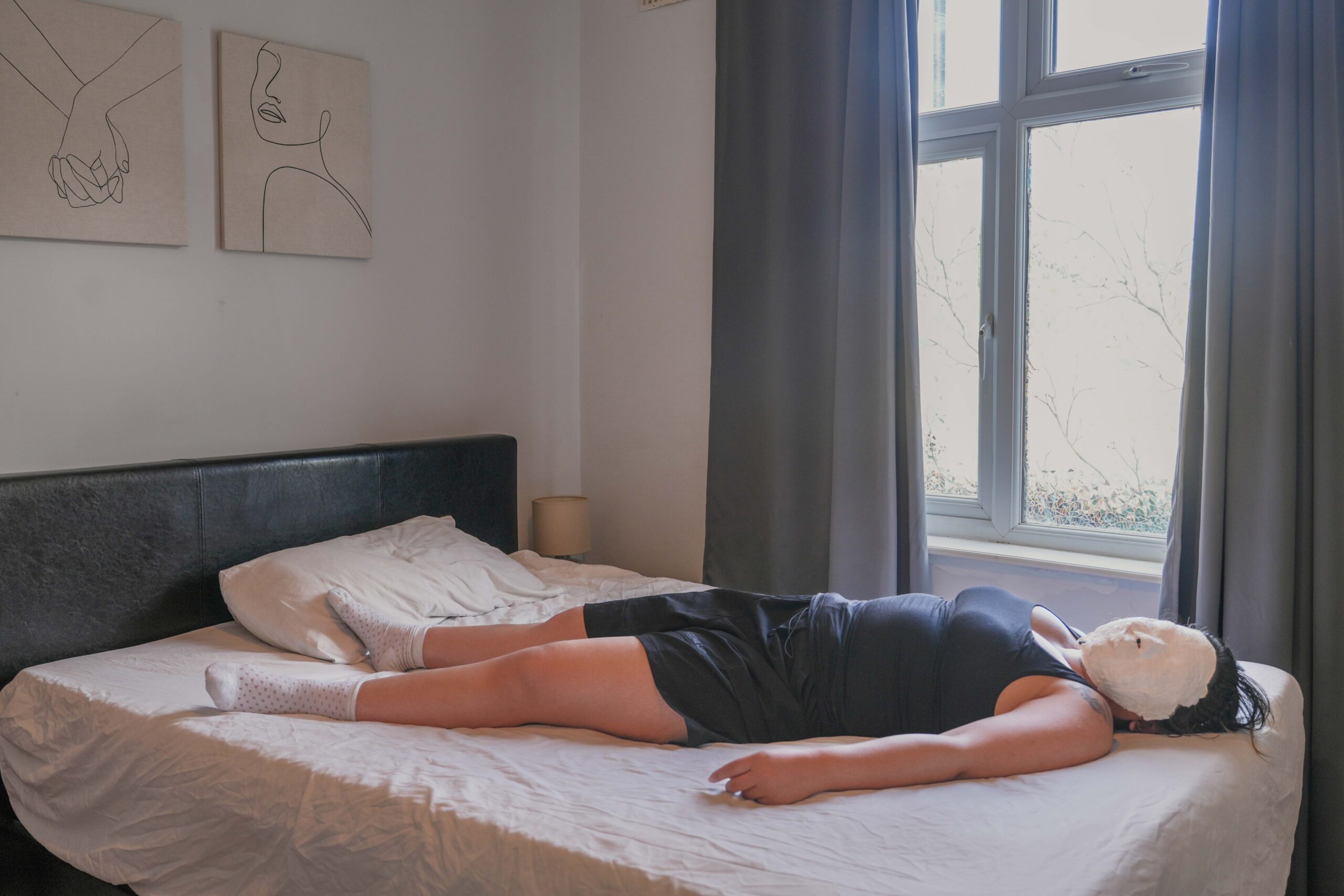
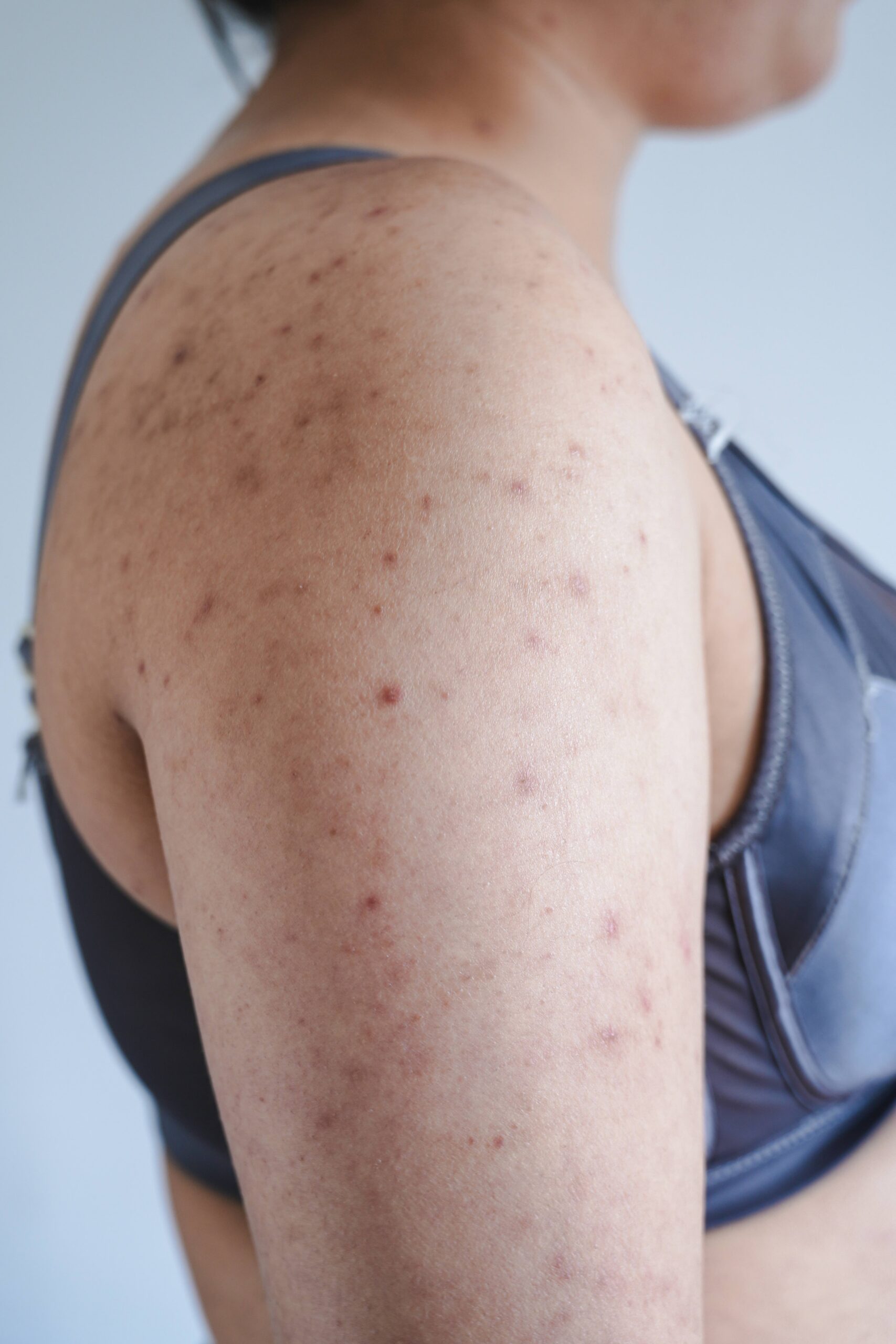
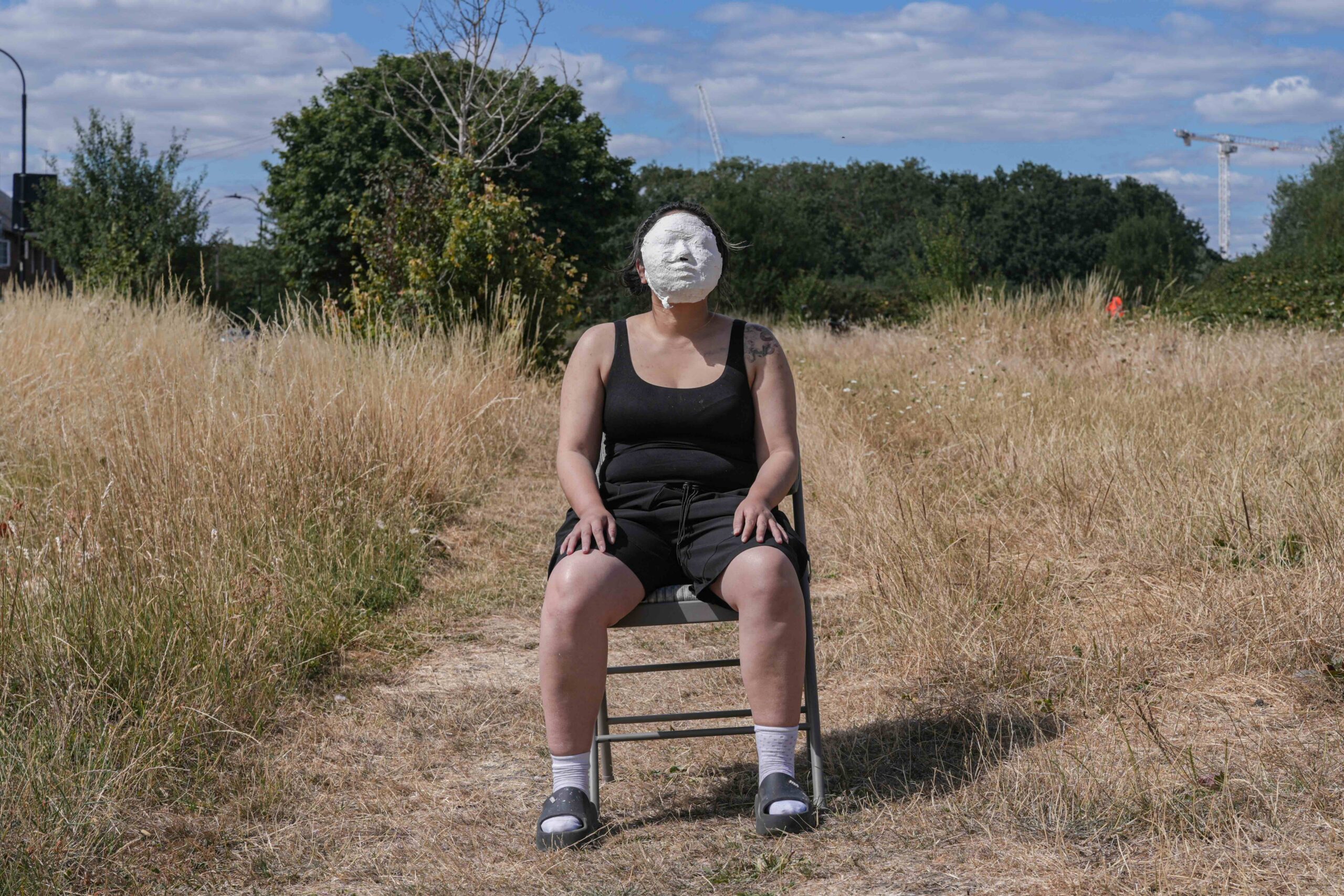
Sitting alone on a chair in the middle of a quiet residential street, a person faces the camera. Black top, black shorts, and white socks; their expression hidden behind a white mask, only parts of skin meant to be seen. The same woman sits in a sun-dried field, an empty playground, on a duvetless bed. Then, scattered across a bare shoulder and upper arm, small reddish marks interrupt the otherwise smooth skin. Photographed up close, they become impossible to overlook.

How to trace experiences that are not always easy to articulate yet become visible? Huiling Chen‘s photography project, Where Pressure Finds a Surface (2025–2026), explores the relationship between bodily and lived experience. The series moves between these environmental portraits and tightly cropped studies of the body, alternating between images that situate the woman within familiar surroundings and those that isolate parts of her skin. Portraying a young Chinese woman’s life with eczema, the series approaches the skin as more than a physical boundary — a surface upon which struggles, expectations, and uncertainties leave their marks.
Two Ways of Seeing the Self
The project was recently presented alongside Yuke Xiao’s Beauty Has Roots as part of No Body Arrives Alone (October 21–24, 2026), a two-person exhibition at Photofusion, London. Curated by Xiao, the exhibition explores the relationship between the body and the world around it, bringing together two projects that approach it from different perspectives.
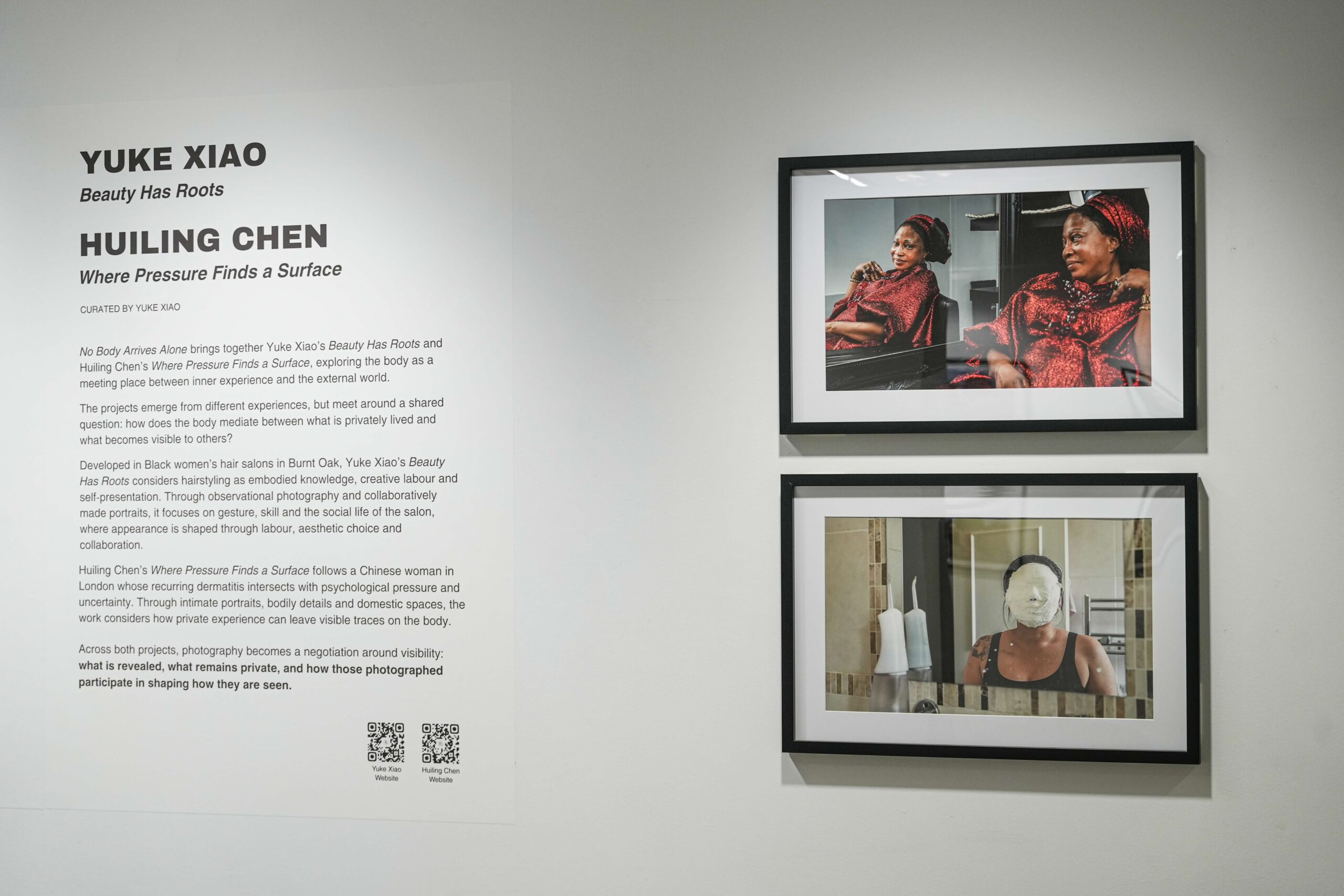
Developed in Black women’s hair salons in Burnt Oak, north-west London, Xiao’s Beauty Has Roots approaches hairstyling as embodied knowledge, creative labour, and a means of self-presentation. Her combination of observational photography and collaboratively constructed environmental portraits draws attention to both the gestures involved in braiding and the social environment in which they take place. Rather than treating appearance as an individual choice or a finished result, the project situates it within a process involving skill exchange and relationships between women.
Chen’s photographs take a different direction. Instead of documenting a shared practice through which the body is actively presented and transformed, she repeatedly returns to one woman’s body, alternating between portraits in everyday environments and close-ups of skin affected by eczema. The juxtaposition brings together two distinct experiences of bodily visibility — one shaped through collective practice, the other through a condition whose physical manifestations cannot necessarily be controlled.
The Individual and the Collective
The focus on an individual subject makes Where Pressure Finds a Surface a particularly revealing entry point into Chen’s practice. A London-based Chinese fine art photographer and visual artist working between the United Kingdom and China, she moves between documentary observation and constructed photography, developing long-term projects concerned with migration, family relationships, labour, and cultural continuity. Her work often begins with individual stories, while placing them within broader social and cultural contexts, exploring how personal experiences are shaped by relationships and changing circumstances.
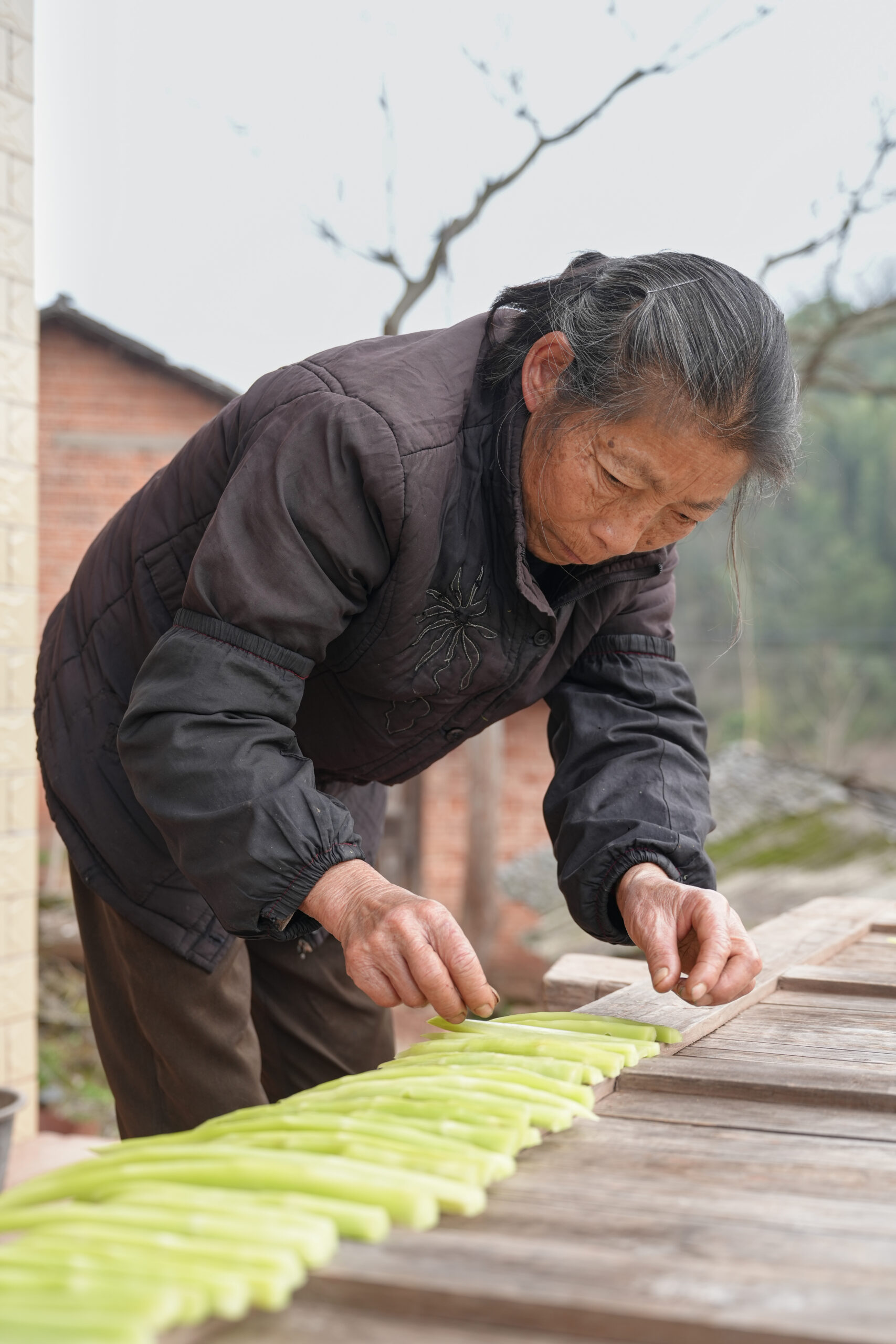
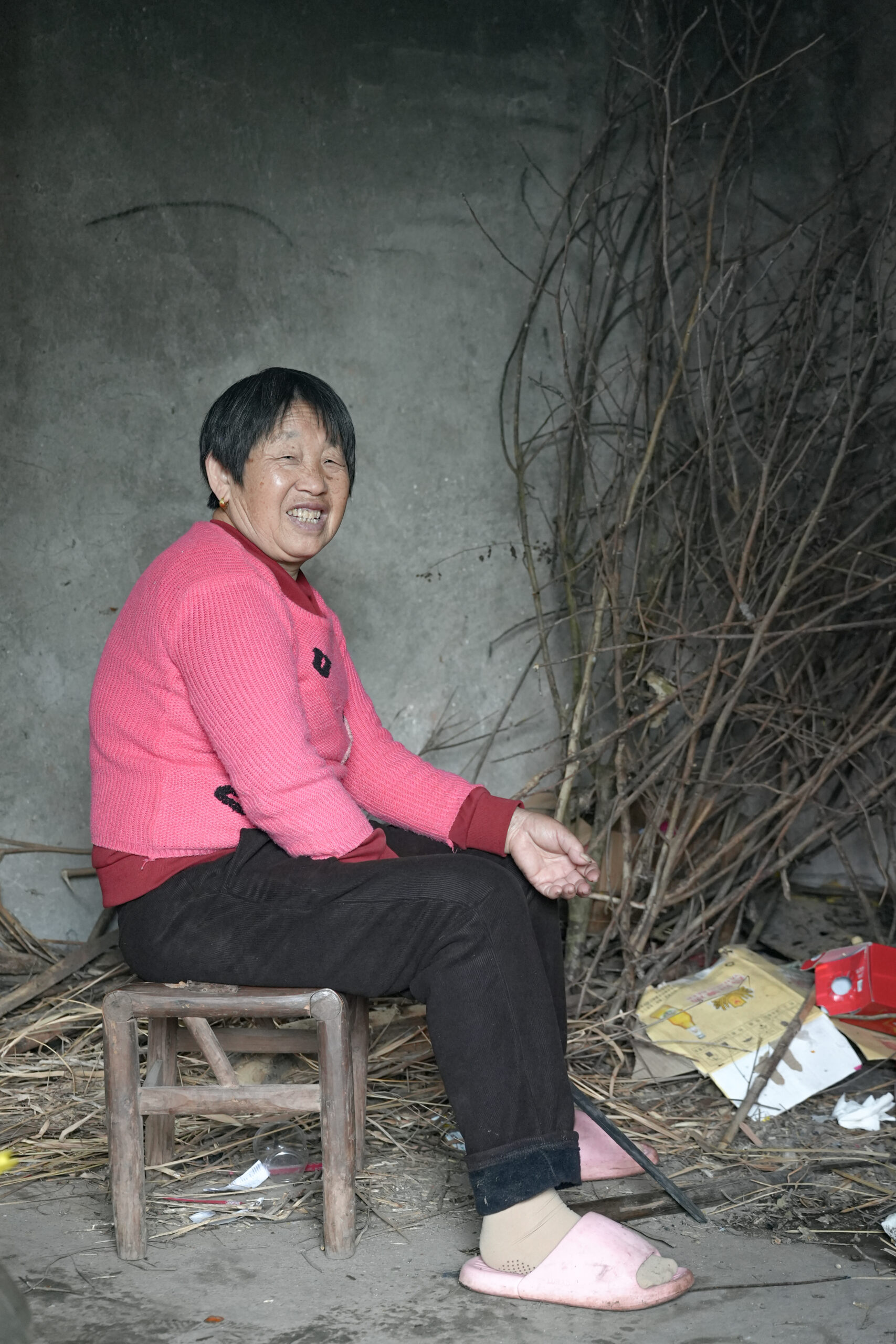
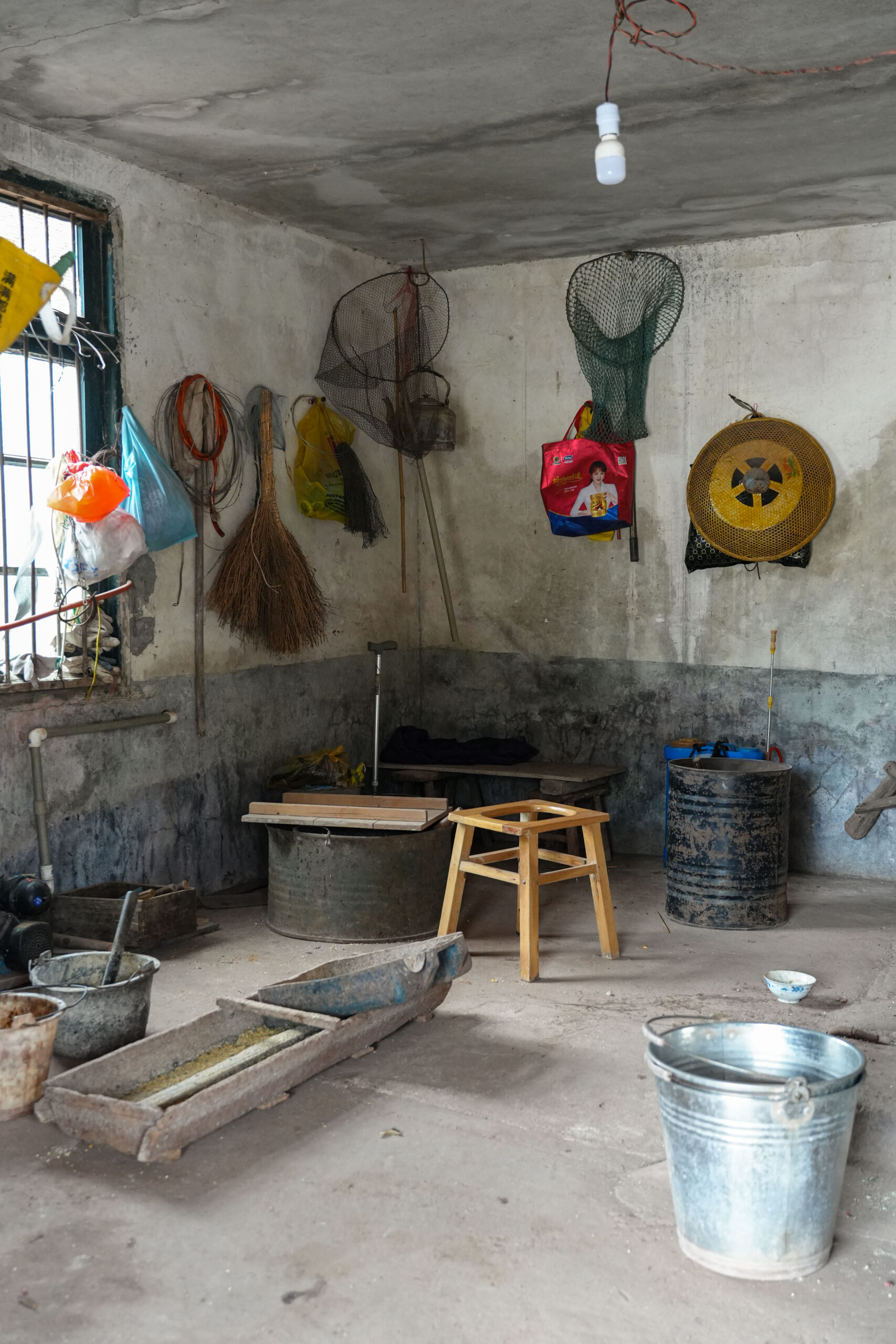
For instance, in Those Who Remain (2025–ongoing), Chen photographs older residents of agricultural communities in rural China, where younger generations increasingly leave for education and work in cities. Through portraits and scenes of regular life, she documents the people and routines that continue to shape these communities amid wider social change. Here, Chen resists the familiar visual language of rural decline. Instead of presenting older residents as passive figures left behind by modernisation, she considers how they continue to adapt to changing circumstances. Her photographs extend beyond conventional portraiture. Alongside images of people at home or working in the fields, the artist includes empty interiors and objects associated with their owners’ everyday activities. Some may have been passed down through generations and carry family without requiring anyone to be present to tell it.
Her work often begins with individual stories, while placing them within broader social and cultural contexts, exploring how personal experiences are shaped by relationships and changing circumstances.
A different aspect of these relationships emerges in Three Generations, One House (2024), which follows a grandmother, mother, and daughter sharing a home in Shunde. Their differing understandings of womanhood, family responsibility, and care reveal how expectations are passed between generations, but also questioned and transformed. The project considers what is carried forward, what changes and what remains unresolved within family relationships.
These projects offer useful context for approaching Where Pressure Finds a Surface. Chen moves away from the collective and intergenerational dynamics of her earlier work to concentrate on one woman’s experience, but her interest in what lies beyond the immediately visible remains.
What the Skin Makes Seen
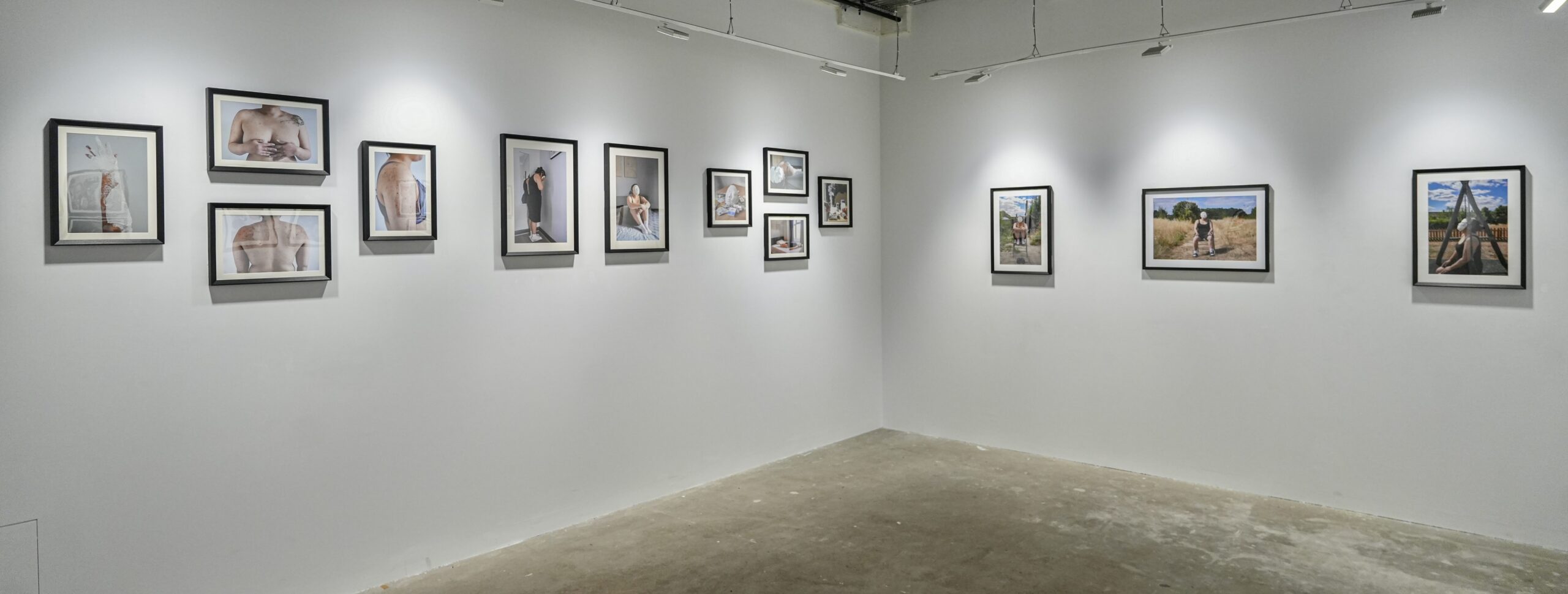
The visual language of Where Pressure Finds a Surface relies on a recurring contrast between concealment and exposure. The white mask obscures the woman’s face, appearing in portraits taken both indoors and outdoors, while other photographs bring the viewer unusually close to her uncovered skin. In one image, the frame cuts across her upper torso, drawing attention to her hands resting against her stomach and the marks scattered across her chest. Elsewhere, a close-up of her shoulder isolates the reddish patches against the surrounding skin, removing almost all contextual information. The photographs therefore alternate between withholding and revealing: the face remains inaccessible, while parts of the body are made intensely visible.
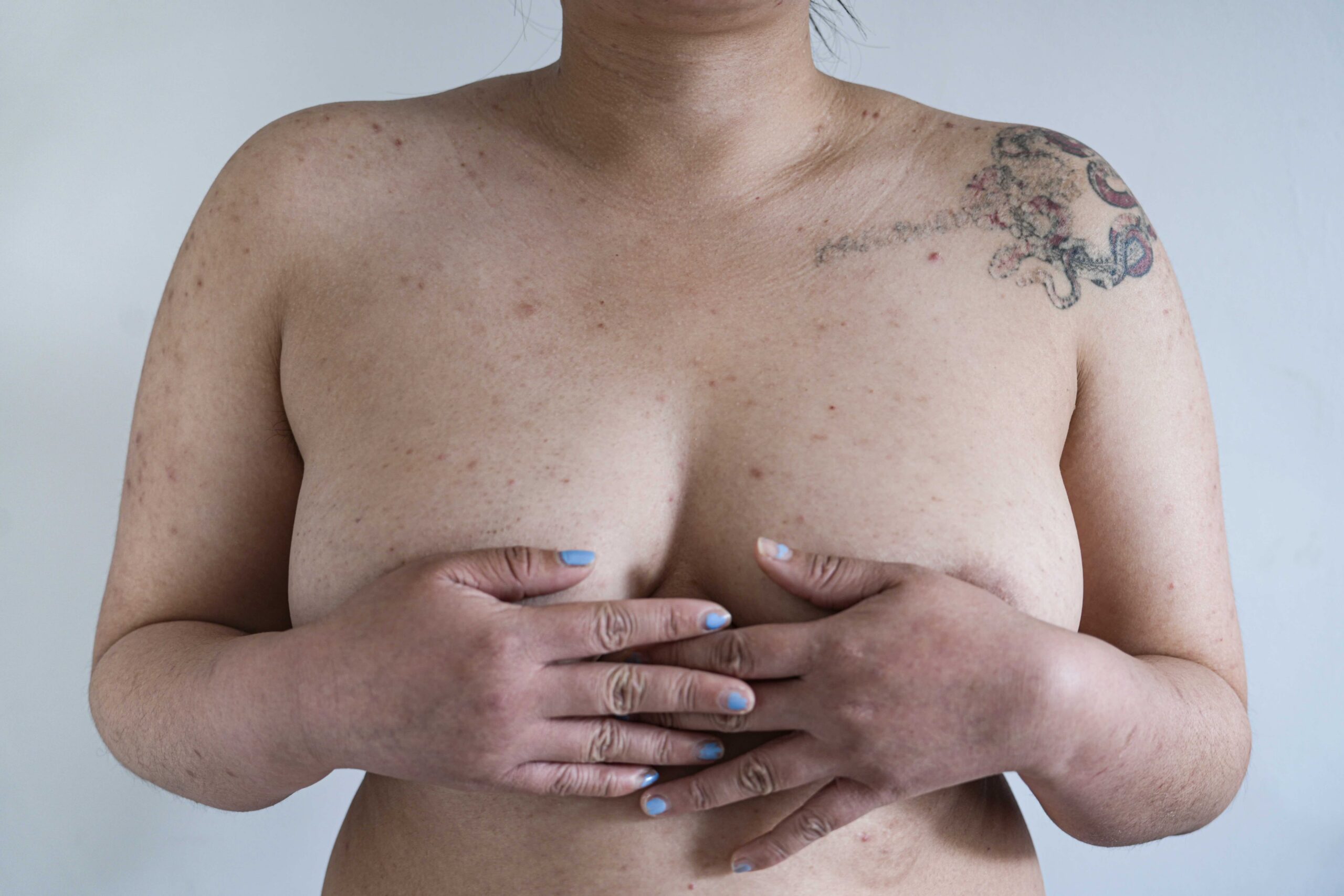
This contrast complicates the viewer’s position. The close-ups invite scrutiny of the skin, almost encouraging us to examine it, yet the concealed face resists the familiarity and recognition that portraiture usually offers. We can see the physical effects of the condition, but cannot read the woman’s expression or assume the visible marks provide an adequate account of her experience. The photographs bring us close to the skin without necessarily bringing us closer to the person. There is also a tension in this approach. Although the close-ups make the symptoms difficult to overlook, they risk directing the viewer’s attention back towards the very physical details that can invite social judgement. Chen does not entirely resolve this tension, but it becomes an important part of how the series engages with looking.
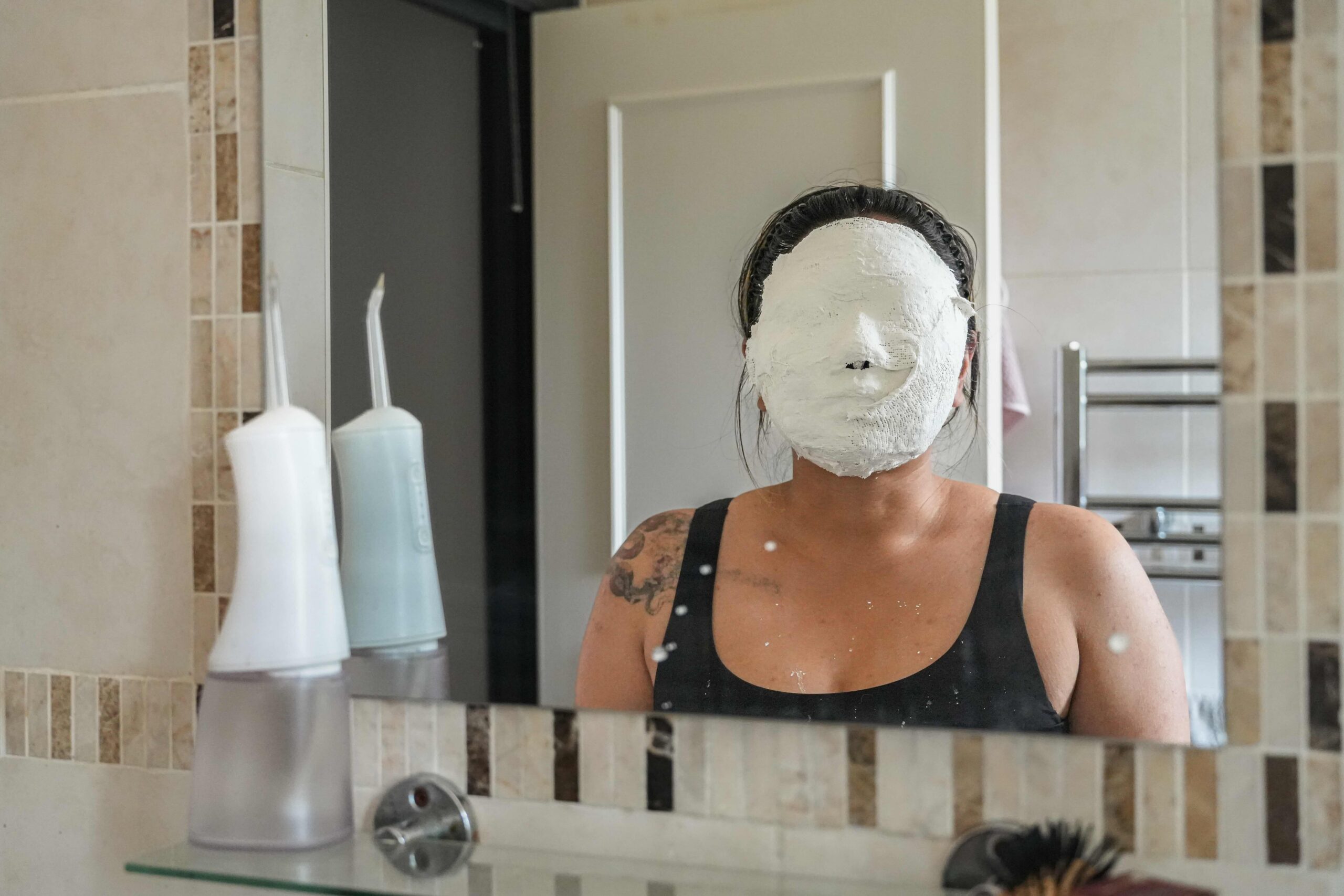
The recurring white mask is more than concealment. It hides the woman’s face, but does not make her anonymous in the conventional sense. In fact, its stark white appearance makes her immediately recognisable within the series. In outdoor photographs, against the surroundings of a residential street, playground, or field, the mask becomes the most conspicuous element in the composition. There is a paradox here — she is protected from direct recognition, yet visually singled out. This is one of the series’ most effective visual choices. The mask gives the photographs a strong sense of continuity, while its repeated presence raises questions about visibility that a conventional portrait might leave unexplored. At the same time, its prominence can draw attention away from the individual woman and towards the mask as a striking visual motif.
While portrait photography traditionally relies heavily on the face, Chen removes much of that possibility. The photographs cannot simply communicate an internal emotional state through facial expression. Instead, they make us consider the limits of what can be inferred from someone’s appearance.
In the mirror photograph, for example, the woman is positioned in front of her reflection, but the mask prevents us from reading her expression. We see the encounter with her own image without being given access to the face through which we might ordinarily interpret it. While portrait photography traditionally relies heavily on the face, Chen removes much of that possibility. The photographs cannot simply communicate an internal emotional state through facial expression. Instead, they make us consider the limits of what can be inferred from someone’s appearance.
The environmental portraits extend this tension into the spaces the woman inhabits. She appears in her bedroom and bathroom, as well as in residential streets, a playground, and an open field. In the outdoor photographs, she is often seated and relatively small within the composition, her white mask standing out against the surroundings. The stillness of her posed figure contrasts with locations ordinarily associated with movement and everyday social activity. Moving between domestic and public settings also places the experience of eczema beyond the confines of private life — the woman is shown occupying spaces that exist independently of her condition, even as the mask makes her presence in them visually distinctive. The repeated use of posed figures and the mask creates a consistent visual language, although it can also make some of the portraits feel similar in their formal approach. The range of settings helps counter this repetition, giving the series a sense of spatial variation.
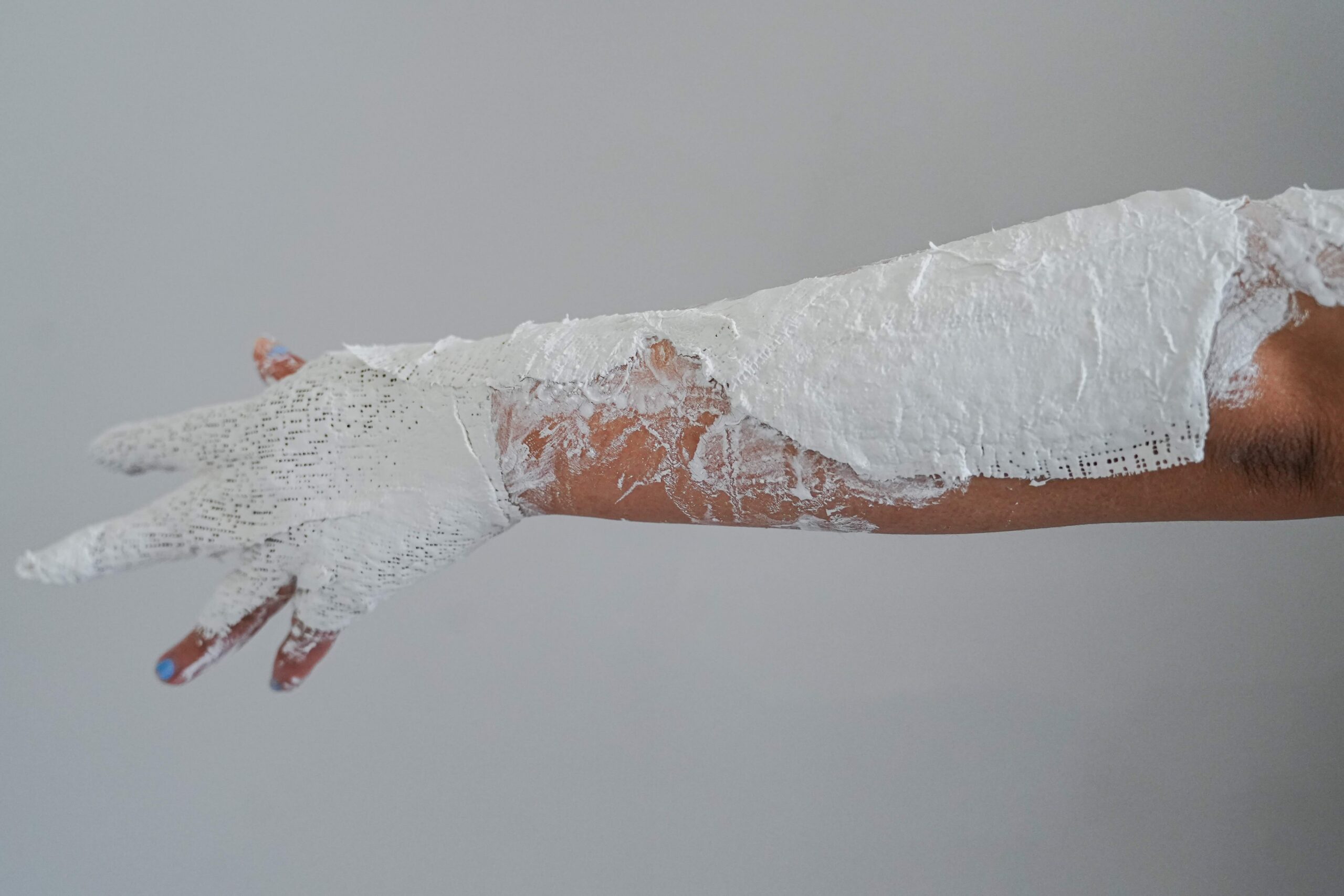
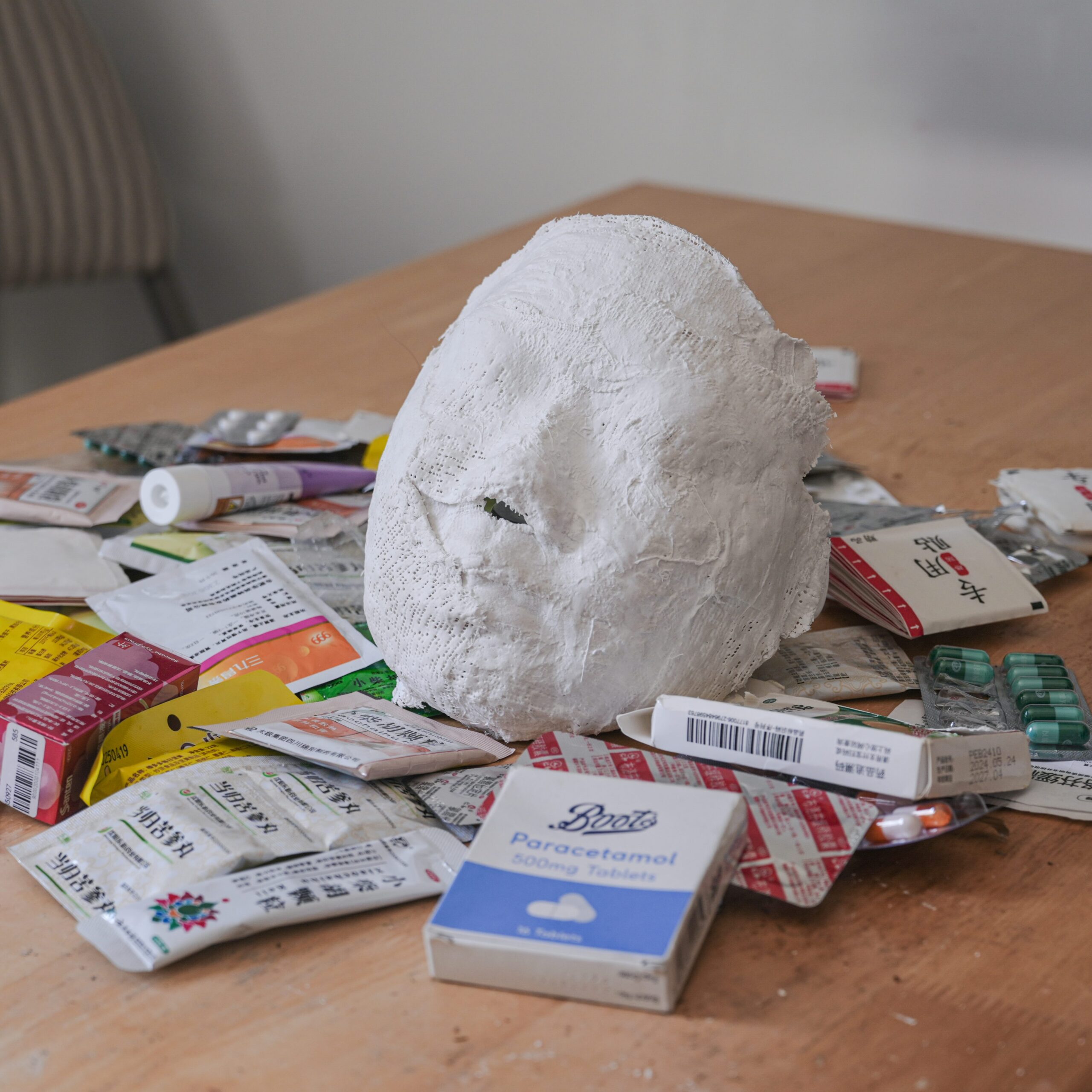
The photograph of an arm covered in plaster-impregnated gauze, alongside the image of the mask made of the same material and the products arranged on a table, adds the practical dimension of living with a skin condition. Plaster-impregnated gauze appears in different forms throughout the series: as a material applied directly to the body and as the substance from which the woman’s recurring mask is made. This creates a visual connection between caring for the skin and the concealment of the face. These images bring attention to the routines and objects that accompany the more visible symptoms of eczema, extending the series beyond portraits and close-up studies of affected skin. They also introduce a different kind of intimacy, grounded in the ordinary actions and materials involved in care, instead of exposure.
What the Photographs Reveal
Presented within No Body Arrives Alone, the project gains another perspective through its dialogue with Xiao’s Beauty Has Roots. Their juxtaposition does not make the experiences presented in both works equivalent, but creates space to consider different ways in which the body is shaped, presented and understood in relation to the world around it.
These images do not resolve into a single, coherent portrait of illness. Instead, they make visible the different ways the condition enters the woman’s life, while resisting the idea that its physical manifestations can tell us everything about her experience.
What makes Where Pressure Finds a Surface particularly effective is the tension between the different ways Chen presents the woman’s body. The close-ups expose the physical effects of eczema, while the mask withholds her face; the environmental portraits place her within mundane surroundings, and the photographs of plaster-impregnated gauze and skincare products draw attention to the repeated work of managing the condition. These images do not resolve into a single, coherent portrait of illness. Instead, they make visible the different ways the condition enters the woman’s life, while resisting the idea that its physical manifestations can tell us everything about her experience. This is the series’ main photographic achievement: it makes the body central to the viewer’s attention without allowing it to become a substitute for the person. The skin may carry traces of what cannot be easily articulated, but it does not tell the whole story. Chen leaves us with a question: where, then, does pressure find a surface, and what can we really understand from the traces it leaves?